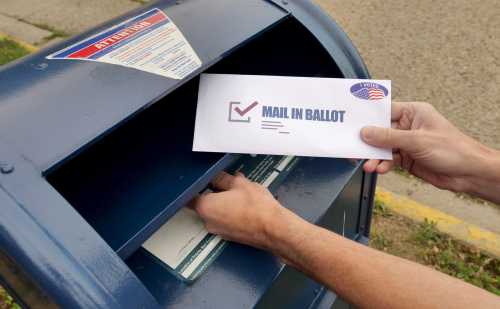
A new Post Office policy that might sound like a technicality—one truck per day to rural post offices instead of two—could result in the rejection of tens of thousands of mail-in ballots in November.
In a new report, I examined the implications of the new rule, finding that the policy could lead to many thousands of ballots arriving late, and as a result being rejected. My analysis estimates that the change could lead to between 43,000 and 55,000 additional rejections nationwide. While this number is small in comparison to the overall number of voters, which is around 158 million, many races around the country are extremely close, and a few votes either way might make all the difference.
According to my analysis, the effects of the policy change will likely be most pronounced in rural areas in the western U.S.—areas where Post Office service is most likely to be less frequent due to the rule change and where many states automatically send mail ballots to registered voters.
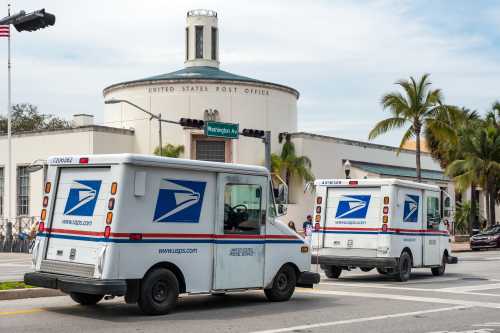
Last year, the United States Postal Service (USPS) began rolling out a new policy, Regional Transportation Optimization (RTO), an effort to run its transportation network more efficiently. RTO, which covers post offices that are more than 50 miles from the plant that processes their mail, is a response to steadily declining letter volumes: the amount of single-piece first-class mail has fallen precipitously in recent decades, from 57 billion in 1997 to 12 billion in 2023.
In the past, each Post Office had two pickups a day, one to drop off mail in the morning and a second later in the day to pick up additional mail. Under the new RTO policy, post offices more than 50 miles from their regional plant now have only one pickup/dropoff per day. Carriers still collect mail according to the same schedule, but in many rural post offices, this mail is taken to the regional sorting center only once a day, rather than twice. For mail posted or picked up by mail carriers later in the day, RTO will add an extra day to the delivery time.
It is important to note that this policy change is separate from recent and ongoing Trump administration efforts to restrict voting and mail-in voting, which have been subject to lengthy legal battles. Although the Supreme Court recently declined to intervene in a federal injunction barring the Postal Service from carrying out the administration’s mail-voting provisions, the administration has signaled that it will continue to pursue this effort.
Roughly 121 million of the country’s 257 million voting-age adults in the 48 contiguous states and Washington, D.C., live nearest to a post office that will now have once-a-day pickup. These post offices serve nearly half of all voting-age adults.
To estimate the effects of the rule change, I focused on three states, California, North Carolina, and Washington. These states each held primary elections earlier this year, and also report how many mail ballots voters in each county returned, how many were rejected, and why, with late arrival recorded as a separate category. All three also report with the same level of detail for the 2022 and 2024 primaries, both of which were held before RTO was implemented. This allowed me to compare 2026 rejection rates with previous years. In addition, because RTO does not affect all counties evenly, I can compare counties that are more and less exposed to the change.
My analysis found that in these three states, RTO doubled the rate of rejection for mail-in ballots. The overall rate of mail-in ballots that were rejected for arriving late in California and Washington was around 1%; in North Carolina, this rate was several times higher. While it is difficult to measure how many voters might be affected by the RTO rule change nationwide, mail-in voting is widespread: Nearly one in three Americans voted by mail in the 2024 general election, a total of around 48 million votes. Around 40% of mail-in ballots in recent elections came from places covered by RTO.
I make several recommendations for how to reduce the risk that the RTO policy will lead to increased ballot rejections.
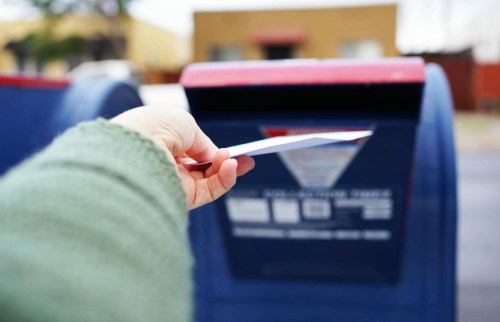
- One key is that voters should not wait until the last minute to send in their mail-in ballots. By sending ballots earlier, voters can ensure that they arrive well before the deadline. This is especially crucial now, because the USPS has declared that a postmark may no longer reliably show the day that a piece of mail was sent. Moreover, the Supreme Court has ruled that the postmark can be used as proof that a voter met the deadline for in-time voting. In addition, several states have ended the grace periods that once cushioned late-arriving ballots.
- I recommend that states and counties widely publicize the change to those affected by RTO, so that these voters know to adjust when they mail their ballots.
- In addition, I recommend that the USPS should also make it clear to voters exactly which Post Offices are now under the one-pickup RTO rules. This would help voters understand the constraints they are working under.
Related Content
The Brookings Institution is committed to quality, independence, and impact.
We are supported by a diverse array of funders. In line with our values and policies, each Brookings publication represents the sole views of its author(s).


Commentary
New post office policy could lead to the rejection of tens of thousands of mail-in ballots in November
September 23, 2026