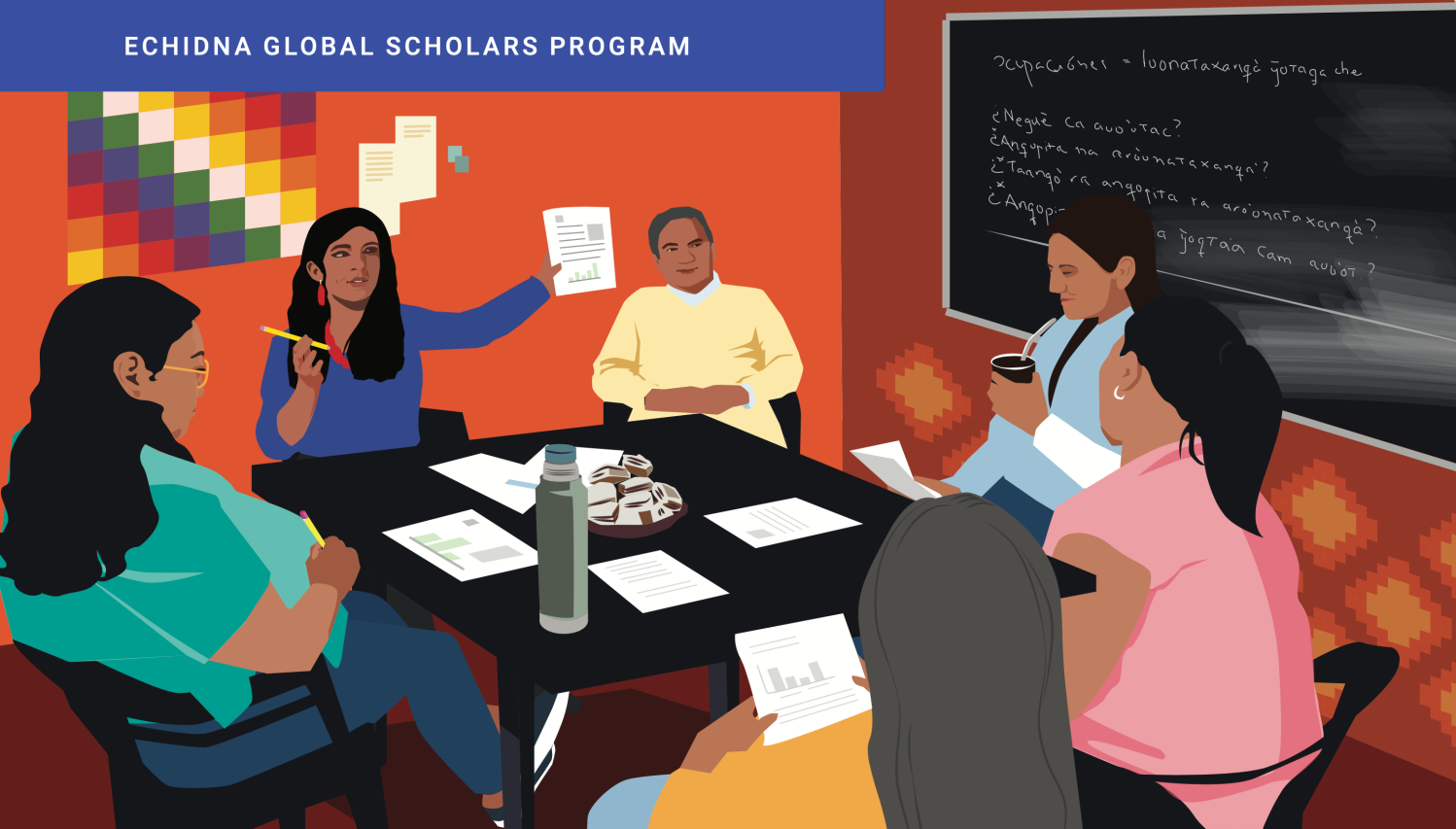
Despite three decades of policy development, the majority of Indigenous children and youth do not have access to Intercultural Bilingual Education (IBE) schools and a quality education, with Indigenous girls facing additional barriers rooted in gendered responsibilities and safety concerns. Drawing on storytelling interviews, focus groups, a survey, and a participatory workshop with Indigenous women teachers and policy actors, this policy brief explores the pathways Indigenous women navigated in their education, the barriers and supports they encountered, and what these experiences can reveal about building gender equality from a culturally grounded perspective.
Findings show how Indigenous women teachers faced social and cultural restrictions, made use of available supports and enablers, and emerged as key actors and critical agents of cultural transmission and change.
Based on the possibilities opened by this first wave of Indigenous women teachers in Argentina and centered on their experiences and voices, the brief offers recommendations to support IBE policy achieve its promise in three interconnected dimensions:
- Create commitment for change based on the values of diversity, multilingualism, and gender equality.
- Support Indigenous women teachers’ capacities to lead transformative education through new roles and spaces within the school, and networks to expand their reach.
- Align policy actors through the development of a shared vision and purpose for IBE that creates the cohesiveness needed for systemic change.
Related Content
Author
The Brookings Institution is committed to quality, independence, and impact.
We are supported by a diverse array of funders. In line with our values and policies, each Brookings publication represents the sole views of its author(s).