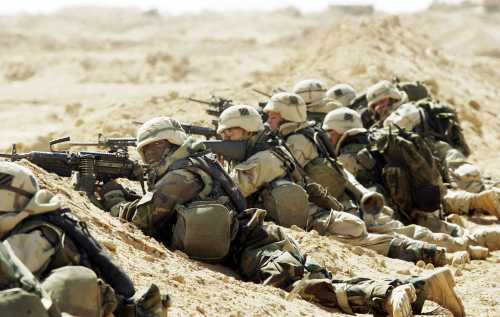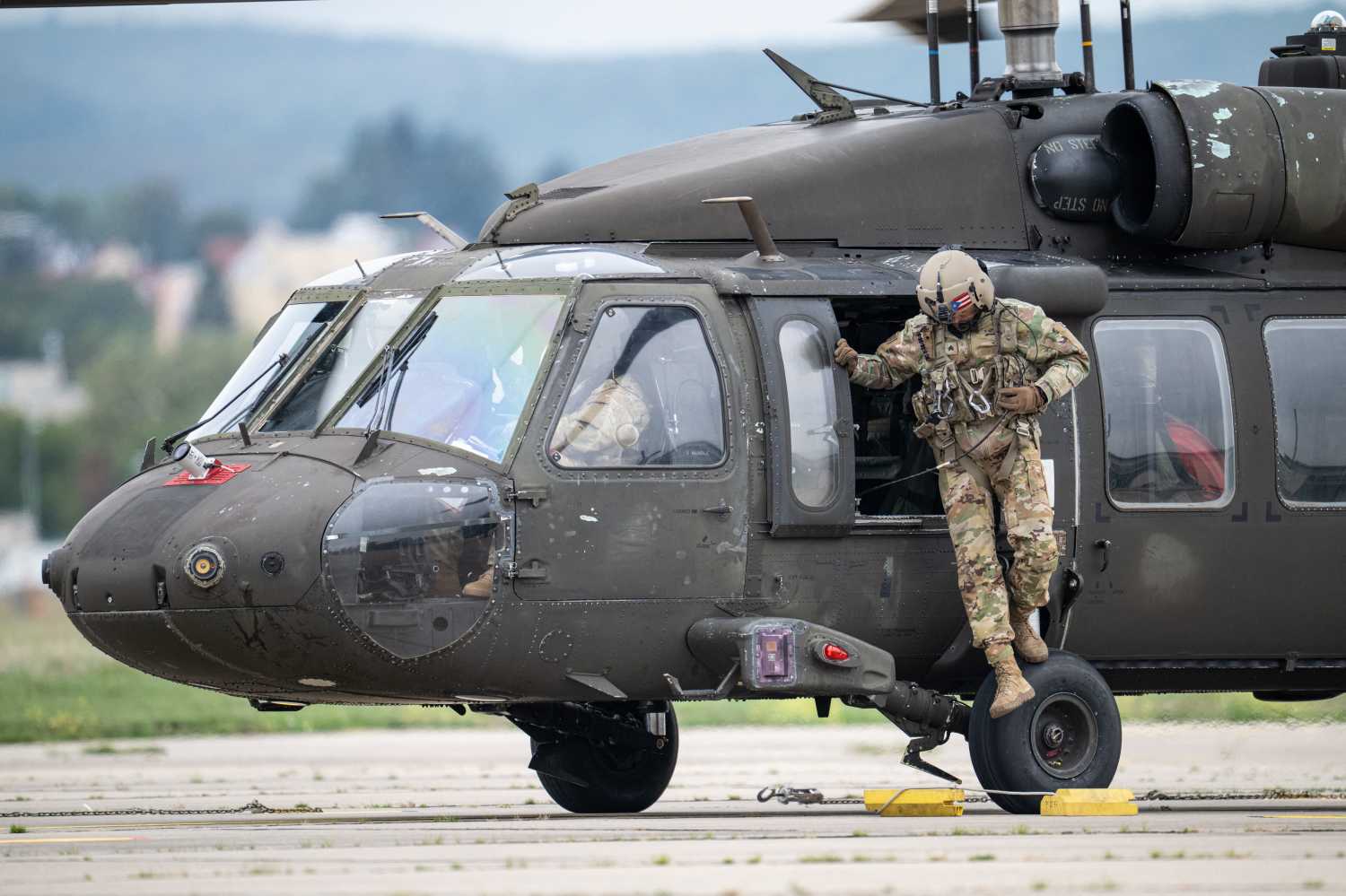

This is a dangerous moment for U.S. defense spending to fall to its lowest level (as a share of the economy) since the 1930s. America’s chief geopolitical rival, China, has been pursuing the most dramatic military modernization program since World War II. The Biden administration’s 2022 National Defense Strategy named China as the “pacing challenge” for the U.S. military, but defense spending has remained around 3% of GDP in the years since. In the meantime, the military balance has only deteriorated: a 2024 bipartisan commission found that “China is outpacing the United States and has largely negated the U.S. military advantage in the Western Pacific.” Meanwhile, the United States is at war in the Middle East, and Europe is mired in its deadliest land war since World War II.
Yet the newly elected Congress—which controls the purse strings—faces difficult fiscal choices that will persist into the next presidential administration. The relative decline of U.S. defense spending is no temporary historical accident: Since 1962, the dramatic expansion of mandatory spending programs such as Social Security, Medicare, and Medicaid has helped squeeze defense from approximately 49% to 13% of the federal budget. Now, there is little headroom in the budget to increase defense spending to meet the proliferating defense challenges. The continued steep growth of mandatory programs and interest on the debt is likely to rise further at the expense of defense. In the coming 30 years, the annual budget deficit is projected to leap from 6% to 14.2% of GDP. Budget deficits rising to 14% of GDP are not economically sustainable, and that means something will have to give. The advocates of a robust military and American global leadership should prepare to make the most of limited budgetary resources.
The current budget outlook
Moving forward, virtually the entire federal budgeting apparatus is aligned against the defense budget. The current annual budget deficit of 6% of GDP is the largest in the Organization for Economic Co-operation and Development—and is taking place despite relative peace and prosperity. From there, the retirement of 74 million baby boomers into Social Security and Medicare is set to drive mandatory spending up another 2.4% of GDP over the next three decades. Under a current-policy baseline, rising debt and interest rates are also projected to push annual interest costs up by another 6.4% of GDP over the same period.
While Social Security and Medicare shortfalls are the lead non-interest deficit driver over the long term, any reduction in benefits will likely face overwhelming bipartisan opposition from voters and many lawmakers. Similarly, interest costs on the debt accrue automatically. They cannot be notably reduced except as a byproduct of deficit reduction elsewhere.
These constraints may force substantial deficit reduction to come from tax increases and/or significant cuts to discretionary spending (nearly half of which is defense). Defense is by far the largest discretionary program, and the only major one that has been sharply cut without public backlash (in the 1990s). Even the relatively popular deficit-reduction proposal of taxing the rich could raise perhaps 1% to 2% of GDP, against a deficit heading toward 14% of GDP.
In this budget environment, even maintaining the current 3% of GDP defense budget over the long term may be challenging.
Other reasons defense may be targeted
Beyond the fiscal squeeze imposed by rising Social Security, Medicare, and interest costs, other factors suggest that the defense budget may be targeted for savings.
First, the budget process is designed in a manner that deprioritizes discretionary programs such as defense. The two-thirds of federal spending that goes to mandatory programs grows annually on autopilot without requiring congressional legislation. By contrast, discretionary spending must be appropriated by Congress and the president every year. And because mandatory spending continues to grow faster than the economy, giving it the first claim on tax dollars forces discretionary spending to compete for what is typically a declining share of federal spending. Instead of reopening mandatory programs for savings, lawmakers have preferred to place tight limits on discretionary spending.
This has been evident in the six major deficit-reduction deals enacted since 1983. Even though discretionary spending is a declining share of the federal budget, it was targeted for 53% of all deficit reduction in these laws. And within discretionary spending, defense has been disproportionately targeted for savings, falling by half as a share of GDP over time.
Second, defense spending is relatively unpopular with voters. In voter surveys going back to the 1980s, defense has consistently ranked near the bottom of federal spending priorities. This perception is likely influenced by concerns that the military is wasteful. Many voters may also exaggerate the military’s share of federal spending because its annual congressional appropriations generate more media attention than mandatory programs, which grow quietly in the background.
Moreover, a growing strain of populist isolationism—fueled by the long, expensive military campaigns in Afghanistan and Iraq—has intensified opposition to new military conflicts. While liberals have long been more skeptical of aggressive U.S. military use, even many conservatives rallied around President Donald Trump’s criticism of past wars and promises to avoid new ones. The Iran conflict’s broad unpopularity has reinforced this sentiment.
Defense spending history
It hasn’t always been this way. From the American Revolution into the early 20th century, national security was a major component of the relatively small federal spending footprint. Wars drove substantial increases in spending and debt for a government that had not yet built its modern welfare state. During World War II, annual defense spending surged from 2% to 37% of GDP before drawing down to a postwar 4% and then back up to nearly 14% of GDP during the Korean War. Following that war, defense spending generally settled between 7% and 10% of GDP through the 1960s, levels that constituted nearly half of total federal spending.1

The post-Vietnam era saw a significant rise in mandatory spending such as Social Security, Medicare, and Medicaid. As mandatory outlays jumped from 5.8% to 9.8% of GDP between 1970 and 1991, the defense budget came under increasing scrutiny. As the Cold War raged, defense bottomed out at 4.6% of GDP under President Jimmy Carter before President Ronald Reagan launched a military buildup that peaked at 6% of GDP in the mid-1980s. Still, with budget deficits rising, Congress passed the Gramm-Rudman-Hollings Act in 1985, which Reagan signed into law, and Congress then revised it in 1987. The legislation specifically targeted defense for roughly half of its automatic spending cuts. Around that time, Congress created the Base Realignment and Closure (BRAC) process, which eventually designated 424 military bases (or parts thereof) for closure or realignment.

When the Soviet empire collapsed in 1991, voters and politicians panicking about rising budget deficits seized the opportunity to dramatically slash military spending. Over the next decade, the numbers of both active-duty personnel and civilian defense personnel were reduced by approximately one-third, while the BRAC process continued closing bases. Overall, defense spending collapsed from Reagan’s peak of 6% of GDP to 2.9% of GDP by 1999. These defense cuts provided a substantial portion of the 1990s deficit reduction that culminated in the 1998-2001 budget surpluses.

The post-Cold War defense savings offer an instructive lesson in how upfront defense investments can save money in the long run. The 1981-1991 defense buildup averaged 0.8% of GDP above its 1980 level. Yet to the extent that it drew the Soviet Union into an expensive arms race that its weakened economy could not afford, it hastened the Soviet empire’s downfall, which in turn allowed U.S. defense spending to fall by roughly 2% of GDP between 1991 and 2001. History has no perfect counterfactuals, yet it can be argued that the earlier defense buildup essentially paid for itself to the extent that it influenced the end of the Cold War.
While the post-Cold War “holiday from history” defense cuts generally ended with the September 11, 2001, attacks, perhaps the most striking story is how little the defense budget expanded. Despite the deadliest foreign attack on U.S. soil in the nation’s history, followed by wars in Afghanistan and Iraq, defense spending did not return to the levels of previous wars—or even to Cold War levels. Instead, the defense budget gradually rose from 2.9% to 4.6% of GDP—on par with the Cold War low of defense spending during the Carter administration—over a decade, before falling back to 3% by 2017, where it has generally remained since.
Implications for national security
Back in 2010, Chairman of the Joint Chiefs of Staff Adm. Michael Mullen declared that “the most significant threat to our national security is our debt.” Since then—even as new dangers emerged requiring American global leadership—military resources have fallen further behind. Since 1987, the number of U.S. active-duty personnel has fallen by nearly 40% (from 2.16 million to 1.30 million) and is in danger of falling below Russia and North Korea into fifth place. Approximately 17,000 companies have left the defense industry since 2001, according to the National Defense Industrial Association, as the United States slowed replacement and upgrades of military equipment.
Such resource limitations will surely have national security implications. In October 2020, the Pentagon ran a classified war game in which one scenario involved a battle over Taiwan. The U.S. side, facing a red team playing China, “failed miserably,” according to then-Vice Chairman of the Joint Chiefs Gen. John Hyten, losing network access almost immediately. Across dozens of similar war games—even those in which the United States fares better—it suffers substantial losses of American troops, ships, and aircraft. In a 2023 war game that the Center for a New American Security ran for members of the House Select Committee on China, the United States ran out of long-range anti-ship missiles in three days—a pattern that recurs across these war games. And while the U.S. Navy’s fleet shrank from 600 to 285 ships over three decades, China underwent a shipbuilding boom that is on pace to reach 435 naval ships. China did so by investing and building more efficiently than the United States.
Military analysts can debate whether more equipment is tantamount to more capability, but in gross terms, the United States is buying fewer platforms and at a greater cost in key domains. And unlike the United States, which has global commitments, China can focus the preponderance of its burgeoning military resources in one theater: the Asia-Pacific.
In short, the U.S. military has considerable ground to make up. In doing so, the Pentagon should budget on the assumption that—with the exception of occasional temporary expansions or a major war—its annual resources will remain near or even below 3% of GDP indefinitely. This constraint should push the military to become much more efficient with tax dollars, including finally being able to pass an audit. It may also require:
- Reforming the procurement process to rein in cost overruns.
- Seeking efficiencies in personnel and compensation costs (salary, pension, health care, housing), which now absorb more than 40% of the defense budget and exceed $110,000 for the median enlistee and $180,000 for the median officer, including noncash and deferred benefits.
- Studying leaner, cheaper ways of fighting wars—perhaps relying more on drone and remote technologies.
- Restraining Congress’ practice of diverting defense resources to pork projects, climate change mitigation, nonmilitary medical research, and other mission-creep distractions.
- Avoiding military adventures that lack public support and threaten a backlash against defense spending.
Despite global threats, America’s long-term military budget is being set less by strategic need than by the brutal math of an aging population and soaring government debt. Rather than count on Congress to aggressively confront the programs driving that debt, the Pentagon must learn to deliver more security per dollar. Moreover, the next administration will have to ask—even demand—that U.S. allies both in the Indo-Pacific and Europe pay more for their own defense and security, even if it asks more politely or diplomatically than the Trump administration has. The United States simply cannot afford to return to the status quo ante.
Author
Related Content


-
Footnotes
- Admittedly, measuring defense spending by its share of the economy is imperfect—the cost of defending a nation does not automatically rise at the rate of economic growth. Yet the common alternative—measuring inflation-adjusted military spending—may understate the needs of a military whose personnel costs (salaries, health care, housing, pensions) often rise at rates exceeding inflation, and whose modernization requires regularly purchasing newer, more expensive technologies and hardware. There is no perfect baseline against which to measure long-term military spending, but measuring by share of GDP avoids these flaws of an inflation-adjusted approach.
The Brookings Institution is committed to quality, independence, and impact.
We are supported by a diverse array of funders. In line with our values and policies, each Brookings publication represents the sole views of its author(s).