




Continuing tradition, host Landry Signé joins top global leaders on the sidelines of the World Bank and International Monetary Fund’s 2026 Spring Meetings. The ongoing conflict in the Middle East loomed over this year’s gathering, as agencies considered how to maintain their development agendas amidst the closure of the Strait of Hormuz and the resulting fuel supply crisis.
Participants
- Claver Gatete, Undersecretary General, United Nations; Executive Secretary, UN Economic Commission for Africa – Listen to the full audio
- Hon. Mark-Alexandre Doumba, Minister of Digital Economy, Republic of Gabon – Listen to the full audio
- Denny H. Kalyalya, Governor, Central Bank of Zambia – Listen to the full audio
- Mohamed Lemine Ould Dhehby, Governor, Central Bank of Mauritania – Listen to the full audio
- Alfonso García Mora, Regional Vice-President for Europe, Latin America, and the Caribbean, International Finance Corporation – Listen to the full audio
- Kevin Chika Urama, Chief Economist and Vice President for Economic Governance and Knowledge Management, African Development Bank – Listen to the full audio
- Ayhan Kose, Deputy Chief Economist, The World Bank Group – Listen to the full audio
Transcript
[music]
SIGNÉ: Hello. I am Landry Signé, senior fellow in the Global Economy and Development Program and the Africa Growth Initiative at the Brookings Institution. Thank you for joining me in a very special episode of the Foresight Africa podcast covering insights from the 2026 World Bank Group and International Monetary Fund’s Spring Meetings.
In today’s episode, we’ll hear not from one or two distinguished leaders, but from seven, all recorded on the ground on the sidelines of the Spring Meetings. From heads of central banks and government ministers to development economists and leadership at the world’s top international financial institutions, our guests in this episode represent the world’s most influential voices in international development finance.
Top of mind during the week’s discussions was how development actors should react to the increasingly frequent shocks to the global economy and their effects on the world’s developing countries.
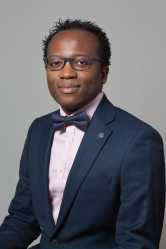
My first guest is Ahyan Kose, deputy chief economist at the World Bank Group, who also happens to be one of our very own nonresident senior fellows at Brookings.
[music]
[2:08]
Welcome to the Brookings Institution Foresight Africa podcast show.
KOSE: Thank you. Thank you, Landry. Nice to be here.
SIGNÉ: I am delighted to have you join me during this very busy week, and I truly appreciate you taking the time to share your insights with our audience. As the Spring Meetings conclude amid rising economic fragmentation and shifting geopolitical dynamics, what are the most consequential takeaways for policymakers and which signals should the world be watching most closely in the months ahead?
KOSE: That’s a wonderful question. Let me mention three highlights I felt throughout the meetings. The first one is that when you think about the recurrence of shocks around us, especially these global shocks, they are becoming basically constant. They’re no longer happening once five years, 10 years. They’re happening every year.
And I think the last example of that is the the conflict in the Middle East. The fallout of the closure of Hormuz, consequences for global commodity markets, especially energy markets, and implications for, of course, from the perspective of the World Bank, emerging markets and developing economies. I think there has been a robust discussion on these issues.
The bottom line is that the duration and depth of the conflict will determine ultimately what type of oil price we’ll see, how growth expectations and inflation expectations will change down the road.
[4:00]
In that context, the second important message is related to policies, what the global community should do and what the national policymakers need to think about going forward. On the part of global community, obviously some of the things are very clear. We need to find ways to repair the damage, especially in war torn areas. Make sure we are providing the necessary support when it comes to food insecurity, because that’s going to be an important challenge if we see sustained increase in fertilizer prices.
A number of countries, including those countries in Africa, suffering from debt related challenges. This type of shock will make those challenges even more pronounced. So the global community needs to think about how it’s going to bring the concessional financing, how it’s going to bring debt relief.
And above and beyond, of course, whenever these types of shocks hit the countries that are most vulnerable tend to be the most affected ones. So how they’re going to be helped? We need to think about those. And I think there was robust discussion on these issues as well.
On the national front, there is this tendency to provide fiscal support when these types of shocks take place. I think there’s a very clear message that fiscal support should be temporary, should be targeted, especially reaching the vulnerable segments of the society, not the blanket support, open-ended support.
Countries need to avoid export restrictions, need to avoid price controls, and need to think about the crisis sooner or later will end, but the impact of the crisis will be felt over the medium term.
[5:50]
Now third important observation is the following. We at the World Bank pay attention to, of course, creating jobs and promoting economic growth. But there are other important issues. For example, this week we spent quite a bit of time talking about water security, making sure countries, the billions around the world in developing economies, have secure clean access to water. This is actually all the more important given the developments in the Middle East and potential consequences of those developments for water security.
So in a nutshell, number one, understanding these shocks are increasingly persistent. They are there. We need to make economies more resilient. Number two, there are some do’s and don’ts of policies; we need to internalize those. Number three, yes, these shocks happen, but there are broader development goals related to jobs, related to water security, related to the digitalization and those things we need to keep in mind and push forward
SIGNÉ: Powerful insights.
[music]
[7:00]
My next guest, His Excellency Claver Gatete, United Nations undersecretary-general and executive secretary of the Economic Commission for Africa, ECA or UNECA. He had a similar assessment, highlighting that states need to build greater resilience to prepare for future disruptions.
[7:34]
GATETE: The shocks have been there since 1970s, when we had the energy shocks. We had the international financial crisis in 2008, 2009. Then we had COVID. And later on we had the war in Ukraine. And also now what is going on in the Middle East, together with, of course, the recurrent issue of climate change that is affecting many countries.
So what one concludes is that the shocks are becoming more normal. They’re regular, and they’re affecting our own countries. And that’s why the countries need to create their own resilience. How do you deal with this kind of issue?
As we are trying to address the debt issue, which is currently at 64% debt-to-GDP ratio on average on the continent, and so many countries are paying every year the amount that is more than the investment that you could have in health and education. They were already constrained.
And now there is an additional burden of the currency crisis, the crisis which is affecting the core of economic development, including the energy, because over 80% of African countries are net importers of energy. And you can imagine now the impact it has had if it is being disrupted and nothing goes through the Strait of Hormuz and more than 15 countries, they import more than 50% of their energy through that Strait of Hormuz.. So they’re highly reflected.
[9:08]
SIGNÉ: The undersecretary-general, also stressed that UNECA is not losing sight of its long-term objectives in facilitating African development.
[9:22]
GATETE: In as much as there are shocks, they should not really prevent countries to also look at their long-term strategy. For example, on the African continent, we’ve been working very hard on the implementation of African market, the Africa Continental Free Trade Area. It is the largest market of 1.5 billion people. And it’s a market which has been approved by all the heads of state, and now we’re into the implementation.
And one issue that is there, apart from the infrastructure and the rest of it, is how do we create industries? How do we add value to all the products on the continent? And here, we at the Economic Commission for Africa are working with member countries to establish the regional value chains so that at least from the production to the industry establishing of the special economic zones, derisking that can be able to attract more investment has been our core work that we have been doing.
And by doing that, then we are adding value on every product. We have identified 94 different regional value chains, from the critical minerals to agriculture. Like, if you want, just as an example, the cocoa, the cotton, the coffee, and also in livestock. And in other areas also that we have identified, areas where we can package and make sure that at least you have a regional value chain that is going to help in terms of adding industries. That’s what creates jobs.
[music]
[10:57]
SIGNÉ: For their part, the World Bank Group is also keeping their sights on job creation as their top priority. I met with the International Finance Corporation’s vice president for Europe, Latin America, and the Caribbean, Alfonso García Mora.
[11:25]
GARCÍA MORA: We are living in a context of high volatility, I would say. And we have seen it in different financial markets, metrics, and different decisions and different reactions. And I think in those times it is particularly relevant to be focused on what really has an impact on the society. In our view, this is jobs. Jobs is at the core of our mission. It’s at the core of where we believe that the political economy and economic policies need to focus.
Why do we say that? We say that because in the next years there will be 1.2 billion people coming into the job market, and according to our estimations, only 400 million will have, will find a job if we continue to do things as we are doing today. So there is a huge gap between those that would like to be able to contribute to the labor market and those that will actually get a job.
So there is a huge responsibility today on the economic policy side, on the policymakers, on the private sector to find ways in which we can generate those jobs for the future.
[music]
[12:32]
SIGNÉ: Next, I spoke with Professor Kevin Chika Urama, chief economist and vice president for economic governance and Knowledge management at the African Development Bank. Professor Urama also pointed to the African Continental Free Trade Area as an important component for adapting to the new normal in the global economy.
[13:02]
URAMA: The downside risks are many, including inflation on the continent. While estimating that inflation would already come down to below the double digit by 2026, it already came down from 21.3% in 2024 to just above 13% in 2025. So we’re expecting it to hit around 9.5% in 2026. But this may not happen because of the huge fuel and fertilizer price inflations that we’re seen because of the global shock that we have.
But these conflicts that we see, especially the Middle East conflict, can drive to positive action, which is accelerating the green growth revolution, the green transition, in the sense that all of a sudden countries may begin to realize that ramping up renewable energy investments is in the interest of countries.
So this for me could be a positive takeaway. There’s nothing positive about a war, but a positive takeaway that could come in the sense that the long awaited, rapid acceleration of renewable energy revolutions and green transitions may begin to take roots as a necessity, not because it’s an environmental policy.
For example, an Africa that has more than 45% of global technical potential in renewable energy, what prevents the continent from harnessing all those and delinking itself more from oil and gas in order to be able to become more resilient when the next energy price shock will hit? Because it’s not a question of if, it’s a question of when. So that’s one positive that could come out of this.
Another positive also, from the perspective of the continent, you and I know that intra-regional trade in Africa is still minuscule, below 18%. But then this is a continent that has huge opportunities for accelerating intra-regional trade and the instruments for doing that, the AfCFTA, is already there. So this can be a drive towards greater intra-regional trade on the continent and also globally.
And that will help to reduce the length of the global supply chains and deliver positive outcomes for growth in countries, but also deliver positive outcomes for the environment by reducing the carbon footprint of trade. So this could be another positive thing that could come out of what is going on now.
SIGNÉ: Insightful, professor!
[music]
[15:38]
To learn more about how national governments were responding to these new risk and opportunities, I spoke with the Honorable Mark-Alexandre Doumba, minister of digital economy and innovation for the Republic of Gabon.
[16:02]
DOUMBA: I think one of the key things is we are realizing that the world that we live in that’s been based on globalization and external dependencies is being tested. And African countries have often relied on mobilizing foreign direct investments in order to catalyze our different industries. But in a time where FDI is being recentered to home markets, I think it’s time for our countries to focus on domestic direct investments, converting national savings into domestic investments, taking our data, localizing them locally. If you have good talent, don’t let them go. Keep them at home. And if you have natural resources, don’t export them raw. Beneficiate and transform them locally.
So I think it’s really a paradigm shift between exporting what we’ve usually exported into retaining it and valuing it, and appreciating what we have in a way that can make our external dependencies less fragile to our structural systems.
I think policymakers need to come away from this week in Washington, D.C., to our home countries with our brains stimulated by the quality of the conversations and a very acute understanding of the challenges that are out there. But then we also, we need to specifically convert those insights into policies, into laws, because laws are written in stone, so you cannot reverse them. You have to move forward with them. It’s the only way to really convert declarations, commitments into long-term, sustainable institutional change, and that is what our countries need.
Our countries need to have policymakers who set directions, who are aggressive about pursuing them and who are consistent in ensuring that the change is sustainable, durable, and, and structural.
SIGNÉ: Fabulous, Excellency!
[music]
[17:54]
Central bank governors also came away from the 2026 Spring meetings with new insights they are looking to convert into tangible results. I spoke with Mohamed Lemine Ould Dhehby, governor of the Central Bank of Mauritania. Governor Ould Dhehby expressed optimism that the stake of the moment are making cooperation possible.
[18:33]
DHEHBY: This, this crisis has revealed the capacity of countries in the same region to coordinate and to pool infrastructures and utilities. So this is a good thing for the coming crisis. The Spring meetings was gathering these countries. And each region is now organizing the coordination. And I think after the crisis, the world will change the way of coordination and the way of facing crisis.
SIGNÉ: I really like this point how you are emphasizing the critical importance of regional co-ordination and the legacy that this could provide post-crisis so that countries are better prepared to manage future events.
[19:30]
DHEHBY: Yes. People I met during these meetings, policymakers, governors of central banks, my colleagues, and ministry of finances, now are more rational and are now not sensitive to populism and so on. So I think the policymakers take a good lesson from this crisis.
SIGNÉ: That’s very insightful. So the policymakers are focusing on evidence-based insight instead of focusing on more populist type of decision making processes.
[20:14]
DHEHBY: Yes, I think so.
This shock is global and is sparing no country. The flagship recommendation is to avoid using buffers so early, as the crisis could last. So these meetings were the occasion, to specialists in the economy to forecasters, to analysts, to go in deep and to analyze the facts and use models.
And they find almost three scenarios. The reference scenario is that the crisis will be short and the resilience of the world economy will be maintained. The other scenarios are a longer crisis and then a severe scenario. So these scenarios, I hope, will not be materialized.
SIGNÉ: So we’ll prefer to have the first scenario, a short crisis–
DHEHBY: –short crisis, and the recovery as soon as possible.
[music]
[21:33]
SIGNÉ: Denny Kalyalya, governor of the Central Bank of Zambia, also expressed the need for multilateralism to avoid the worst outcomes of the intersecting global crisis that face many countries.
[21:54]
KALYALYA: Last year we were talking of polycrisis. I don’t know how we can make that even more appropriate now. Now the thing about the current crisis is really the plea for everybody is to cessation of the fighting, get into a more a negotiated solution because the impact on our economies is quite great. The oil prices have been going up. The others who are importing fertilizer also is affected, which means agriculture would also be affected, which means food security becomes an issue, and that’s an issue under the SDGs. So it’s in I believe everybody’s interest that this is safeguarded.
So what we are looking at, this is a multilateral setting, so it’s really renewal of multilateralism. What do we really see happening going forward with multilateralism? So this is one of the things we are hoping that they will be rethink on how multilateralism can be fostered so that it does work. What we are looking to mostly is really peace being restored and we have oil prices coming down to where they were before the crisis. Because I think the global economy was growing, but as has been pointed out by the IMF in their WEO [World Economic Report] growth is being affected.
Now, the expectation is that it’ll be short duration, but what if it persists? That’s what we would want to see avoided by the interaction that we have been having at the meetings.
SIGNÉ: Insightful, Governor.
[music]
[23:58]
The need to rethink multilateralism for the current moment was behind many of the week’s conversations.
Professor Urama of the African Development Bank raised why this issue is so crucial and offered a potential path forward.
Looking beyond the Spring Meetings, what will it take to translate today’s commitments into measurable, on the ground impact? And how can institutions ensure accountability, speed, and scale in delivering results?
[24:41]
URAMA: Yeah. I’ll be a little bit controversial on this one because, one, reflecting on years and years of global convenings and big pronouncements, that one would go back home with hope that the leaders have come together and there is some solutions coming out. The main challenge there is that the implementation often does not match those big pronouncements.
And in my sense, one of the reasons is that we’re looking for global consensus. In a world where fragmentation, multi-polarization is now a new normal.
So we need to start looking for plurilteralism, where it’s more about the coalition of the willing, so that countries that see value in addressing particular recommendations that come out of these meetings do not have to wait to get a consensus of everybody and every state on this planet before they start making a move.
So I think it’s about thinking about inclusivity in a manner of that you’re including all the interested parties without closing the doors for others to join later. That, for me, would be a pragmatic way of beginning to see that the declarations that are made in this large convenings translate into policy actions in countries.
Second, there’s quite a lot of push towards private sector capital mobilization to augment public sector resources. And I have a concern in that regard because there there appear to be a push to use guarantees and other instruments to socialize risks and private gains. I fully support the use of guarantees, but those use of guarantees should be measured to ensure that we’re not creating moral hazards in the markets by buying off private sector risks. That is supposed to be part of the risk taking arrangements.
[music]
[26:46]
SIGNÉ: IFC Vice President Alphonso García Mora also offered his organization’s thoughts for how the key ideas from the Spring Meetings can be carried forward into concrete action.
[27:02]
GARCÍA MORA: So I would, I would focus on two things. One, to really identify what are the key sectors that are job creators. That actually where the jobs are generated. And this is, we have identified at the World Bank Group there are five key sectors. One is infrastructure, basic infrastructure. Second is value added manufacturing. Third is health. Fourth is agribusiness. Fifth is tourism.
If you put together these five sectors, you will actually cover a significant part of the GDP across the supply chain of all these sectors. So focusing on those five sectors, establishing metrics of what is the jobs that you want to create in each of the sectors, is paramount.
But it is also to think on what is needed to make that happen and to make that happen. We have identified three things. One, we need to work on infrastructure and the human capital skills. We need the skills of the future. We need to invest today on what are gonna be the skills of the future.
Second, we need the business environment. We need to focus on red tape. We need to eliminate the red tape. We need to facilitate the business creation entrepreneurs.
And third, we need to mobilize private capital. Without private capital, it will impossible to generate the jobs of the future, basically because 90% of the jobs are generated in the private sector.
SIGNÉ: What a powerful way to conclude. Thank you again for joining us today and for sharing your thoughts and insights.
GARCÍA MORA: Thank you very much for having me.
[music]
[28:29]
SIGNÉ: This concludes our special coverage of the World Bank Group and International Monetary Fund’s 2026 Spring Meetings.
The development finance ecosystem is taking the political and economic disruptions that the world is facing very seriously. They are also adapting their tools and coordination accordingly. Global actors across countries and institutions are working hard on how they can continue to create sustained economic growth for countries and their populations.
You can find the full length audio and transcripts of all this episode’s interviews on our website, Brookings dot edu slash Foresight Spring Meetings.
I am Landry Signé, and this has been Foresight Africa. Thank you listeners for joining me today. The Foresight Africa podcast is brought to you by the Brookings Podcast Network. Send your feedback and questions to podcasts at Brookings dot edu.
My special thanks to the production team, including Ike Blake, supervising producer; Fred Dews, producer; Dafe Oputu, Izzy Taylor, and Aysha House, associate producers; Gastón Reboredo, audio engineer; and Daniel Morales and Teddy Wansink, video producers. The show’s art was designed by Shavanthi Mendis. Additional promotional support for this podcast comes from my colleagues in Brookings Global and the Office of Communications at Brookings.
Participant
- Subscribe to Foresight Africa on Apple, Spotify, Afripods, or wherever you listen to podcasts.
- Listen to previous episodes.
- Watch episodes on YouTube.
- Learn about other Brookings podcasts from the Brookings Podcast Network.
- Sign up for the podcasts newsletter for occasional updates on featured episodes and new shows.
- Send feedback to [email protected].
The Brookings Institution is committed to quality, independence, and impact.
We are supported by a diverse array of funders. In line with our values and policies, each Brookings publication represents the sole views of its author(s).

Commentary
PodcastHow the Middle East crisis is testing African resilience and global development
Listen on
Foresight Africa Podcast
April 29, 2026