




Transcript
LANDRY SIGNÉ: Hello. I am Landry Signé, senior fellow in the Global Economy and Development Program and the Africa Growth Initiative at the Brookings Institution. Welcome to the Foresight Africa podcast, where I engage with distinguished leaders in policy, business, academia, and civil society who share their unique insights and innovative solutions to Africa’s challenges while highlighting opportunities to advance engagement between Africa, the U.S., and the global community.
Today we are on the sidelines of the 2026 Spring Meetings organized by the World Bank and International Monetary Fund. Twice a year, these international financial institutions bring together the world’s most prominent figures in the field of development finance, including central bankers, ministers of finance, heads of global and regional financial institutions, corporate CEOs, entrepreneurs, and civil society leaders.
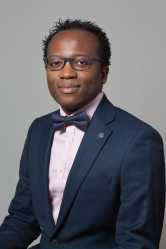
I am joined now by Governor Denny Kalyalya of the Central Bank of Zambia. Welcome to the Brookings Institution Foresight Africa podcast show, Governor.
DENNY KALYALYA: Thank you very much indeed for having me.
SIGNÉ: I am delighted to have you join me during this very busy week and truly appreciate you taking the time to share your insights with our audience. As the Spring Meetings conclude amid rising economic fragmentation and shifting geopolitical dynamics, what are the most consequential takeaways from policymakers and which signals should the world be watching most closely in the months ahead?
KALYALYA: Yeah. Thank you very much. Coming out here, I think the current challenges we have of the geopolitical tensions in the Middle East are foremost on everybody’s mind largely because they have differential impact on our countries. For those who are exporting oil , maybe this may be an opportunity to get more money. But the flows may be affected because of the impact the crisis has had on the channels where ships move. So, I think coming here, many of us were looking to see how others are interpreting this, how they are being affected and what kind of solutions they are looking at.
But clearly the issue of having buffers is foremost, I think, for everybody. But we all have different structures of economies and different challenges. So, really we are faced in a situation where this crisis doesn’t seem to be going away. Last year we were talking of “polycrisis”. I don’t know how we can make that even more appropriate now given this year.
Now the thing about the current crisis, really the plea for everybody is for cessation of the fighting and for a more negotiated solution. Because the impact on our economies is quite great.
SIGNÉ: Absolutely.
KALYALYA: The oil prices have been going up. Countries importing fertilizer are also affected, which means agriculture would be affected, which means food security becomes an issue. And that’s an issue under the SDGs, so it’s in everybody’s interests that this is safeguarded.
So what we are looking at is that this is a multilateral setting – a chance for the renewal of multilateralism. What do we really see happening going forward with multilateralism? One of the things we are hoping for is that there will be rethinking on how multilateralism can be fostered so that it does work.
We are looking for peace to be restored and for oil prices to come down to where they were before the crisis. The global economy was growing but, as has been pointed out by the IMF, growth is now being affected.
Now the expectation is that it’ll be short duration, but what if it persists? That’s what we would want to see avoided by the interactions we have been having at the Meetings.
SIGNÉ: Insightful, Governor! Looking beyond the Spring Meetings, what will it take to translate today’s commitments into measurable on-the-ground impact, and how can institutions ensure accountability, speed, and scale in delivering results?
KALYALYA: A very big question. Yes, I think the immediate signs we should be looking to is really a situation where there is a ceasefire and more negotiations on an amicable outcome for all the parties. And also, what we are looking for is the role of institutions really coming to the fore. I think what Brookings is doing is commendable.
SIGNÉ: Thank you
KALYALYA: Because in the conversations that we have, I think we hear each other’s concerns and how it is affecting us in one way or the other and what other ambitions we have for our different countries. Because we are all desirous to have growth, to have stable markets. But with what we are seeing, it could very well lead to higher prices, which means inflation rising, and that would mean tightening of monetary policy.
Now, for us in developing countries, we are on the receiving end where it means that if we’re tightening here, the dollar will start to strengthen.
SIGNÉ: Yeah.
KALYALYA: Which means that there will be movement of capital from our places, which may be considered high risk. That reversal in capital flow would affect our growth prospects and therefore affect employment generation. So those have also social implications.
SIGNÉ: Yes.
KALYALYA: So institutions like yours here bring it to the attention of the authorities here with the research that you do. I think it’s very important. Because that brings evidence that sometimes when we think we’re solving one problem, it has other unintended consequences.
SIGNÉ: Absolutely.
KALYALYA: So we do hope that through institutions there will be more reasoned conversations. Ones that can end these hostilities and galvanize the world economy to use our collective wisdom and resources for the good of our people.
SIGNÉ: What an excellent way to conclude, Governor. Thank you so much for joining me today.
KALYALYA: Thank you. It’s a pleasure. All the best.
Participants
-
Acknowledgements and disclosures
The Foresight Africa podcast is brought to you by the Brookings Podcast Network. Send your feedback and questions to [email protected]. Special thanks to the production team including Fred Dews, producer; Dafe Oputu and Nicole Ntungire, associate producers; Gastón Reboredo, audio engineer; and Izzy Taylor, communications manager in Brookings Global. The show’s art was designed by Shavanthi Mendis. Additional promotional support for this podcast comes from my colleagues in Brookings Global and the Office of Communications at Brookings.
The Brookings Institution is committed to quality, independence, and impact.
We are supported by a diverse array of funders. In line with our values and policies, each Brookings publication represents the sole views of its author(s).

Commentary
PodcastForesight Africa at the 2026 Spring Meetings: African monetary policy in the new “polycrisis”
April 30, 2026
Listen on
Foresight Africa Podcast