Throughout American history, social change has been driven by collective action and community organizing. In fact, the country itself is a product of the social movement for independence from Britain. Although the first social movement in the U.S. had leadership dominated by white men landowners, collective action in America has become much more inclusive across race, class, and gender over the past 250 years.
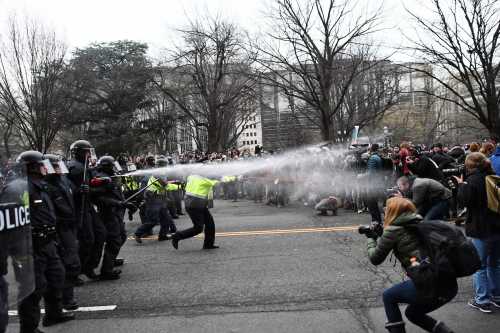
Resistance and collective action have thrived during the current Trump administration. As in the first Trump administration, protests and demonstrations increased after the administration took office. The Crowd Counting Consortium, which tracks protest activity across the U.S., reports that there were three times as many protests in the early months of the second Trump administration compared with the same period eight years ago. People have mobilized in response to the administration’s curtailment of civil liberties, cuts to social services, and targeting of immigrants. Unlike protests during the first Trump administration, when large demonstrations were organized in specific cities, resistance during the second has been more geographically distributed, with people participating in days of action and locally coordinated events in their communities.
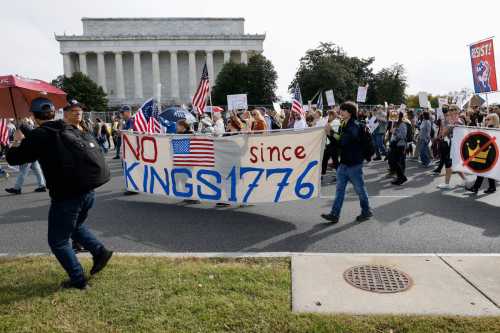
To date, the biggest mobilizations have taken place during the No Kings Days of action in June and October 2025, and March 2026. These protests were organized by a broad coalition of progressive groups. The second No Kings Day mobilized more than 7 million protestors to join over 2,700 events across the United States, and the third No Kings Day was even larger, with more than 8 million protestors participating on March 28, 2026, and over 3,300 events.
As part of a long-term project studying protests in America, which included documenting the resistance to the first Trump administration in “American Resistance: From the Women’s March to the Blue Wave,” I have been studying this second wave of resistance. The project aims to understand who is participating, their motivations, and their tactics.
Data collected from participants in these protests show that, even though more people are turning out in more locations across the U.S. for these days of action, the participants have been less diverse than at the protests during the first Trump administration. In particular, this time around, participants are much less racially and ethnically diverse, more homogenous in their educational backgrounds, and older on average.
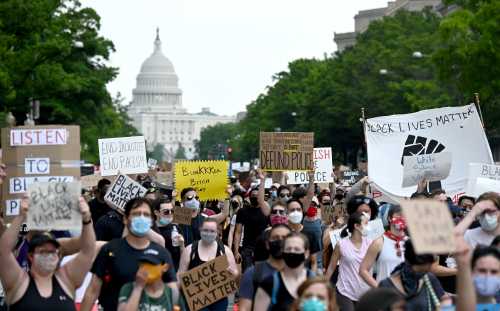
During the first Trump administration, my colleagues and I documented the ways that intersectionality was mobilizing people with diverse identities and interests to join the resistance to the Trump administration. After George Floyd was killed by a police officer in 2020, my research found that personal identities to specific subgroups mobilized diverse crowds to protest systemic racism in the United States. In other words, the diversity of the crowds in the longest sustained period of protest in U.S. history was driven by overlapping identities and motivations. As such, Latinos participated due to concerns over immigration policy, members of the LGBTQ+ community joined over worries about LGBTQ+ rights, and women reported joining out of distress over reproductive rights under the first Trump administration. This type of solidarity was notable and unprecedented.
Even though the crowds protesting the second Trump administration are less diverse, participants continue to be driven by a range of identity-based concerns. Figure 1 shows support for immigrant rights, LGBTQ+ rights, racial justice, and women’s rights from participants at the largest mobilizations since January 2025. More than half of participants identified these issues as being reasons why they were participating.
There is ample evidence that social movements are most durable and effective when they mobilize intersectional crowds. The relative lack of diversity at large-scale protests during the second Trump administration may limit the effectiveness of those efforts.
At the same time, the fact that participants are so distressed about issues that concern people from various identities and backgrounds suggests that the movement is open to building solidarity. Following the Supreme Court’s decision in Louisiana v. Callais, which weakened protections under the Voting Rights Act, several Southern states are redrawing their congressional maps in ways that favor white voters. The changes are likely to mobilize Black voters and other voters of color who feel the effects of the ruling on their political representation. Given the interests and motivations of participants in these large-scale protests, that mobilization could help build coalitions connecting people from diverse backgrounds to work toward shared political goals.
Collective action that connects people across identity, background, and class may be the most effective response to democratic backsliding at all levels of government.
Related Content
2026
Author

The Brookings Institution is committed to quality, independence, and impact.
We are supported by a diverse array of funders. In line with our values and policies, each Brookings publication represents the sole views of its author(s).