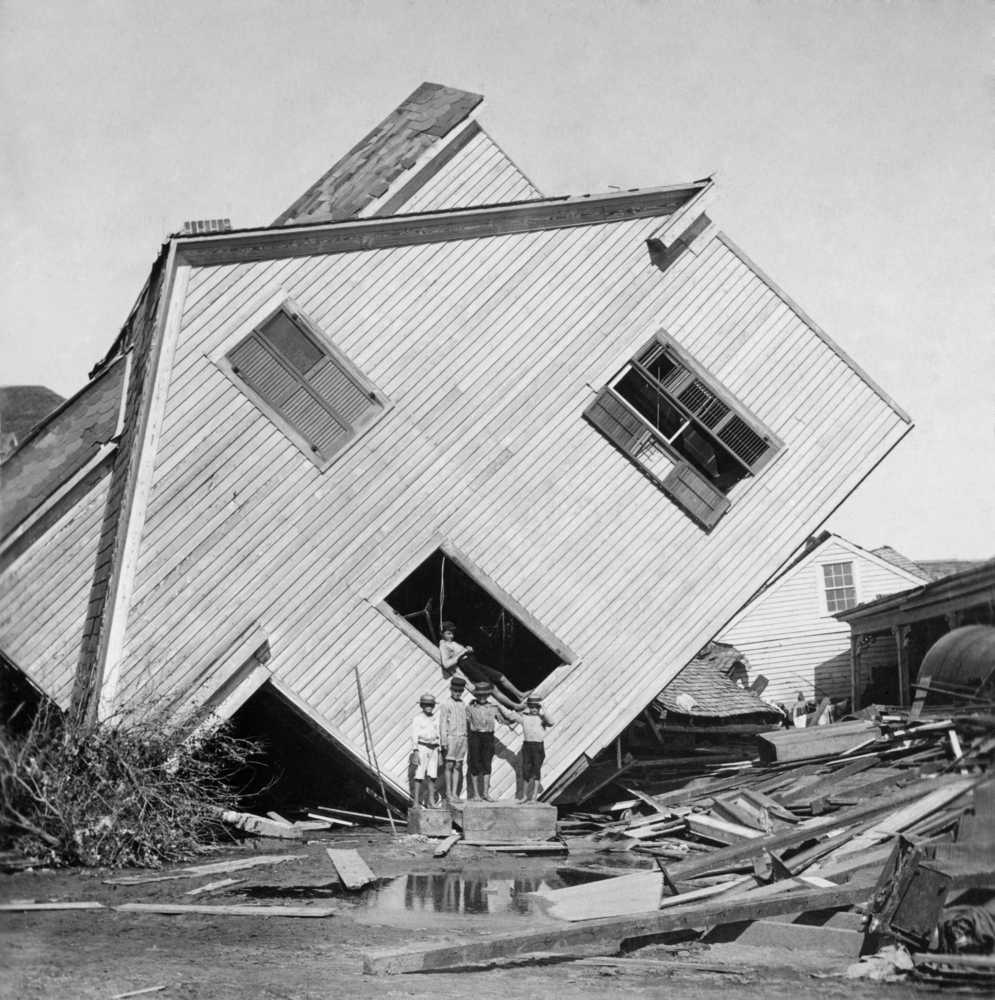
Karen Clark and colleagues at Karen Clark & Co. use the firm’s model to estimate the reduction in property losses on the Texas coast in a hurricane as strong as the 1900 Galveston Hurricane if single family homes met the stiffest building codes. The bottom line: Stronger building codes can generate significant reductions in hurricane losses. The additional costs associated with stronger wind-resistant construction are often small relative to the resulting reduction in expected losses, particularly in high-risk coastal communities.
This map shows the territory on which the study focused.
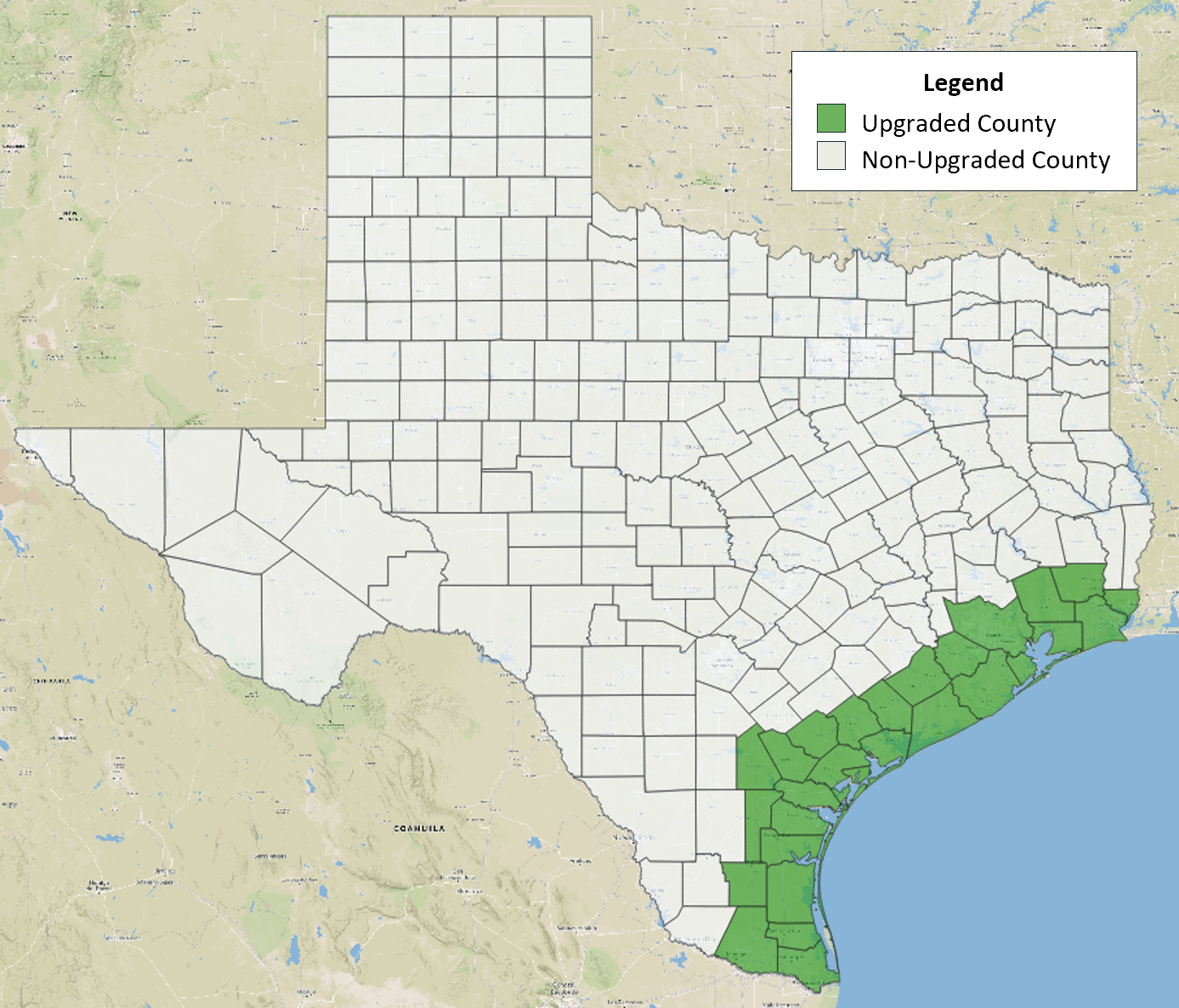
The authors test four scenarios:
Scenario 1: All homes in coastal counties were built to the most recent building code in the year they were built.
Scenario 2: Only homes built in 1995 or after were built to the then-current building code. Under this scenario, approximately 40% of the replacement cost of houses in the coastal counties was upgraded.
Scenario 3: Only homes constructed after 2000 were built to meet then-current code. This corresponds roughly to the period following major advances in hurricane engineering and building code modernization in many jurisdictions. Under this scenario, approximately 30% of the replacement cost of houses in the coastal counties was upgraded.
Scenario 4: Only the newest building stock, i.e., those constructed in or after 2012, met the most recent building code during the year they were built. Under this scenario, approximately 16% of the replacement cost was upgraded.
This table summarizes the results.
The authors then do a benefit-cost analysis, looking over 30 years with a discount rate of 4.25%. For most of the territory, the benefits exceed the costs, more in Galveston, which sits on the Gulf Coast, than for more inland areas, such as Houston. This table summarizes the results. (BCR means benefit-cost ratio. A ratio above one means benefits exceed costs. SFH means single-family home. IRC means International Residential Code.)
Authors




Related Content
The Brookings Institution is committed to quality, independence, and impact.
We are supported by a diverse array of funders. In line with our values and policies, each Brookings publication represents the sole views of its author(s).