The geography of homeowners insurance stress within metropolitan areas is more complicated—and more urban—than the conventional climate risk narrative suggests, Matthew E. Kahn and Wesley A. Miller of the University of Southern California find.
The authors construct a Local Insurance Strain Index, or LISI, using ZIP code-level data for 2018 through 2022. The index combines three measures of stress in the homeowners insurance market: affordability, measured by premiums relative to homeowner income; availability, measured by insurer nonrenewal rates; and insurer profitability, measured by paid losses relative to premiums. The data, drawn principally from the Treasury Department’s Federal Insurance Office, cover roughly 70% of U.S. ZIP Code Tabulation Areas and 87% of the population.
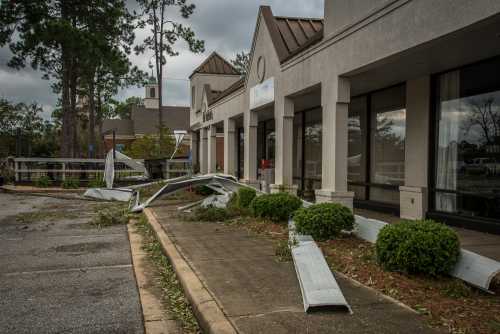
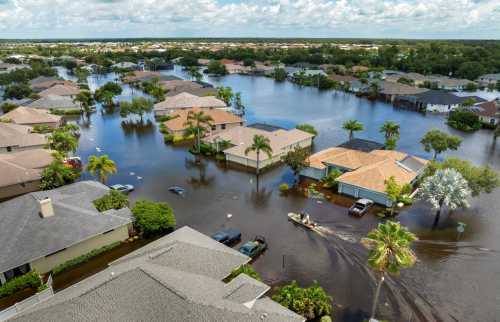
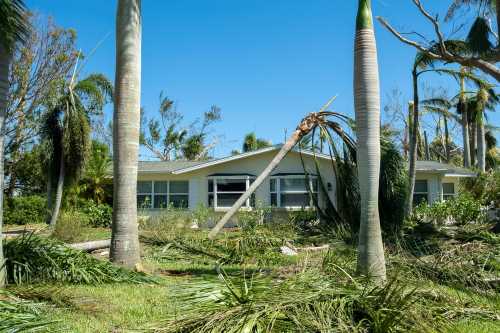
At the national level, the familiar story holds: ZIP codes exposed to hazards such as wildfires, tornadoes, and flooding tend to have higher premiums relative to income and more difficulty retaining coverage. The authors then look beyond that to compare neighborhoods within the same metropolitan area.
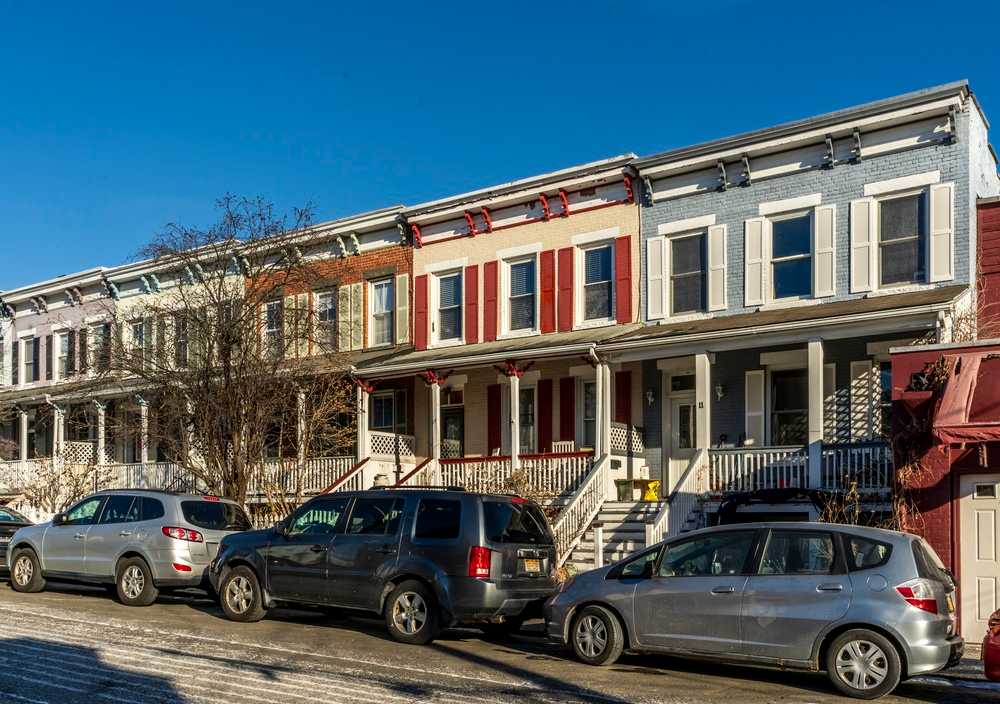
Environmental risk tends to increase as one moves away from a metropolitan area’s central business district. By contrast, homeowners insurance strain is highest in the urban core, falls sharply over the first five miles from downtown, and then levels off across suburban areas. Simply put, city homeowners often face the greatest insurance burden even though they live in the parts of metropolitan areas with the lowest measured exposure to natural hazards.
The magnitude of the urban insurance penalty is substantial. Within the same metropolitan area, homeowners in ZIP codes near the central business district face nonrenewal rates about 20% higher than those in suburban ZIP codes more than five miles from downtown. Their average homeowners insurance premiums are 39% higher. These differences are not explained by unusually high profits for insurers in city neighborhoods. The authors find that insurers’ paid-loss ratios are broadly similar in urban and suburban ZIP codes. Higher urban premiums appear to accompany higher losses, rather than reflecting rent extraction by insurers.
Why might it cost more to insure homes in relatively low-hazard urban neighborhoods? The paper points to risks that are not usually central to the climate-insurance debate. Theft and burglary are more common in dense environments. Older housing stock may produce more claims involving plumbing, appliances, and other building systems. Repairing urban homes can also be especially expensive because of higher labor and materials costs, building-code requirements, and the complexity of repairing older structures.
The institutional design of insurance markets may amplify this difference. In many disaster-prone areas, government-supported programs absorb some of the most consequential catastrophe risks. The federal National Flood Insurance Program, state windstorm pools, and state FAIR Plans can remove or reduce the private market’s exposure to flood, wind, wildfire, or other environmental perils. These arrangements are particularly important in some suburban and peripheral communities, including wildfire-exposed areas of California and coastal parts of Texas and Florida.
Urban homeowners, however, generally do not have comparable public backstops for the non-environmental risks associated with density, older buildings, crime, and high repair costs. The result is an asymmetry: Public policy often helps spread the cost of geographically concentrated catastrophe risks, while the risks that contribute to high insurance costs in cities remain largely within the private homeowners market.
The paper also examines whether local insurance strain is reflected in housing markets. The authors find strong evidence that it is. In ZIP codes for which both home price and rent data are available, a one-standard-deviation increase in insurance strain is associated with a 10.6% decline in single-family home prices and a 3.1% decline in multifamily rents. The ratio of home prices to rents falls by 7.5%.
These estimates are associations, not proof that a change in insurance strain alone causes a particular change in housing prices or rents. Insurance strain may itself reflect local conditions—such as crime, building quality, or environmental disamenities—that also affect demand for housing. Still, the pattern is consistent with two related mechanisms. First, higher premiums and less available coverage raise the cost and uncertainty of homeownership, reducing what potential buyers are willing to pay for single family homes. Second, the local conditions generating insurance claims may make an area less desirable for both owners and renters.
The relationship is especially pronounced near downtown. At the central business district, a one-standard-deviation increase in insurance strain is associated with a 19.1% decline in single-family home prices and a 6.2% decline in multifamily rents. These relationships diminish with distance from the urban core and are close to zero by roughly 30 miles from downtown. Thus, insurance stress is not only more concentrated in urban neighborhoods; its apparent housing-market consequences are concentrated there as well.
The authors’ findings reframe the homeowners insurance crisis as a within-metro phenomenon. Much public attention has focused on catastrophe risk in environmentally exposed regions, but a substantial share of homeowners insurance losses comes from non-environmental perils that concentrate in urban cores. Efforts aimed at reducing urban housing affordability burdens should account for insurance affordability and availability when considering familiar policy approaches (e.g., rate regulation, residual-market expansion, and zoning), the authors say; the cost of insuring urban property is shaped by local conditions (e.g., crime, building stock, infrastructure, liability environment) that often lie outside the conventional scope of insurance policy.
Authors


Related Content
The Brookings Institution is committed to quality, independence, and impact.
We are supported by a diverse array of funders. In line with our values and policies, each Brookings publication represents the sole views of its author(s).