




Brookings Metro Senior Fellow Joe Parilla speaks with Alma Flores, executive director of the Latino Economic Development Center, and Peter Frosch, CEO of the GREATER MSP Partnership, about how their Minnesota-based organizations responded to the crisis brought about by Operation Metro Surge, the federal immigration enforcement operation in the Minneapolis-Saint Paul area.
Transcript
FLORES: We were receiving calls in the hundreds daily of people reporting ICE agents at their business, in their neighborhoods. What really hit home and hard was when ICE SUVs appeared right in front of our office. There is a lot of fear in the community, which is why you saw the surge in mutual aid organizations around rent relief for tenants. I mean, the community has come forward and it’s been a tremendous help.
[music]
PARILLA: This is The Current part of the Brookings Podcast Network. I’m Joe Parilla, a senior fellow at Brookings Metro, and two months ago, operation Metro Surge hit the Minneapolis-St. Paul region, setting off a wave of intensive immigration enforcement that upended daily life and strained local businesses and the broader economy, particularly in neighborhoods with large immigrant populations.
But unlike past crises the region has faced, Operation Metro Surge was led by the federal government. It was a policy shock– not a natural disaster, not a global pandemic. So there was no coordinated relief coming to the Twin Cities to help get workers and small businesses back on their feet.
And in that vacuum, a new form of civic self-help has emerged in the region. Almost immediately, informal mutual aid networks formed, neighbors helping neighbors. Days into the crisis, community organizations began mobilizing more structured support for businesses and households. And over time these grassroots efforts inspired corporate and philanthropic leaders to coordinate broader approaches to stabilize the situation. And now local and state governments are deliberating their own aid packages.
The recovery from Operation Metro Surge, it’s still unfolding. But it’s worth stepping back to consider what it can teach us, because the events in Minnesota point to a larger question that may shape the coming decade. How should communities respond when economic and social change outpaces the institution’s designed to manage it?
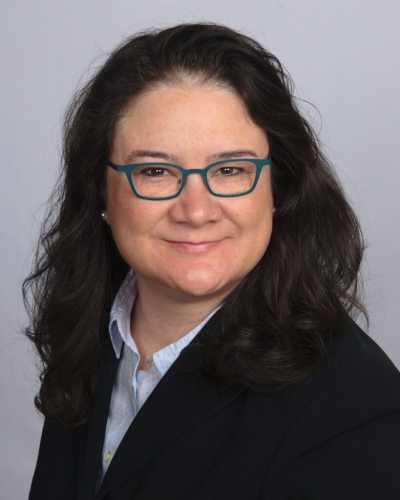
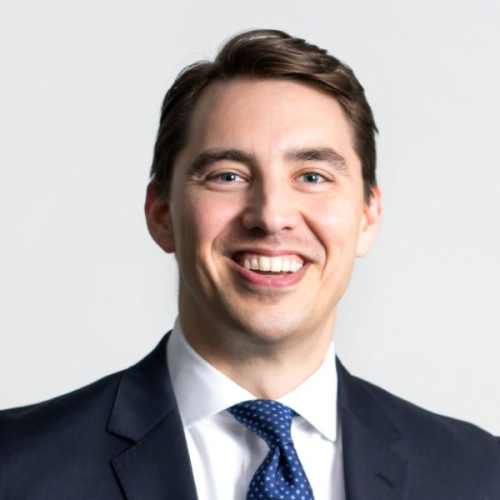
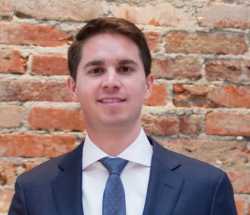
And so to explore that, I’m joined by two leaders deeply involved in the response. Alma Flores is executive director of the Latino Economic Development Center, and Peter Frosch is the CEO of the GREATER MSP Partnership.
Welcome to The Current Peter and Alma.
So, Alma, let me start with you. Take us back to those first few days this winter when Operation Metro Surge first started. What did those moments feel like for the communities and businesses that you work with?
[2:46]
FLORES: Absolutely, Joe, and thank you so much for having me be here to talk about this matter.
So, you know, we knew back in January of 2025 that there was going to be a new way of thinking. And given that I serve the Latino community and immigrant populations of Minnesota, I was prepared and mindful of possible impacts.
But we weren’t entirely prepared for December 2025 when the first wave of ICE agents came to be. They had already been in Minnesota. We had a presence, but we did not have what we now know as Operation Metro Surge in place. It was immediate. We had phone calls by the minute from clients of ours, from non-clients, just people who knew who we were and called us, looked us up. And we were receiving calls in the hundreds daily of people reporting ICE agents at their business, in their neighborhoods. In some cases, businesses themselves had been already impacted with ICE agents taking their employees.
What really hit home and hard was when ICE agents appeared, about ten SUVs appeared right in front of uh our office. They weren’t coming for LEDC, they were coming for one of our clients, which happens to be kitty-corner from us, CentroMex Grocer. And they were surrounding Henry Garnica’s store and wanted to come in. And he stood his ground.
And so that was our first exposure. We’ve had four since then. And we continue to hear from the business community about the strife they’re facing in the face of ICE and Border Patrol. We’ve had several clients have them come in to eat, pretending to be customers, and then lo and behold they come later in the day and take either an employee or the the business owner himself.
There is a lot of fear in the community, which is why you saw the surge in mutual aid organizations around rent relief for tenants, for homeowners, childcare. I mean, the community has come forward and it’s been a tremendous help.
[5:04]
PARILLA: Tell us a little bit more about LEDC. And as you reflect on that, you know, maybe talk a little bit about the Latino and Immigrant Business Emergency Relief Fund you stood up pretty quickly in the in the wake of the crisis.
[5:20]
FLORES: Absolutely Joe. So, LEDC has been in Minnesota since 2003. We started out as a place-based community development corporation on Lake Street in Minneapolis. We grew from there in 2013 when we became a certified community development financial institution, or CDFI for short.
We also have had an agricultural program, we now have rebranded as our Regenerative Agriculture Program, to serve farmers, BIPOC farmers, which are Black, indigenous people of color, and other immigrant groups who want to start a farm or have an existing farm and need additional working capital. So much of what we do is providing that, the capital as well as the technical assistance for entrepreneurs and farmers.
PARILLA: And so you were naturally positioned to support those types of businesses as they went through the disruption?
FLORES: Absolutely.
[6:15]
PARILLA: Tell us a bit about how you structured that and what the Relief Fund was trying to accomplish.
[6:20]
FLORES: So starting in Jan early January, when LEDC closes for the last two weeks of December, so when I came back from that time period off, you know, we had no idea it was still called Operation Metro Surge. And when I came back to the offices, it was still all around us.
So I immediately reached out to our East Side Funders Group. So the benefit of being on East Side St. Paul is that we have a wonderful group of funders who see the need to reduce the disparities in East Side St. Paul. So we have a funders group that we could tap into when we have issues like this one, although I don’t think they were prepared for something like this.
And at that moment I brought three of our business owners to provide a testimonial to this East Side Funders Group alongside me. And we talked about the impact on the ground to about forty funders. And at that moment, we had already about $150,000 donated at the end of that conversation, and then many, much more came through in the form of grants to LEDC to provide to the business community as an emergency relief fund.
We have raised over $800,000 to deploy. We’ve deployed $589,000 of that already. It was an instant need that I saw and wanted to make sure that people were well aware that this was not going away anytime soon, that I could see, and that we needed to act fast, by definition, an emergency.
[7:50]
PARILLA: Alma, yeah, I’m struck by the sequencing here of sort of immediate, individuals supporting each other, which probably happened instantly, almost. And then a community based organization like yours who has deep relationships with the most impacted parts of the region, and then access to philanthropy that was ready to deploy resources relatively quickly because they understood the conditions.
You know, Peter, at what point did it become clear that this situation required a broader response, particularly from the corporate and and other philanthropic investors in Minnesota? And how were the Twin Cities positioned to sort of bring all those sectors together? I’d imagine they all were sort of receiving slightly different information and coming at it from slightly different places. What what was it like for you to sort of navigate the early days of this?
[8:48]
FROSCH: Some saw it immediately, like Alma’s describing, and others, that wasn’t visible to everybody in the same way. I would say the day that Renee Good was killed, that was, I think, the moment that everybody saw, understood, realized what was going on.
In terms of response, I think the first idea is you can’t respond effectively to something you don’t understand. It didn’t fit into any category that we could name. So you mentioned natural disaster before, and I think it’s an interesting comparison. I mean, when a hurricane’s coming, you know what a hurricane is, you know how to prepare, you know what to do individually, you know whose job it is to clean up afterward. We didn’t know what this was. It happened fast; it was escalating. And so leaders are looking around saying, what’s happening, actually was kind of the main question.
And GREATER MSP is essentially a team of institutions: corporations, universities, foundations, cities, counties. And so, the first response is internal, where every entity looks within its walls and says, how is this affecting us? What are we supposed to do?
[10:04]
PARILLA: And so GREATER MSP, which was founded to sort of grow the regional economy, in that purpose, you have built a table that connects a lot of different sectors within Minnesota. And how did you feel as you looked inside your own organization, like, you just happened to engage with all these other partners, what did you think your role was initially?
[10:32]
FROSCH: Step one is trying to rapidly understand the situation. And so, bilateral was what happened first. So, you know, I’m having conversations with foundation presidents, I’m having conversations with CEOs, with university presidents. What are you seeing? What’s happening? What’s going on with you?
The next phase was leaders started huddling within their sectors. Foundation presidents got together, CEOs started talking, you know, mayors were talking. And that went on for a period of time. But since, again, what was happening in real time was still not understood, it was still escalating.
So a lot of the institutional intermediation was not happening. And all of the institutions that exist are kind of built to have a relationship with the federal government. And this did not fit that script. It really wasn’t until Alex Pretti was killed. That was the moment that changed everything, you know, across the board.
[11:34]
PARILLA: And as the impact and the duration of that impact became clearer, it sounds like that constellation of leaders and organizations began considering larger scale responses. So, one of those was this Economic Response Fund. Peter, how did the idea for that start to come together?
[11:58]
FROSCH: The first step was to find a way to deescalate the situation. So things were moving in very much the wrong direction. And in that space there is no response. There are no funds being raised.
And so by the end of January, when Tom Homan came to town, dialogue started, things fundamentally and almost immediately changed. That put the entire experience on a different course. It created some of the space day-by-day then for work to start happening, saying, what is the impact of this?
And so GREATER MSP was working with the relationships we have and the research capabilities we have to start trying to dimensionalize the economic impact, especially to small business corridors in Minneapolis and St. Paul that we knew to be significantly impacted. And right now, that conservative estimate is about $200 million of negative impact over a course of just weeks.
And then, quickly, in parallel to that, RT Rybak, former mayor of Minneapolis, now head of the Minneapolis Foundation, stood up a fund, the economic response fund, which was meant to be emergency relief, really trying to provide a tourniquet for these businesses. And private companies came together and raised $4 million over a weekend to capitalize that as a start. And that’s how that began. So that was really kind of late January and now we’re on a kind of recovery and relief path.
[13:33]
PARILLA: And Alma, on that recovery and relief path, how does LEDC connect to that economic response fund? What is your role within that?
[13:42]
FLORES: So the Emergency Relief Fund that came out of the Minneapolis Foundation with corporate donations, LEDC was one of the selected eight organizations to distribute, deploy $400,000 of those funds statewide. That was our allocation to provide that level of funding, grant funds to business communities throughout Minnesota.
We knew that we had many different partners that were providing that service in the Twin Cities. So we felt that we needed to be a partner in distributing those funds because we are a statewide community development financial institution that we were able to do that.
And since we also know that there are Latino businesses throughout Minnesota, not just in the Twin Cities or in the metro region, that we wanted to make sure from an equity standpoint that they also knew about the funding opportunity and could participate in it.
[14:37]
PARILLA: So that is one part of the response and I sort of want to pivot the conversation and just get both of your reflections on what a this has meant for you as leaders. And Peter, I’m I’m curious, you know, you mentioned GREATER MSP’s unique role. Your job is to sort of find collaboration between the corporate community, government, civic stakeholders. Right? But this is not an easy topic on which to find common ground. I mean, it’s highly polarized. And I would suspect some corporations were sort of hesitant to weigh in publicly. Many of the companies you work with, they operate nationally or globally, not just locally. How were business leaders who sort of have that global vantage point but are rooted in Minnesota, their headquarters are there often, how do they think about their role in a moment like this?
[15:29]
FROSCH: We’re talking about people who live in neighborhoods that we’re talking about. And so in some ways, in that respect, they were in no better position than anyone else to understand what to do, what was happening.
I mean, some of what was happening was policy and some of it was, I mean, there’s a lot of emotion, a lot of human stuff going on. And a sense of powerlessness I think was something that I’ve heard and saw across leaders in all sectors. And I think that that sense of powerlessness was really difficult for everyone to manage.
And so there was this, you know, someone should do something, right? So everyone had ideas about what everyone should be doing, and no one was really sure what they had the ability to do. Things were happening with the CEOs. They started working behind the scenes together for several weeks. It was starting in early January, and there were teams that were set up and there were dialogues that were then established with high-ranking state officials and federal officials.
And then the first public comments came after Alex Pretti was killed. And the aim was to be strategic and try to move the whole situation on a path of deescalation because it was in that moment headed in the wrong direction.
I mean, it was like a story every day in the paper about the role of CEOs and what they were saying and not saying. And that became kind of, like, a a side industry and and everything that was happening. And we’re going to keep talking about that I think for a long time.
But mayors and foundation presidents and everyone that was in leadership I think had their own version of that struggle. And everyone, I think, was left feeling leaving whoever they were helping or serving unsatisfied because their institutions weren’t built to respond to a situation like this.
[17:16]
PARILLA: So maybe the the final thing I’d ask you both to comment on is just what advice you would give to your peers in other communities across the country that you would want them to know if they experienced what you experienced? And I think that that may not be the specifics of Operation Metro Surge, but a sort of acute shock to a place that they weren’t quite prepared to deal with. What’s a leadership lesson you would leave to your peers? And Alma, I’ll start with you.
[17:50]
FLORES: Sure. I think, you know, I’ve worked for government before I became the executive director of LEDC. I had worked in local government for about 21 years, so I knew what cities can do, what cities can’t do. And much of the work that they can’t do is do what we were able to do at LEDC, which was to do an implementation that was extremely quick. Within four weeks, we had deployed over $500,000 in grants, right? from the beginning to the end.
So I would say to leaders, whether you’re in local government, county government, or within a nonprofit organization, that you need to make sure that you are in touch with your communities that you serve. If it’s broader, you know, work with your city governments toward that effort. Make sure that you are connected to comprehensive economic development strategies at that regional level, connected at the comprehensive plan level with city government so that they understand who you are and the role you play in the community toward community revitalization efforts, economic revitalization efforts, commercial corridor, Main Street. If it’s focused on economic development or affordable housing, just be connected to your local governments in that way.
And then similarly for nonprofit organizations, get to know the players at the city and county, and voice the needs of the communities you serve so that they can come to you when these things– hopefully this is the only time this will happen in this, you know, throughout this presidency.
But I was working on a panel for the NCRC conference on this is coming to your city next, and how to develop a resiliency plan. That’s really what we need now, are resiliency plans across the board, across sectors, across disciplines to understand that this may come back and if it’s coming to you, this is how you need to prepare. You need to get a resiliency plan together, a strategic plan that can address these types of scenarios.
I think a lot of nonprofits don’t do enough scenario planning for themselves to understand “what if” scenarios that could potentially play out in politically charged environments. That it’s, it’s critical to have those things in place so that you can activate. People ask me, how did I stay calm throughout this? It was because I had a resiliency plan and that’s why I felt calm even though it was very disheartening, very frustrating to have this happen right here in our backyard to our community.
[20:18]
PARILLA: Thank you Alma for that, you know, reflection. I heard strategy and planning, experience, connection, trust with different types of institutions. That all resonates a lot. Peter, I’m curious just what lessons you would offer.
[20:34]
FROSCH: There were no institutional winners, I don’t think, in Minnesota or nationally in this experience. But the people of Minnesota were incredible. I mean, they’re the heroes of this. And what was happening in thousands of different places in thousands of different ways and continues to happen is not expected, no one should have to do it. But the way that that happened so organically and so rapidly was really powerful.
And it actually has created a sense of, I think, unity and, like, a spirit here as a result of this that’s extremely positive. And this is something we’re going to be able to build and draw on going forward. So, whatever the culture of your place is is is what you’re going to be, you know, working with in minute one.
I think the other thing that this was not a Minnesota experience, this was an American experience, and I think this was a 21st century experience. There have been and will continue to be, I think, in our professional lives shocks like this. And I think we have to, we are learning how to respond and rebuild and build at the same time. Because you can’t lose your focus on the future. You can’t stop. You have to find ways to keep going.
And we have to adapt, I think, not only our institutions, but our whole way of working and our mindsets so we can move fast. Because speed is the answer. I mean, that’s where effectiveness will come from. And I think that having more of an innovation mindset is essential for people who are leading even in big institutions.
This is not a programmatic issue; this is not an administrative issue. This is a Apollo 13 innovation moment. It’s like you shake the bag out on the table and you get your team together and say, what are we going to do? And I think that we’re just, that’s our mode of operating, and I think that’s our mindset going forward.
[22:30]
PARILLA: Yeah, what I just heard from you both, it it has me reflecting on how our work at Brookings Metro can better support communities and leaders responding to what I agree feels like an accelerating pace of change– economic, technological, environmental, political.
And the response to Operation Metro Surge, like any crisis response, was far from perfect. But what stands out to me is most of all is the humanity and leadership that has been on display in Minnesota over the past two months. I think it’s a real guiding light for the country as a whole.
And our country faces no shortage of challenges, but, I don’t know, conversations like this, they remind me that we also have no shortage of leaders that are willing to confront them. And they just need mechanisms to do that work together at a different pace and a different scale to make the change in the country that we all want to see.
[music]
So my thanks to Peter and Alma for sharing their experiences and my thanks to you for listening. I’m Joe Parilla and this is The Current.
Participants
More information:
- Listen to The Current on Apple, Spotify, YouTube, or wherever you like to get podcasts.
- Learn about other Brookings podcasts from the Brookings Podcast Network.
- Sign up for the podcasts newsletter for occasional updates on featured episodes and new shows.
- Send feedback email to [email protected].
The Brookings Institution is committed to quality, independence, and impact.
We are supported by a diverse array of funders. In line with our values and policies, each Brookings publication represents the sole views of its author(s).

Commentary
PodcastHow Minneapolis-Saint Paul community leaders responded to Operation Metro Surge
Listen on
The Brookings Current
March 19, 2026