Elections have always been beset by dirty tricks—a topic to which we devoted an entire book in 2019. The term was made infamous during the Watergate scandal, and in the digital age, efforts to confuse voters are easier to carry out than ever. Some election tricks are used time and time again, and informed voters should be on the lookout for them in the coming weeks. In this piece, we will present common strategies deployed to confuse voters, as well as illustrate important procedural safeguards designed to ensure that every eligible vote is counted fairly and accurately.
Misleading voters on dates and times
AI makes it easy for bad actors to send out convincing but fake notices announcing election date changes, for example by attributing them to a weather event. However, election dates are rarely changed. In all of American history, a presidential election has never been delayed—including during wars. The 9/11 attack took place during a primary election day for New York City mayor and other city officers; a special act of the legislature moved quickly to conduct it on a later day.
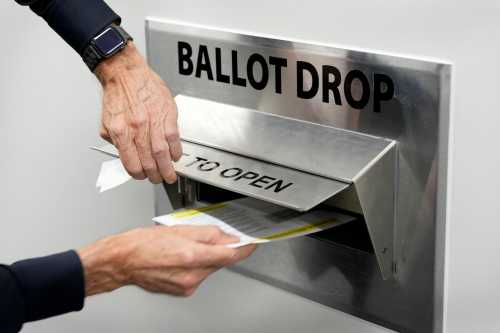
In 2018, Rep. Lee Zeldin (R-N.Y.) was running for reelection in New York’s First Congressional District amid what turned out to be a “blue wave.” His campaign sent out flyers telling voters of the First Congressional District to postmark their absentee ballots by Nov. 6. However, there was a problem: The actual deadline was Nov. 5, and under state law, ballots postmarked after that date would not be counted. Perry Gershon, Zeldin’s Democratic opponent, jumped on the error, alleging that it targeted college-age and minority voters, and called for a federal investigation. The Zeldin campaign provided a statement from its printer alleging the misinformation was not intentional but rather a simple printing error. Some observers were skeptical: The Zeldin campaign had made the same “mistake” in 2016, fueling suspicion that this was a deliberate effort to mislead voters. Zeldin won his 2018 race with about 51.5% of the vote—a much narrower result than his 16-point victory in 2016.
Claiming another action replaces voting
Republican Wisconsin Governor Scott Walker was elected in November 2010 on a conservative platform that included repealing collective bargaining rights for state employees. By 2012, state employees, their unions, and other labor unions were so incensed by the move that they mounted a successful recall petition, triggering a new election. The vote was set for June 5, 2012, between Walker and Democrat Tom Barrett. As Election Day approached, voters reported receiving robocalls telling them that if they had signed the recall petition, they were not required to cast their ballots in the recall election. Walker won the race with 53% of the vote.
Recruiting spoiler candidates
Third-party candidates rarely win American elections and are often feared as potential “spoilers.” Most races are run without a third-party candidate on the ballot.
But in 2010, when a Republican operative in Arizona recruited a slate of third-party candidates to run for three offices, a lawyer representing Democrats described the effort as “a cynical manipulation of the process,” intended to siphon off votes from their nominees. Steve May signed up people he had met on Mill Avenue in Tempe, several of them homeless or marginally housed and none of them with any political background. One, a tarot card reader with less than a dollar to his name, was signed up to run for state treasurer. Another, a pedicab driver who went by “Grandpa,” was recruited to run for the state Senate. And finally, a young street musician was recruited to run for a seat on the Arizona Corporation Commission (the candidate eventually left the race). Democrats were furious, as were Green Party officials, who disavowed the candidates. Democrats filed a formal complaint but failed to get the candidates off the ballot.
Fielding candidates with the same name
Dirty tricks don’t belong to the digital age, nor do they belong to one political party. John F. Kennedy made his first run for office in the 1946 Democratic primary for 11th Congressional District of Massachusetts. The two dominant ethnic groups in his district were people of Irish and Italian origin. Ethnic voting, the tendency to support candidates from one’s own ethnic community, has always been part of American politics and was especially strong in that era.
One of Kennedy’s opponents was an Italian-American Boston city councilor named Joe Russo. Kennedy’s father, Joe, set about to confuse voters by allegedly paying another Joe Russo, a janitor with no political experience, to run on the primary ballot as well—in hopes of splitting the Italian vote. As it turned out, it wasn’t necessary to get the other Joe Russo into the race—Kennedy won the primary by a large margin.
In this year’s Alaska Senate race, two Dan Sullivans are running against former Rep. Mary Peltola (D-Alaska). One of them, Dan S. Sullivan, is the incumbent senator. The other, Dan J. Sullivan, is a retired high school teacher with little background in government or public service. The Republican Party accused Dan J. of being put up by the Peltola campaign to siphon votes off of the incumbent senator, calling his campaign a “sham” and suing him. Peltola denied any involvement in getting Dan J. to run. On Oct. 23, 11 days before this year’s midterm elections, the Justice Department moved to block certification of the race if the incumbent loses, in order to “not certify any election result that may be impacted by voter confusion.”
'Swatting' on Election Day
“Swatting” refers to calling in a fake emergency (for instance, a bomb threat or an active shooter situation) to law enforcement, causing them to rush to the scene. During the 2025 New Jersey gubernatorial election, seven places received bomb threats. Although they were all hoaxes, they did cause brief shutdowns.
Needless to say, when called in, law enforcement will often immediately clear the area to ascertain the presence of a threat. This might frighten people away and prevent many from returning even once the area is deemed safe. An emergency call about an incident at a polling place has the potential to spread like wildfire on social media and might lead some voters to decide to simply stay away from polling places altogether.
Similarly, the presence of uniformed men dressed in riot gear and holding weapons might create a sense of danger even in the absence of any threats. This is why the Trump administration’s threats to deploy ICE at polling places are causing such an uproar, and why groups led by the NAACP are suing preemptively to keep ICE away.
Once votes have been cast, how can the public be sure that the count will be accurate? In our election system, many procedural safeguards exist to protect the security and safety of ballot counting. Here are some of the most relevant.
Ballots have a chain of custody
The term “chain of custody” is usually heard in the context of evidence in a criminal trial. It is the process dictated by law to make sure that evidence is protected from tampering at every stage of the legal process.
In election law, states define a “chain of custody” that details what must happen to ballots at every stage: from printing and distribution to polling places, to transport to a tabulating center, to retention for any recount, and finally archiving. While the details vary from state to state, every state has its own chain of custody. This explains why it is so difficult to inject fake ballots, premarked for one candidate or another, into the election process. In 2021, conspiracy theories circulated alleging that tens of thousands of counterfeit ballots had been shipped from Asia to Maricopa County, Arizona, to benefit Joe Biden. A Republican-led review of the 2020 election even examined ballot paper for bamboo fibers in an attempt to investigate the allegation. Multiple audits and investigations ultimately found no evidence of widespread election fraud.
Most voting systems aren’t connected to the internet
Most election machines in the United States today are “air-gapped,” meaning that they are isolated from the internet and thus hard to penetrate. In addition, most election machines now issue paper ballots, making it possible to check the machine results against a sample of paper results—known as a post-election audit or a risk-limiting audit. So even if a machine were compromised, the errors would likely show up in one of these audits.
Most states restrict access to the rooms where the machines are stored. However, bad actors could still manage to get in and tamper with the machines themselves, so safeguarding machines and having post-election audits remains critical.
Vote totals shift as different areas report
A great deal of paranoia has resulted from the “red mirage” or the “blue shift.” They refer to the fact that small rural counties, which have recently tended to vote Republican, are usually able to report results relatively quickly. In contrast, large urban areas frequently have long lines—delaying the closing of the polls—and many more ballots to count. These places have recently tended to vote Democratic.
Early returns sometimes look like a Republican win, but this discrepancy in how fast votes are counted across rural and urban areas is key. The fact that one candidate led early in the evening and went on to lose an election is not an indicator of any malfeasance.
Another complicating factor is when a state decides to count mail-in ballots. Recently, due to President Trump’s campaign against mail-in ballots, they have tended to be more Democratic than Republican. Some states count them early and release them early; others release them only after the in-person ballots have been counted. And some states count mail-in ballots that arrive a certain number of days after Election Day.
Party representatives can watch the count
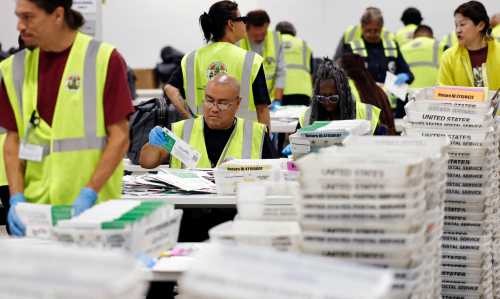
Most states have statutes governing the participation of partisan poll watchers at each point in the election cycle—including the tabulation room. However, these are not usually required; instead, it is up to the political parties or the candidates to designate their representatives to election officials prior to the election. Most state statutes outline rules that the partisan observers must abide by, such as what distance they need to keep from the people doing the work.
None of these measures are foolproof. A campaign of fear and confusion directed at minority voters can keep legitimate citizens from voting; and election deniers who have, since 2020, gotten jobs in election administration can operate from the inside to undermine the final count. But often forgotten is the fact that both major parties mobilize volunteers and sophisticated attorneys to watch the polls and the count. Unless these observers are asleep at the switch, attempts to rig an election will likely be exposed and litigated.
Related Content

Authors


The Brookings Institution is committed to quality, independence, and impact.
We are supported by a diverse array of funders. In line with our values and policies, each Brookings publication represents the sole views of its author(s).
Commentary
How dirty tricks harm, and institutional safeguards protect, the integrity of US elections
October 28, 2026