The Smithsonian Institution, alongside the Kennedy Center and agencies such as the National Endowment for the Arts (NEA), the National Endowment for the Humanities (NEH), and the Institute of Museum and Library Services (IMLS), play an essential role in preserving a functioning democracy. They safeguard national history, support arts education, and ensure that arts and culture remain accessible to all Americans. However, these cultural institutions have become a flashpoint for political power struggles.
On Sept. 8, 2026, Secretary Lonnie Bunch, the Smithsonian Institution’s first Black secretary, announced his retirement following a year of intense White House scrutiny. That pressure traces back to March 2025, when the Smithsonian was targeted by an executive order, “Restoring Truth and Sanity to American History,” to remove what the administration called “improper ideology” from its museums. The Kennedy Center also faces unprecedented turmoil.
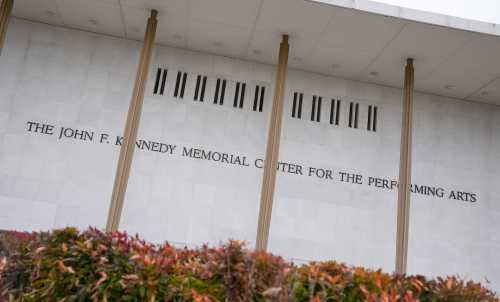
After President Trump became chairman of the center in 2025 and a federal judge repeatedly blocked his name from being added to the building, the board—previously reconstituted by Trump—voted on Sept. 15, 2026, to close the center immediately. Trump vowed to cancel the upcoming renovations unless the court overrules its decision and allows his name to be reinstated on the building, also leaving its resident National Symphony Orchestra in deep financial crisis. In the meantime, the administration’s proposed fiscal year 2027 budget seeks to permanently dismantle the NEA, the NEH, and the IMLS, a move that could force hundreds of small, local arts organizations to cease operating entirely.
This fight over who controls America’s cultural institutions illustrates the quiet but significant role the arts play in shaping democracy, especially when the artists or subject matter elevates marginalized communities who may struggle for attention otherwise. Artforms such as film and music don’t just reflect the political environment, they actively shape and amplify it.
Film and Hollywood
Understanding the importance of cultural expression and its deep connection to policymaking helps explain why democracy and civic engagement extend beyond the ballot box. Programs such as the Kennedy Center Honors and the film collections within the National Museum of African American History and Culture elevate film as an influential form of expression. Films share compelling stories, delivering complex themes and shaping narratives for a global audience. This influence makes clear why films often fall victim to politicization.
While film and Hollywood have historically perpetuated stereotypes of minority and underrepresented groups, they also function as a powerful platform for civil rights activism, movement building, and even legislative reform. The pattern goes back to the early 20th century. In 1915, when “The Birth of a Nation” premiered, depicting Black Americans through explicit racist tropes and praising the Ku Klux Klan, it sparked nationwide protests led by the newly formed NAACP. Even as film screenings continued, the backlash did not abate. It laid the groundwork for one of the earliest legislative responses to on-screen racism, Illinois’ 1917 film censorship law, sponsored by Black state legislator Robert Jackson, which prohibited films from portraying any race as criminal or immoral.
Decades later, a similar confrontation played out at the Academy Awards, founded by the same Hollywood film industry. In 1973, Sacheen Littlefeather took the stage to decline Marlon Brando’s Oscar award on the actor’s behalf, using the moment to protest Hollywood’s treatment and depiction of Native Americans and drawing national attention to the events at Wounded Knee. To this day, racial stereotyping and insensitivity around racial issues continue in film and media. In the past decade alone, there have been a string of racist corporate advertisements that include: a Target Halloween costume referencing blackface, a 2018 H&M ad showing a Black child wearing a shirt with the slogan “coolest monkey in the jungle,” and controversies involving Dove and Pepsi’s Mountain Dew.
By the 1960s, Hollywood started incorporating an agenda to advance civil rights in response to the backlash against displays of racial stereotypes and mistreatment of artists from underrepresented communities. During the height of the Civil Rights Movement, the films “To Kill a Mockingbird” (1962) and “In the Heat of the Night” (1967) openly addressed race and inequality, bringing those issues to audiences who might never have encountered them otherwise.
Throughout the years, filmmakers also used this strategy of dramatizing social issues on screen to highlight other underrepresented communities. The study “Deinstitutionalization Through Optimism: The Community Mental Health Act of 1963,” examined the portrayal of mental health patients on screen and found that films such as “The Snake Pit,” “One Flew Over the Cuckoo’s Nest,” and the documentary “Titicut Follies” had built public awareness over decades, which eventually led to federal policy. In 1963, President John F. Kennedy signed the Community Mental Health Act, the same year he delivered his famous televised civil rights address. These examples illustrate how his administration successfully translated years of cultural pressure into federal policy.
Music
Music has also historically amplified the voices of marginalized communities, enabling artists to express their personal and community struggles to a wider audience. In 1967, Aretha Franklin, renowned singer and civil and women’s rights advocate, transformed Ottis Redding’s song “Respect” into an anthem for civil rights and the feminist movement. Nina Simone wrote the “Mississippi Goddam” in 1963 in response to the 16th Street Baptist Church bombing in Birmingham, Alabama. She weaponized music itself to tell the story of oppression that Black communities faced in the segregated South.
Bob Dylan channeled the same urgency into folk music in the early 1960s and popularized protest songs that are championed to this day. Similarly, scholar Reiland Rabaka argues in his book “The hip hop movement” that hip-hop and rap, as well as spirituals, blues, jazz, R&B, and soul, are inexorably linked to a specific era in Black history and civil rights activism. The politically fueled work of spoken-word poets like Harlem’s The Last Poets and Gil Scott-Heron—whose “The Revolution Will Not Be Televised” “resembles rap before it got the name”—set the stage for hip-hop’s tradition of social commentary. Artists such as Kendrick Lamar, who performed “To Pimp a Butterfly” with the National Symphony Orchestra at the Kennedy Center, carry that same tradition forward.
Alongside movements for racial and social justice, music has given voice to America’s working class and to communities frequently left out of national political discourse. Pete Seeger, a folk singer and songwriter, dedicated his career to using music to bring awareness to working-class struggles, and he helped popularize the song “We Shall Overcome,” which became the anthem of the Civil Rights Movement. That thread of protest music continued for years, evolving to meet the moment: Public Enemy’s “Fight the Power” and N.W.A’s “F*** tha Police” confronted systematic racism and policing in Black communities, while decades later, Beyoncé and Kendrick Lamar dedicated their songs “Black Parade” and “Alright” to the Black Lives Matter movement.
In 1975, Bruce Springsteen’s “Born to Run” spoke to working-class Americans as they coped with inflation, factory closures, and lingering trauma from the Vietnam War. Inspired by his upbringing, Springsteen’s decades-long discography cemented his legacy as one of American music’s most enduring chroniclers of working-class hardships. Dolly Parton, who was born and raised in poverty in Appalachia, used her music and philanthropic work to support working-class communities. She founded the Dollywood Foundation in 1988 and later launched Dolly Parton’s Imagination Library, which has gifted over 300 million free books to children up to age 5 around the world. Together, these musicians show how the power of collective expression through art can give voice to an underrepresented socioeconomic class on the national political stage.
Policy recommendations
Protecting cultural institutions in the United States from political power struggles will require both financial and structural solutions.
Congress has previously rejected NEA defunding amendments on a bipartisan basis, and the current proposed elimination of the NEA, the NEH, and the IMLS in fiscal year 2027 will still require congressional approval. This gives legislators leverage based on precedent to set stable funding levels regardless of the president’s budget proposal.
According to the National Assembly of State Arts Agencies, 29 states have already increased their own arts funding in fiscal year 2026, while federal funding has been significantly reduced. Rather than treating state increases as a one-time fix, states and the federal government should strengthen the existing state-federal partnership—with expanding matching commitments on both sides—so these cultural institutions are less dependent on shifts in government.
Another solution can be found in international funding models. In the United Kingdom, portions of funding for public arts are distributed through independent institutions such as the Arts Council England. The U.K. government has affirmed that this arms-length structure is vital to its democracy, as it keeps funding decisions outside political interference. The U.S. can adopt a similar structure for its own cultural institutions, with fixed board terms to shield leadership from turnover with each new administration.
Cultural expression has repeatedly given voice to marginalized and underrepresented communities, and today’s power struggle over the Smithsonian Institution, the Kennedy Center, and federal arts programs shows there’s more work to do.
Related Content
Authors


The Brookings Institution is committed to quality, independence, and impact.
We are supported by a diverse array of funders. In line with our values and policies, each Brookings publication represents the sole views of its author(s).

Commentary
How cultural expression shapes policymaking and why it matters for democracy
October 1, 2026