This piece was corrected on Aug. 26, 2026, to clarify that the National Digital Inclusion Alliance (NDIA) did not agree to the removal of racial and ethnic minority covered populations from the Digital Equity Act.
The United States is a global technology leader, yet millions of Americans lack the internet access, devices, or skills to benefit from its technological capabilities or participate fully in the digital economy. Recognizing this divide in 2021, Congress passed the largest federal investment in broadband in U.S. history, encompassing both the Broadband, Equity, Access, and Deployment (BEAD) Program and the Digital Equity Act. Together, these measures aim to expand broadband access and infrastructure while ensuring that people have the skills and resources needed to adopt and use these technologies.
But the two have come under increased scrutiny during the second Trump administration, which in May 2025 moved to terminate the Digital Equity Act’s grant programs, arguing that the programs’ considerations of certain historically “underserved” ethnic and racial groups were unconstitutional. As a result, the National Digital Inclusion Alliance (NDIA) filed a lawsuit seeking to restore the program. During litigation, government attorneys argued that the program should only be allowed to continue if the act’s race-related provisions were removed from the statute. And on July 15, a judge of the U.S. District Court for the District of Columbia agreed, claiming that the statute’s racial provisions were unconstitutional and should be severed from the act as a whole.
But race cannot and should not be ignored in digital access conversations, and the courts’ striking of racial provisions undermines the act’s recognition of key barriers to broadband access and reasons for digital exclusion among racial and ethnic groups.
What’s in the act
The Digital Equity Act, which complements the $42.45 billion BEAD Program, established a $2.75 billion investment to address barriers to broadband adoption. Regulated by the National Telecommunications and Information Administration (NTIA), the program established major grant programs helping states, local governments, Tribal entities, and community organizations expand digital literacy, improve access to devices, and support digital navigator programs for populations facing persistent barriers to connectivity. The act specifically established the State Digital Equity Capacity Grant Program, which provides formula funding to states based on various factors such as broadband availability, demographics, and covered populations, and the Digital Equity Competitive Grant Program, which supports organizations implementing community-based digital inclusion initiatives.
Despite receiving bipartisan support upon its passage, the act has become the subject of significant legal and political debate. In May 2025, the Trump administration terminated the act’s grant programs, arguing that the identification of certain racial and ethnic groups as “covered populations” violated constitutional principles and amounted to unlawful racial preferences by making funding decisions based on race. This push is in line with the Trump administration’s persistent attempts to eliminate language and policies related to diversity, equity, and inclusion.
The NDIA’s original filing in October 2025 sought to restore the terminated funds under the act’s Digital Equity Competitive Grant Program. The organization argued that the administration lacks the authority to unilaterally terminate a congressionally authorized program that supports “shovel-ready” digital inclusion initiatives that would serve thousands of individuals across the country. The lawsuit seeks to compel the administration to resume implementation of the program. On June 24, attorneys representing the Department of Commerce argued that, rather than invalidating the Digital Equity Act in its entirety, the statutory provisions identifying certain racial and ethnic groups as covered populations should be severed from the law if they are found unconstitutional. Under this interpretation, the remainder of the act, including many of its grant programs and digital inclusion initiatives, could continue as long as they do not explicitly consider race.
On July 15, 2026, John D. Bates, a judge of the U.S. District Court for the District of Columbia, agreed with the Department of Commerce’s interpretation, writing, “… the government contends that the Competitive Grant Program is itself unconstitutional because the enabling statute authorizes funds to be allocated based on the race or ethnic status of the people served by grant awardees. On that issue, the government is correct.” Judge Bates contends that the grant program can continue if the Act’s racial and ethnic provisions are removed.
In a joint status report filed on Aug. 3, the Department of Commerce agreed to reinstate the Digital Equity Act without racial provisions, aiming to reopen funding applications for December 2026.
The digital divide was never only geographic
Public discussions on broadband policy often focus on geography. For years, policymakers have concentrated on expanding broadband infrastructure to unserved and underserved rural areas where internet access is either unavailable or unreliable. However, the digital divide was never solely an infrastructure problem, and broadband availability alone does not guarantee adoption or meaningful use. Even in communities where broadband service is available, many households remain disconnected because of affordability issues, limited access to devices, language and accessibility barriers, disabilities, or insufficient digital skills. These challenges can be found in rural, urban, and suburban areas across the country.
Further, barriers to digital access are not distributed evenly. They overlay longstanding disproportionate investment in marginalized communities and broader social and economic inequities that have historically impacted communities of color, Tribal communities, and low-income households. For example, research has consistently found that racial disparities in broadband adoption persist even when accounting for income. A 2016 study found that among households earning less than $20,000 annually, 58% of white households had home internet access compared to just 51% of Hispanic households and 50% of Black households. Lower-income households and communities of color were also substantially more likely to rely exclusively on mobile broadband rather than fixed home internet, which limits the quality and reliability of their connectivity.
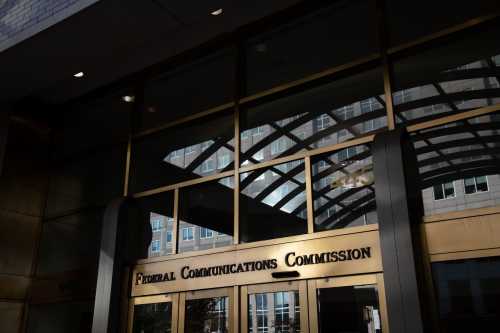
Advocates and researchers have documented this type of “digital redlining,” in which internet providers have invested less in lower-income and predominantly marginalized neighborhoods, while offering slower service, fewer choices, or less favorable pricing than they do in wealthier communities. The FCC recognized these disparities, citing that poorer, less-white neighborhoods often received lower broadband investment and worse internet offerings than higher-income, predominantly white communities—realities that have been called for dismissal by the current administration.
The Digital Equity Act did embrace race as a factor for digital exclusion, not because race itself determines digital access, but because it is closely intertwined with many other structural factors that determine economic inclusion. Decades of racial segregation, unequal educational opportunities, disparities in household wealth, and historic patterns of public and private investment have contributed to persistent differences in broadband adoption among racial and ethnic groups. The act’s “covered populations” definition also includes a range of impacted populations beyond racial groups, including older adults, incarcerated individuals, veterans, people with disabilities, rural residents, individuals who face a language barrier, and those living in households with incomes at or below 150% of the poverty level. Acknowledging and addressing how these communities experience barriers to connectivity was the purpose of the act, and dismissing the ability to address their lived experiences might diminish the importance of their circumstances. More importantly, the act sought to tailor resources where they were most needed rather than assuming a one-size-fits-all approach. Without addressing the social, economic, and historical factors that shape broadband adoption, the U.S. risks investing billions of dollars in networks, hardware, and training that might not work to fully close the digital divide.
This implicates more than broadband
The consequences of weakening digital inclusion efforts also extend far beyond broadband adoption. Patients increasingly rely on broadband for scheduling appointments, accessing telehealth services, reviewing medical records, and communicating with medical providers. Job seekers use it to search and apply for employment, complete workforce training, and earn professional certification, while students depend on it to complete coursework and access educational resources. Individuals without reliable internet access or the digital skills to navigate these systems face barriers that can directly affect their economic security, health outcomes, and overall well-being.
As artificial intelligence (AI) and other digital technologies become increasingly embedded in these sectors, existing disparities will likely deepen. Without sustained investments in broadband adoption and digital literacy, many communities will remain excluded from the essential services and opportunities that increasingly define full participation in modern society.
The future of the Digital Equity Act
The constitutional questions surrounding the Digital Equity Act will ultimately be resolved by the courts. The broader policy concern is whether a digital inclusion strategy that does not account for race can achieve the same outcomes as one that recognizes race as one of several factors contributing to digital exclusion.
Some members of Congress have joined the NDIA to fight the Trump administration’s proposed modifications to the act. On June 30, Reps. Nanette Barragán (D-Calif.) and Jennifer McClellan (D-Va.) questioned NTIA administrator Arielle Roth about the Commerce Department’s push to sever race as a “covered population,” though Roth committed to enacting the provisions if they are maintained. By eliminating race as a considered factor in barriers to technology access, the U.S. courts are leaning toward an enforced “colorblind Constitution,” which fundamentally limits the government’s ability to monitor, remedy, and explicitly prevent racial inequality, with profound implications for civil rights and liberty protections.
Ultimately, the act represents competing visions of digital equity and the federal government’s role in achieving it. As the United States seeks to strengthen its technological leadership, closing the digital divide will require policies that recognize and respond to the full range of barriers, including racial and ethnic inequalities.
Related Content


Authors

The Brookings Institution is committed to quality, independence, and impact.
We are supported by a diverse array of funders. In line with our values and policies, each Brookings publication represents the sole views of its author(s).



Commentary
Cutting race considerations from the Digital Equity Act undermines its aim
August 25, 2026