Students walking into an American public school today might not immediately realize their movements are being monitored. Hallway cameras are familiar enough, but schools are increasingly deploying artificial intelligence tools that go far beyond a lens pointed at a corridor.
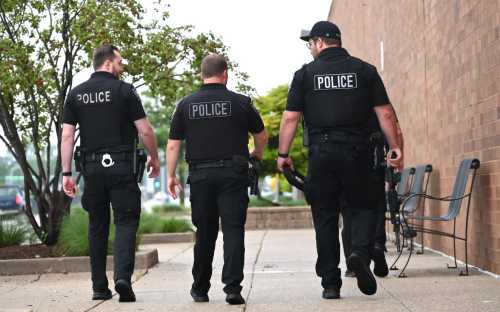
In 2025, a high schooler in Baltimore was carrying a bag of chips that was flagged by AI software as a potential weapon. A school resource officer reviewed the alert and determined there was no threat, but by that point the principal had already called the police. Officers pointed guns at 16-year-old Taki Allen, made him get on his knees, and handcuffed him. Allen later shared, “The first thing I was wondering was, was I about to die?”
Taki’s experience captures the concern shared by many students, parents, and teachers about the presence of advanced technologies in schools, especially technologies that are not backed by evidence of being reliable and valid. Overall, schools and school districts face the difficult task of trying to ensure safety without technological overreach. This piece aims to provide some middle ground to ensure all stakeholders, including students, can embrace transparency and trust regarding technology in schools.
How digital surveillance is being used in schools
The use of digital surveillance in schools includes a wide range of practices, from using camera systems to detect potential threats and weapons to analyzing students’ online activity and personal data.
In some American schools, administrators have installed bathroom monitoring devices that capture audio to listen for signs of distress. As one Forbes article reports, Motorola, which manufactures the listening devices, claims that the devices only flag sounds of concern in real time, such as gunshots or calls for help, and do not store recorded audio. However, one student was able to hack his school’s device and turn it into a real-time audio eavesdropping bug, disable its detection capabilities, and create fake alerts for gunshots. Motorola addressed the security vulnerability with an update, but the incident raises serious questions about where the line between safety and surveillance is drawn.
One Florida school district began sharing student grade and attendance data with the local police department to generate a list of “potential future criminals.” Students who had done nothing wrong were flagged by an algorithm, with their academic and attendance records used to construct a risk score estimating whether the system viewed them as “at-risk youth” who were “destined to a life of crime.” After a coalition of 30 local, state-based, and national organizations mobilized opposition to the program, the local school board ended the data-sharing agreement that made this system possible.
Uneven adoption and systemic bias
It’s important to note that these systems are not deployed evenly across schools. While many affluent schools have adopted surveillance technologies, emerging research suggests that these tools are more prevalent in schools serving historically marginalized student populations. A 2025 study found that schools were more likely to possess surveillance technologies if they were large, urban high schools with higher proportions of racial/ethnic minority and low-income students. As a result, students of color are more likely to be exposed to digital surveillance.
This unequal exposure is especially important because predictive policing tools like those used in Florida often create a “self-fulfilling prophecy.” Identifying children as likely “future criminals” can change how police interact with them. These interactions with police officers may then prompt a child’s distrust of police, disassociation from society, and an increased inclination toward the very criminal behavior the system seeks to prevent. Additionally, because these algorithms are often trained on historical data that reflect existing systemic biases, students of color can disproportionately be flagged as “high risk” and subjected to heightened police intervention. Together, these factors increase the risk that students of color become caught in a cycle of intensified surveillance, police contact, and disengagement.
Balancing school safety and trust
None of this is to say that school safety isn’t a serious concern, especially for Black and brown students who are more likely to worry about their safety compared to their peers. A recent survey of students found that, of secondary students, only 37% of Black students and 40% of Hispanic students agree that they are safe from violence at school, compared to 53% of white students.
These sentiments highlight that increased school surveillance efforts are often driven by genuine concerns about sexual assault, school shootings, bullying, and other forms of on-campus violence. In the wake of repeated tragedies, administrators face immense pressure to take preventative action, and surveillance companies have been quick to offer technological solutions. Many of these digital tools emerged as part of a response to school shootings. AI gun detection software ZeroEyes was “founded in 2018 following the Marjory Stoneman Douglas school active shooter incident,” with the goal of preventing similar attacks.
However, many students don’t feel like they have an adult at school that they can turn to when they’re upset, and the increased use of surveillance may worsen this problem. Students report that in-school surveillance makes them less likely to trust the adults around them and less willing to open up about mental health struggles, problems at home, or signs that a peer might be in crisis. This reluctance matters because research consistently shows that social trust and access to supportive adults are among the most meaningful factors in promoting positive mental health and preventing school violence. If surveillance tools undermine that trust, it becomes difficult to determine whether the tradeoff for increased surveillance actually makes students safer.
What can be done?
Setting boundaries for surveillance
Some schools have tried to consider this trade-off by increasing cameras in hallways, outdoor areas, and cafeterias while keeping them out of classrooms. And while teachers’ unions have pushed back against cameras in libraries and gyms, claiming that these are spaces where a degree of privacy and personal expression is expected, keeping cameras out of classrooms is a baseline where teachers, guardians, and students broadly agree.
Schools should also provide notice when they are enrolled in a facial recognition system or biometric data collection program. Biometric data law is a patchwork of state regulations: At least 20 states having broad privacy requirements for businesses, including requirements to disclose when biometric data is collected, while there is more discrepancy around collecting and sharing this type of data on children and what that means for public schools. Schools predominately ask guardians to sign photo release waivers, so at a minimum there should be an equivalent notice for the collection of a student’s biometric data. In this context, “opting out” is complicated since students cannot avoid cameras in hallways or other school spaces. However, even if families cannot opt out, they should at least be able to make informed decisions about how they respond and the environments in which they feel safe.
Community engagement is essential
Ultimately, balancing safety and privacy requires engaging students, guardians, and teachers in the conversation. After the incident involving Taki Allen in 2025, Baltimore County Public Schools surveyed the community on whether to continue using the AI system, and city council members proposed oversight hearings on the procurement of future AI surveillance technology. However, this community participation should have been sought out before the technology was deployed. Proactive, community-oriented conversations that consider the consequences of these technologies are essential.
As of now, though, community participation is low: Only 10% of parents reported attending a school board meeting in the past year. Guardians and students should make an effort to stay engaged in these conversations by attending these meetings and voting in local school board elections. Still, participation can be difficult for families in marginalized communities, where work schedules and caregiving responsibilities create real barriers. Black mothers, for instance, spend more time in paid work than other racial groups, which may limit their availability to participate. For those unable to attend in person, submitting written testimony offers a meaningful way to still have a voice. This engagement helps ensure that decisions about surveillance and safety reflect communities’ needs and values.
Oversight and accountability
Some potential strategies for increasing oversight and accountability include:
- Build cross-group coalitions that include teachers’ unions and student groups to strengthen collective advocacy for responsible digital surveillance policies.
- Provide transparent information to teachers, students, and parents about product implementation and usage.
- Require independent validation before adoption. Before a district implements a product, vendors should provide evidence of its reliability and validity, published error rates, and third-party testing, rather than the district discovering the false-positive rate on a live student.
- Prevent data sharing and predictive scoring. Schools should prohibit the use of academic and disciplinary records to generate predictive risk scores for students and strictly limit the sharing of student data with law enforcement. The Florida district that used grades and attendance data to help police create a list of “potential future criminals” is a cautionary case.
Digital surveillance has the potential to increase safety, but that safety should not come at the expense of the trust that truly keeps a community protected. Surveillance is not the same as safety, and a school where every student feels watched is not necessarily a school where every student feels safe.
Related Content
Authors
The Brookings Institution is committed to quality, independence, and impact.
We are supported by a diverse array of funders. In line with our values and policies, each Brookings publication represents the sole views of its author(s).


Commentary
AI surveillance in schools raises safety and equity concerns
August 27, 2026