



I like to get things done, and my parents are like that. My family’s like that. The people of Sheyenne are like that. Like, I’ve also seen many other small towns in North Dakota that are not thriving, and they’re losing resources and losing people. And we’ve been trying to turn the needle in Sheyenne and make sure that doesn’t continue to happen here, that we attract younger families, that we attract workforce, that we have viable housing, that we have essential services.
Joanna Larson, Farmer's Grocery store
In Sheyenne, North Dakota, a shuttered grocery store once signaled decline. Today an honor-system market inside a century-old gas station anchors a broader revival fueled by grassroots grants, rehabbed housing, and a growing roster of community volunteers. This episode of Reimagine Rural explores how a town of roughly 200 people is betting on itself, one investment at a time.
Featuring:
- Connie Brown
- Gavin Brown
- Michelle Gilley
- Brent Halseth
- Tara Hanson
- Megan Langley
- Patti Larson
- Joanna Larson
- Julianna Chenze Millang
- Kent Mirey
- Sharon Whitmer
Recent Episode
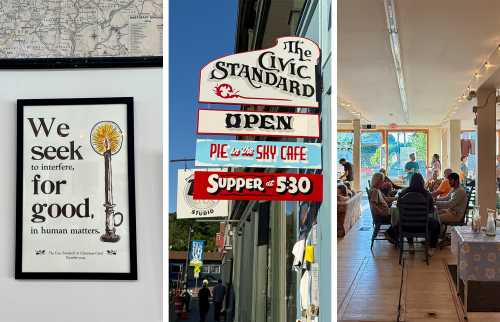
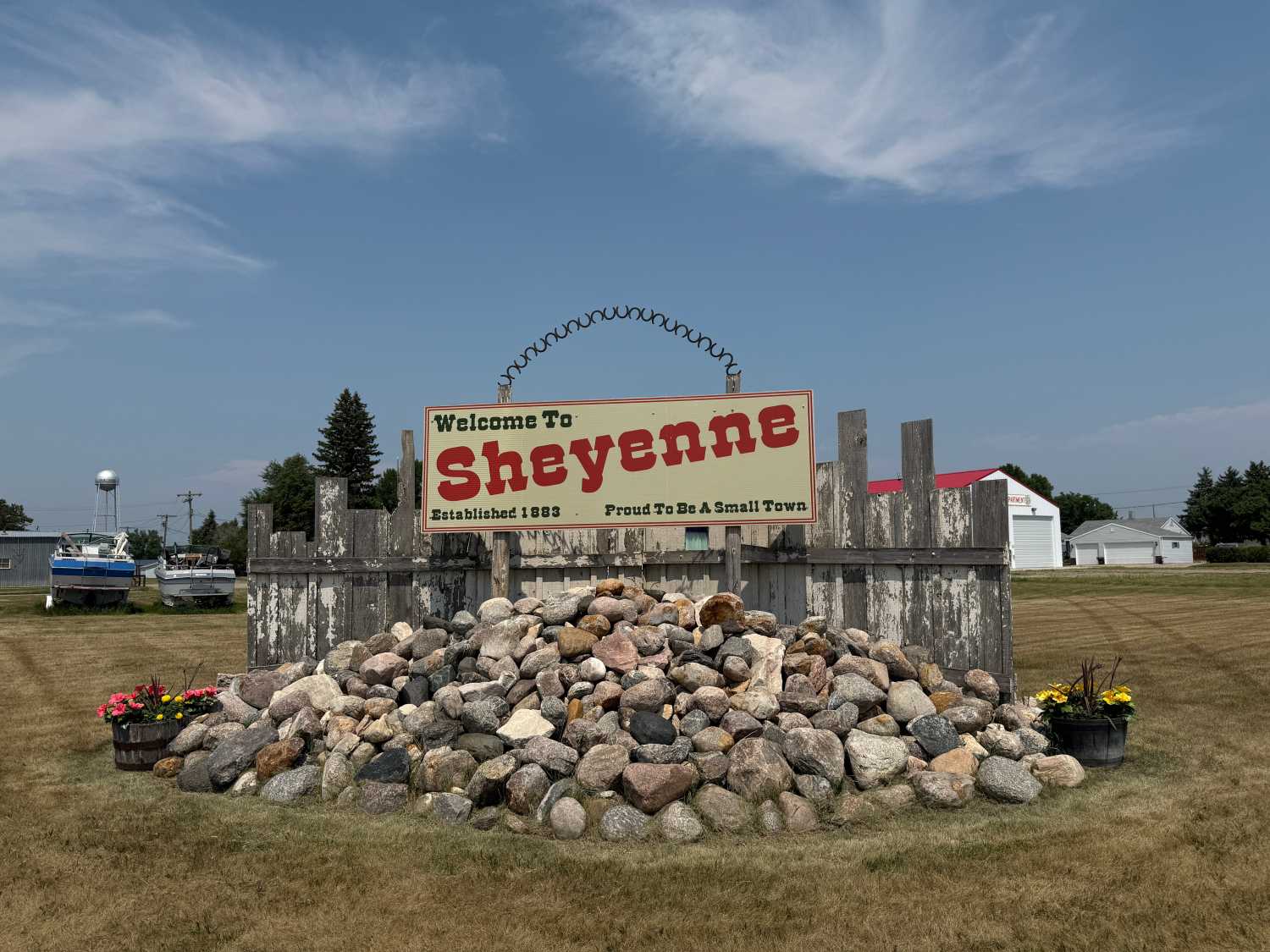
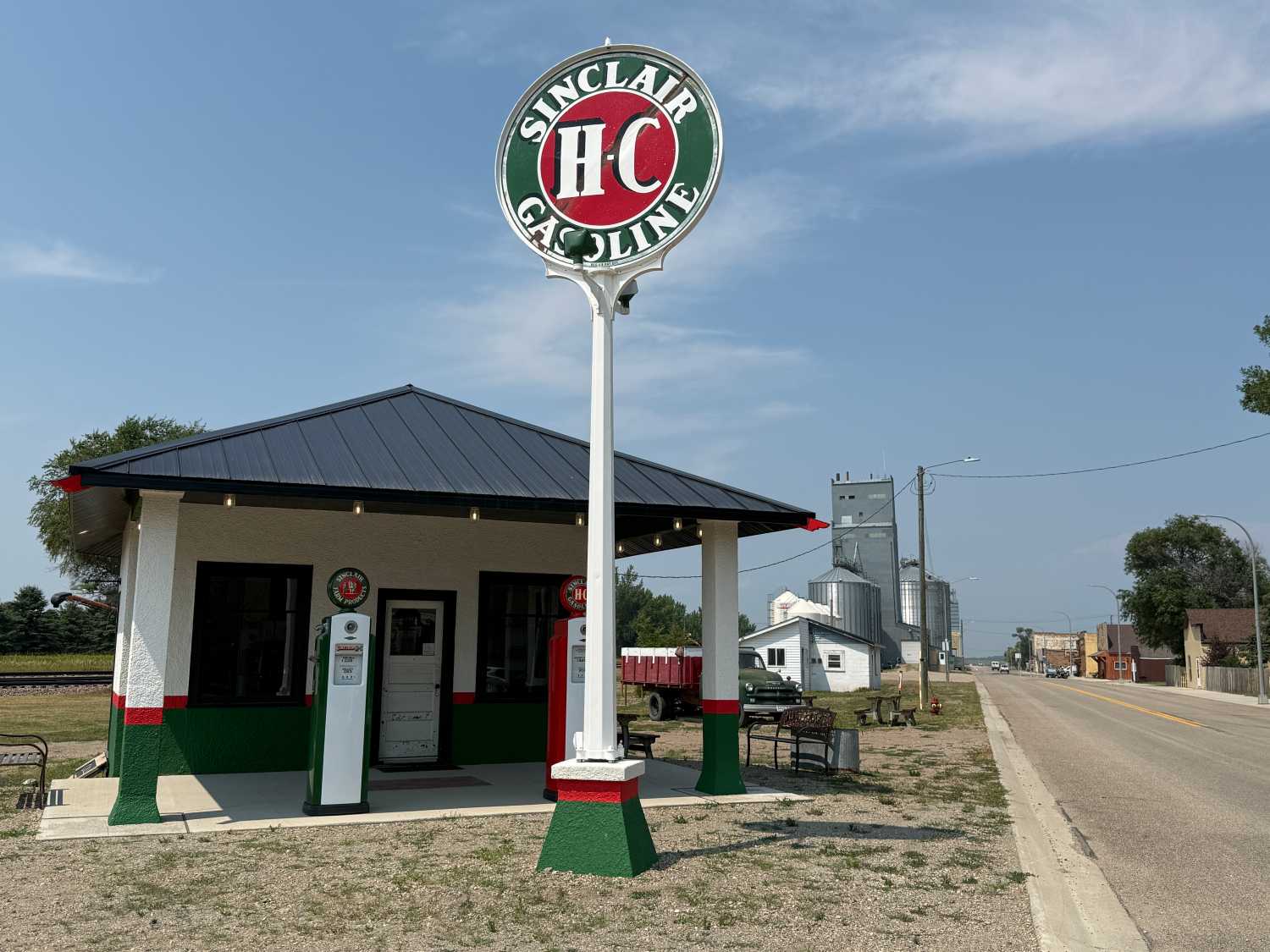
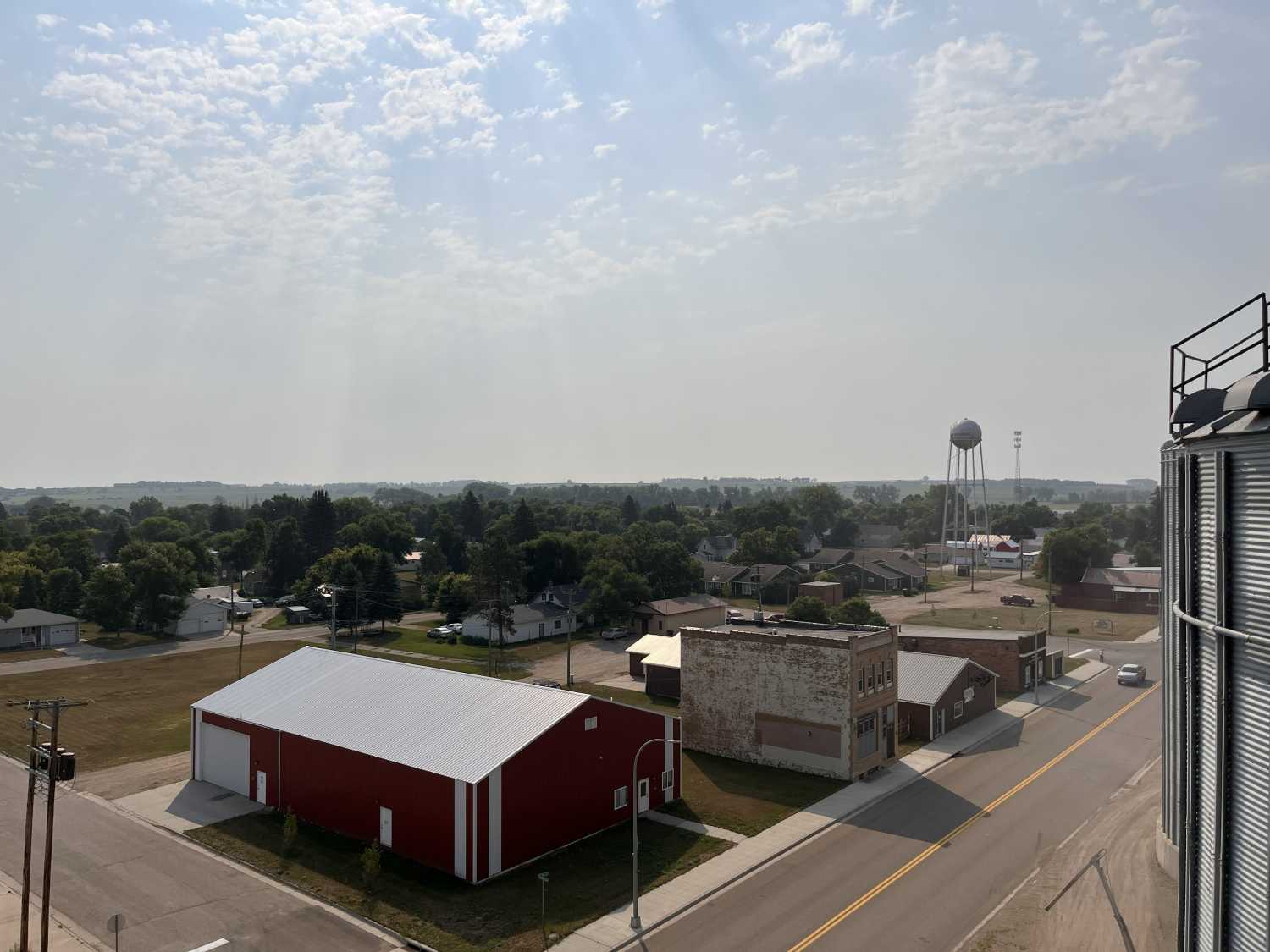
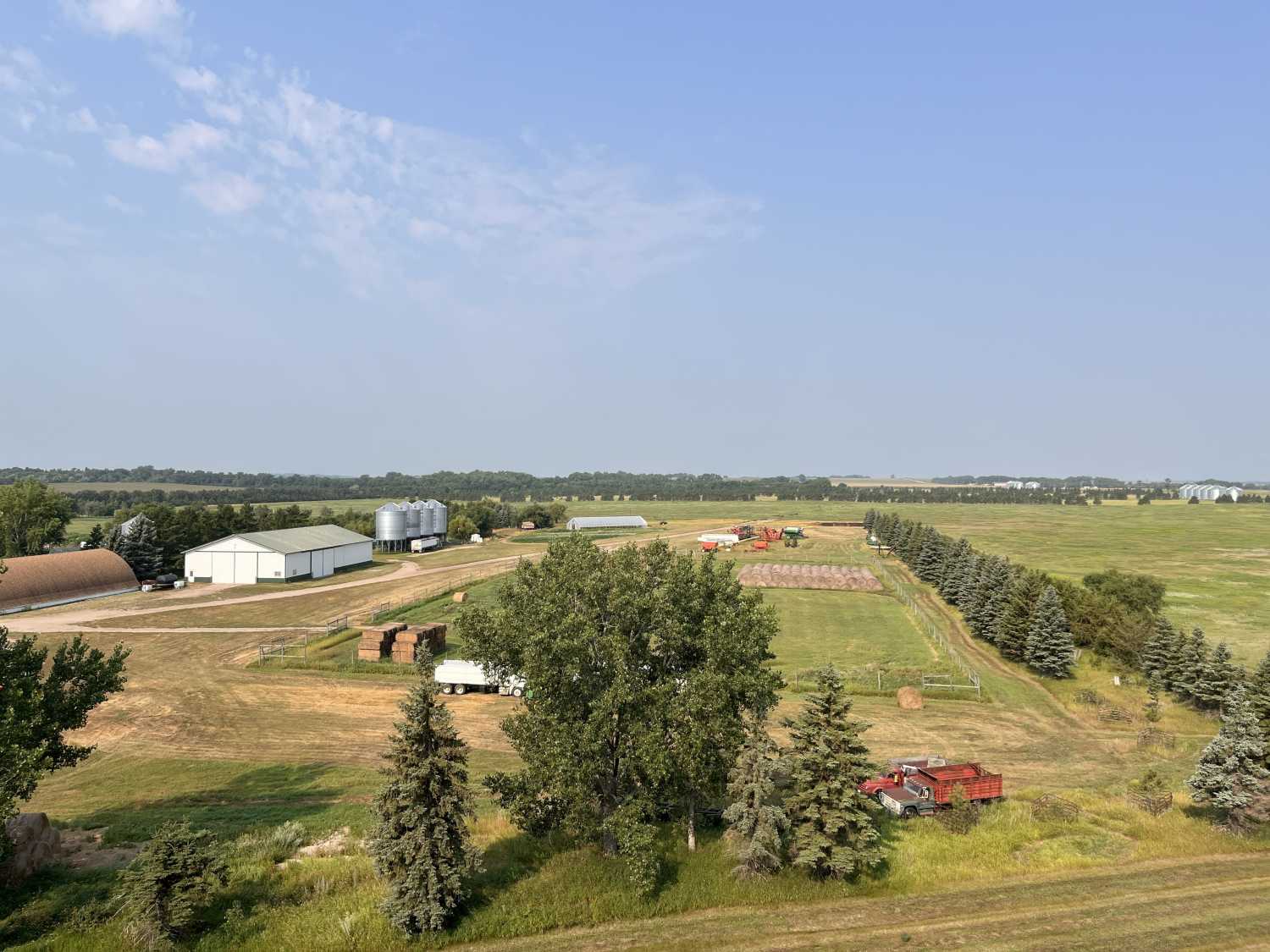
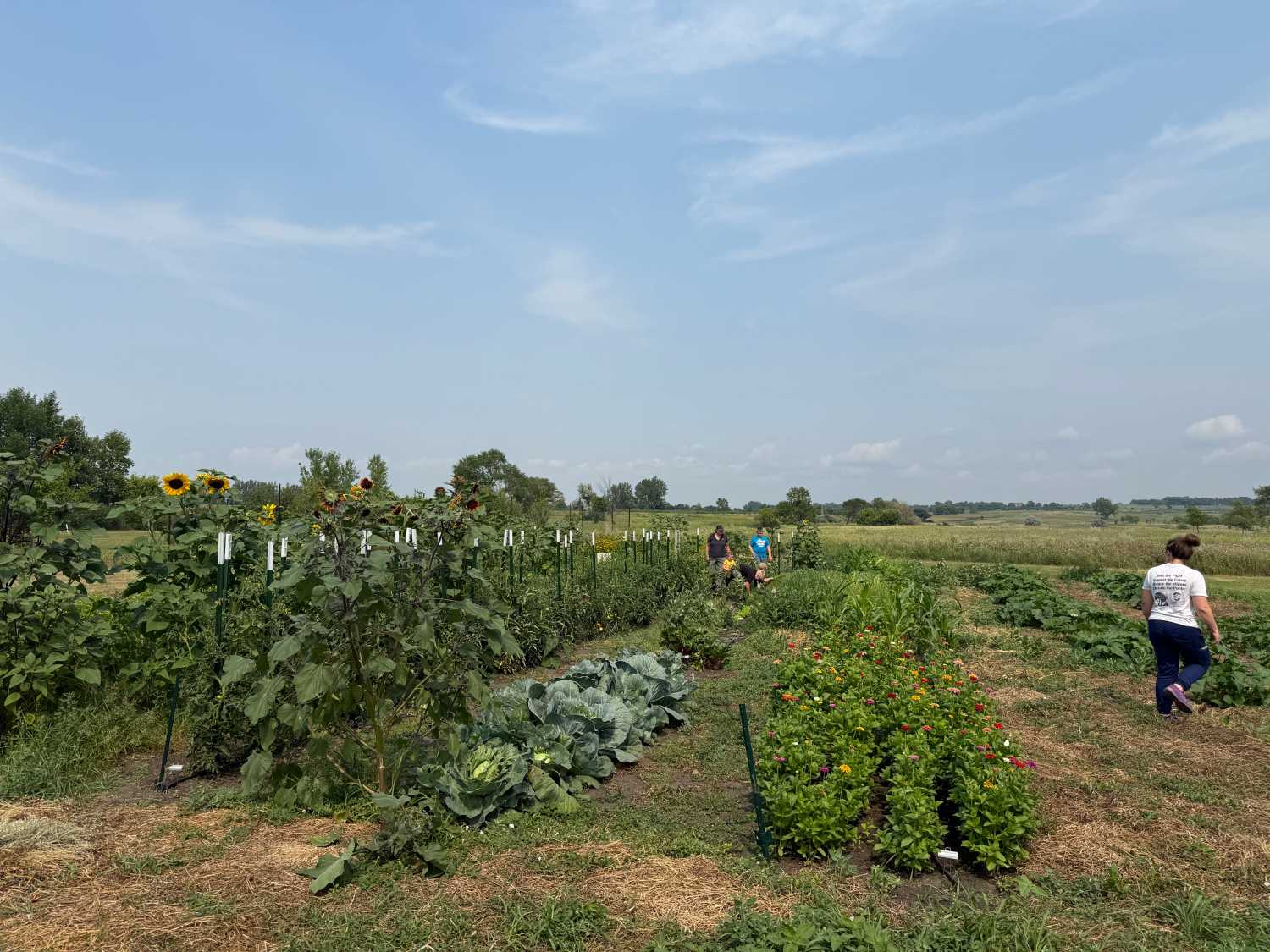
Scenes from Sheyenne, North Dakota
Transcript
TONY PIPA: Like many kids in small towns across America, Joanna Larson used to walk to the community grocery store to pick up food for her family.
[music]
A grocery store in a rural area is sacred. If it closes, like it did here in Sheyenne, North Dakota, it can change a place in ways seen and unseen.
[0:20]
JOANNA LARSON: And I use a grocery store as just one example, but it’s really other things as well, whether it’s a rural clinic or whether it’s a a gathering space like a senior center, a gas station, or a lunch counter, or a cafe, or a school. Those resources are hard to replace once they’re gone.
TONY PIPA: Joanna Larson is a fourth-generation farmer and rancher from this prairie town of 200 people. That grocery store closure made a lasting impression on her, influencing her educational and work pursuits, and after eight years away, leading her back to her hometown.
JOANNA LARSON: When we lost that, that was something that stands out in my childhood. I think that’s always been in the back of my mind, and has kind of developed my interest in local foods, and a big part of why I I studied agriculture, and wanted to come back to the family farm, and eventually opened a a small store right here on Main Street.
[1:22]
TONY PIPA: That store is an expansion of a roadside stand along a main street in Sheyenne that Joanna ran for two years. She sold her produce and that of other local growers.
JOANNA LARSON: That was pretty successful, I would say. It was not sustainable the amount of time I put in it. But I could see that there was a demand for what we were doing, and I had a vision that potentially if we scaled this to the right size, it could be sustainable.
TONY PIPA: No doubt the demand was there. For years, the nearest grocery store to Sheyenne was 11 miles away. Joanna asked a friend, Gavin Brown, a young contractor from a neighboring town, to help her transform an abandoned gas station along Sheyenne’s main road into her vision. It just opened this past summer. The tape’s a little windy.
[2:11]
GAVIN BROWN SCENE: Well, anyway, thank you all so much for being here. To say I’m shocked with the number of people here on the corner is is an understatement. It’s awesome—
TONY PIPA: — that’s Gavin …
GAVIN BROWN SCENE: —to see you all here. You’ve all mostly been with me through my endeavor of painting and scraping and doing all the fun things. So, I wanna say thank you. There, there is a brick dedicated to this community of Sheyenne, because without this community, I don’t think this would’ve been possible. not only did people give money to support the project, but also a lot of people came to help, to smile, to laugh, to share stories, and that’s what really keeps me motivated. And so, thank you all. I can’t believe I’m getting emotional.
[3:02]
TONY PIPA: Sheyenne is the smallest town I’ve ever visited for the Reimagine Rural podcast, but it’s emblematic of a story happening across rural America. The residents here love their hometown, and they’re willing to get creative and to dedicate their time to gradually bring back essential services that looked like they were gone for good, to create new enterprises that fit with the town’s current incarnation, and to keep it vital and on the map.
[music]
Farmer’s Grocery is eye-catching, one of the very first things you see when you drive into the town. Gavin is 26 now, and he’s been admiring this old gas station for almost half his life.
[3:43]
GAVIN BROWN: It was built, I believe, in 1927. It’s of course, you know, your classic American gas station from that era. So, the 1920s, you know, the cars were all narrow, Model A’s. So, there’s an awning off of the front of the building. And and that protrudes out about 12 feet. And then under that awning, of course, would’ve been the old, tall visible gas pumps, you know, you could pull up on either side, and the attendant would come out.
TONY PIPA: One Fourth of July when he was 12 years old, he and his grandmother met the owner.
GAVIN BROWN: You know, he kinda told me what he paid for it. And now, well, at the time it was a dollar, you know. So, even at 12 years old, I was like, “Well, come on now. I got $2.” So, it was always a kind of an attainable dream of mine, even growing up.
So, I’d call him maybe every other year, just to let him know, you know, “Hey, I’m still interested in this building.” And at the time it was used for nothing more than storage. The windows were broken out of it. It was in really miserable shape. But, he always said, “Well, I’ll call you if we decide to sell it.”
[4:56]
TONY PIPA: So, when Joanna expressed interest in expanding the farm stand into a brick-and-mortar space, word got around, as it always does in a small town.
GAVIN BROWN: And I think that might have kinda pushed him to say, “Okay, maybe I will sell this.” But it was just one of those things where it was like, well, I guess now’s the time, so, here I’m gonna go buy a gas station.
And really didn’t have large intentions of doing anything really rapidly with the building. You know? It’s kind of a passion project. So, in the back of my mind I just thought, “Well, at least take the plywood off the windows and put some glass back in and make it look half decent.”
But right away after I visited with the previous owner of the building, Joanna had reached out to me and kinda told me her desires of what she wanted to do with the space or a space. And I I just told her, “Well, I have no problem making that happen.”
[5:56]
TONY PIPA: Joanna and Gavin worked for two and a half years to make Farmer’s Grocery a reality without publicly revealing their plans. Two of those years were construction and renovation.
[6:07]
JOANNA LARSON: We did not tell the community that it was gonna be a store. We kept that a secret because right on Main Street, when you start renovating a building that has been essentially abandoned, busted windows, bad roof, when you start working on something, you get a lot of attention really fast.
So, we didn’t tell anybody what we were doing, just that we were fixing this up And Gavin was working on it whenever he could in his spare time. People were really generous and donated money to him so that he could keep himself fed and and keep working on it.
And that was really inspiring that the community didn’t even care what it was going to be, just that it was going to be fixed up and it wasn’t gonna be an eyesore on Main Street.
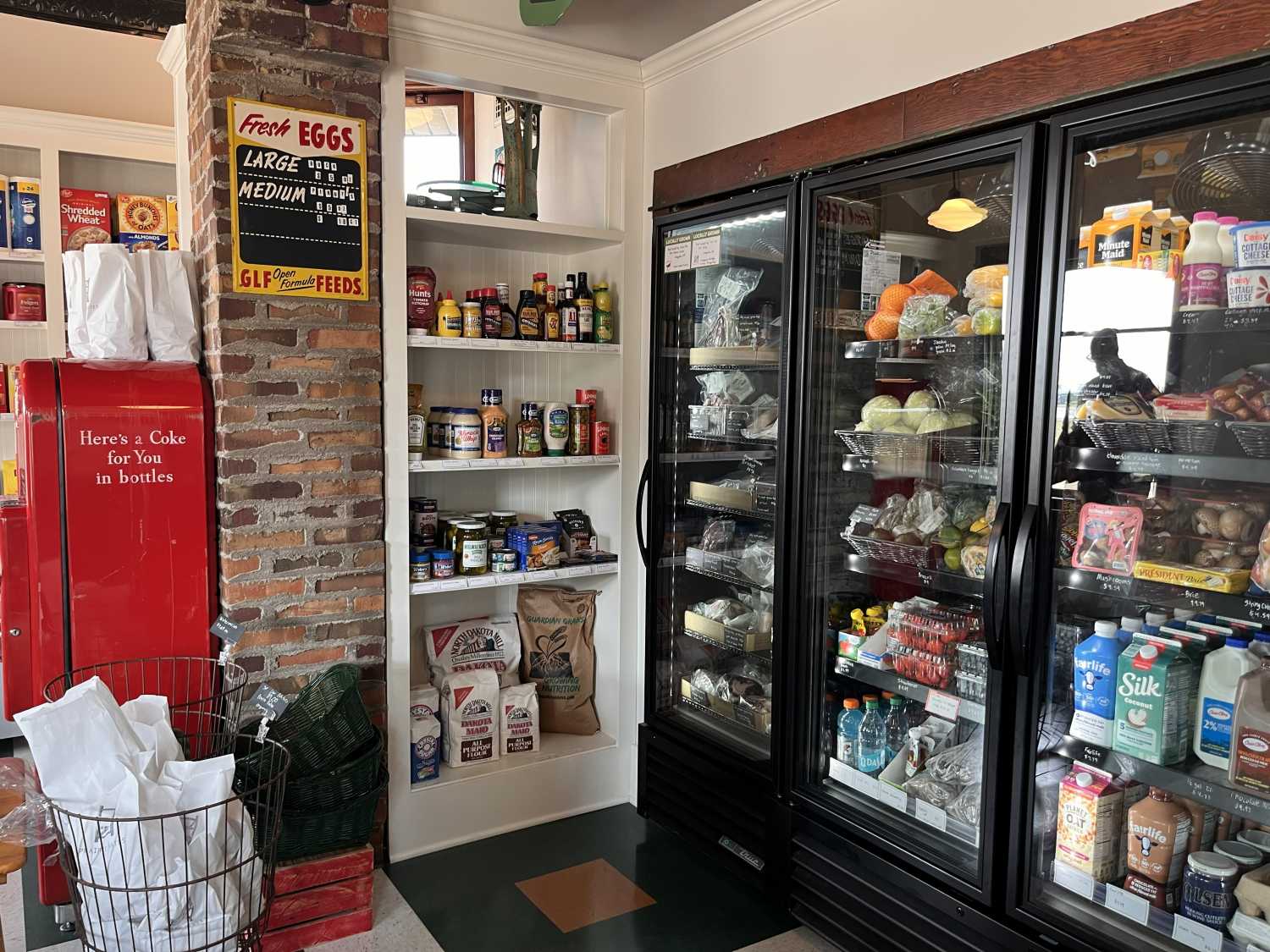
We have the historic pumps out front. We have the tin ceiling. We have the old mercantile cases. We have a vintage Coke machine that works and runs. And and when people walk in, it’s like stepping back in time. And as much of an art project as it really became, it’s also incredibly functional and providing a really important need.
[7:19]
TONY PIPA: The business model relies on an honor system. Joanna hired a company specializing in rural grocery store accessibility to help Gavin install remote door access hardware and software so people can access the store 24/7.
[7:34]
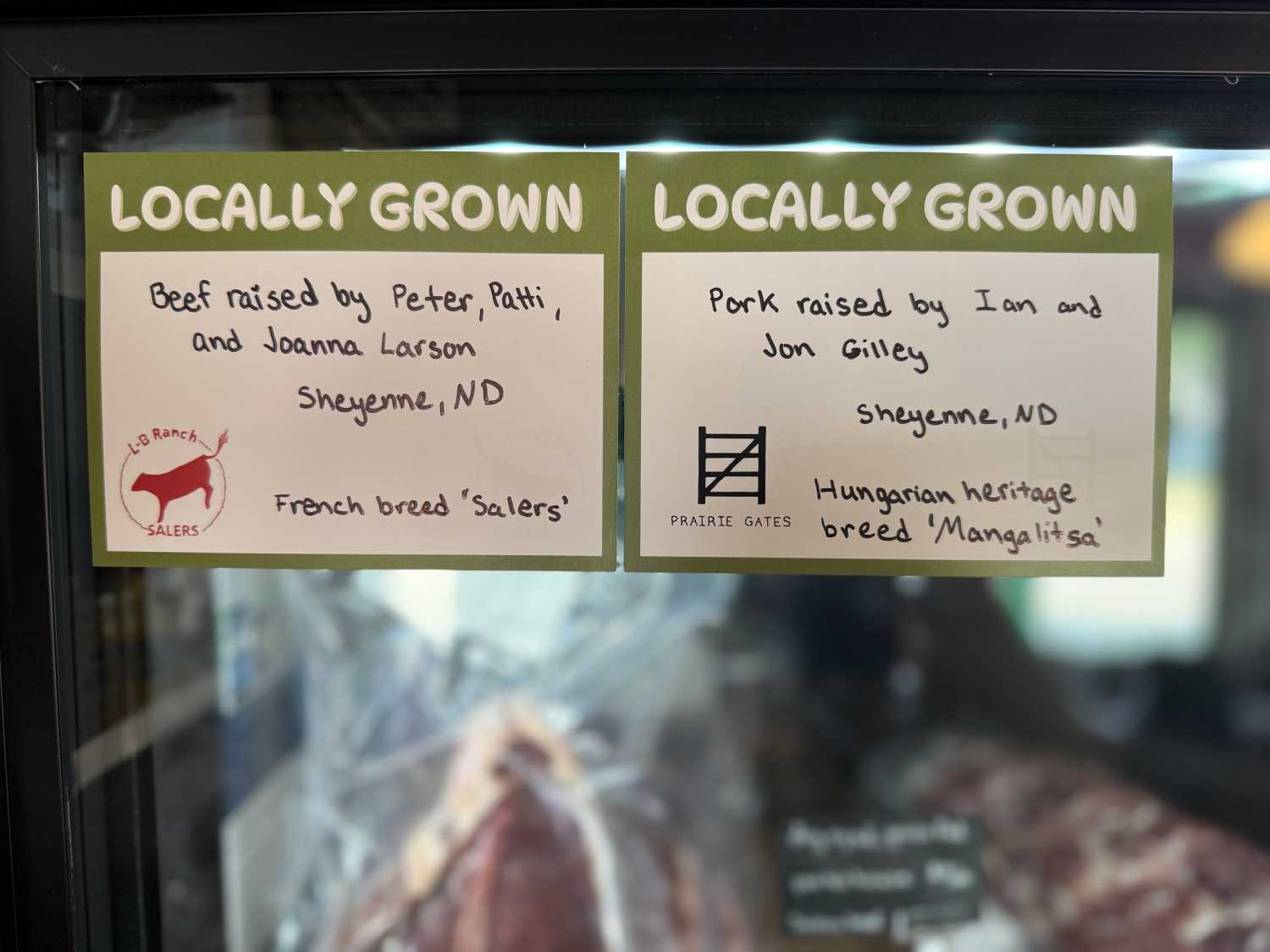
JOANNA LARSON: We have the produce still, and we also have a handful of local ranchers bringing animals so that we can butcher and have meat products in the store. And then conventional groceries, all of the essentials, ready-to-eat meals, baking supplies, breakfast items, bread, milk, eggs, cheese, deli meat.
And then a little bit of specialty in some of the clean label foods and foods that might be hard for people to get if they have a allergy or an intolerance. In such a small community, we really need to have a little something for everybody.
[8:12]
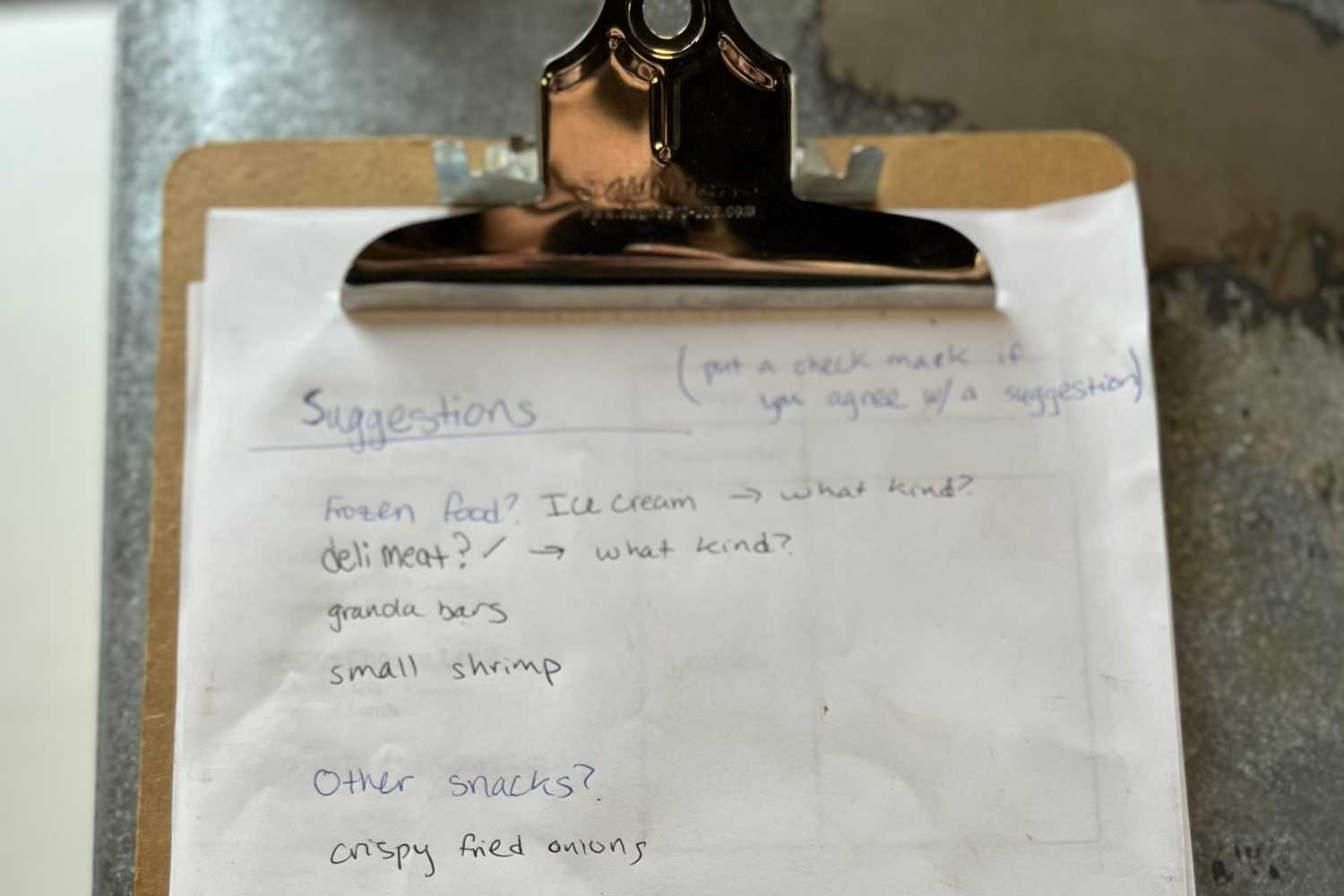
TONY PIPA: A sheet of paper on the counter invites residents to share ideas of what they’d like to see on the shelves.
[8:18]
JOANNA LARSON: People are writing their ideas down, and I’ve been taking ideas verbally since we started and trying to source those things. We can’t source everything that people want, unfortunately. Our supply chain is still seriously constrained out here, but we’re doing the best we can and and trying to get what people want.
Like, think about accessing groceries in the middle of a North Dakota blizzard, or being a farmer and working late hours during calving and and not having time to run to town and get milk or get bread. And and so it’s just really essential. And I don’t take food access for granted at all.
[music]
[9:03]
TONY PIPA: I’m Tony Pipa, a senior fellow in the Center for Sustainable Development at the Brookings Institution, and your host for the Reimagine Rural podcast. It’s the podcast where we visit rural places across America experiencing change, and we bring their stories to life while exploring the intersection with policy.
[music]
Sheyenne is in central eastern North Dakota, about two and a half hours northwest of Fargo, but it feels a bit like an old Western town. Here’s Patti Larson, Joanna’s mother, and one of the leaders of Sheyenne’s volunteer community development group.
[9:49]
PATTI LARSON: I’ve always thought Sheyenne had a a unique brand, that the Main Street sort of has that West, Old West flavor, pioneer spirit. It it was really brought to life in the ‘70s when I was in high school. They kinda redid the storefronts to look like the the Old West.
TONY PIPA: Sheyenne is less than a fourth of a square mile, and driving on the main road, you can pass through it in a matter of seconds.
PATTI LARSON: Our town is so small. There’s 113 houses. We kinda know all of them, and we especially know them all because our church ladies, every year at Christmastime, we go around with cookies.
[10:27]
TONY PIPA: Sheyenne’s vibrant rodeo culture also continues that Western town aesthetic. The July 4th rodeo and the August Sheyenne Stampede events help attract thousands of visitors in the summer months.
[10:43]
SHARON WHITMER: The Rodeo Club was and has been here since 1954.
TONY PIPA: Sharon Whitmer is secretary of the Sheyenne Rodeo Club.
SHARON WHITMER: It’s one of those things that it’s been here, people kind of expect it. It’s like the big highlight of the Fourth of July festivities. People are coming from out of state. And the one lady told me all she did was search for what’s going on on July 4th and found the Sheyenne Rodeo was gonna be happening, and she said that’s what they decided they were gonna come and do.
And when we finally took the big step forward to bring in the Stampede, that has just grown and grown. And every year I’m just amazed. Like, last year we had roughly 2,500 people in attendance, and this year I think they’re looking at probably 3,000 to 3,500.
[11:36]
RODEO SCENE: Go in, get their horses. Come on. Saddle up. Gotta get it branded right on the ribs. Now the run, go.
SHARON WHITMER: You pay it, for a ticket for the whole day, and you get to take in the barrel racing. You get to take in the ranch rodeo. You get to take in all the vendors that are out there, and then you also get a whole night of entertainment. And this year, you know, we’ve got three Nashville recording artists, plus a regional band that, from Minnesota, that’ll open at the beginning and then close with the beer gardens until 2:00 a.m.
TONY PIPA: Wow.
SHARON WHITMER: It actually, you know, I used to say it draws from all the connecting states. And now we’re actually bringing in people from, like, down south and further west and further east. And I think that’s what makes it exciting and so rewarding when you can see that happen.
TONY PIPA: Describe for listeners all the different things that happen. Not everybody’s been to a rodeo that’s gonna be listening to the show.
[12:43]
BRENT HALSETH: So, the barrel race is three barrels set up in a triangle.
[music]
TONY PIPA: That’s Brent Halseth, the rodeo club treasurer.
BRENT HALSETH: And then they run around each barrel in a clover leaf pattern, and obviously the idea is to be as fast as you can. And then in a ranch rodeo, that’s a four-man team, and there’s generally five different events. They range from wild cow milking. It’s catch as catch can, so if you can get on her head and hold her while somebody milks her, have at it.
Range doctoring, you gotta rope the head of a steer and and the heels of a steer, and then fake doctor it. There’s mugging. You gotta rope a steer and then get it tipped over on the ground and tie three legs together. Penning event, you gotta rope a steer, get it into a pen in the middle of the arena. A sled race, which a sled race is kind of, oh boy, pull a sled down with a guy in it, turn around and come back.
So, I come up with the idea, let’s stake a goat at the end. You gotta run down, grab the goat, bring it back to the next guy, hand him the goat, and he’s gotta take it back and put it back on the, the leash. All without letting the goat go and being pulled as fast as you can behind a horse.
TONY PIPA: Here’s Patti Larson again.
[14:13]
PATTI LARSON: Rodeo goes way back. They would just set up a rodeo fence just out in the prairie and work really hard rounding up the cattle, and they built a really nice rodeo arena. The dirt in Sheyenne is sandy, so, it’s just a really nice bed for the horses to run around on.
Rodeo is kind of a, it’s kind of a lifestyle. It’s kind of an attitude. And so, it’s really important to Sheyenne. Although everybody isn’t involved in it, they just like to be part of the watching it happen, and I think it just kind of another tradition that is important to keep people coming back or to be known of, known for.
[14:52]
KENT MIREY: I mean, you get this draw of people into our community. It’s kind of, it’s kinda overwhelming. It kinda almost like it brings tears to your eyes that this can happen in our community.
TONY PIPA: Kent Mirey is a third-generation farmer who’s also in the rodeo club.
KENT MIREY: And it’s getting bigger. I mean, people are starting to call us and ask can we be a sponsor with, of the music. So yeah, it’s pretty cool.
[15:19]
BRENT HALSETH: I I guess to answer your question, how do we handle all these people? We just offer free camping and free parking. We’re, we’re gonna need more volunteers. We’re gonna have to probably start thinking about how are we gonna be able to handle how big this is actually gonna get or how big do we want it to get.
[15:40]
SHARON WHITMER: We are very forward-thinking, and it’s like you’ve got to change, and I’ve said that for a long time, that you’ve gotta be willing to change. You’ve gotta change. If you don’t, you’re gonna sit and be stagnant, and everything’s gonna pretty much just shrivel up and be gone.
TONY PIPA: That ethos is what guides a lot of people in Sheyenne, including Joanna.
[16:09]
JOANNA LARSON: I’m just a go-getter. I like to get things done, and my parents are like that. My family’s like that. The people of Sheyenne are like that. Like, I’ve also seen many other small towns in North Dakota that are not thriving, and they’re losing resources and losing people.
And we’ve been trying to turn the needle in Sheyenne and make sure that doesn’t continue to happen here, that we attract younger families, that we attract workforce, that we have viable housing, that we have essential services.
I know very few people in Sheyenne that are kinda, like, sitting on the sidelines and don’t care what happens to the town. Like, everybody wants Sheyenne to be successful.
[music]
[16:57]
CONNIE BROWN: I’m Connie Brown. Some people don’t like to say their age, but I’m pretty proud that I’ll be 84 in November, and I’m real proud that I’ve been married 65 years to the same guy.
TONY PIPA: Connie is Gavin Brown’s grandmother, the one he was with when he first noticed the gas station. She’s seen a lot of change over the years. Her sister and brother-in-law, who had moved to Washington State, returned to run the grocery store that closed.
[17:24]
CONNIE BROWN: And another place that was hard for the farmers to lose was our blacksmith shop. I could remember before that closed, thinking, “What would they do without that blacksmith shop to run in and fix up their equipment?” And well, then eventually it did quit, so, they had to start going to New Rockford or buying brand-new stuff. And most of the farmers weren’t… they’d rather fix than buy.
Losing the Tastee-Freez was hard. We we enjoyed that, coming into town on a Sunday night and just everybody would be parked over by the Tastee-Freez. We’d go get our treat, and then we’d all sit around and visit and stuff. I mean, that was, another big social that was cut off.
Back in the days when my husband was farming, one of the biggest things to do was in the morning before they got too much going, they’d go to the elevator and they’d, all the farmers would sit around and talk about the day. A lot of the people end up staying home and losing the friendships and the visiting that they’re, they should be having.
[18:38]
TONY PIPA: In the early 2000s, Sheyenne experienced a series of monumental losses for a small town. In addition to the grocery store closure, the town lost its only fully operating restaurant, the town bank, and the school, all within a matter of years.
CONNIE BROWN: And to see the town lose their school and move to New Rockford, it was a very emotional and hard thing because we lost people, too.
TONY PIPA: Here’s Sharon Whitmer again.
[19:14]
SHARON WHITMER: For me personally, I think it was just, it really created a void. It’s like it was another piece of the community that basically slipped away. And then when you lose your school and all those kids and families, it just was kinda like, okay, now as a community, what do we do? You know? What what can we take hold of and still keep Sheyenne alive and thriving?
[19:42]
TARA HANSON: I think it was hard for it to close, but at the same time, I think it was the the community kind of that steppingstone for them to come together and figure out, okay, what are we gonna do with this building because we don’t want it to go to waste. And so, here I am managing a school that is now a lodge.
TONY PIPA: Tara Hanson is a school psychologist who also manages the building, Open Season Lodge & Events Center. Visitors can book an overnight stay in old classrooms or rent out the gym for parties. It’s ideal for groups of hunters and anglers.
TARA HANSON: So, when I walk into each of the rooms that are now, that have beds in them and people come and stay, I call them what they used to be as my school. You know? Like, Oh, here’s the library. Here’s the science room. Here’s the math room. You know, there is that connection. And I think when I tell that story, I think they think it’s even cooler to just kinda stay here because of that background.
[music]
[20:41]
TONY PIPA: Tara is a member of that community development board that includes Sharon Whitmer and Patti Larson.
[20:47]
PATTI LARSON: Sheyenne GRIT, it’s a group of volunteers. We call ourselves GRIT because of the we all agree that we want growth, renewal, imagination, and teamwork. So, when we found out that there was actually some money available that we could spend however we wanted to, it was, like, let’s have a meeting as though we’re gonna win the lottery, and what will we do with it?
[21:11]
TONY PIPA: That money she’s referencing is a project of Strengthen ND, a community development organization based in a small town just six miles south of the Canadian border. Since July 2025, I’ve been co-directing America’s Rural Future, a bipartisan commission co-sponsored by the Brookings Institution and the American Enterprise Institute.
The Commission will recommend improvements to federal rural policy in 2027, sharing what we’ve learned from local rural leaders and residents that we’ve been visiting across the country. And it was during the Commission’s very first public hearing last fall in North Dakota that I met Megan Langley, executive director of Strengthen ND. She spoke passionately about the importance of investing in the leadership of small towns so that local people have the chance to decide for themselves what matters in their community.
[22:07]
MEGAN LANGLEY: We meet people where they are. That means being present in their communities, listening first, and helping them build on what’s already strong.
[22:16]
PATTI LARSON: The the six areas of really concern was housing, and and they included dilapidated houses; businesses and business enhancement; Main Street, because we know it’s our business card for people driving through; events; and then childcare and kid activities. And then we knew that marketing the Sheyenne brand was also a a thing we needed to invest in.
We just got really lucky and wrote up a grant that said we would just try to tackle all these areas. We we formed a board of six women. One one specializes each of the areas, and I was tasked with housing.
[22:57]
TONY PIPA: In 2022, Strengthen ND awarded GRIT a $75,000 Creative Community Solutions Grant. GRIT had been dormant a while, but once it got that investment, Patti and her fellow GRIT members applied for nonprofit status, assembled a six-member board, started holding regular meetings, and began doing some serious grant writing. The other $75,000 came in 2023. They applied again and got another $150,000.
MEGAN LANGLEY: Before that, the community hadn’t received a major state, federal, or philanthropic investment since the 1970s. With that modest…
TONY PIPA: GRIT used the backing from Strengthen ND as a financing tool. Essentially, they put that money in the bank and used it to open up other grant opportunities, $800,000 worth. Since many grants act as reimbursements, applicants have to spend the money upfront. For many small towns, that reality takes them out of the running before they even apply.
[24:03]
PATTI LARSON: If we can always have this little pool of money, that will be our saving grace, because we used to just be able to do fundraisers, but you can’t do enough with $5,000. $5,000 is a great fundraiser for a meal or something, but, you know, for big projects you need upwards of $100,000. Yeah, that’s just a, it’s just a godsend for us.
But also, it brought some agency to our community. Like, Oh, we can do this. And it brought hope for people who had already kinda decided, oh, it’s just, it’s, you know, what can you do? It’s, like, give up.
But now we can do something. It’s important to do stuff. It’s it’s planning for the future. Like, we planted a bunch of trees. We planted, like, 80 trees in the last two years in Sheyenne, and it’s … that alone is hope for the future. You know, someone planted these big shade trees 100 years ago.
[25:02]
TONY PIPA: I heard Patti’s name come up time and again as people described Sheyenne’s growth.
[25:08]
JOANNA LARSON: I’ve just seen her, like, almost have this second act in her life. Like, she’s always been involved in our community my whole life, but after she was done raising us, she just poured all of her energy into, like, every waking hour she’s doing stuff for Sheyenne.
[music]
It’s hard not to be enthusiastic about what she and other people in this community see and hope for and wanna be a part of that.
[25:40]
TONY PIPA: Connie Brown wrote regularly for the Sheyenne Star, a newspaper that GRIT put out for a couple of years. When the support from Strength in ND arrived, she couldn’t help but think of her sister and brother-in-law, the ones who moved back to Sheyenne to run the grocery store, the one that eventually closed.
[26:00]
CONNIE BROWN: At that time, they weren’t talking about grants or anything like that, and I’m so happy they have grants and things now because that may have helped them. It may have been just enough to turn the tide for them.
[26:15]
TONY PIPA: Since housing is a major concern, GRIT used some of that money to clean up dilapidated houses. They were able to purchase and repair a rundown house that had been owned by a retired teacher who left it to her brother in Minnesota after she passed.
[26:31]
PATTI LARSON: It needed a lot of work. He knew about how much Sheyenne meant to her, and he was just so happy to let Sheyenne GRIT take on this as a project.
We purchased the house for $8,000. And it was on a corner lot, but it was totally overgrown with trees, had asbestos tiles in the basement. I did a lot of research. How much is it gonna cost to do this, bring it all up to speed? The garage was almost a tear-down.
But we just started in, and volunteers started showing up, ‘cause, amazingly, people like to paint. People like to do yard work. People just like to do stuff. And then once the trees were cleared, and the scraping of the paint, and started painting it, it’s like, wow, this is really coming to life.
TONY PIPA: They sold the house to a contractor who had a home in California but was in the area doing work in nearby Devils Lake.
PATTI LARSON: So, that was our big first investment. We made, like, twenty-grand, so, wow.
[27:33]
TONY PIPA: The possibility of home ownership was a huge draw for Julianna Chenze Millang, who has lived most of her life in Sheyenne.
[27:41]
JULIANNA CHENZE MILLANG: When it’s so small here, it’s so hard to … [this is a romano] … do anything big-ish. You know? Mm-hmm. We just live in our own little bubble in here in this town.
MOLLY BORN SCENE: Do you like living here?
JULIANNA CHENZE MILLANG: Yeah, I’ve lived here my whole life. It’s cheap to live here. You can actually afford to buy a house here. Well, even driving to New Rockford, 10 miles, the housing price difference is insane, the difference. So, like, it’s so cheap. We just, we’re, we just bought our second house in this town. So, it’s affordable to live here.
MOLLY BORN SCENE: You know, I’m sure it is a great place to raise kids, like…
JULIANNA CHENZE MILLANG: It is, yeah.
MICHELLE GILLEY / GARDEN SCENE: Green, and the yellow ones stay yellow.
JULIANNA CHENZE MILLANG: I mean, do I wish, like, there was more here? Like, maybe a better playground for our kids? Yeah, but they find things to do.
MICHELLE GILLEY / GARDEN SCENE: And butterflies like our… what was down here at the bottom? Butterflies like…
[28:40]
TONY PIPA: One of those things is the Youth Garden Club, run by Michelle Gilley, the county’s extension agent. My producer and I got to tag along one sunny afternoon as Julianna’s nephew and sons identified plants, and then harvested some of the vegetables they’d planted earlier in the summer.
[28:58]
MICHELLE GILLEY / GARDEN SCENE: Monarch butterflies. Yeah. So, this flower is a milkweed. It’s one of the different kinds of milkweed. I think it’s a showy milkweed, not like, so it’s, that’s, we put it in our pollinator garden ‘cause it’s less aggressive than the common milkweed. That is actually kind of a weed in our garden, but we leave it where we can.
So, how is this pollinated? Wind. Wind. Wind. And what kind of flower is this? Uhh … smell it. Dill pickle. Smells like dill. Smells like dill pickles. Yes. So, that’s a different kind of flower, and that shape is an umbel. So, should you take that home and eat it with your cucumbers? Yeah. Yeah. It’s a good idea, but I know you will eat the cucumbers before you get home. True.
What kind of flower is this?
[29:51]
JULIANNA CHENZE MILLANG: Before they started just the kids garden, it was always a massive community garden that I think Patti Jo helped start. And…
TONY PIPA: …that’s Patti Larson, of course …
JULIANNA CHENZE MILLANG: … it was always nice. And then everybody just came up here and helped maintain. And then as the years went by, just slowly grew. And then, like she said, you know, a lot of people were like, Well, we’re just doing our own garden, so the kids can have the entire thing.
TONY PIPA: I gotta say, a garden of this size in a town as small as Sheyenne, pretty impressive.
[30:27]
JULIANNA CHENZE MILLANG: And they’ve learned so much. Like, I mean, it’s not just, like, planting. Right? And then just watching them grow. Like, she teaches them so much about every step, every, like, process. Like, I think, well, I don’t know, I could be wrong, but I swear, I think the kids’ favorite part was putting in the irrigation this year. They had a lot of fun putting that in and learning about it.
[30:52]
MICHELLE GILLEY / GARDEN SCENE: Right now. They’re probably ready right now. When are the onions ready? When they’re popping out. No, not when they’re popping out. When are the onions ready? When they’re falling over. When the stem is bent over and it’s soft when you grab it where it’s bent. Right there. It’s soft. Yes, grab it. These two are ready. This is… Can you pull that onion out and that onion out? Good job. Get the next one too. You wanna dig potatoes next, or… yeah … beans or peas? Potatoes. Okay.
[31:29]
TONY PIPA: During our trip to Sheyenne, we spent a lot of time with Joanna Larson, and we learned so much from her. She and her partner, Ian, who grew up mostly in Texas, but ended up going to high school a couple hours away in Casselton, North Dakota, started their careers in the Seattle area. The work there felt meaningful, and it included dependable salaries and reliable health care.
[31:52]
JOANNA LARSON: Things you don’t have when you farm necessarily. And we started thinking real seriously about making Seattle our home. Frankly, it was felt … unaffordable. We both were making pretty good money. But what was available to us that seemed like a good affordable starter home was, like, you could buy two or three homes in Sheyenne for that amount of money, and it was hard for us to see ourselves there for very long.
So, we decided to go back to school and get more education instead of buying a home, which, many of our peers out in the Seattle area thought we were nuts, and we quit our jobs, and we went to Europe and worked on our master’s degrees.
[32:40]
TONY PIPA: Joanna attended the Swedish University of Agricultural Sciences in Uppsala. It’s a place she felt especially connected to. Her great-grandparents were born in Sweden. After a lot of international travel, she and Ian moved to Sheyenne in 2023.
[32:59]
JOANNA LARSON: That all the traveling we did kind of got that out of our system. And I kid you not, we hate leaving Sheyenne. We we don’t even like to drive to neighboring town for appointments. We just, we just want everything here. And maybe part of that is because we got spoiled having all of the amenities and entertainment and everything close when we lived abroad and when we lived out west. So, we think why why can’t we just have everything here in Sheyenne?
[33:34]
TONY PIPA: Joanna knows it’s not entirely realistic to have everything in this small town. But Farmer’s Grocery is one step toward making life better for her neighbors.
[music]
[33:47]
JOANNA LARSON: There is of course a chance that it completely fails and then you have to tell everybody and disappoint everybody that this just didn’t work. But I just think about the people who moved out here, like my my great-grandparents that left Sweden because they were starving and thought that there’s gotta be somewhere better. There’s gotta be somewhere where we can make a life for ourselves.
And they risked everything. They left their communities, they left their families never to return. So, I think when I think about that, it’s like, how can you not try? How can you not kind of put yourself out there? Because if we don’t, I mean, the alternative for a place like Sheyenne is that this experiment fails.
[34:49]
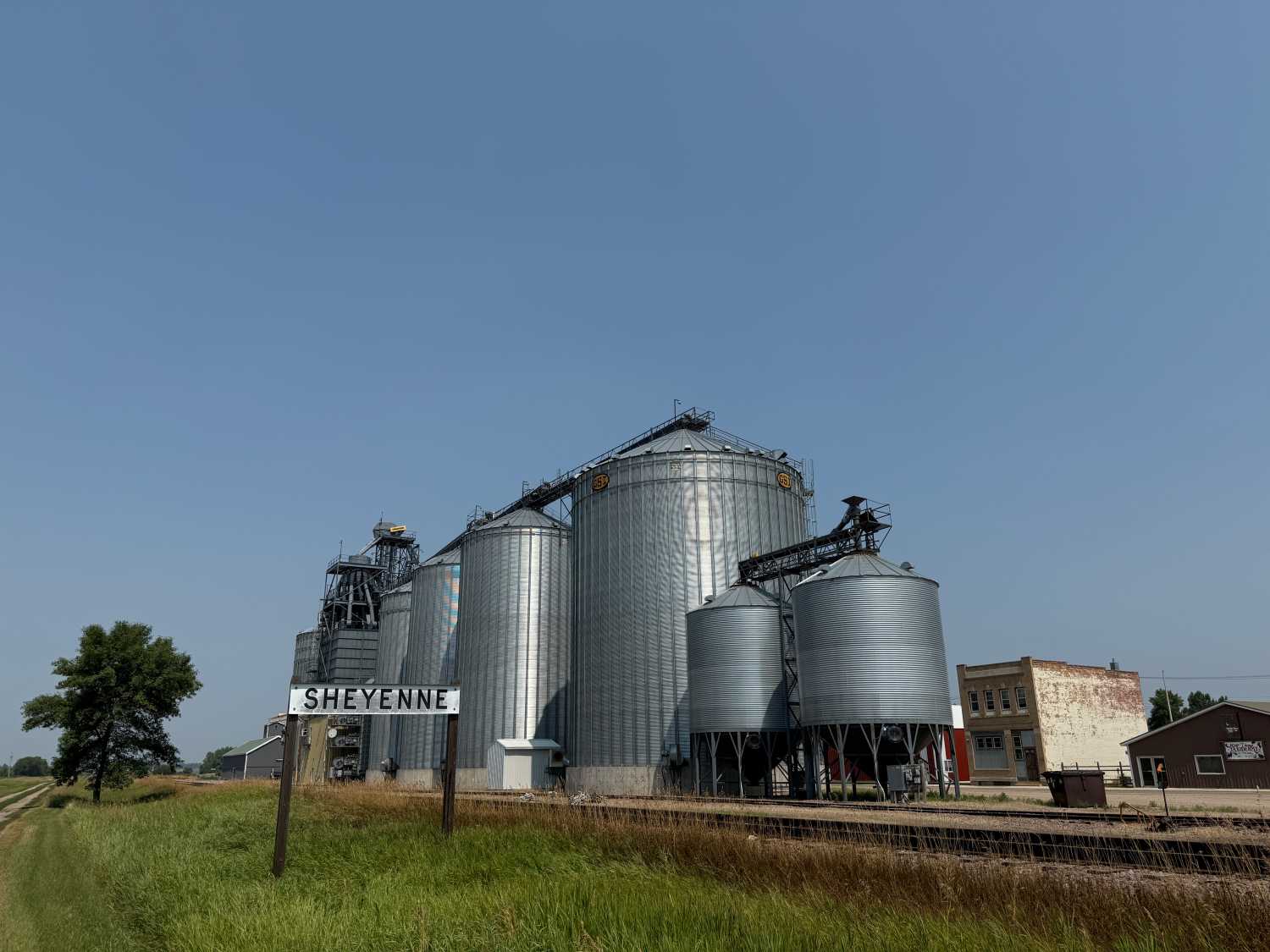
TONY PIPA: At the end of town, a grain elevator stands perched right alongside the main road. The facility caught fire and burned in 2016. At the time, it had been serving 120 farmers in the region. It was rebuilt and opened again in 2017. My producer thought it might be fun to climb to the top and get a bird’s-eye view of the town, and Joanna offered to be her tour guide.
[35:17]
GRAIN ELEVATOR SCENE: Would it be okay if we walk up the stairs? Oh, I don’t care. Go ahead. Okay. Just don’t fly off. Oh, we’re not gonna. If you want me to come back and get you more, just-
These were originally called elevators because the… You saw where the truck could dump the grain in the pit? Yeah. And then these long belts with little buckets on them were the elevators. They elevated the grain all the way to the top.
The whole point of the elevator is that maybe one farmer doesn’t have the best crop that year, and a different farmer has a good crop, and then we can bring it here, and we can blend it off, and then we can make an acceptable product. And that way, we all come together and and are able to market it.
So, I don’t know how high up you wanna go. We, we’re welcome to go to the top, but… yeah, let’s do it. So, this is all your farm?
Yeah. So, this is where I grew up. So, the house, you can’t see it, but it’s just barely behind the trees there.
[36:17]
JOANNA LARSON: We’re ranching. We have about 165 head of cow-calf pairs, and we’re farming conventional crops. So, my folks have corn and soybeans and wheat and alfalfa. And then I myself am growing certified organic vegetables. I’m growing cut flowers that I sell to florists, and also have some of my own cows, and my partner Ian has pigs and ducks.
So, we have a lot of little enterprises going on, and the smaller scale high-value crops like the vegetables and cut flowers are insignificant acreage-wise compared to the other crops my family’s growing, but they’re impactful economically to me.
So, I’m selling most of the produce really locally, and a little bit of farm to school, right down the street in the store, so fresh produce for the community, as well as another rural community up north of here, selling the produce that I raise and some of the beef and pork as well in their store.
[37:28]
GRAIN ELEVATOR SCENE: Yeah, this farm is gorgeous. And you’re in the yellow house right there?
So, that’s where my parents live on. Ian and I live on the other side of town over here in the little, little cottage.
I think you’re probably one of only a handful of people who’ve ever been up here. My dad…
[37:44]
TONY PIPA: Patti Larson and the members of GRIT are thinking about their next project. An especially urgent need now is childcare. After all, to attract and keep a younger generation here, people like her daughter Joanna or Julianna Chenze Millang, it depends on offering the support young families will need.
[38:05]
PATTI LARSON: We have people who would work there. We think we could have up to 15 kids. Yeah. It’s just, like, not easy because you gotta do the building right, and we have to have the person, the manager. We… should we coordinate with a, a childcare that’s already in existence? Or should we start our own, you know?
TONY PIPA: Joanna was more direct in her assessment of how elected officials can help places like Sheyenne.
[38:29]
JOANNA LARSON: I think that the main thing that that our elected officials need to understand is that they’ve gotta be courageous enough to act before it’s too late. I think we saw a little bit of this with the rural grocery crisis, where North Dakota lost a lot of grocery stores in the last decade. And it’s just unfortunate that there wasn’t more done to prevent the loss kinda as it was happening. There was this just attrition going on.
And now they’ve scrambled and provided some limited, much-needed funds, which we’re very fortunate to have received some of those here in Sheyenne. But when you look at all of the stores that applied across the state, and then the small amount that were awarded, it was like putting a Band-Aid on a really bigger problem.
So, that’s that’s the hard part, that sometimes the policy changes move more slowly than the crisis progresses.
[music]
In the next 20 years, I hope Sheyenne is a a great place to raise a family. I mean, I’m, I want, God willing, I want to have kids that grow up here, and I want them to have the same opportunities I had when I grew up here.
[40:12]
PATTI LARSON: Yeah, I would just love to see growth and just happy people living here, taking care of each other like they always have, and just less decay and decline, and more positive things. And there’s definitely, definitely the momentum to do it.
Sheyenne’s not the only little town that’s worth saving. Maddock, Fessenden, you know, quite a few of them just in the, in the 500-mile radius. So, I hope, I hope people realize that when they do policy.
[40:48]
TONY PIPA: Some of those opportunities that Joanna remembered from her childhood, T-ball, a summer theater group, have yet to be realized again. But Patti reminded me about one thing Sheyenne has in spades, people who care about making the place better.
[41:06]
PATTI LARSON: One thing about a small town, civic engagement is just so easy to be a part of. You know, you can be the school board. You can, you can serve on the church board. You can help in any way you can because you’re needed. It’s good to be needed.
[41:26]
TONY PIPA: You know, a rural expert I know often talks about the “STP problem.” The syndrome of having the “same two people” doing everything in town. You would think that that would be even more pronounced in a place as small as Sheyenne. Yet everywhere we turned, it felt like there were lots of people here who were involved in one project or another.
And it was impressive not only to witness this civic energy, but to see the creativity. Joanna, for example, pursuing a business model that would work for the Farmer’s Grocery to serve this place’s needs. Gavin depending upon lots of community support to make the remodel work. GRIT and the rodeo continuing to pump life into new projects.
Will it be enough? The younger generation here is betting that it will be. And that mixture of can-do, collaboration, and commitment certainly seems to give them decent odds of that bet paying off.
Thanks for listening.
[music]
Many thanks to the team who makes this podcast possible, including Ike Blake, supervising producer; Fred Dews, senior producer; Molly Born, producer and audio mixer; Daniel Morales and Teddy Wansink, video managers; Chris Chang, audio and video editor; Elyse Painter, senior project coordinator in the Center for Sustainable Development at Brookings; Adam Aley, also in the Center for Sustainable Development, who provides research assistance; and Junjie Ren, senior communications manager in the Global Economy and Development Program at Brookings.
Thank you to Sharon Whitmer, Brent Halseth, Kent Mirey, Randy Keller, Connie Brown, Tara Hanson, Joanna Larson, Gavin Brown, Julianna Chenze Millang, and Patti Larson for talking with us for this episode. Also, my sincere thanks to our great promotions team in the Brookings Office of Communications and Global Economy and Development. Katie Marris designed the beautiful logo.
Finally, support for this podcast is provided by Ascendium Education Group. The conclusions and recommendations of any Brookings publication or podcast are solely those of its authors and speakers, and do not reflect the views or policies of the institution, its management, its other scholars, or its funders. Brookings recognizes that the value it provides is in its absolute commitment to quality, independence, and impact. Activities supported by its donors reflect this commitment.
You can find episodes of Reimagine Rural wherever you like to get podcasts, and learn more about the show on our website at Brookings dot edu slash ReimagineRural.
You will also find my work on rural policy on the Brookings website, and if you like this show, please consider giving it a five-star rating on the platform where you listen.
I’m Tony Pipa, and this is Reimagine Rural.
Participant
HOST
More information:
- Listen to Reimagine Rural on Apple, Spotify, or wherever you like to get podcasts.
- Learn about other Brookings podcasts from the Brookings Podcast Network.
- Sign up for the podcasts newsletter for occasional updates on featured episodes and new shows.
- Send feedback email to [email protected].
- Find out more about the Brookings-AEI Commission on U.S. Rural Prosperity.
- Discover more research on Reimagining Rural Policy.
The Brookings Institution is committed to quality, independence, and impact.
We are supported by a diverse array of funders. In line with our values and policies, each Brookings publication represents the sole views of its author(s).

Commentary
PodcastA case for small-town grit: Sheyenne, North Dakota’s quiet comeback
Listen on
Reimagine Rural
November 12, 2026