This piece was originally published on March 17, 2025, and has been updated since.
What does “independence” mean?
The Federal Reserve was created by an act of Congress in 1913 and, since 1977, has been charged with promoting maximum employment and stable prices. In practice, independence means that the Fed can set interest rates without interference from Congress or the White House even if politicians are unhappy with Fed policy—and say so publicly.
Congress could, of course, change the law, but no bill to alter the Fed’s mandate or governance has gone very far. That’s because members of Congress generally recognize that if they or the president were able to directly influence the setting of interest rates, higher inflation would be the likely outcome.
Central banks in nearly all major capitalist democracies are similarly insulated: Elected governments set the central bank’s mandate, but the central banks have the freedom to deploy their tools (primarily interest rates) to achieve that mandate. The rationale is that elected politicians will tend to favor lower interest rates now to boost the economy, but this comes at the expense of more inflation later, and that’s not in the best interests of the overall economy. Independent central bankers, the argument goes, can make unpopular decisions, such as raising interest rates, when circumstances demand. Academic research supports the case that economies with independent central banks tend to have lower—and less volatile—inflation rates.
Here’s how Fed Chair Ben Bernanke, now at Brookings, put it in a 2010 speech: “Policymakers in a central bank subject to short-term political influence may face pressures to overstimulate the economy to achieve short-term output and employment gains that exceed the economy’s underlying potential. Such gains may be popular at first, and thus helpful in an election campaign, but they are not sustainable and soon evaporate, leaving behind only inflationary pressures that worsen the economy’s longer-term prospects. Thus, political interference in monetary policy can generate undesirable boom-bust cycles that ultimately lead to both a less stable economy and higher inflation…”
“To be clear,” he added, “I am by no means advocating unconditional independence for central banks. First, for its policy independence to be democratically legitimate, the central bank must be accountable to the public for its actions … [T]he goals of policy should be set by the government, not by the central bank itself; and the central bank must regularly demonstrate that it is appropriately pursuing its mandated goals. Demonstrating its fidelity to its mandate in turn requires that the central bank be transparent about its economic outlook and policy strategy.”
A president influences Fed policy mainly through his nomination of members of the Federal Reserve Board, subject to confirmation by the Senate. Jay Powell’s term as Fed chair expired in May 2026, and he was succeeded by Kevin Warsh. But Powell remains a member of the Federal Reserve Board because his term runs until January 2028. There is precedent for this: Marriner Eccles was replaced as Fed chair in 1948 by President Truman, but he continued to serve as a Fed governor until 1951. (For more on the terms of Fed officials, read this Hutchins Center explainer.)
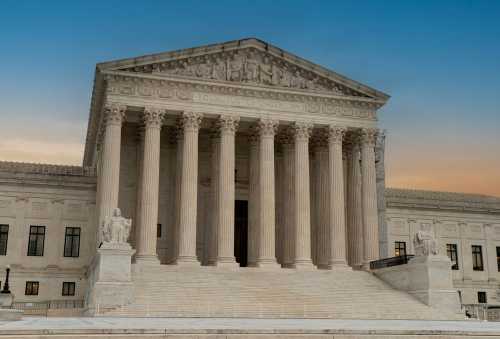
The Federal Reserve Act says that Fed governors can be removed by the president before the expiration of their terms only “for cause.” For many years, the Fed has relied on a 1935 case (Humphrey’s Executor v. United States), in which the Supreme Court ruled that President Franklin D. Roosevelt could not fire a member of the Federal Trade Commission (FTC) due to policy disagreements, because the law said commissioners could be removed only for “inefficiency, neglect of duty, or malfeasance in office.” (FDR said FTC’s work could be “carried out most effectively with personnel of my own selection.”) But in June 2026, the Supreme Court, in a 6-3 decision (Trump v. Slaughter), overturned Humphrey’s Executor, giving the president the power to fire members of the FTC and other independent agencies.
However, on the same day, the Supreme Court blocked President Trump’s attempt to fire Fed Governor Lisa Cook. The president had argued that her alleged mortgage fraud is sufficient cause to fire her, although she has not been formally charged with and denies any wrongdoing—and, importantly for the Court, didn’t get due process. (More on this below.) Former Fed chairs Ben Bernanke, Alan Greenspan, and Janet Yellen, along with other former economic policy officials from both Republican and Democratic administrations, advised the Supreme Court in an amicus brief that removing Cook from the Board immediately “would expose the Federal Reserve to political influences, thereby eroding public confidence in the Fed’s independence and jeopardizing the credibility and efficacy of U.S. monetary policy.”
In its 5-4 decision, the Court ruled on the narrow due process procedural grounds that Cook could remain on the Board while her case works its way through the lower courts where, the Supreme Court indicated, she is likely to prevail. In his majority opinion, Chief Justice John Roberts wrote, “[I]t is the Federal Reserve’s independence that allows it to pursue its mandate of ‘maximum employment, stable prices, and moderate long-term interest rates,’ goals that may be thwarted if (to quote [Alexander] Hamilton) ‘suspicion’ arose that its operations were ‘at the disposal of the Government,’ which often may favor ephemeral short-term gains over long-term growth. Not only the fact of independence, but also the appearance of independence is key to the Federal Reserve’s design.”
Allowing the president to remove Cook while the lower courts weigh the question of whether she did anything to justify a “for-cause” removal “would allow the President to remove a member of the Federal Reserve at any time, for any reason, without any notice before, and without any judicial check after. That would turn for-cause protection into little more than at-will employment,” the Chief Justice wrote.
In a concurring opinion, Justice Brett Kavanaugh wrote: “[W]e should not leave open the question whether the Federal Reserve can remain an independent agency in the wake of Slaughter. After Slaughter, there is a clear choice: Either the Federal Reserve may remain independent (with the Governors removable for cause, not at will), or it may not. Leaving that question open would create significant uncertainty about whether the Court might soon eliminate the Federal Reserve’s independence, and thereby expose the Federal Reserve to political influences and jeopardize the efficacy of U. S. monetary policy. Even temporary uncertainty about the status of the Federal Reserve could spark political upheaval, including confusion about whether the President could immediately remove multiple Governors at will, as well as turmoil in the U. S. and world economies.”
What about the presidents of the 12 Federal Reserve Banks?
Each of the 12 Federal Reserve banks has a nine-member, private-sector board of directors which appoints its president, subject to approval of the Federal Reserve Board in Washington. The presidents are appointed for a term of five years, all of which expire on the last day of February in years ending in 1 and 6 (that is, in 2026 and 2031). In December 2025, the Board renewed their terms through 2031.
At any one time, five of the 12 presidents serve alongside the seven Fed governors in Washington on the Federal Open Market Committee (FOMC), which sets interest rates. In the 1980s, Sen. John Melcher (D-Mont.) challenged this in federal court, arguing that because the five presidents are “officers” of the United States, they must be appointed by the president and confirmed by the Senate. In 1987, a federal appeals court rejected that argument, reasoning that Congress could change the law if it didn’t like it. The senator appealed. The Supreme Court didn’t take the case.
A 2019 opinion by the Justice Department’s Office of Legal Counsel said that the Reserve Bank presidents are “inferior officers” under the constitution and therefore are subject to “plenary removal” by the Fed Board of Governors in Washington. The Board, however, has never fired any of the presidents, nor has this opinion ever been tested in litigation.
What are the legal constraints on the Fed’s ability to buy securities and lend money?
The Federal Reserve Act says the Fed can (and does) buy and sell U.S. government securities and mortgage-backed securities guaranteed by the federal government, as well as municipal bonds with a maturity of up to six months. Under Section 13(3) of the Federal Reserve Act, the Fed has emergency lending authority which it can invoke only with the approval of the Secretary of the Treasury. The Fed used this authority extensively during the COVID-19 pandemic, offering loans to municipalities and corporations, among other things. (For details, see this Hutchins Center explainer.)
A major function of the Fed and other central banks is to lend to solvent banks when they need cash to meet depositors’ demands, provided the banks are solvent and can post collateral. These loans, by law, must be “secured to the satisfaction” of the Reserve Bank in whose district the borrower is headquartered.
What about bank regulation?
The Fed is less independent in its role overseeing the safety and soundness of banks and other financial institutions than in monetary policy. It directly supervises and regulates nearly 3,800 bank holding companies, 700 state-chartered banks, and several financial market utilities, such as the Clearing House Payments Company, which operates a bank-to-bank payments system. The Fed shares some of these responsibilities with other federal agencies, including the Federal Deposit Insurance Corporation (FDIC), the Office of the Comptroller of the Currency (OCC), the Securities and Exchange Commission (SEC), and the Commodity Futures Trading Commission (CFTC).
Some Fed regulations on banking can be overturned by Congress under the Congressional Review Act. The act, however, specifically exempts Fed “rules that concern monetary policy.”
In February 2025, Trump signed an executive order that, among other things, said that the White House Office of Management and Budget (OMB) shall “review independent regulatory agencies’ obligations for consistency with the President’s policies and priorities.” The order explicitly excluded the Fed “in its conduct of monetary authority,” but said it applies to the Fed’s “supervision and regulation of financial institutions.”
The executive order also said that OMB can adjust agencies’ “apportionments” to prohibit them from “expending appropriations on particular activities, functions, projects, or objects, so long as such restrictions are consistent with law.” (In OMB parlance, “apportionment” is a legally binding, OMB-approved “plan to use budgetary resources” consistent with congressional appropriations.)
It is not clear if or how that applies to the Fed’s supervisory and regulatory operations. In contrast to most other arms of the federal government, Congress does not decide how much the Fed spends on its operations. The Fed’s income comes primarily from the interest it earns on government securities it buys in the secondary market and, when its revenue exceeds its expenses, it turns the surplus over to the Treasury.
Author

Related Content
The Brookings Institution is committed to quality, independence, and impact.
We are supported by a diverse array of funders. In line with our values and policies, each Brookings publication represents the sole views of its author(s).

Commentary
Why is the Federal Reserve independent, and what does that mean in practice?
June 29, 2026