




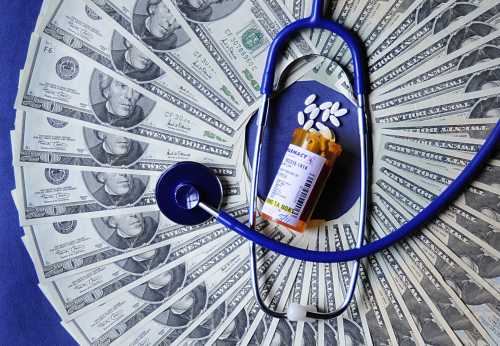
In 2010, the U.S. government projected that Americans would spend about $6 trillion dollars on health care, a little over 21% of GDP, in 2024. The actual amount spent was almost $1 trillion less. In fact, health care spending has been below projections almost every year since the early 2010s. In a new BPEA paper, “Has the U.S. bent the health care cost curve?” David Cutler and Lev Klarnet of Harvard University document this historic slowdown in spending, identify causes, and offer insight into whether this slowdown is a permanent adjustment to the trend. On this episode of the Brookings Podcast on Economic Activity, the authors speak with Richard Frank, director of Brookings’ Center on Health Policy, about their study.
Related Content
- Listen to the Brookings Podcast on Economic Activity on Apple, Spotify, YouTube, or wherever you like to get podcasts.
- Learn about other Brookings podcasts from the Brookings Podcast Network.
- Sign up for the podcasts newsletter for occasional updates on featured episodes and new shows.
- Send feedback email to [email protected].
Transcript
[music]
EBERLY: I am Jan Eberly, the James R. and Helen D. Russell Professor of Finance at Northwestern University.
STEINSSON: And I’m Jón Steinsson, Marek Professor of Public Policy and Economics at the University of California Berkeley.
EBERLY: We are the co-editors of the Brookings Papers on Economic Activity, a semi-annual academic conference and journal that pairs rigorous research with real-time policy analysis to address the most urgent economic challenges of the day.
STEINSSON: And this is the Brookings Podcast on Economic Activity, where we share conversations with leading economists on the research they do and how it will affect economic policy.
The high cost of healthcare has been at the center of public policy debates in the United States for as long as most of us can remember. That makes the results of the new BPEA paper we will be discussing today particularly interesting.
The paper is titled, “Has the United States Bent the Healthcare Cost Curve?” It highlights that the growth of healthcare spending slowed substantially between 2010 and 2024. Healthcare still got more expensive, But it got more expensive much less rapidly than over the prior few decades.
On today’s episode, we’ll hear a discussion on how this happened and whether it might continue with the authors, David M. Cutler and Lev Klarnet of Harvard University and Richard Frank, Director of Brookings Center on Health Policy.
EBERLY: This is a very complex issue since it’s hard to measure healthcare costs and there’s no single metric of health services. Moreover, healthcare quality changes over time, so it’s hard to tell if costs are higher because the same procedure is more expensive or if treatments have improved.
The authors examine efforts that would have tended to reduce cost in key areas, notably acute care and prescription drugs. They find that cost saving technologies, such as moving from inpatient to outpatient treatment and reduced demand for expensive treatments, have been the two most important factors in the slowdown.
STEINSSON: With that, let’s turn it over to Richard.
[2:24]
FRANK: Well, thanks, I’d like to welcome David.
CUTLER: Thank you so much for having me.
FRANK: And Lev.
KLARNET: Great to be here.
FRANK: Well, first off, I wanted to congratulate you guys on a terrific paper. It really does pull together many big questions that have been around for a long time in a very clear way. So, thanks for that.
Let me start with you, David. You know, the paper makes a really strong case that the spending growth has been reduced below expectations. And that, by and large, it’s done so without really compromising outcomes, health outcomes. And one of the findings, though, that you note is that what is driving a lot of this is changes in cost sharing arrangements.
And as you know, the track record for high-deductible health plans, for example, is not stellar. That is, it does tend to compromise health care. So, as you kind of look forward and you see, for example your finding of 11 to 27 percent of the slowdown being driven by cost sharing, does this make you nervous about future health outcomes?
[3:38]
CUTLER: Yeah, so we, did find that a lot of the savings are associated with what looks to be improved health. Things like minimally invasive surgery that doesn’t require as long a recovery where the complications aren’t as severe and so on. The one most concerning finding about ways of saving money has been that from the increase in high-deductible health plans.
Almost a third of Americans who have private insurance now are in a high-deductible health plan, where they pay maybe 2,500 dollars or even higher before insurance covers anything. What we know about individuals in those settings is that people absolutely use less care.
So, when someone’s in a high-deductible health plan, they absolutely use less care. That by itself is neither good nor bad. But unfortunately, people are not very good at figuring out which care They should get rid of because it’s not contributing much value and which care they should not get rid of. And so, there are a large number of studies showing that the care that is foregone when people are in high-deductible health plans is almost like random.
It’s almost just a random set of the care that people receive. And that means that we’re hitting valuable care in addition to less valuable care. And so that’s the one of our findings that I think is most troubling along those lines. Many of the other things, like physicians ordering fewer images because of their payment incentives or because of their sense of value and so on, doesn’t seem to be associated with poor outcomes.
Lots of debate about prior authorization and so on. Obvious, but this is the one that is the most troubling along these lines.
FRANK: Great. Thanks. So let me turn to you, Lev, to talk about a second finding which is in a sense, one of your strongest and actually in a sense, most uplifting findings is that so much of this slowdown has been driven by new technology.
And sort of technological advances in the U. S. health system. And that finding is coupled with the observation that, well, you know, you’ve seen somewhat similar slowdowns in Europe and other OECD countries. But the U. S. has been ahead of them.
But since we all kind of draw from the same body of technology, if you will what is it that really makes the U.S. special in this case?
[6:15]
KLARNET: So, one of the findings that we have is that if you look at healthcare as a share of GDP in the U.S. compared to other OECD countries. In the past decade or so it’s been the only time when healthcare in the United States as a share of GDP has grown more slowly than the composite of other OECD countries.
And that fact was particularly striking for us. And it showed that. What’s happened in the United States over the past 15 years or so, has happened, you know, even more so here than elsewhere. It’s true that healthcare slowed a bit in other countries as well, so it’s completely possible that many of the technological advances that have happened here that have led to slower growth have also happened elsewhere.
The key cases that we look at. Our cardiovascular disease and the shift from inpatient to outpatient surgery. And what’s fascinating about both of these cases is that while in the past, technology has been a leading driver of growth in healthcare spending, as we’ve been able to treat more conditions and solve more problems, what’s fascinating about these cases is that we’re actually able to do oftentimes better, even in the case of cardiovascular disease, a lot cheaper.
FRANK: But you’d expect that the Europeans also have the same access to the cardiovascular technology, for example, as the U.S., can you say anything more about what’s driving the difference? Maybe David, you want to jump in here, I see you nodding.
[7:55]
CUTLER: Yeah, some of it is, I suspect we’ve probably used some of the new drugs more than other countries have in part because the cost was always higher in the U.S. and so as they’ve gone generic, the costs have come down more in the U.S. I think in part because docs in the U.S. are probably a little bit more inclined towards the technological component than they are in other countries, so there may be a little bit more recommendation for exercise and dietary change, and in the U.S. you get that and you also get medications. I also think because we had built up more about things like hip and knee replacements and so on, that when you then find a way to save money on it, you save more in the areas where you’re doing more, you know, so if you’re doing twice as much of it, then a technology that saves you 20 percent is going to be a bigger overall dollar amount.
So, it’s you know, having climbed the mountain, if you climb a taller mountain, the way down is steeper than if you climb a shorter mountain and, so I think that part is probably adding to it a bit.
FRANK: Great. Thanks so much. Now, let’s pull together a couple of these points. Now the paper addresses the sort of long standing view that the health sector is a low technology part of the economy or low productivity part of the economy. And your paper strongly provides a different view of that. And I think that was one of the most convincing, you know, strongest part of the paper.
But what it prompted in my mind was the idea that if this is true and people are getting healthier because of all this technology and it’s driving costs down, well, if there’s a growing share of GDP, how should we be thinking about that as a matter of good or bad with respect to our well being?
[9:43]
CUTLER: So, I’ll start off and then Lev may want to jump in. The idea behind the question you raised strikes me as exactly right, which is, the key word is not spending, the key word is value. And if you’re getting value for the money, then you should do it, and if you’re not getting value for the money, then you shouldn’t do it.
That is an important issue, and it’s particularly important the more you’re spending on it, because, you know, wasting 10 percent of a big budget is an enormous consequence, enormously bigger than wasting 10 percent of a small budget. I think what we have done is this medical sector has gotten somewhat more productive in the past 15 or so years.
We have figured out ways to improve our health and provide care to people that are not as expensive or cheaper than what was there. That’s good. I don’t think that we have solved the problem. And I’m a little bit of a runner. So, the way that I think about it is we have managed to run a pretty good 10k race.
That is, we’ve done okay. and we set ourselves a goal and we did okay. What I really would love to do is to win the Boston Marathon, or the New York Marathon, or wherever. We’re not there yet. And so, that’s what I want to do is say, yeah, not bad so far. How do we get even more productive and go, not just that we’re holding it constant, but we should be able to decrease the share of spending, health spending, and GDP, and still have better outcomes as a result.
FRANK: Lev, do you want to jump in here?
[11:25]
KLARNET: Sure, so I’ll say that one thing that, you know, David teaches us all in graduate school is the key thing to think about is the outcome when it comes to this. So, it’s about health outcomes for a particular condition. That’s how we should think about productivity, the cost of helping someone with severe arthritis, or, you know, dealing with heart disease.
And we’ve shown in this paper, there’s many cases where, both we’re improving health, And lowering costs. And that’s the key to how we’ve become increasingly productive. And I think many people have had experiences with the healthcare system that just demonstrate how productive it can be.
Where, many years ago, people would be in an inpatient facility for a week or even longer and go to a skilled nursing facility following that, and today people can just as safely go home the same day, and so to me, the idea that healthcare is not productive and hasn’t been is a bit shocking.
FRANK: So, I guess, the message from you two is that even though we’ve been grinding our teeth for, you know, 30 years about the growing share of healthcare and GDP it’s not entirely time to exhale and say, we’ve won the race.
[12:40]
CUTLER: No, and I want to point out another thing that’s a part of that, which is, healthcare as a share of GDP is if everyone’s income is going up, and healthcare is going up, what does that mean?
GDP is not being spread equally. So, there’s some people who are getting a lot more, and some people who are getting the same or less. But everyone’s healthcare is going up. So, for a large share of the population, healthcare continues to go up, even as incomes are not. And that’s a really big issue.
For other people, their incomes are growing more rapidly than healthcare, and that’s great. But those other folks, I really worry about an enormous amount.
FRANK: Great. Thank you. Let me turn to just something that made me scratch my head a little bit. Which is, as I was looking at your analysis and looking at the way that costs have been reduced.
A lot of it has come from what you referred to as substitution, from higher cost institutional type of care to lower cost outpatient care. And one of the things that occurred to me is that perhaps we might be too optimistic about that because in fact and I’ll take the long term care sector that you focused on as an example, if you’re in a nursing home, the nursing home provides you with care and support, but also room and board. And then when you go to the outpatient community side, the community programs provide you with care and support, but not room and board. And when you take the room and board money out of this, you automatically get a saving to the health sector.
Because either households are picking it up, or housing vouchers or something like that. How important do you think that is to your story?
[14:30]
CUTLER: It’s an important issue, it’s not a huge quantitative importance to our story. But that’s exactly right. And in fact, this actually goes back to when Simon Kuznets invented the national income accounts.
And at the time, the issue was how do you value women’s work at home? And you know, cooking and cleaning and doing the laundry and so on, all of which was predominantly done by women at the time. And should you include that in GDP? And the answer was, no, they didn’t because it’s not priced, but yet if the woman goes to work and earns money and then pays someone to cook and clean and do the laundry, then it is in GDP because there’s a price.
And so, it’s the same thing here. If one is in a nursing facility and they’re providing room and board, that counts as like a hotel service and it’s in their medical spending. But if they’re providing it at home and their daughter-in-law is providing care or friends or other relatives and are not being compensated, then it’s not counted as medical spending.
If we were doing the fix up, which Simon Kuznets thought about but didn’t do, we would value that care provision too. We would say how much implicit care, informal care, are people receiving. Most of the reductions we find are not in the long term care parts, so I don’t think that’s going on as a big part of what we find, but I do think it is important, particularly if you look at people in need of long term services and supports, the frail, elderly, people with intellectual or developmental difficulties, people with severe mental health impairment and so on, where there have been big reductions in hospitalizations, inpatient use, that’s probably a part of what’s going on for those groups.
FRANK: Great. Thanks. One more question. And you mentioned it a little bit earlier your findings on prescription drugs spending. And you kind of note that a lot of this slowdown is because of spending on new drugs. And to what extent do you think this is due to new science or incentives to focus on orphan drug which has become, they’re almost 50 percent of all the new drugs that come out.
And so how much of this is just in a sense. How we’re sort of managing our own science as opposed to in the rest of your story as if new science is available broadly, and we’re just making use of all of it.
[16:57]
CUTLER: Maybe I’ll start off and then Lev can chime in on things. The pharmaceutical issue is so interesting because it picks up so many of the themes of this.
So, if you go back to 2000, year 2000, the big blockbuster drugs at the time were mental health drugs, things like for depression, anxiety and so on, and pain medications. You know, opioids, this was the sort of era of the opioids and so on. We wrote, we, in this case being you, wrote a lot, how these drugs were overused.
They were used in situations without clinical testing. So, they got to be blockbusters without any real evidence that they were doing what they were supposed to do and indeed that in many cases they were harmful. You almost never see that big a mass market drug now.
They tend to be very specialized drugs. The new blockbusters, they’re the orphan drugs or they’re for people with a particular type of cancer or a particular genetic sequence of a cancer or so on. And they’re very limited. They’re extremely expensive, but they’re very limited. And part of that I think is because the science, we just haven’t done a lot in the way of science to say what is the non-addictive pain reliever that’s going to help us with pain? What is the drug that’s going to finally change the course of Alzheimer’s disease or Parkinson’s disease We haven’t developed those. We’ve developed the other more niche population drugs. And then we’re doing, we being the system, is really controlling their use a lot.
So, you have the insurers say, well, look, this drug was developed for refractory cancer of the X, and therefore we are only going to approve it for refractory cancer of the X. Unlike with the mental health drugs and the opioids where, you know, oh, look, any patient in pain, you know, yes, it’s approved for this, but any patient in pain, or any patient with, Mild mental health or whatever gets on it, the sort of technology of prior authorization and payment reform and all of that has meant that things are very substantially restricted in use.
And so, the technology and the economic incentives together are leading to a situation where the new drugs are not contributing like what we had thought. And just to follow that sentence up with one more: at the time in 2000, anywhere from 2000 to 2010, if you had said to people, tell me, are the forecasts for prescription drugs too high or too low?
Our best guess, probably my guess at the time, was they’re too low because the genomic revolution is going to just lead to immense understanding and we’re going to treat all these things with drugs and it’s going to be super expensive and so on. And of course, the biggest item where we over predicted was prescription medications.
So that has not happened anywhere like what people thought it would. And it’s a really fundamental part of the story.
FRANK: So, in a sense what you’re saying, I think, just to sum up, is we’ve developed science in a particular direction. Science has just gone in that direction because that’s just the way the field is developing. And we’ve put into place incentives and management processes that actually exaggerate the effects of that science.
[20:21]
KLARNET: One piece that, David, I’m curious what you think about is in our theory, we’re going to say that there’s going to be as technology advances more competition. And as there’s, you know, the second or third drug that comes in on an issue, there’s going to be competition both with prior drugs or procedures and such and later stage ones, which can drive down the price.
So, one thing I’m thinking about is has competition gotten stronger in the more recent period as more treatments come about for a particular disease? Thank you.
[20:53]
CUTLER: Yeah, I think that’s a very good issue because if you look again, go back to 2000 or so, you know, they’re the mental health drugs and they all made a lot of money and so on.
And then in ‘20, what was it, 2015 or ‘14, we invented hepatitis C meds, you know, meds to cure people with hepatitis C. And the initial price was, you know, $85,000 a treatment. And within two or three years, it was down to $25,000 a treatment. Because we had a lot faster competition. And that’s again, a feature of the economic environment that can also be affected by policies.
How quickly does the competition come in? And the insurers were very good at playing one drug off against another in a way that they weren’t with many of the earlier generations of blockbusters. So, there is a lot more competition.
So, I do think that the science and the economics have, if you will, conspired together here, or at least been synergistic in terms of how they affect the outcomes of the pharmaceutical market.
FRANK: Before we leave this, I just want to, come back to that a little bit. Your paper is very persuasive on the competition from generics front. However, if you think about where the science is going, it’s going to cell and gene therapy and to biologics, and those are places where there isn’t a lot of competition.
So, in a sense, now pushing you to your forward looking view of all this, do you really think that competition is going to be the thing that drives prices down in the future, or actually are we going to see another generation of spending pushes from the science.
[22:28]
CUTLER: I don’t know the answer and of course I would love to.
You could imagine where, you know, if you’re making a therapy specific to each individual, there’s no competition. Because you have to do it one place. You know, you have to go to Philadelphia to get the thing done. Or you could imagine, no, there will actually be seven or ten places across the country where you can do it.
And the insurers will sort of do a center of excellence strategy and say, look, I can choose among these seven or 10 places. And either way, it’s a trip for you because you got to do something.
But so, we might as well figure out, is the Mayo Clinic better than UPenn and cheaper or better than Mass General and the Dana Farber, you know, like you could imagine competition in smaller numbers being effective.
I don’t know. What’s interesting, and we sort of noted it, but we didn’t discuss it too much in the paper, most of the kind of gene, you know, CAR T therapy type drugs have actually underperformed predictions. People find them more difficult to use than thought, the side effects, the doctors don’t want to give up the patients, the insurers don’t want to authorize it.
So actually, a lot of them are underperforming financially, sometimes clinically, relative to what was thought. I don’t know if that’s good or bad but it suggests that it’s not going to be as easy a road to say, you know, here you are, you’re in, Oklahoma being treated for cancer. Oh, by the way, why don’t you go spend a month in Pittsburgh getting treated and we’ll pay for the drug, but we’re not going to pay for the hotel room. And there’s a big copay on the hospitalization, which, by the way, you might need because we’re killing your white blood cells. And you got to take off work for a month too.
And so like, maybe that’s not going to be as easy a sell as we thought it would be.
FRANK: Yeah. Good point. You know, bearing in mind Yogi Berra’s admonition that prediction is hard, especially about the future. Your book in a sense ends up speculating a little bit about the future. I wanted to give you a second to actually kind of close us out with sort of your view about where this is all headed.
[24:33]
CUTLER: So, I’ll paint a couple of scenarios. So, one scenario is the genomic future, where we can do all these things. We can customize your cancer therapy for you. We can slow down your Alzheimer’s disease. We can, you know, deal with autoimmune disorders and so on. And that’s all super expensive and we do a lot of it.
The other future is we use AI. And we figure out how, not only not to put you in the hospital, but how to keep you at home healthy. And we take the 25 percent of healthcare, which is administrative costs, and get rid of 80 percent of that. And so, we effectively save, you know, 20 percent of healthcare spending.
And we invent some more cures for things that we’re halfway good at the moment. We take the things that are currently expensive technologically and we develop more cures. And we figure out how to deal with overpayment to pharmaceutical companies and overpayment of insurance companies and so on.
And the net effect is that healthcare is much cheaper and actually much better than it was. And I wish I knew which of those two scenarios to bank on. Ironically, I think the one that seems more certain because the technology already exists is the second of those. So, the AI has come so far in the past two or three years that I can easily see ways where we can drive an enormous amount out of the system.
Whether that will then be offset or overwhelmed by other types of spending. Hopefully it’ll be valuable. Maybe some of it won’t be. I don’t know for sure, but I think that’s the race that we’re in between the ability to treat, to prevent the progression of Alzheimer’s disease and the ability to cut out the administrative waste and the profits that we don’t need to have.
FRANK: Okay well, I really appreciate it. I very much enjoyed reading the paper and I sure hope you’re right about scenario 2.
CUTLER: If not, Lev is younger than me, so you’ll get more time to blame him.
FRANK: Yes, and we’ll be paying our rent while we stay at home being cared for by our long term care aides. Thank you very much both Lev and David.
CUTLER: Thank you, Richard.
KLARNET: Thank you.
[music]
STEINSSON: Once again, I’m Jón Steinsson
EBERLY: And I’m Jan Eberly.
STEINSSON: And this has been the Brookings Podcast on Economic Activity. Thanks to our guests for this great conversation and be sure to subscribe to get notifications about new releases of this podcast.
EBERLY: The Brookings Podcast on Economic Activity is produced by the Brookings Podcast Network. Learn more about this and our other podcasts at Brookings dot edu slash podcasts. Send feedback to podcasts at Brookings dot edu and find out more about the Brookings Papers on Economic Activity online at Brookings dot edu slash B-P-E-A.
STEINSSON: Thanks to the team that makes this podcast possible. Fred Dews, supervising producer Chris Miller, co-producer, Gaston Reboredo, co-producer and audio engineer. Show Art was designed by Katie Meris. And promotional support comes from our colleagues in Brookings Communications.
Participants





The Brookings Institution is committed to quality, independence, and impact.
We are supported by a diverse array of funders. In line with our values and policies, each Brookings publication represents the sole views of its author(s).


Commentary
PodcastWhy is spending on health care slowing?
April 30, 2026
Listen on
Brookings Podcast on Economic Activity