A good toy is 90% kid and 10% toy. A good toy does not direct kids, it prompts them. It does not substitute for human connection, it supplements it.
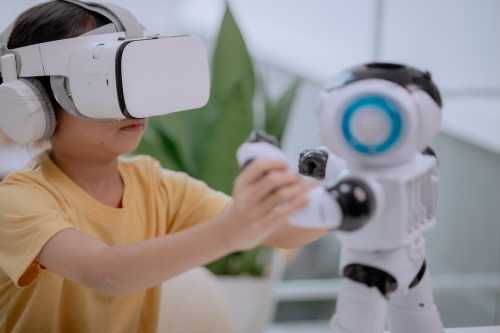
Last year, Santa packed his bag with many toys that violated this basic rule. There were plushy dolls that were advertised to become a child’s friend, robots like Miko advertised as “Safe AI for everyday learning” and even Wuffy the robot dog, designed to teach kids love and responsibility. Amazingly, the battery-powered dog did not have to eat or even go for a walk, suggesting few lessons in responsibility. These toys are better at suggesting what the child should do than becoming prompts for imaginary play. Often displayed in solo mode, a child engaging with them needs no other companions and no human interaction.
It is little wonder that the AI toys were met with an outcry from parents and policymakers. Public Interest Research Group’s (PIRG) “Trouble in Toyland” piece sparked concerns that these plushy friends would help a child find a match when asked and would even help the child light it. Similarly, Common Sense Media gives AI toys an “unacceptable risk” designation, citing an example of a child saying she “liked to jump from high places” to the toy, Miko. Miko recommended “You could try a tree, a bench, your roof, or a window. Just remember, be safe.”
These concerns fueled California to pass legislation that institutes a four-year moratorium on “the sale and manufacturing of toys with artificial intelligence (AI) chatbot capabilities for children under 16.” The New York Assembly and House recently passed similar legislation.
What happened to AI toys this year? You can still find the toys if you specifically search for them. Some toys from last year have been reshelved. PIRG retested these toys and noted that they still have unacceptable risks. Happily, however, toy companies appear to be pushing back against screen-based and AI-infused toys. In fact, even marketing for AI toys this year has emphasized that they are often screenless, even if not yet ready for prime time.
The top toy lists for the 2026 holiday season host many more old favorites that stick by the 90% child rule. The 2026 Good Housekeeping Winners, Amazon’s Top 100+ Toy List, Target’s Bullseye’s Top 50 Must-Have Toys, The Toy Foundation’s Toy of the Year Finalist Lists, and Walmart’s Top Toy List include familiar manipulatives, pretend play, block building and artistic creation toys.
The toy industry is at an inflection point. Today’s toy lists offer opportunities for children to play together and practice the human-to-human skills necessary for them to thrive in school and beyond. When children build forts and castles together with blocks, when they practice taking turns and the art of being a good winner (or loser) when playing a game, when they pretend to bake brownies in a plastic oven, or when they imagine that the plush cat they love is real and pretend to take care of it, they are building key developmental skills like spatial skills (can you put the blue block on top of the red one), and even story creation (who is the character, what is the setting and what is the character trying to do?). These skills help drive early literacy.
Parents and caregivers will still have to navigate the new technology that will undoubtedly find its way into future offerings. A 2026 Common Sense Media report finds that 49% of parents have either bought or are interested in buying an AI toy for their children, with 19% being at least somewhat interested in having that toy serve as a companion for their child. At the same time, parents also report worries about these toys collecting personal information, their own difficulty in setting limits, cybersecurity risks, toys providing inappropriate content, and a fear of these toys displacing playtime with family and friends. This is not to say that AI-enhanced toys cannot be good for young children, but at the moment, the science cautions, let the buyer beware.
Future AI-embedded toys can be designed to prompt children to work together on problems or excite families with challenges and games. These toys are just not available yet. Perhaps future toy designers can work with scientists and educators to help us use tech as a tool for building imagination and human connection rather than dampening it.
It seems that, in response to this, Santa left many of the AI toys at the North Pole this year. We look forward to seeing what developers can create in the coming years that centers play and human engagement. Until then, kids and their parents will benefit most from the magnetic tiles, blocks and low-tech toys of old—the ones that are 90% child and 10% toy.
Authors



Related Content

-
Acknowledgements and disclosures
Zero to Three has made a contribution toward the forthcoming Brookings Center for Universal Education task force on AI and young children. Kathy Hirsh-Pasek is on the board of Zero to Three.
Brookings recognizes that the value it provides is in its absolute commitment to quality, independence, and impact. The conclusions and recommendations of any Brookings publication are solely those of its author(s), and do not reflect the views or policies of the Institution, its management, its other scholars, its funders, or views of the authors’ other affiliated organizations.
The Brookings Institution is committed to quality, independence, and impact.
We are supported by a diverse array of funders. In line with our values and policies, each Brookings publication represents the sole views of its author(s).



Commentary
Why AI toys shouldn’t make the list this holiday season
November 20, 2026