



TechTank, a biweekly podcast from the Center for Technology Innovation at Brookings, explores today’s most consequential technology issues. Moderators Nicol Turner Lee and Darrell West speak with experts and policymakers to share data, ideas, and policy solutions that address the challenges of our digital world.
A growing number of Americans report using artificial intelligence (AI), despite levels of trust remaining stagnant or dropping in some areas. Surveys reveal concern about job loss, effects on personal relationships, and the environment amid the vast buildout of data centers. People are curious about the technology, but they don’t want it to limit their opportunities or pave the way to the catastrophic risks some tech leaders have warned about.
Yet between the two dominant, opposing narratives about AI—that it will bring about utopia or the end of the world—are critical conversations regarding how everyday people can use, benefit from, and contribute to the technology. Research has shown how AI can benefit and transform access to essential services, but whether that’s achieved is now a question of governance and reframing public discussions about AI to how the future should look rather than focusing on tech companies’ visions for it.
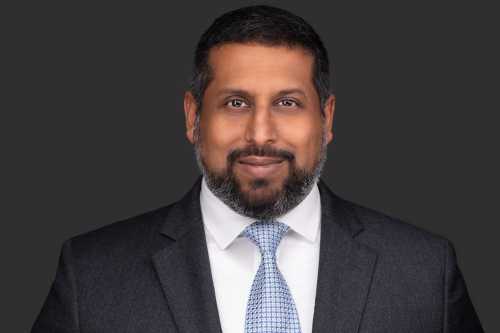
In this episode of the TechTank podcast, co-host Nicol Turner Lee is joined by Vilas Dhar, the president of the Patrick J. McGovern Foundation, to discuss how we can create an inclusive AI future and the landscape of funding AI for public purposes.
Listen to the episode and subscribe to the TechTank Podcast on Apple, Spotify, or Acast.
Transcript
[00:00:00] CO-HOST NICOL TURNER LEE: You’re listening to TechTank, a biweekly podcast from the Brookings Institution exploring the most consequential technology issues of our time. From racial bias in algorithms to the future of work, TechTank takes big ideas and makes them accessible. Welcome to the TechTank podcast. I am co-host Nicol Turner Lee, senior fellow and director of the Center for Technology Innovation and the founder of the AI Equity Lab at the Brookings Institution. Today, I’m really excited about the conversation, folks. We’re focusing on this question that does not often get asked, which is who AI is actually benefiting, and what are the big picture consequences for humanity if not properly guided? I mean, it’s no secret that we are seeing all of these things in the news as the frontier models rush to develop even larger language models, and leaders are still grappling with how AI and a AI future should look. I mean, Anthropic just recently came out with a 300-page document, folks. I’m still reading it, I’m still reading it, around their view of the world and humanity and democracy going forward. And even the pope, our recent pope, for example, has warned that focusing only on greater efficiency in AI will lead to more exploitation of humans, where we’ll become mere cogs instead of envisioning a future built around commitments to justice and common good. My guest today is that person who’s sitting squarely in the center of this. He understands the question that I pose needs answers, and we’re gonna probably get to those today. And he also has thought about the global context in which AI is rolling out, and the harms like mass job loss and discrimination and equity concerns, and how the public sentiment is gonna either increase or decrease. He gets it.
So I’m joined today by Vilas Dhar, my friend, and the president of the Patrick J. McGovern Foundation, one of the largest global funders of AI for public purposes, to discuss everything I just mentioned, and his visions for AI. Vilas served on the U.N. Secretary General’s high-level advisory board at AI, is the U.S. government’s nominated expert to the Global Partnership on AI, and advises Stanford HAI and the OECD. His work sits at the intersection of AI, technical governance, and democratic institution building. Vilas, thank you so much for being here, my friend.
[00:02:41] GUEST VILAS DHAR: Oh, Dr. Turner Lee, Nicol, you know I am such an admirer of your work, and I’m really delighted to be with you this morning.
[00:02:47] CO-HOST NICOL TURNER LEE: I know. We’ve, we’ve, uh, had so many conversations, and we really have had a front row seat to all the things that I’ve mentioned in the introduction, and I’m really excited to dig into those. You know, I wanna start with this Anthropic mantra, and, and again, I haven’t finished reading it, but I do think from what I have gleaned from headlines, uh, that they are really trying to, in this very lengthy document, share a lot of the uncertainty around AI and AI’s ability to manage itself without compromising what humans have built, our society has built. I, I just wanna start there, right? Because I think there’s, um, a lot of polling being done right now where this public sentiment sort of matches this uncertainty, Vilas, and I would love to hear from you, like, what do we do with this when we’re trying to build such a transformative technology?
[00:03:33] GUEST VILAS DHAR: Yeah. Thank you, Nicol. And again, I’m just so happy to be with you today. You know, I’ve spent nearly all of my life building technology and building civic institutions, and finding out where those two things intersect. And it’s given me a lot of hope about a future that’s possible. But it’s also given me some frustration and some impatience, and it gets right to the heart of your question. We’re stuck in this moment where we, as the public, are being asked to choose between overwhelming excitement and despondent fear, neither of which I think are the right answer. If we look at how the public narrative around AI has evolved, you know exactly the headlines I’m talking about. We see them every day. Either AI is gonna cure every human disease in the next 10 years or it’s gonna kill us all by 2035. It’s not really a common, uh, conversation about the things that you and I care about, which isn’t necessarily what will the technology do, but what are we gonna do with it?
[00:04:30] CO-HOST NICOL TURNER LEE: Yes.
[00:04:31] GUEST VILAS DHAR: And in that context, this document that you’re referring to, a lot of the recent public corporate communications have to be read through a few different lenses. I’ll give you two things I’ve been thinking a lot about. The first is I’m really happy and proud that we live in a world where the researchers who are trying to design these technologies have the comfort, the safety, the capacity to come out and say to the public, “We have real and sincere concerns and questions about what we’re building.” It’s a part of the American democratic experiment that everybody has a voice and nobody can silence them when they come out and say, “I have real fears about the risks of this thing that I’m building.” I want to acknowledge the bravery and courage of many of these researchers at these companies that have come out and shared these stories with all of us.
[00:05:18] But the second part of that story is also to acknowledge that we’re not only hearing, unfortunately, from scientists and researchers and people I’ve spent my whole life with. We’re also hearing from profit-seeking investors and executives who have a very different potential motivation to get to that trillion-dollar number in company valuation, to make sure there’s a frothiness in the public discourse, to make sure there’s investor attention, to make sure there’s a hype cycle I think if you take both of those intentions together and you can hold them as you read these documents, you have a way to navigate the complexity of what folks are talking about. And here’s my two-line version of that. On one side, we’re making investments into building the infrastructure of a technology that we don’t really understand, and maybe more importantly, we don’t have any mechanism by which you and I, Nicol, the people who are listening to this podcast, the everyday people across this country that are gonna have to be participants of the system-
[00:06:17] CO-HOST NICOL TURNER LEE: That’s right.
[00:06:17] GUEST VILAS DHAR: Actually have a voice in shaping what these tools become, and maybe more importantly, what our society becomes around these tools.
[00:06:25] CO-HOST NICOL TURNER LEE: Well, that’s so interesting. I mean, this is also, like, something that I pay close attention to, which again, I find you to be very interested. If I, if I may just digress, you know, what’s so interesting about some of these polls where you see a lot of concerning public sentiment is that people actually wanna use AI in some way or form. Right there was a poll I just read that said, you know, there’s a general concern, and a lot of it has to do with the fact of, like, not knowing what you, you know, what you mentioned, what this technology can actually do, as well as being afraid because it seems like it’s, you know, the unregulated environment is just allowing them to do whatever. But you and I also know why it’s so important to get this technology to everyday people is because it can be very transformative in areas like healthcare, the economy, democracy. I mean, how do we understand those use cases, uh, Vilas? Because I, I sit in this space now of, like, there’s this concern, but it’s like this gray area in which we do not have many so- solutions to bring people to a better understanding of what AI is, if that makes sense.
[00:07:26] GUEST VILAS DHAR: Well, this is where we’ve lost the thread in the conversation.
[00:07:29] CO-HOST NICOL TURNER LEE: Right, you know.
[00:07:30] GUEST VILAS DHAR: You know, for, for all of us who have been researchers and developers and builders in the AI space for decades, this was the only thing I ever cared about, was how we built these technologies in ways that transformed access to high-quality healthcare in rural, vulnerable settings, or how we make sure that the cliche that it has become now, but was actually the use case we designed for 10 years ago, was how do we make sure a subsistence farmer has the kind of information right at hand that lets them make a better decision about how to extract every possible bit of yield from their farm so that they can make sure their daughter can pay their school tuition fees? This was what AI was supposed to be. Now, I recognize that you might hear me as sounding hopelessly naive about all this, right? But this shift to trying to build AI tools that strip away human agency and labor, that reorganize institutions and make sure there’s less democratic voice, that pursue profit at all costs, are a very recent phenomenon in the AI field.
[00:08:29] I think we could have a solution here where instead of trying to fight that narrative and all the frustration that’s coming from it, maybe we go back to our roots. We talk about the public investments that are necessary in order to build AI across all those use cases that you and I know so intimately well, that we are very excited for the innovation that’s coming out of the private sector, but we know it has to be balanced by public investment, public ownership, and public institutions that are actually trying to solve these problems. Because the thing that would happen, Nicol, and I hear this in every community I spend time with across the country, exactly what you said. People are not rejecting AI out of hand. In fact, they’re deeply curious about it. Yes. They wanna use it.
[00:09:12] CO-HOST NICOL TURNER LEE: Right.
[00:09:13] GUEST VILAS DHAR: They just don’t wanna use it in ways that forcibly displace them from their work, that may mean that they can’t get a fair shake when they go for a credit decision, or that limit their access to justice. If that’s the only thing they’re getting pitched, then of course it makes sense to me that they wanna say AI as a whole category needs to get thrown out. This isn’t a technological question. It’s not about whether the tools themselves can be used well or not. We know with overwhelming evidence that they can It’s a question about whether we’re willing to just cede the ground on the entire public discourse to a small handful of tech companies and say, “You guys figure it out for us.” And every person I talk to across this country says, “Absolutely not.”
[00:09:57] CO-HOST NICOL TURNER LEE: Yeah, and I mean, I think that’s so real, right? Because, uh, the fact that these companies are a handful, they’re dictating, uh, as you’ve mentioned, human agency. And, you know, unfortunately, people are struggling with affordability, and they see this as, you know, another, uh, vulnerability that they’ll have as they try to, you know, care for their family and support, you know, their households. I mean, I think it’s so deep, right? Because it cuts across so many intersections, uh, that w- that conversation is not happening right now to better understand where people are. But, you know, the Pope came in and they offered another little, uh, nuance to this, which I found to be so fascinating. Um, I’m not Catholic, but I did read the document, and I do agree with the Pope’s activism around this, where from a spiritual frame, he’s sort of saying, “Look, where is humanity in all of this? Where is the moral compass in how we develop these tools? How do we avert this from becoming something that regresses progress?” It, it, and it, it feels, when I read that, oftentimes like a George Orwell scene, you know, in his book, 1984, something from The Terminator, that we’re just out of control and we’re just peons, right? Uh, I think of … There’s a minion example I give with agents when I’m talking to everyday people and they don’t quite understand when we talk about agentic infrastructure. And I say, “Just imagine a bunch of minions running around with trench coats doing what they do.” Right? I mean, you know, I … That to me realize like this is a new state of the conversation because it comes with a level of spirituality, and I know you’ve also looked at that very closely as to how do we navigate that moral compass with AI as well.
[00:11:33] GUEST VILAS DHAR: Well, now I’m stuck on thinking about minions- I know … running around on my behalf, Nicol.
[00:11:36] CO-HOST NICOL TURNER LEE: I know. It stays in your … It’s the greatest analogy I have for anybody who does not understand agentic in- uh, AI. Think about minions with a trench coat doing what they do. Um, and then-
[00:11:47] GUEST VILAS DHAR: I love that. Well, look, you’ve, uh, put your finger right on a couple of different things that are so important. The first is I am so happy that faith institutions, that civil society, that governments have woken up to the idea that these tools aren’t just about lines of code or algorithms. Yes. They’re about fundamental transformations in our society. And Pope Leo, and I have to say Pope Francis before him, have been incredibly visionary leaders in helping us put a frame around the social, ethical, and faith-based considerations that we need to have as we think about these issues. You know, as you described, the Pope in his circular, it’s called “Magnifica Humanitas,” put forward what I think is a really powerful consideration, and he says one thing in there that actually reflects and echoes a lot of where our human rights discourse has been. It’s a basic statement. It says, “If you wanna start in the language of human dignity, then you have to start from a pretty demanding proposition that your worth is more than and bigger than an economic calculation of how much you can produce in your lifetime I say it, and I know you, Nicol, and I know that for both of us, that sounds so reasonable and common sense, and yet it’s often not how decisions are made. Let me say it a different way. That we have value and dignity, identity, and worth in this world that’s more than just what job we have or what goods we produce or what ideas we create. And if we start from there, then it totally reshapes how we think about the values that we embed in the systems that we create.
In the AI systems, about how we think about not just displacing human labor, but augmenting our capacity to create. In our access to justice, indicating that efficiency isn’t the thing we should be solving for, justice should be the thing we’re solving for, and across every other mechanism. And it’s really, if I can say this to you, Nicol, it makes me a little bit sad that we had to wait for religious institutions to come in and remind us that we shouldn’t just let technological progress define the state of our society. We know this is the case, and this chorus that’s emerging from the Pope and his incredible team at the Vatican, who I’ve had a chance to spend some time with, from the Dalai Lama who I’ve spoken to about these issues to faith leaders across communities and societies coming forward and saying, “We’re not just talking now about products. We’re talking about the values that define the society we live in.” This is a conversation not for a few thousand people, but for the billions that make up the beauty of humanity.
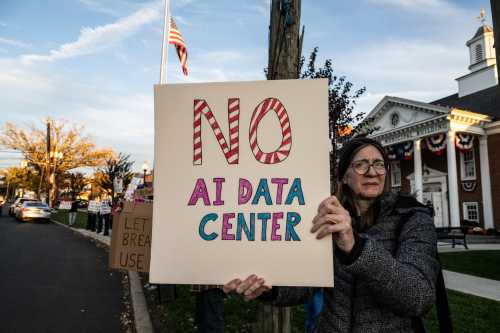
[00:14:26] CO-HOST NICOL TURNER LEE: Wow. Wow. And that, that to me is so interesting in this conversation because you and I have also worked together to ensure that these systems are complying with human and civil rights. And if you recall, remember back in the days, uh, that was a very significant concern around algorithmic decision-making, as you keep referring to this word justice, right? At the end of the day, these systems have to be just. They have to be equal. It appears to me, as I also listen to the news and the research that I’m doing now, um, as part of the AI Equity Lab, data centers, uh, are showing up as an unjust, uh, vehicle, where communities are standing up and saying, “You know, no way, um, not in my backyard.” We’re seeing issues like, you know, algorithmic decision-making and automated decision-making being rejected because, by states who are saying, “We do not want algorithms in hiring decisions.” We see groups that are still trying to tackle misinformation and disinformation that is AI-enabled and generated and do not have a vehicle for ensuring that AI literacy is matched within the communities they serve. I mean- That conversation to a certain extent, I agree with you that the Pope sort of brought back a lot of old memories for me in particular and yourself around where we need to center justice, where we need to center people. But why is it that that’s still not leading the conversation? You know what I mean? Like, we’re still talking about technical efficacy and all the things that are still important. We need to audit these systems for civil rights compliance. We need to evaluate these systems to make sure they’re doing what they say they do. But I s- I wanna stay with your thread around this is not a, just about the technology, it’s about people
[00:16:03] GUEST VILAS DHAR: Yeah, well let me pick up that last point, and I’ll come back to kind of the broader question you’re asking. You know, I’ve spent time with communities around data center issues in particular really over the last three years, but particularly over the last six months. Yes. From Louisville, Kentucky, all the way up to the northernmost town in Barrow, Alaska. I get to sit down, and because we don’t h- we’re not, we’re not lobbyists and we’re not advocates, we’re listeners- Yes and we’re facilitators, I’ve talked to the tech companies, and I’ve talked to the planning commissions, I’ve talked to governors and county commissioners, and I’ve talked to community groups, and here’s my takeaway from all this. Of course, there’s a conversation about data centers that’s about environmental impacts and economic sustainability, about public voice, but I’ll tell you one thing, Nicol. The conversation about data centers is not just about data centers. The data center debate has become a lightning rod and a catalyzing moment for a much deeper sense for a lot of folks across this country that we’re just not getting a fair shake.
[00:17:00] CO-HOST NICOL TURNER LEE: Yes.
[00:17:00] GUEST VILAS DHAR: That people are coming in, they’re extracting and exploiting value from our communities. They’re extending that work to create value for their shareholders, and there’s nothing left behind for the people in the communities we live in. It’s not just data centers, it’s AI use broadly. It’s how it’s being used to displace workers. It’s all of the kind of negative impacts we’ve talked about. So we need to look at data centers not just as a conversation about whether we wanna build these massive soulless warehouses in the middle of towns that pollute and create problems, right? Or the flip side of that, which I also am deeply sympathetic to, which is this is the infrastructure that will power American competitiveness and let us make sure that we are winning the AI race. We can come back and talk about that phrase in a minute if you want to, Nicol. But underneath it all is a question that’s more fundamental, is do we believe in a democratic process where people have voice? Do we believe that economic extraction should be accompanied by economic investment and building the welfare of communities? And around AI writ large, this question’s gonna come into focus again and again and again. You and I are talking at a time when some of the largest tech companies are filing those documents that you’ve talked about.
[00:18:12] Yes. The reason they’re filing them is to go out to IPO, to be in the public markets, to have multi-trillion dollar valuations, but maybe more implicitly, to have such overwhelming influence on the political and economic shape of what this country is, and people are saying, “You can’t do this without us.” That’s where a lot of that rage is coming from So if that’s the frame that we can take, then the question becomes, well, how do we do this? Like, this isn’t just a we’re raising our hands and saying we wanna be in the room. This is something much more powerful. It’s a movement of people across the country that are coming together. And I’ll tell you, Nicol, again, I’ve spent so much time in these communities. These topics are universally across political lines- Yes … across ideologies. They’re across party identification. They’re actually much more grounded in a sense of shared American liberty. And because of that, I actually think there’s a lot of power in this moment. People are calling for concrete proposals, and we can talk about some of those if you’re interested. I know you’ve been a leader- Yeah … in actually shaping some of these things around how we actually make sure that we govern these tools. And I wanna be clear, that doesn’t mean regulate them. It doesn’t mean put in place controls around innovation. It means balance our capacity for innovative enterprise with some basic values that shape the fact that as we build these things, they have to benefit all of us in a fair and just way.
[00:19:41] CO-HOST NICOL TURNER LEE: So that’s interesting. I mean, oh my God, I got so much to unpack here. The data center issue is very interesting, and I, I really do appreciate the way you framed it ’cause I feel the same way, right? That there’s so much, um, dissatisfaction with the democratic process, particularly here in the United States and across the world, that the data center issue, I agree with you, is way beyond just whether or not there’s a building, uh, a monstrosity in my backyard, but more so I now have agency to impact the political process. So, um, would love to continue that conversation. I think we need something on this after the midterms, right? That’s right. Because I think we’ll actually see that this is what this issue actually became. And I do appreciate, you know, the time that you’re spending in communities as well. I also think, to your point, like, communities do not have a voice, and I think we need some type of intermediary that empowers and enables communities with tools to be able to act on that inclination of what they feel, what they want to protect, uh, in their communities as well as where they want to transform.
[00:20:36] Because to your point, you know, I tell people all the time, today it’s a data center, next year it could be a quantum lab. So we have to prepare for these moments. And I agree with you, you know, trying to find that middle where we can actually think about economic trade-offs is really interesting. I also think that these are not issues that are only affecting the U.S. i do think that they have global consequence. And Vilas, I cannot count, I watch you on LinkedIn , the number of summits that are happening across the world to come up with some level of standard or hygiene around, you know, what makes for ethical, responsible AI. You served on the U.N. Secretary General’s high-level advisory board on AI, and the U.N. recently moved to establish this independent international scientific panel on AI. Talk to me about, like, how significant that moment is, too, because we often forget we’re not the only one talking about this, folks. For people listening, the U.S. does have a lot of people talking about this outside of your particular city or state or town. What’s this moment, Vilas? Like, what is gonna be determined from these institutions, and how eager are they to latch onto AI governance or other things that, you know, you know more about than I do?
[00:21:45] GUEST VILAS DHAR: Well, I think there are very few topics that fit that last category, Nicol, because you have been such a leader in this space too. But let me say a few things. So the first is, I think it’s worth recognizing and naming this moment in history. For the last hundred years, we’ve had this evolution of public institutions, and many of them were shaped in that post-World War II era. They were designed to create stability and function across a whole lot of issues. And I have to say, Nicol, because I feel like we have lost the thread on this a little bit. These institutions that we now often are the subject of derision or amusement, they still shape so many of the meaningful ways that make our world work. I’ll give you a really esoteric example, right? Shipping lanes and international trade. The mechanisms that create stability there and give us an international frame of law that lets us get our goods that we buy on an online platform delivered to our house within three days, they’re all created, maintained, and governed by institutions like the United Nations. So even as we enter this moment where these institutions are being weakened by a variety of factors, by geopolitical considerations, by a sense of relevance, by, you know, internal leadership and inefficiency, there’s an entire invisible architecture of international governance that is essential to have the world that we have today.
[00:23:07] As we look forward and we say almost all of these systems are gonna change because of AI, it brings us to two questions that I think are really critical. The first is, do we actually believe in the idea of multilateral participatory governance of all of these issues in the world? Because you’ve heard, and we’ve seen, the destruction of many of our institutions that are supposed to protect this. Does it mean that as a society we’re saying, “You know what? Everybody’s on their own. You go figure it out for yourself”? I would hate to think that that’s the case The second question’s more pragmatic. If we can come to a consensus that at least there are some issues where multilateral governance, where, as we’ve said earlier in this conversation, bringing those billions of people and their voices to play in designing a world that’s seamless and frictionless matters, then we ask, are the institutions that we have capable of?
[00:24:00] Are they good enough? Are they designed for the challenges that come ahead? I’ve taken both of these questions into my work as I’ve extended into the international space, and I’ll give you a few examples. You mentioned some of the work we’ve done at the United Nations, where I th- I actually find a great deal of optimism because over the last few years, we’ve seen more progress on a topic around multilateral governance in AI than any topic I can think of really in my lifetime. Maybe the last thing I can think of was global consensus around nuclear arms testing. Since then, we haven’t really had this much attention, interest, and consensus-based work. And as you mentioned, that’s led to some really positive interventions from the high-level advisory body in a report that we issued called “Governing AI for Humanity”, to these new mechanisms we’re building to ensure that the scientific community actually has a voice that’s independent from the companies that can provide reasoned, wise assessment of where these technologies and the risks attached to them are gonna intersect with people across the world We’ve also had a chance to work with tens of governments, at last count I think it was over 70, to help them assess where they are in their AI readiness journey, and to create capacity and competence for them to be able to build both governance environments, but also think about how they wanna invest and engage in bilateral or multilateral negotiation around what AI means for them.
[00:25:20] That’s a really wonky answer, Nicol, and I thank you for your patience for just letting me kind of get through all that, but let me bring it back to what really matters.
[00:25:26] CO-HOST NICOL TURNER LEE: Yep.
[00:25:27] GUEST VILAS DHAR: If we wanted to live in a world where we said competitiveness and economic domination are the primary frames of AI innovation, and we’ve heard that language a little bit, then unfortunately the world collapses from that 8 billion people and the 190-plus countries down to maybe three or four countries that have a really significant advantage in AI, and those countries then get to design the entire future for the rest of us. I wanna be cautious when we begin to talk about things like, “Hey, we should let, you know, innovation be unleashed and just go and design for the future,” because what it leads to isn’t just a matter where a lot of the world feels powerless, but it also sets up a world that might have felt a lot more familiar 100 years ago, one where the great powers begin to compete in ways that actually create global crisis and catastrophe for everyone else, that conversation about AI governance very quickly becomes a referendum on different styles of governance, on political ideology, on economic issues, and lead to a much more fragile world, one where the potential specter of war, of economic strife, of the failure of democracy becomes much more close than it ever has felt in my lifetime. It’s a long way of saying, if you believe in a future where these tools actually make humanity as a whole better, I can’t think of a reason or a position where you would say, “I also don’t want to invest in the public institutions, the civic infrastructure that makes sure that we’re doing this together.”
[00:27:06] CO-HOST NICOL TURNER LEE: Mm-hmm. Yeah, I’m just sitting on that comment for a moment, right? And I, I’m thinking about, you know, even what we’ve seen over the last year and a half or so of the increasing, uh, creativity and influence of people in the Global South, right, Vilas, who are, are starting to architecture themselves out of that invisibility. I mean, do you see more of this happening as we sit in this space that you’re talking about? More actors-
[00:27:32] GUEST VILAS DHAR: What I can- …
[00:27:32] CO-HOST NICOL TURNER LEE: coming, you know?
[00:27:33] GUEST VILAS DHAR: Yeah. What I can tell you is I can see the decisions that are being made about what we are creating-
[00:27:39] CO-HOST NICOL TURNER LEE: Right …
[00:27:39] GUEST VILAS DHAR: and what we are prioritizing. If you read some of those documents that we’ve alluded to a number of times here, as the companies justify their valuations and their public use, you can get an insight not just into what they’re building, but why they’re building them and what they’re solving for. They’re often solving for more adoption, right? Right. It has… goes, it goes back to social media. We want more people spending more time on our products. They’re solving for companies that are using these tools to automate lots of human labor and to push people out of their jobs. They’re solving for ways that we can restructure kind of economic outcomes and create new centers of gravity. What’s missing in these documents is language that you and I have talked about already in this conversation about giving people greater agency in decision-making, or making sure that people have better access to the same economic benefits at that micro scale as we’re solving for for the largest companies in the world. These decisions that are primarily, again, about creating markets, which I’m all for, right? And I should say this to you, Nicol, bluntly because you know this about me.
[00:28:46] CO-HOST NICOL TURNER LEE: That’s right.
[00:28:46] GUEST VILAS DHAR: I am a born and bred American capitalist, right? I’ve spent much of my life in the private sector building companies. Yes. This is not an indictment of capitalism by any means. It is instead a question that says, how do we balance those tendencies with something that also incorporates the public benefit, a public purpose, a sense of shared welfare?
[00:29:07] CO-HOST NICOL TURNER LEE: But when you say… I mean, I’ll just push a little bit, if you don’t mind. Uh, efforts like digital sovereignty that we’re seeing in the global space is also, like, a response to those things that companies prioritize, which in some cases, you know, there’s some rejection of digital sovereignty outside of the, the Global South in particular, or countries who are starting to think about where they want their data to be held, hosted, you know, how they wanna participate in the AI economy.
[00:29:33] GUEST VILAS DHAR: Yeah. You know, digital sovereignty is such a fascinating conversation- It really is … evolution, right?
[00:29:38] CO-HOST NICOL TURNER LEE: It is.
[00:29:38] GUEST VILAS DHAR: You know, as you know, we’ve been very involved in it from the very early days, and you’re right, it started with questions of, um, where will data be held, who will have access to it? And as you know, it has extended into something much more foundational, which is the entire AI stack. Who owns it, who controls it, and who-
[00:29:57] CO-HOST NICOL TURNER LEE: Yes.
[00:29:58] GUEST VILAS DHAR: Now, I will tell you, I made a series of public statements going back through all the summits from the French summit with President Macron hosting me, all the way through the Indian summit last February, um, where the prime minister of India kind of guided a conversation about what he thought public infrastructure should look like. Throughout, what I’ve shared is this- I think a very narrow view of digital sovereignty might be to say a country will reject any form of AI that isn’t owned, developed, and governed exclusively in the country, and I don’t think that works. Like, I think we have to have a more realistic framing. I actually had a, a nice conversation with the U.K. Prime Minister, and he said something that’s really stuck with me, and he shared that again later, I think, at a speech at the Munich Security Conference. He, uh, he said, “You know, we are in a world where we’re contemplating overdependence, overdependence on a small set of companies, on a small set of economic drivers, overdependence that asks countries to give up a lot of their agency and sovereignty. But what if we instead designed for a world of interdependence, where countries that had the capacity to provide those frontier models partnered with countries that had really deep technical expertise in implementation and evaluation and independent monitoring, and countries that had the capacity to deploy these tools against specific localized, meaningful problem sets?” I’ll give you an example. We’ve worked very closely with an incredible researcher and team in Trinidad and Tobago who are designing AI tools that help with the agriculture and development of sugarcane.
[00:31:31] CO-HOST NICOL TURNER LEE: Wow.
[00:31:31] GUEST VILAS DHAR: Now, that’s a really specific and narrow question, right? Until you realize that for tens of countries around the world, sugarcane agriculture is a meaningful part of their economic productivity, and that work that’s happening at a university in the West Indies is gonna have a transformative impact on the economic welfare of hundreds of millions of people well outside of the Caribbean. What if we could really invest in public capacity and support for these kinds of institutional architectures that meant that every country could carve out a space where they have a unique ownership position because of their competencies, and an international architecture where those things could be shared with each other in ways that created mutual dependence and mutual ownership in a way that knit together a global economy that could be productive for everyone.
[00:32:21] CO-HOST NICOL TURNER LEE: Mm-hmm. You know, I like that idea. It almost reminds me of the ways in which we developed the digital economy around the internet, right? Um, there was always a focus on public infrastructure and public good. Wow, I mean, I, I’m blown away by this conversation ’cause I sit in this space like yourself as to how do we convert this into economic value. So we’ve talked a lot about the policy and the guidance and, you know, obviously I wanna hear your projection of, for what AI means in the future. Let’s talk about what this moment means for philanthropy, and you just mentioned the University of West Indies. I’m curious if philanthropy needs to be leaning into the design of this public infrastructure, the civic infrastructure. Where do you think the role of philanthropy is? We’ve talked about the companies, you know, getting them on board. We talked about government playing a role, but what about philanthropy?
[00:33:07] GUEST VILAS DHAR: Well, I love this question. As you know, I’ve spent the last 10 years of my life building one of the premier philanthropic organizations in the world.
[00:33:14] CO-HOST NICOL TURNER LEE: Yes. Yes.
[00:33:14] GUEST VILAS DHAR: You know, I, but I think we sometimes limit ourselves, so let me pull this question apart into a couple of things. The first is philanthropies as institutions of public capital and the role they play. It’s worth acknowledging that philanthropies here in the United States sit on more than $4 trillion of capital. $4 trillion.
[00:33:31] CO-HOST NICOL TURNER LEE: Wow.
[00:33:32] GUEST VILAS DHAR: I also wanna give you a couple of other numbers, that this year alone we’re anticipating about $750 billion of public spend on data center infrastructure for AI. These are insanely large numbers, Nicol, as you know. Philanthropy has spent hundreds of millions of dollars maybe, or maybe low billions on creating AI for public purpose. My institution alone has put about $500 million into the world, which makes us, I think, if not the largest, one of the largest funders of AI in, in the world. We’re quite proud of that. But I wanna go back to the spread. A few hundred million against the billion dollars of infrastructure that are being created by the private sector shows you the mismatch. I think philanthropy needs to acknowledge this moment in time and say, all of this money that’s going out to build kind of private sector activity needs to be matched, not just in scale, but in ingenuity and innovation to invest in all of those public use cases of AI that we started our conversation with- Yep that aren’t necessarily going to be created by markets. Philanthropy has an incredible opportunity to step forward as a meaningful capital provider for AI for public purpose at scale. That’s the first half of my answer, Nicol. And the second half is a little more esoteric, ’cause I don’t think of philanthropy as exclusively as bank accounts.
[00:34:49] CO-HOST NICOL TURNER LEE: Right.
[00:34:50] GUEST VILAS DHAR: What they should be, in my ideal sense of what a great philanthropy is, is a repository of public trust, is a place where people can look to and say, “We’re getting a lot of messages from the world.” What’s the real answer about risk, but maybe just as importantly about opportunity? How do we build a capacity to support civil society, those organizations that you and I know well that are often serving people when they’re at their most vulnerable, that understand the problems that people face and can guide and define what AI should be doing to make their lives better? The role of philanthropy should be twofold, one, to provide capital and support and funding, but at the same time to lift up and celebrate the voices of those who are at the front lines of vulnerability and ensure that we’re building an AI ecosystem that actually supports, enables, empowers and celebrates them.
[00:35:44] CO-HOST NICOL TURNER LEE: Yeah, I think that’s right. I think that there is an ability of philanthropy to be a catalyst. But to your point, I mean, the mismatch in terms of investments is really large, so we have to be realistic about that as well. I just wanna get to this last question, Vilas, as part of, uh, just the close of our conversation. You know I could keep you forever, right? In terms of where we’re going. Um, you are feeding my soul right now in terms of some of these areas ’cause I think so deeply about this, like yourself. But what does the trajectory of AI look like in the next five years? I mean, what’s our conversation five years from now? Yeah. Is it the same? Is it different? What’s your vision for that conversation?
[00:36:19] GUEST VILAS DHAR: Yeah. Well, it’s a great question. I wanna tell you, I wanna tell you what I think of as the base case, and then I wanna tell you about the opportunity. The base case is we get stuck in where you and I started this conversation, a world where we are forced to choose between hype and panic, and there’s no other option, right? Either everything is gonna be amazing or we’re all gonna be dead. I think there’s a challenge that we might be in a world five years from now where we’re still hearing only those two messages, and that would be really sad for me because there is a third way. There is an optimistic and a hopeful way. There’s the one that grounds this conversation not in what the tools can do or what they might do to us, but what we can do using these incredible tools, of how humanity is augmented by AI, not in our productivity, but in our creativity, in our inspiration, our hope, our ambition. I’ll give you one very quick example. With a very dear friend and colleague of mine named Vivian Schiller, we’ve created something called “Shared Futures.”
[00:37:16] CO-HOST NICOL TURNER LEE: Yes.
[00:37:17] GUEST VILAS DHAR: And “Shared Futures” has become the premier festival of human creativity in the age of AI. We bring together storytellers and filmmakers and actors and playwrights and musicians who come in and demonstrate to us where their creativity is taking them when they’re supercharged by incredible AI tools. Not replacing them, but helping them build more. That to me is the hope of the moment, is what do we have to do to create the infrastructure, the ecosystem, the enabling environment to let us all ask ourselves what would we be if we could be more than? How could we use AI to let us express our creativity and our inspiration, our hope to build more dignity for ourselves and for each other?
[00:37:59] CO-HOST NICOL TURNER LEE: Well, I like that. A shared future, right? Inevitably, that’s what we’re trying to get to. There is so much that we discussed. I’m so grateful for the time that you’ve spent with us on the TechTank podcast. I mean, obviously, we will have to come and revisit where governance goes in the direction of both the national front as well as internationally. But you hit it. You know, it’s about an AI future that involves people, and I think it’s a, you know, it goes beyond just humanity, right? It’s about people, communities, and the type of world that they would like to live in and see, uh, which I think you so articulately, um, expressed. Woo, I am full, um, on this podcast. I wanna thank Vilas for joining us today and reminding us that AI is not inevitable, and we’ve just got a lot of work to do, and we gotta continue to do that work. So thank you for coming onto the podcast.
[00:38:48] GUEST VILAS DHAR: Thank you, Nicol. It’s always a pleasure, and I just wanna say again, I’m not just an admirer of your scholarship- your moral leadership, but now of you as a podcast host. This is amazing. Thank you so much for this great conversation.
[00:38:58] CO-HOST NICOL TURNER LEE: I know. I, I think I need to be a little bit more creative, so you might have to give me an invitation to your conference. I gotta figure out how to be a little bit more, you know, entertainment-like. Um, this concludes another episode of the TechTank podcast. We make bits into palatable bites. Until next time, follow us at the TechTank blog. Uh, you can find that at brookings.edu. And, um, again, if you like the episode, please share with other people. We are trying to make sure that we get this information out to the world.
[00:39:30] Thank you for listening to TechTank, a series of roundtable discussions and interviews with technology experts and policymakers. For more conversations like this, subscribe to the podcast and sign up to receive the TechTank newsletter for more research and analysis from the Center for Technology Innovation at Brookings.
Related Content


Participants

-
Acknowledgements and disclosures
The Patrick J. McGovern Foundation is a donor to the Center for Technology Innovation (CTI) at Brookings. The findings, interpretations, and conclusions posted in this piece are solely those of the authors and are not influenced by any donation.
The Brookings Institution is committed to quality, independence, and impact.
We are supported by a diverse array of funders. In line with our values and policies, each Brookings publication represents the sole views of its author(s).
Commentary
PodcastWho decides the future of AI? | The TechTank Podcast
Listen on
November 10, 2026