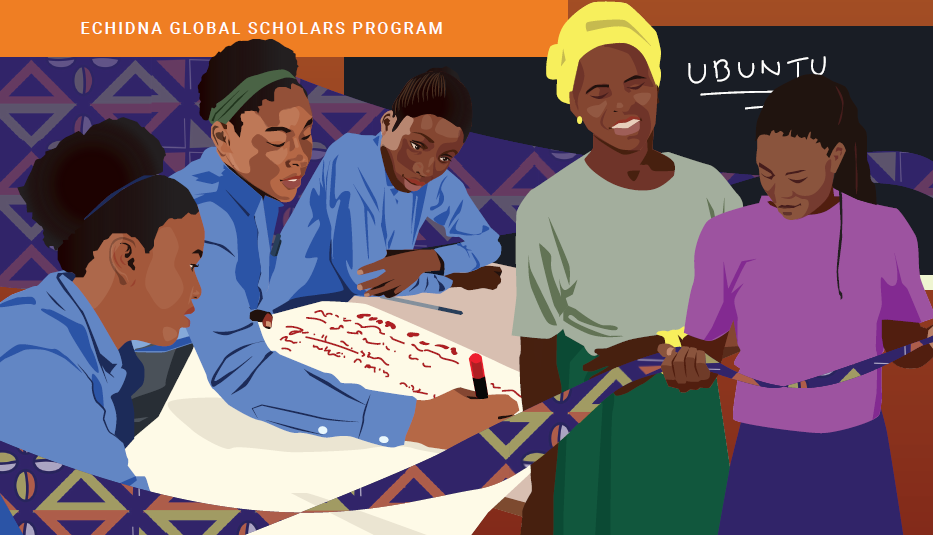
In recent years, Zambia has made commitments and launched programs to advance gender equality and girls’ leadership. The National Gender Policy (2023), the Education Act (2011), and the Eighth National Development Plan all name it, and years of skills, confidence, and empowerment programming have sought to build it. Yet girls in rural and peri-urban areas remain largely outside of formal leadership, a missed opportunity for Zambia’s gender and education goals. The problem is not that girls lack leadership, but that institutions fail to recognize, name, or support it. Girls defined leadership through values and responsibility rather than title, consistent with Ubuntu, in which leadership is communal and relational. Programs targeting girls treat leadership as a skill to be taught, while policy names it without defining, tracking, or funding it.
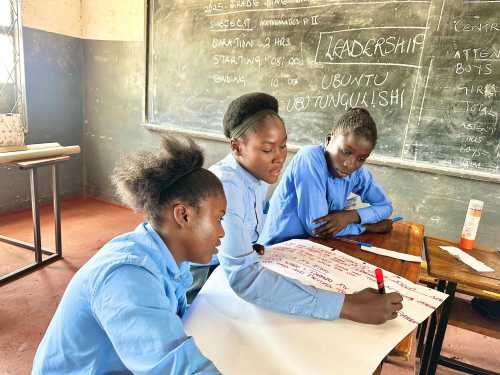
Drawing on storytelling circles with girls aged 12 to 17 and interviews with head teachers, teachers, and community elders across four schools in two Copperbelt districts, this brief examines how girls understand and practice leadership and what supports or constrains it.
The brief shows that girls already lead at home, school, church, and community, learning it from the women around them, few of whom are in formal positions. Barriers identified across all four schools and both districts were structural and relational: peer discouragement, pressure to conform, fear of judgment, and inconsistent adult support. Girls named age as the barrier; adults named gender. Schools recognized only the roles they created, and support remained uneven, so whether a girl’s leadership was noticed depended on the adults and peers around her. Girls identified individuals as enablers of their leadership, yet these relational supports are insufficient to address the structural barriers they face.
Closing this gap means recognizing and supporting girls’ leadership in coordinated and consistent ways. This brief recommends that institutions, schools, communities, and policymakers:
- Strengthen girls’ leadership identities.
- Expand opportunities to practice leadership.
- Reduce social, structural, and cultural barriers.
- Strengthen networks around girls: mentors, peers, families, and communities.
- Align policy through definitions, indicators, and budgets that make girls’ leadership visible and policy actors accountable.
Related Content
Author

The Brookings Institution is committed to quality, independence, and impact.
We are supported by a diverse array of funders. In line with our values and policies, each Brookings publication represents the sole views of its author(s).