The following is a summary of the 49th session of the Congressional Study Group on Foreign Relations and National Security, a program for congressional staff focused on critically engaging the legal and policy factors that define the role that Congress plays in various aspects of U.S. foreign relations and national security policy.
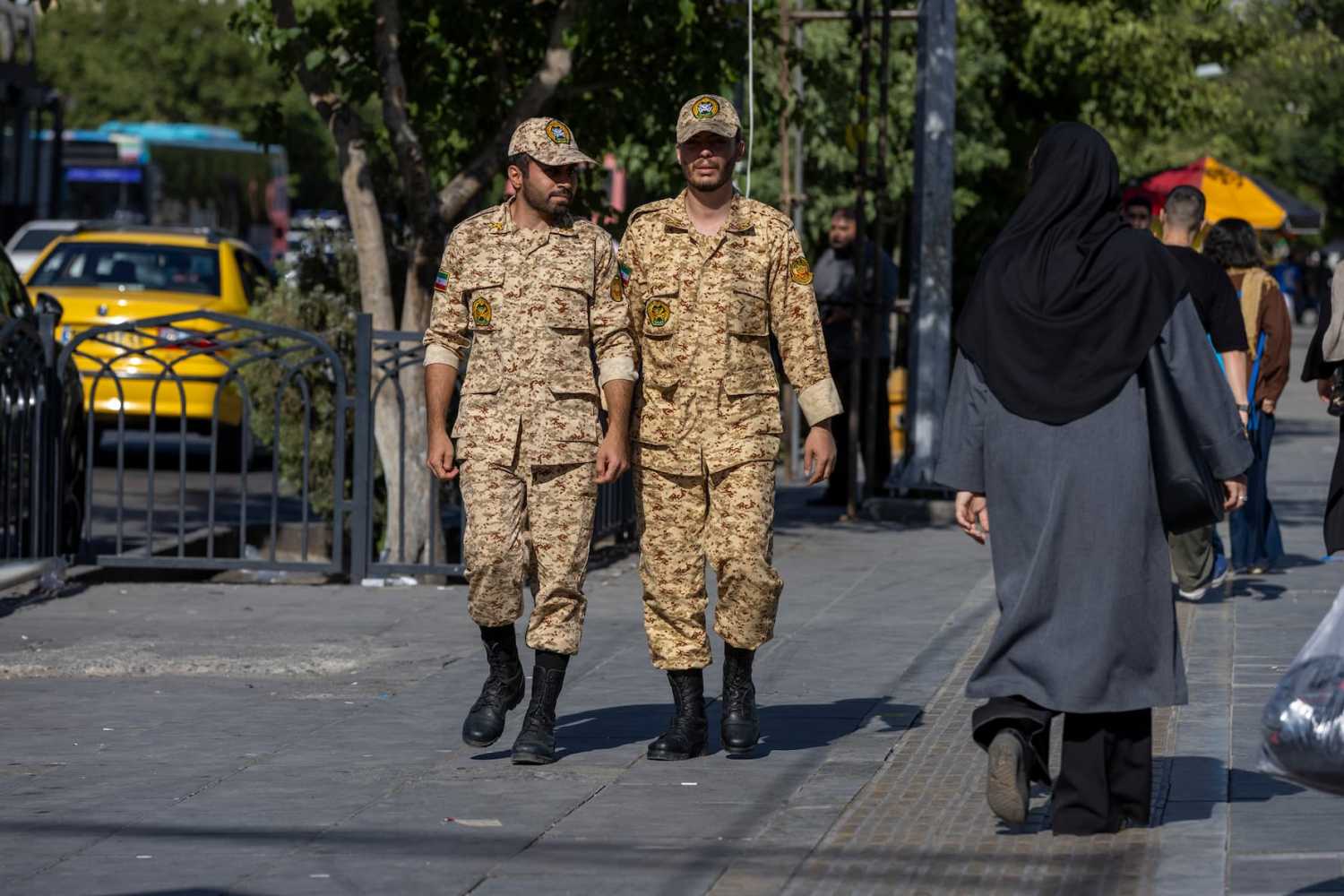
On March 10, 2026, the Congressional Study Group on Foreign Relations and National Security convened virtually for a session on the domestic and international legal questions raised by the ongoing use of military force in Iran. On Feb. 28, the United States and Israel had initiated a major military operation against Iran, beginning with an airstrike that killed Iran’s Supreme Leader Ayatollah Ali Khamenei, and in the ensuing days continued to target a wide range of Iranian military assets and, in some cases, political leadership. Iran, in turn, attempted to close the Strait of Hormuz to maritime traffic and engaged in a broad array of violent reprisals against civilian and military targets across the region. President Trump’s decision to undertake such consequential military action under his own constitutional authority, without seeking authorization from Congress, raised profound questions of constitutional law. And as the offensive unfolded, questions of international law arose as well.
For the session, coordinator Scott R. Anderson led an initial discussion with two leading experts and former senior administration officials:
- Ashley Deeks, professor at the University of Virginia School of Law, who served as the deputy legal advisor for the National Security Council during the Biden administration and was previously the assistant legal adviser for political-military affairs at the U.S. Department of State; and
- Chris Fonzone, who served as the assistant attorney general in charge of the Office of Legal Counsel at the U.S. Department of Justice from 2023 to 2025 and, before that, as general counsel for the Office of the Director of National Intelligence, among other senior national security roles in government.
Background readings circulated before the session included:
- Jack Goldsmith, “Law is Irrelevant to the U.S. Attack on Iran,” Executive Functions (Feb. 28, 2026);
- Brian Egan and Tess Bridgeman, “Top Experts’ Backgrounder: Military Action Against Iran and U.S. Domestic Law,” Just Security (Feb. 28, 2026);
- Michael Schmitt, Tess Bridgeman, and Ryan Goodman, “Expert Q&A: Are U.S. Threats or Use of Force Against Iran Lawful?,” Just Security (Feb. 21, 2026);
- “S. and Israel Strike Iran,” Lawfare Live (Mar. 1, 2026) (podcast); and
- Scott R. Anderson, “The Law of Going to War with Iran, Redux,” Lawfare (Mar. 3, 2026).
Deeks began with the international law questions, focusing on the “jus ad bellum”—the law governing the resort to force—rather than the targeting questions raised by the ongoing campaign. She explained that the administration appeared to rely on two overlapping theories: collective self-defense of Israel and individual self-defense of the United States. Israel’s own claim, she noted, might rest either on preemptive self-defense against the threat of an armed attack arising from Iran’s missiles and nuclear program, or on the view that Israel has been engaged in an ongoing armed conflict with Iran stretching back to the exchanges of 2024—a framing that some Israeli scholars have suggested may explain why Israel has not filed an Article 51 letter with the Security Council. Deeks flagged as unusual the suggestion that the United States was acting in individual self-defense by anticipating Iran’s response to an anticipated Israeli strike, observing that such reasoning risks becoming circular, since it would let the United States strike first whenever an ally or host of a U.S. base plans to use force. She added that, even within an ongoing armed conflict that relaxes the usual imminence requirement, the customary constraints of necessity and proportionality are generally understood to set an outer bound on permissible action, and that the administration and Israel had taken a notably capacious view of what proportionality allows.
Fonzone agreed that the strongest of the available arguments—though not necessarily a winning one—is likely that Israel is engaged in an ongoing armed conflict with Iran in which the United States is acting in collective self-defense. He then connected the international and domestic analyses, noting that the administration’s position, reflected in its recently released Office of Legal Counsel opinion concerning the Jan. 3 Maduro operation, is that the president may act even where doing so is inconsistent with international law. That position traces to a 1989 OLC opinion by then-Assistant Attorney General William Barr, which treated the UN Charter as a non-self-executing treaty that does not, by itself, constrain the president’s Article II authority. Fonzone observed that the analysis in the Barr memo is notably thin given the magnitude of the question, that it remains highly contested—the Senate Foreign Relations Committee, for instance, has treated the Charter as self-executing—and that, because presidents have at times acted inconsistently with the Charter in episodes such as Kosovo and the 2018 Syria chemical-weapons strikes, durable change in this area would likely require Congress to act rather than the executive branch alone. He invoked David Barron and Martin Lederman’s study of the “lowest ebb” to underscore how rarely presidents have exercised Article II authority contrary to statute.
Turning to the domestic framework, the speakers examined the two-pronged test that the Office of Legal Counsel applied in the Maduro opinion and that prior administrations of both parties have used: whether the operation serves a sufficiently important national interest and whether its “anticipated nature, scope, and duration” rise to the level of “war in the constitutional sense.” Deeks observed that the list of recognized national interests has grown to the point that the first prong does little work; here, the administration could readily point to protecting U.S. persons and territory and to humanitarian concerns. Fonzone explained that the nature-scope-and-duration prong has functioned less as a precise formula than as a holistic judgment anchored most concretely by the war powers resolution’s 60-to-90-day clock, with escalation risk, anticipated U.S. casualties, and effects on the targeted nation among the other relevant considerations. He cautioned against the common claim that every administration has viewed the war powers resolution as unconstitutional, noting that most have in fact treated it as binding and sought to comply.
Deeks then addressed the 60-day clock itself, explaining that the most likely point of contention would be whether the operation still involves “hostilities” as that period closes. She recalled the four factors that Harold Koh articulated in the 2011 Libya episode—a limited mission, limited exposure of U.S. forces, limited risk of escalation, and limited military means—and observed that, if the situation on the ground resembled its current state at day 59, none of those factors would be satisfied. Fonzone added that even where administrations have advanced aggressive theories to avoid the clock, as in Kosovo and Libya, they have tended to wind down operations soon afterward, so that the clock functions as a forcing mechanism that channels the politics of a conflict even when it does not operate like ordinary judicially enforced law. On the prospect of judicial review, both speakers were skeptical that courts would intervene absent a specific statutory violation. There’s also the issue of misalignment between the political branches—Deeks pointed to Smith v. Obama and related legislative-standing cases as illustrating courts’ reluctance to reach the merits where Congress has continued to appropriate funds and has not objected.
Asked what congressional staff and members should be considering, both experts urged against letting the perfect be the enemy of the good. Fonzone emphasized that drawing a categorical line between the president’s operational control of the military and Congress’ power to declare war is extraordinarily difficult in the abstract, and that the more productive course is to focus on the situation at hand—through oversight, public statements, letters calling attention to the 60-day clock, and similar tools that use the language of law to channel the politics of the conflict. Deeks similarly suggested achievable steps: planning now for what day 59 should look like, sending letters stating members’ expectations about the meaning of “hostilities,” articulating disagreement with the OLC’s two-part test, and requesting that the State Department legal adviser explain the international law basis for the operation.
The session then concluded with an open discussion wherein attendees were invited to ask questions or present their own views on some of the issues raised.
The Brookings Institution is committed to quality, independence, and impact.
We are supported by a diverse array of funders. In line with our values and policies, each Brookings publication represents the sole views of its author(s).