This essay has been adapted from Karl Schlögel’s keynote address delivered at an event on “Ukraine on the mental map of Europe” in partnership with the Goethe-Institut Washington on March 19, 2026, at the Brookings Institution.
Writing about mental maps is not without risk these days. You sit at your desk at home or in the library, but you feel as though you are in the situation room of a news agency or in the editorial meeting of a newspaper. Before your eyes, the global political landscape changes with breathtaking speed. With every news story, with every report, with the next presidential speech, we are propelled into a new world. As a historian, I am used to studying events from a distance (“sine ira et studio”—without anger or bias, as Tacitus put it in the Annals), to dive into times long past, to concentrate on understanding the world of generations that no longer exist. But historians are also contemporaries, open to the world they live in, paying attention to what is going on now. They are eyewitnesses of the present, of history in the making.
When I started to prepare for this talk about Ukraine, breaking news came in, live reports from Istanbul, Tel Aviv, Amman, and Abu Dhabi of Israeli and American strikes on Iran. Bombs falling on Iranian cities, counterstrikes on American military bases, missiles breaking through the Iron Dome over Israel: a new theater of war, a new focus diverting our attention from the fighting in Ukraine.
In this moment of surprise and shock, our mental maps, developed over generations, can shatter into fragments and reveal hidden maps that show us layers of the past that have been forgotten, overlooked, or erased. But this situation, where history is clearly open, also offers points of departure for a new and fresh interpretation: a great opportunity to rethink our analytical frameworks and to navigate the vast open seas ahead, to board the ship of the great early 19th-century German explorer and scientist Alexander von Humboldt, and to risk venturing into a world unknown to us.
The post-Cold War world order has disintegrated. New players are now onstage. This is a time of disorder, in which we must attempt to manage turmoil and the collapse of the old order and to—hopefully—find a path toward a new stability.
I would like to situate my talk about Ukraine on the mental map of Europe within this framework of moving coordinates. The place and importance of Ukraine must be understood in the context of this new global re-arrangement, not just in regional terms. Of course, I do not intend to avoid the European context. In my lecture, I want to focus on four points:
1.
First, we struggle to explain to ourselves and to the Ukrainians why Europe did not take notice for a long, long time of the second-largest state in Europe. The mystery of the great Ukraine as terra incognita, the absence of Ukraine in the general European consciousness.
Russia’s aggression since 2014 and its full-scale war since 2022 have radically changed Europeans’ mental map. I would even say: Ukraine has become part of our mental map because of the war—irreversibly so. But what are the indicators for this?
2.
Second, the German case is unique. I want to explain why, even in Germany, which is so geographically close to Ukraine, it took so long to include the “Ukrainian question” in the German and European horizon. I will also add a note from my own experience, which is not only personal but characteristic of my generation.
3.
Third, mental maps are about geography—but not exclusively. We long neglected the importance of geography. But in the current turn to geopolitics (the so-called “spatial turn” that emphasizes the role of place and space in social processes and power dynamics), we are also witnessing its overestimation. When we view geography as the sole lens for understanding what is going on, we risk a new reductionism. This is not only of epistemological interest; it has practical and political consequences.
4.
Fourth, and finally, the fate of Ukraine will define the fate of Europe and probably of the West, however we understand this term.
Ukraine returns from Europe’s periphery to the center of its consciousness
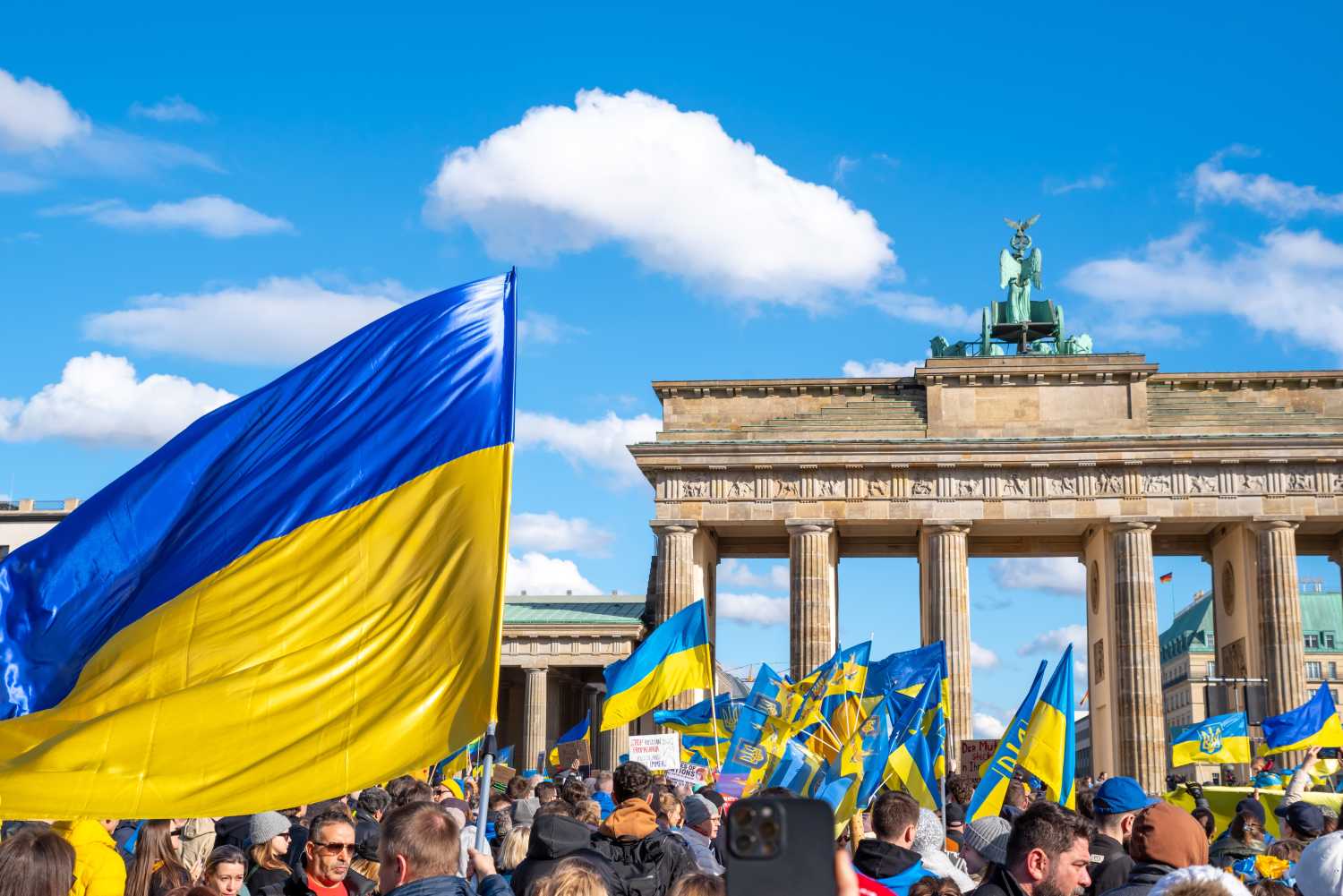
There is, as we saw on the recent anniversary of the Russian full-scale invasion on February 24, 2022, a mood of fatigue, even an acclimatization to what four years ago was still perceived as a rupture. Despite the continuing horrors of Russian warfare—weaponizing the winter cold against Ukraine’s metropolises and demolishing their infrastructure to make them unlivable—there were no great demonstrations in the European capitals comparable to the huge protests we saw after February 24, 2022. On the news, we saw the representatives of the European Union (EU) institutions arriving at Kyiv’s Central Station for yet another state visit, laying wreaths at the monastery of St. Michael, and touring the destroyed energy infrastructure. Yes, this was a demonstration of solidarity. But that same day, the delegation from Brussels had to tell the Ukrainian leadership and people that the EU’s 90-billion-euro loan was blocked by two member states, Hungary and Slovakia. So, they arrived empty-handed amid an extremely dire emergency: a city under siege, thousands of households without electricity and without heating, elevators out of order, elderly people helpless and confined to their apartments. The great and rich European Union was unable or unwilling to help in the most drastic situation.
I do not mean this to be Brussels-bashing; I am just pointing out the obvious gap between the EU’s declaration of support and the hard reality. This might seem to contradict what I said in my introductory remarks—that Ukraine has taken center stage in the consciousness of Europeans. Of course, there are degrees to this, grounded in geography and historical ties. Ukraine is in any respect closer to Poland and the Baltic states than to, say, Spain or Portugal. And yet, it is quite clear that since the annexation of Crimea in 2014, Ukraine has found its place on the European mental map.
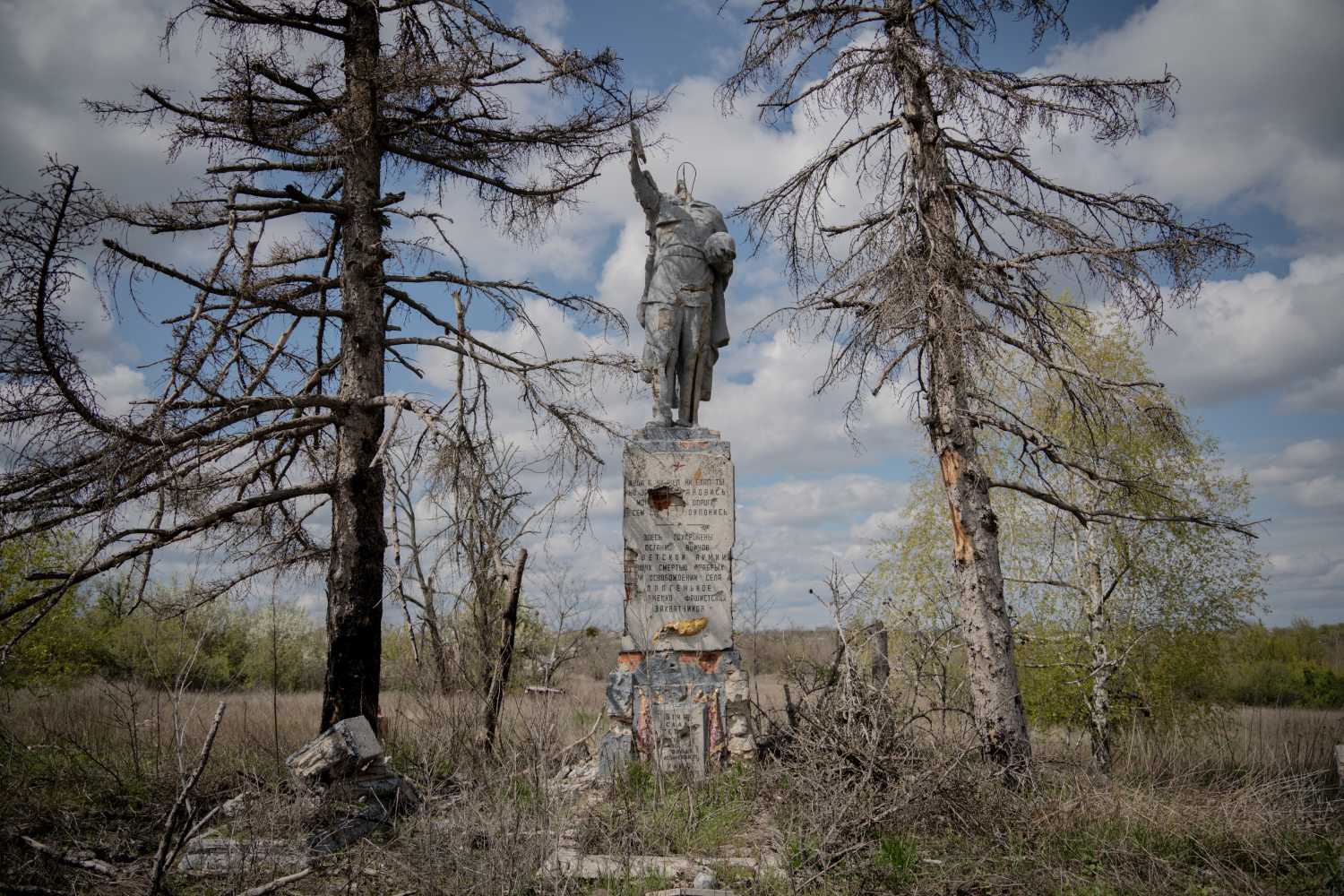
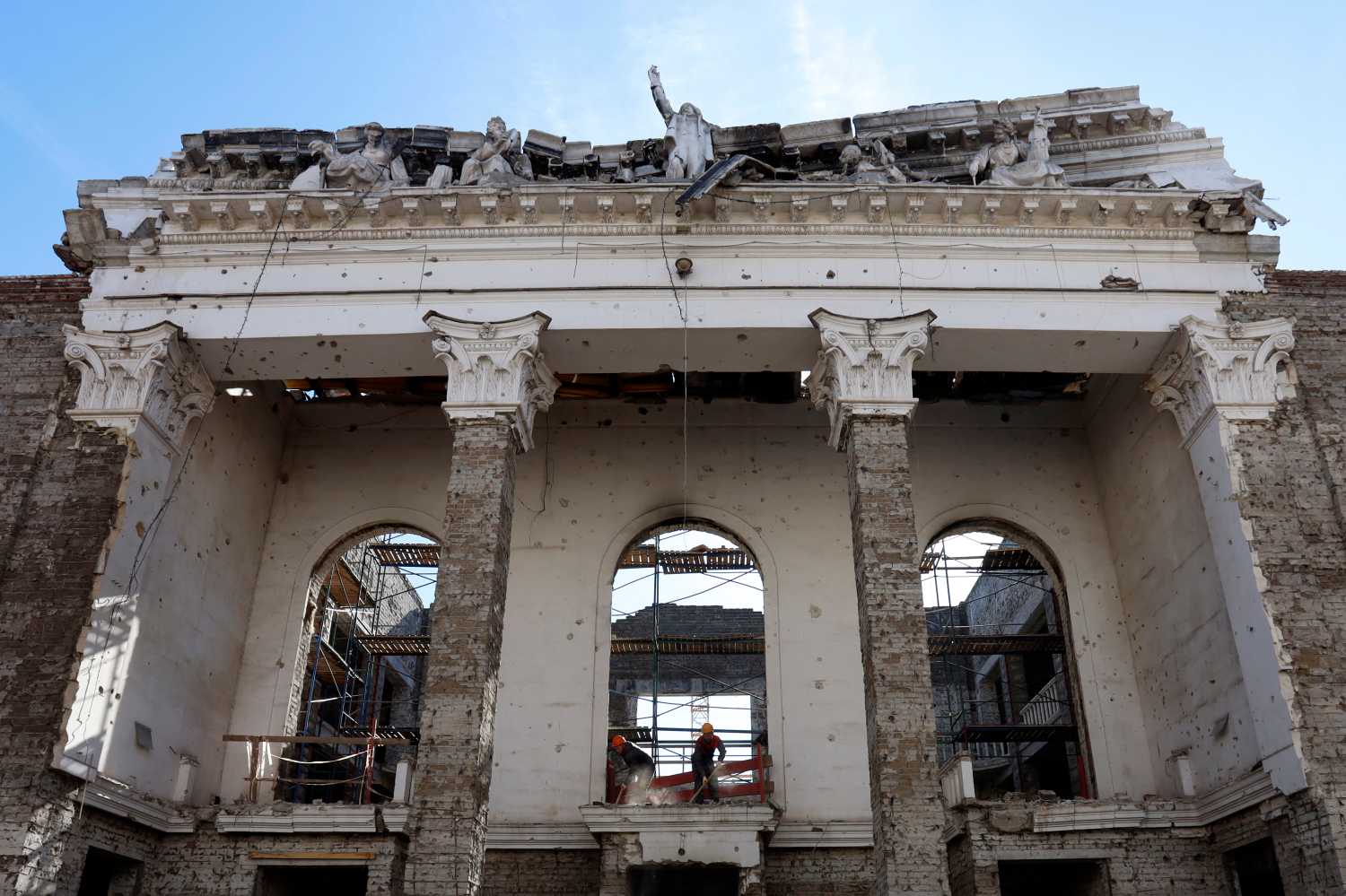
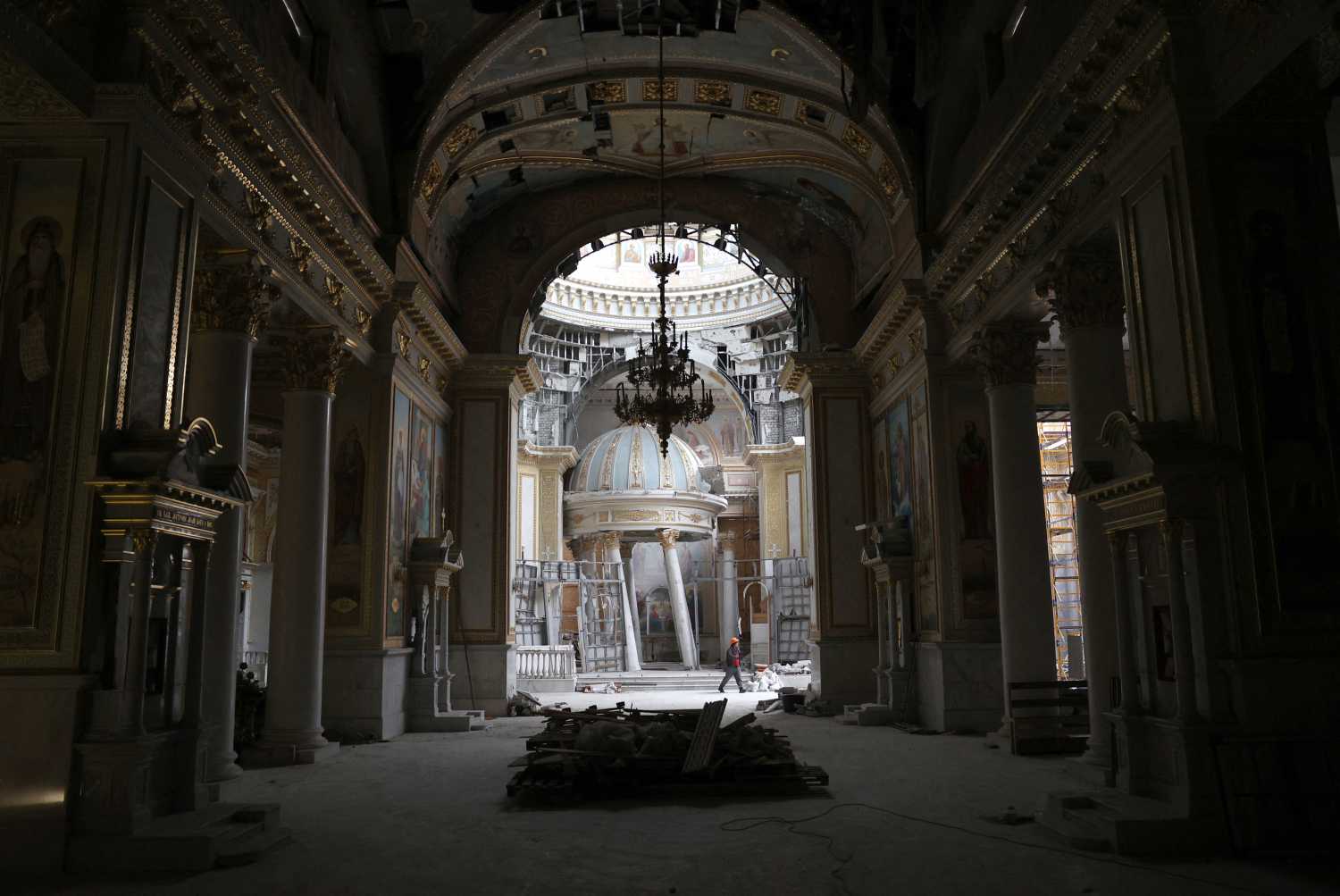
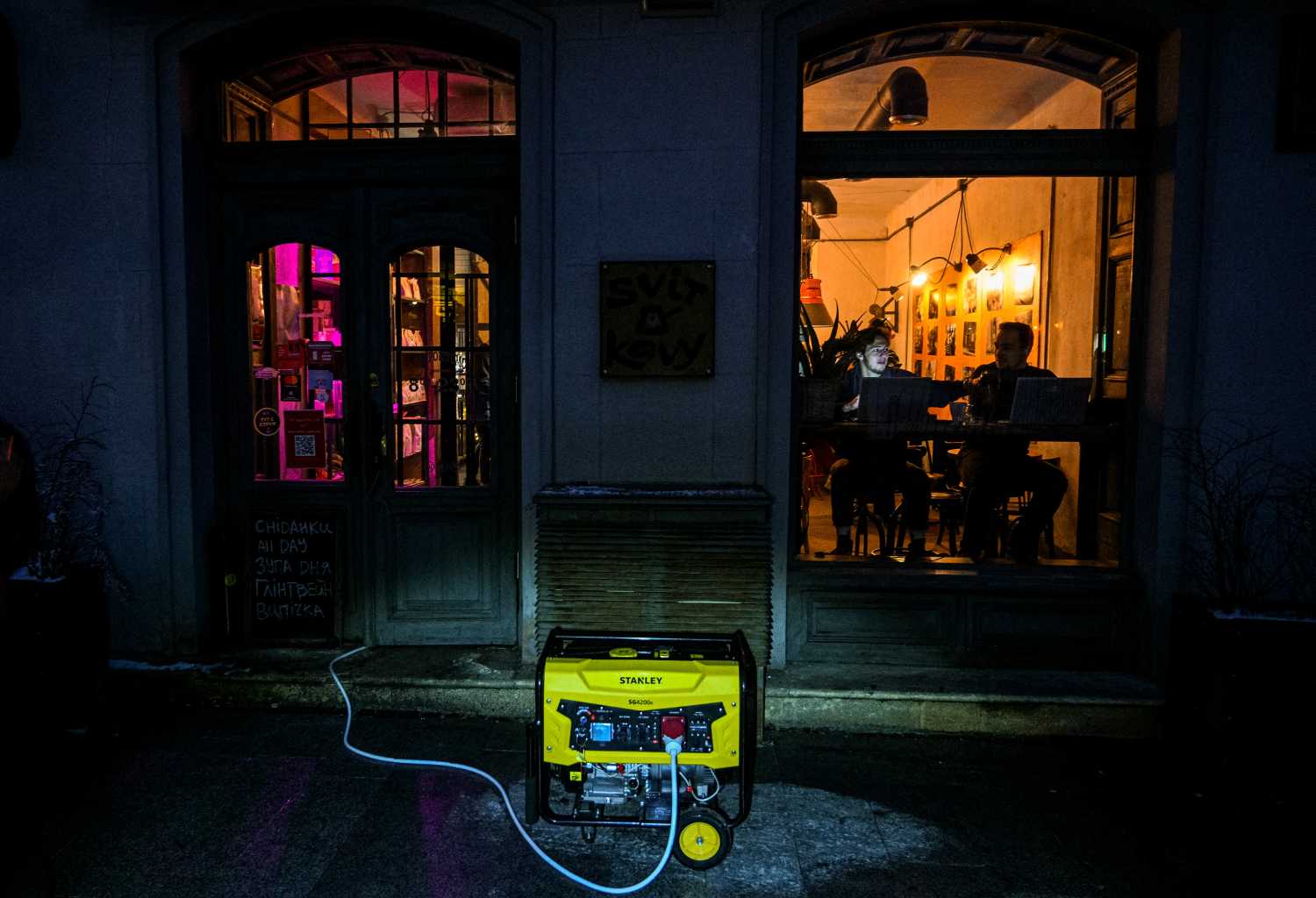
Before 2014, most Europeans were unaware that there is a country, a state, a nation named Ukraine.
Most Europeans, educated people included, had no idea where all these cities now under Russian attack were located—Kharkiv, Mariupol, Odesa, Lviv.
Most Europeans, educated people included, had no idea where all these cities now under Russian attack were located—Kharkiv, Mariupol, Odesa, Lviv.
Most Europeans, educated people included, had no idea where all these cities now under Russian attack were located—Kharkiv, Mariupol, Odesa, Lviv.
Most Europeans, educated people included, had no idea where all these cities now under Russian attack were located—Kharkiv, Mariupol, Odesa, Lviv.
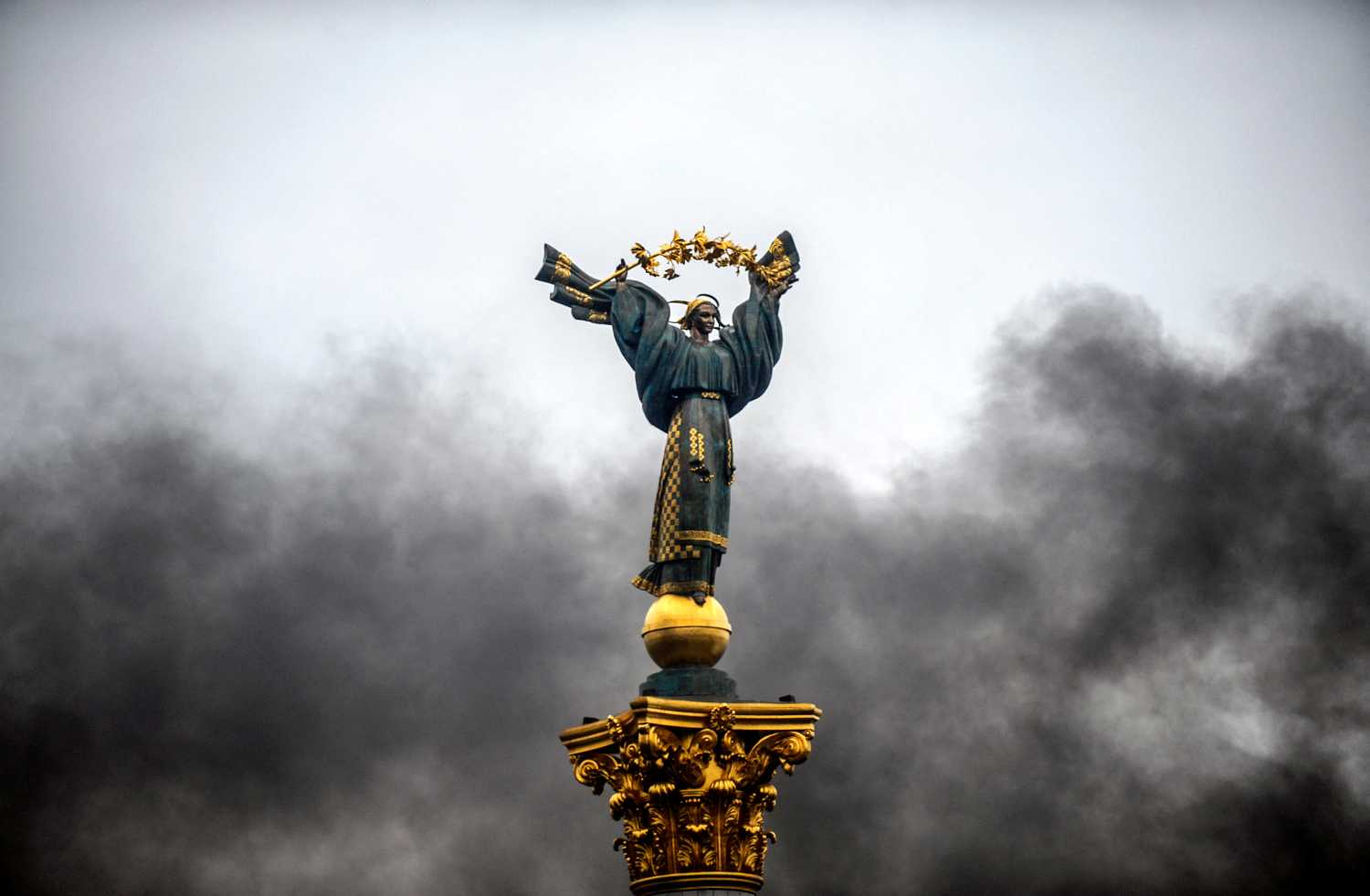
Before 2014, most Europeans were unaware that there is a country, a state, a nation named Ukraine. Most Europeans, educated people included, had no idea where all these cities now under Russian attack were located—Kharkiv, Mariupol, Odesa, Lviv. Some cinephiles remembered the legendary Odesa Steps scene in Sergei Eisenstein’s classic film, “Battleship Potemkin,” in which a pram bounces down the grand staircase between the city center and the waterfront while Tsarist troops shoot at unarmed civilians who have gathered there to protest during the revolution. There were historians of the Habsburg lands who knew something of Lemberg (Lviv), the so-called “little Vienna,” or of Czernowitz (Chernivtsi), the pre-World War II hub of Jewish German-language literature. Only a select few were aware of Kharkiv and its constructivist 1920s skyscrapers. Ukraine seemed far away, barely existing. It was “the overlooked nation,” to quote the title of my fellow historian Martin Schulze Wessel’s most recent book.
But with the mass movement of the Maidan in 2013-14, and then the confrontation and the bloodbath in the center of Kyiv, Ukraine became the topline item of the evening news. This fundamentally shifted the spatial perception of ordinary Europeans. Many foreign correspondents who had been based in Moscow moved to Kyiv to cover the protests. In news coverage, documentaries, and talk shows, experts and commentators were now discussing Ukrainian history, language, and culture, and especially the relationship between Ukraine and Russia. Many Europeans heard for the first time in their lives about the Holodomor, the Red famine of the early 1930s; that Ukraine and Belarus were the main battlefields in World War II; or that Chernobyl, the site of the 1986 nuclear disaster, is a city about 110 kilometers (68 miles) north of Ukraine’s capital.
Since then, and especially since the full-scale invasion, there has been a huge flow of information about Ukraine, not just of political news and battlefield reports, but also of stories about ordinary people and everyday life—for the first time in generations.
This new familiarity has been reinforced by the arrival of Ukrainian refugees across Europe: hundreds of thousands of people in many countries, and more than a million in Poland and Germany, most of them women with children and elderly people. They live in small towns and villages, supported by networks of volunteers and twinned cities, and there are networks of communication as well as travel moving back and forth across the borders; their children are attending kindergarten and schools, where many of them have become bi- or trilingual. The result is the emergence of a common space of shared experience and knowledge, beyond multicultural romanticism or kitsch, and of course, by no means without conflicts in everyday life. Europe has also noticed the rise of a young Ukrainian literature and the prominence of public intellectuals and writers like Yuri Andrukhovych and Serhij Zhadan—both of whom have been widely translated, featured at literary festivals, and awarded book prizes, especially in Germany.
The Russian war has transformed the atmosphere, public spaces, political debates—every aspect of Europe’s relationship with Ukraine. In Germany, the parliament, political parties, and public intellectuals debate the Ukrainian issue, defense and security (historically taboo topics), Germany’s relationship with Russia, and the ambiguous or even disastrous consequences of “Ostpolitik,” and finally, the differences between illusion, self-deception, and political expediency. The debate on defense and security has had an especially profound impact in Germany, a country so deeply pacified and demilitarized after 1945. I see this as a political awakening, an emerging awareness of the new realities of the early 21st century. Chancellor Olaf Scholz called it the “Zeitenwende”—the historic break.
The Russian war against Ukraine is understood in Europe as a war not only against Ukraine, but against Europe and the West.
Crucially, the Russian war against Ukraine is understood in Europe as a war not only against Ukraine, but against Europe and the West. This is not a mere metaphor, but something societies are acutely experiencing and feeling. Violence, war, and subversion penetrate European societies in many forms: espionage, sabotage, networks of disinformation and malign influence campaigns, assassination attempts, corruption, and pro-Russian lobbyism. They play on intraparty friction, instrumentalize domestic social and political tensions, and try to intervene in decisionmaking processes and elections.
But there is no guarantee that this transformation will continue and lead to a stable outcome. Securing the financial means to support Ukraine and fund its defense is severely challenging. This is not so much a question of money but of European appetites for confronting Russian imperialism and the incertitudes of U.S. policy. It is quite an open question in which direction the German people will go. Polls show that the overwhelming majority sympathizes with the Ukrainians’ struggle, but there are substantial minorities—on the left and on the right—which view so-called negotiations with Russia as the only way to end the war. They repeat, over and over, the mantra that Russia is invincible and that it is Ukraine that must be pushed to accept the hardest compromises. Germany first: that is the slogan populists use to mobilize their followers against the support of Ukraine. The spirit of appeasement is not far away in times of Ukraine fatigue and an ongoing war of attrition, despite an increasing awareness of the Russian danger.
To understand this seeming discrepancy, it’s worth looking back at the reasons for the long absence and ignorance of the Ukrainian issue in the German mind.
Ukraine in the German mind: absent, disregarded, overlooked for far too long
The change in public perceptions after 2022 is quite radical, I think. By way of reminder: While the two pipelines of Nord Stream 1 were installed in 2012, the construction of the second double set (Nord Stream 2) was still ongoing up to the moment of the full-scale invasion. Until then and for some months thereafter, the position of successive German governments had been that the pipelines had nothing to do with politics, because—as Chancellors Gerhard Schröder, Angela Merkel, and Olaf Scholz all argued—they were a private commercial project.
Since the invasion, the self-inflicted delusion of the official German position has been investigated in numerous analyses, books, and publications about the “Russian connection,” together with the willful illusions and blind spots of Germany’s relationships with Russia, Eastern Europe, and above all, Ukraine.
My historian colleague Gerd Koenen dedicated a whole book to the analysis of the “German Russia Complex” (Der Russland-Komplex). Even today, you can still hear Russia described as “our most important neighbor”—strange enough, given that our actual neighbor to the east is Poland. Even enlightened and educated politicians like the late Chancellor Helmut Schmidt questioned the existence of the Ukrainian nation: He used the odd term “die russischen Stämme” (the Russian tribes) to describe Russians, Belarusians, and Ukrainians. Many Germans still see the Ukrainian language as a Russian dialect—a minor one, of course—not to mention the long-standing dominance of Russian literature and the ignorance of earlier Ukrainian writers like Taras Shevchenko, Ivan Franko, or Lesja Ukrainka.
Why this blindness to Ukraine, when the first encounters between Germans and Slavs go all the way back to Christian missionaries like Thietmar of Merseburg or Adam of Bremen, who travelled to Kievan Rus’ and to Kyiv itself in the 11th century, and who brought back one of the earliest and most detailed travelogues from what was at the time the East’s biggest metropolis? Outside observers’ understanding of Ukraine has always depended in large part on the vantage point from which they viewed the land at the “Gates of Europe,” as the historian Serhii Plokhy has called it. Perspectives from Krakow or Warsaw, from the Polish-Lithuanian kingdom, from Muscovy and Saint Petersburg, and from Vienna, the capital of the Habsburg empire—all had their highly specific biases, interests, viewpoints, and elisions. There are many rival narratives and interpretations from outside Ukraine, but what they have in common is that it took a long time for all these imperial centers to accept Ukraine as an emerging nation and nation-state with its own identity and dignity. Some of them never did acknowledge it.
In all this time, the German perspective was shaped by the dominance of the German-Russian relationship.
In all this time, the German perspective was shaped by the dominance of the German-Russian relationship. Ukraine was perceived for years, decades, centuries, not as an entity in and of itself (“ein Wesen an und für sich” in the words of the 18th-century philosopher G.W.F. Hegel) but was seen as being in the shadow of and dependent on the Russian Empire, even an integral part of it. The history of Ukraine—“Little Russia” in the depiction of the 19th-century historian Vasily Klyuchevsky—was read as part of the history of the Russian Empire.
I would like to illustrate this with my own experience, although I do not pretend to represent the German view on Ukraine. Growing up in the Catholic deep south of West Germany, I was given the rare opportunity to learn Russian at my Benedictine boarding school. With no family connections to the world on the other side of the Iron Curtain, I went to Ukraine for the first time during my school years, in 1966. I passed through Uzhgorod, Lviv, Kyiv, and Kharkiv en route to Moscow. Ukraine was then a landscape of transit. You could speak Russian everywhere. Later, as I immersed myself in Russian and East European studies and archival research, I relied on the archives and institutes in Moscow and Leningrad, like most of my colleagues. Only very few scholars ever ventured farther out, to the so-called provinces, the backyard, the “Hinterland.” German-language academia was deeply Russo-centric, focused on Moscow, and unfamiliar with Russia’s periphery (with a few notable exceptions, like the Swiss historian Andreas Kappeler). And not just they. In 1995, the American historian Mark von Hagen published his seminal piece “Does Ukraine have a history?” in which he argued that historians generally had failed to give Ukraine “historiographical legitimacy.”
This was also to become my own—by no means solely rhetorical—question many years later. The 2014 Maidan protests in Kyiv, and my travels that spring to the Donbas, to cities like Kramatorsk, Donetsk, and Mariupol, were a very belated awakening for me. I came to realize in those weeks that I would have to return to my studies and to learn anew about Ukraine—mostly through books written in the Ukrainian diaspora, such as by the Canadian-Ukrainian historian Orest Subtelny. My experience proved to be characteristic of a whole generation of scholars, and not only scholars.
The dominance of the imperial perspective from Peter the Great and up to Bismarck’s Reich and World War I notwithstanding, interest in all things Ukrainian began increasing before World War I. The founder of German East European Studies, Otto Hoetzsch—who held a chair in Eastern European history at Berlin’s Humboldt University when George Kennan studied there in the late 1920s—met the eminent Ukrainian historian Mykhailo Hrushevsky and read his 1917 book, “Russia and the Ukrainian Question.” Influential German public intellectuals and journalists like Paul Rohrbach and Friedrich Naumann became interested in Ukraine as a possible “factor” to destabilize the Russian Empire, and conceptualized “Mitteleuropa” as a German-led expansionist sphere of influence. But it was also the (brief) opening of a window of opportunity for Ukraine to achieve national independence and sovereignty. The Treaty of Brest-Litovsk in February 1918, which ended the war between Soviet Russia and the Central Powers (Germany, Austro-Hungary), led to the establishment of the short-lived Hetmanate under former czarist general Pavlo Skoropadsky; after the collapse of the Ukrainian People’s Republic in 1921, he was forced to leave for exile in Germany, where he died in 1945.
But under the Rapallo Treaty of 1922, a renewed German-Russian entente set out a clear revisionist ambition against the victorious powers of World War I and the Treaty of Versailles: stabilizing Soviet Russia and undermining both the Second Polish Republic and an independent Ukraine. Still, in interwar Germany, there were always segments of the public who supported the Ukrainian struggle for independence, including leading scholars at the Ukrainian Scientific Institute, founded in Berlin in 1926 (Dmytro Dontsov, Stepan Rudnytskyi, Yevhen Levitsky).
On the Ukrainian side, there was always the hope that a revisionist Germany would support Ukrainian independence, especially among nationalists like Dontsov, who was influenced by Italian-style fascism. The clash of the Nazi and Stalin empires after June 22, 1941, was perceived as a second chance to win independence and statehood (as Poland had been able to do at the end of World War I). This motivated cooperation and collaboration with the Nazis by Ukrainian groups such as Stepan Bandera’s OUN (Organization of Ukrainian Nationalists). Similarly, some senior Germans, like the Nazi theorist Alfred Rosenberg or the head of military intelligence, Admiral Wilhelm Canaris, hoped to instrumentalize the Ukrainians to topple the “Jewish-Bolshevik” Soviet Union. Both ambitions failed against the horrific backdrop of the German Generalplan Ost, which unleashed terror, massacres, forced labor, and genocide on Eastern Europe. Ukraine and Belarus became the main laboratory of Nazi Germany’s genocide. After 1945, a liberated and then reoccupied Ukraine became—despite being a member of the United Nations—an integral part of the Soviet Union and disappeared behind the Iron Curtain.
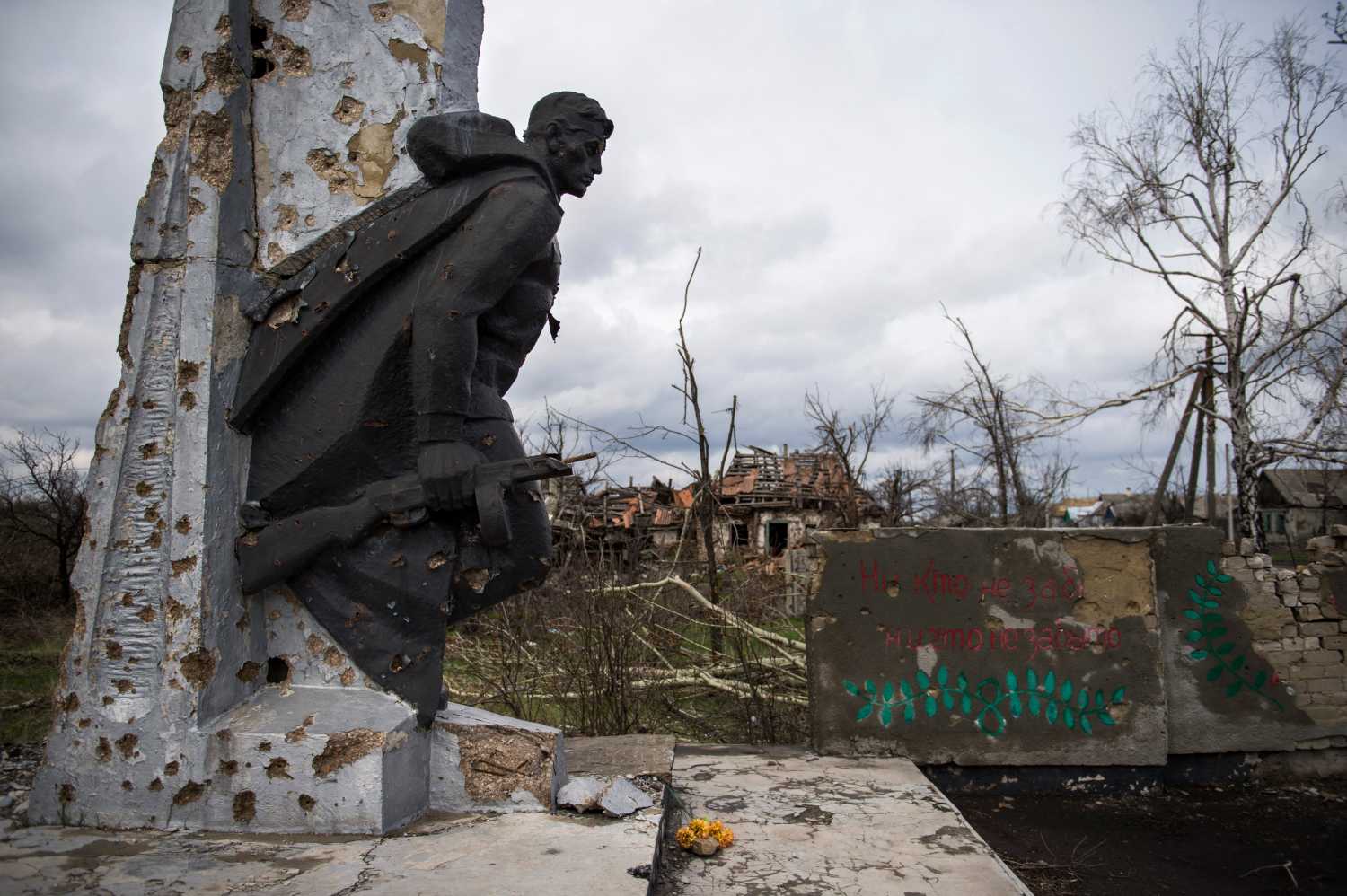
Today, Germans hear the names of places where Russian soldiers are fighting Ukraine in the evening news and realize that this is where their fathers may have been deployed in World War II.
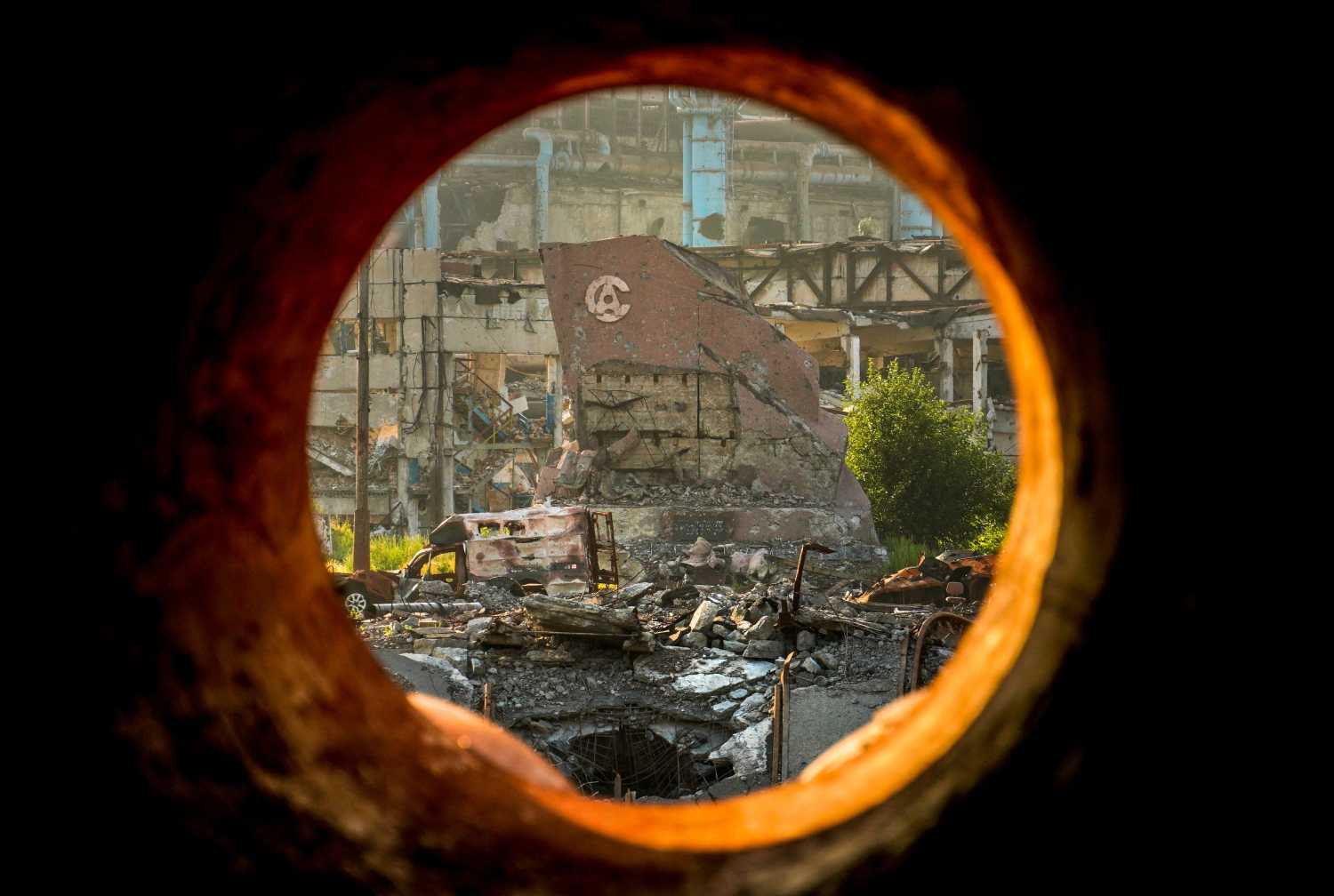
German companies once owned the metallurgical factories of Mariupol, which the Russians have now destroyed.
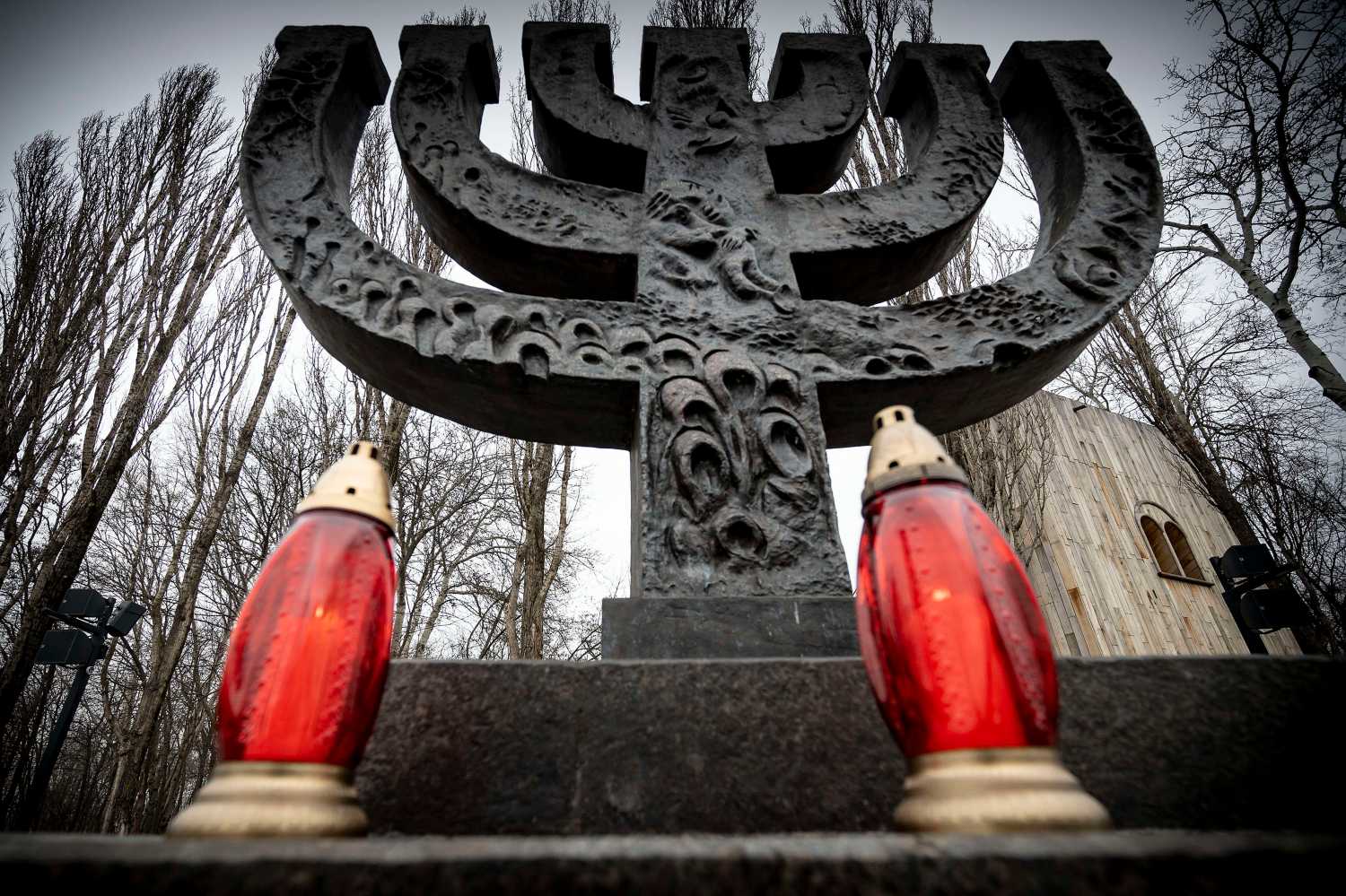
At times, Russian ballistic missiles and drones have even targeted monuments commemorating the sites of German massacres, such as Babi Yar in Kyiv and Drobitsky Yar in Kharkiv.
You can still feel the consequences of the Second World War in German-Ukrainian relations today. For most of the war generation, including my father, the German invasion of the Soviet Union was remembered as the “Russland-Feldzug”—the invasion of Russia—although the main theaters of war were in reality Belarus and Ukraine. After World War II, Germans felt guilt and responsibility for war crimes committed on Soviet territory, focusing only on Russia, but not on the other peoples and territories of the Soviet Union. This despite the fact that the greatest share of forced labor workers—almost 3 million—were deported from Ukrainian territory, that the main sites of the “Holocaust by Bullets” (the title of a seminal study by Patrick Desbois published in 2008) were on Ukrainian soil, and that the entire territory of Ukraine suffered under German occupation. Today, Germans hear the names of places where Russian soldiers are fighting Ukraine in the evening news and realize that this is where their fathers may have been deployed in World War II. The satellite photos of today’s war show the same cities that the German Luftwaffe saw from the air 80 years ago: Lemberg/Lviv, Donetsk/Stalino, Kramatorsk, Sumy, Kharkiv, and others. German companies once owned the metallurgical factories of Mariupol, which the Russians have now destroyed. At times, Russian ballistic missiles and drones have even targeted monuments commemorating the sites of German massacres, such as Babi Yar in Kyiv and Drobitsky Yar in Kharkiv.
For postwar, divided Germany, it was easier to pay reparations to Russia than to the other nations and states of the former Soviet Union; meanwhile, non-Russian nationalities remained under a general suspicion of collaboration with the Nazi regime or, at the very least, of nationalism and antisemitism. Together with other stereotypes of German militaristic traditions and authoritarianism, this framing responds to and accords with the Putinist narrative of a historical continuity between Ukrainian fascist collaboration and militarism, and a modern “Russophobic” Ukrainian-German collaboration. The hosts and guests of any current Russian television talk show—Vladimir Solovyov, Dmitry Medvedev, Sergey Karaganov, and others come to mind—peddle this fiction daily. These historical narratives now serve as instruments of fear and intimidation, aiming to paralyze the resistance and undermine support for Ukraine.
Germany has to learn that the Third Reich’s war crimes on Ukrainian soil confer a unique moral obligation and responsibility today. We cannot come to terms with the past without acknowledging these barbarities—the massacre of Babi Yar, the attempt to extinguish all Jewish life in Ukraine, the deportation of Ukrainian forced laborers, and the starvation of Soviet soldiers in a prisoner of war camp in Darnytsia, on the left bank of the Dnipro. Germans cannot speak about present-day horrors while ignoring the horrors of the past and vice versa: the ecocide and urbicide in the Donbas today, and the “verbrannte Erde” (torched earth) the Wehrmacht left behind; the explosion of the Kakhovka Dam (2023) and the blowing up of the Dneproges hydroelectric power station (1941); the winter of 2025-26 with thousands of apartment blocks without heating and electricity and the winter during the siege of Leningrad (1941-42). Coming to terms with the past is not an anniversary ritual; it helps us understand that everything can happen again.
There is, of course, not just one German perspective, but at least two, since we have a West German and an East German viewpoint and narratives. For the German Democratic Republic, Ukraine was an integral part of the Soviet world. There were city partnerships (between Leipzig and Kyiv, for instance) and thousands of students and engineers who worked for years in Ukrainian universities or along the construction site of the Druzhba pipeline. There was a quite popular tourism with attractive destinations, riverboats, and the famous Artek youth camp in Crimea, the legendary “pearl of the empire.” East German citizens often felt closer to Ukraine than their Western fellow tourists, because they belonged to the same Sovietized sphere of life—one need only look at the description of travelling “wild” through the vast Soviet Union in the memoirs of former Chancellor Angela Merkel. Indeed, it is strange that today, more than 30 years after reunification, there is not more sympathy and support for Ukraine in the former East Germany. My guess is that East Germans view Vladimir Putin as the avenger of a reunification imposed on them as a form of Western colonialism.
Many Germans—in East and West—remain grateful for the support of Russia’s then-leader Mikhail Gorbachev in managing German reunification (even as they forget the no less important role played by the Polish Solidarność movement and others). Finally, German-Russian relations also featured elements of corruption and old clandestine networks.
The uses and limits of geopolitics
The recent rise of “geopolitics” is a remarkable phenomenon, since the geographical dimension is inherent in any historical, sociological, or cultural analysis. Space matters, just as much as time—the chronological order of the narration, the sequence of events, the process of evolution—matters. There is no Cold War without geopolitics; there is no Roman Empire without the spatial dimension; there is no Russian Empire or Stalinist power without space and geography (and the cold of Siberia). Since this is taken for granted, the spatial dimension has been underappreciated in theoretical reflection. But there are situations when the spatial dimension comes to the fore: the collapse of a political order, moments of disruption, of systemic crises, caesuras marking the end or beginning of a social or political order, when frontiers and borders and demarcation lines are liquidated, broken, and redesigned. Borders are the true measure of the reach of a system of power or civilization. There are many examples: the treaties of the Westphalian world, the Vienna Treaty of 1815, the Treaty of Versailles (1919), the Molotov-Ribbentrop Pact (1939), and the Iron Curtain, but also the frontier discourse of the American West (Frederick Jackson Turner) or the Great Game in Eurasia (Halford Mackinder).
We must find means of analysis that can accommodate the complexity of the subject, putting to use the entire set of disciplines and approaches: sociology, history, political science, economics, and more.
The rise of geopolitical discourse after the Cold War marks the collapse first of the Soviet empire and possibly the (temporary) end of the world of the second globalization. However, geopolitics is just an indicator, not the key to understanding what is going on. This is banal but nevertheless important, since in our analysis we must go beyond two theoretical extremes: a determinist geographical version and a constructivist version, which neglects geographical conditions. Both are reductionist. The world we live in is not determined by geography, but at the same time, we cannot ignore the conditions of physical space. The consequences are quite simple: We must find means of analysis that can accommodate the complexity of the subject, putting to use the entire set of disciplines and approaches: sociology, history, political science, economics, and more.1 The analytical work done by German scholars in exile in the 1930s concerning National Socialism and fascism is a good example. We need this kind of holistic approach if we want to understand the historically new phenomenon of Putinism (and maybe Trumpism too). In sum, my plea is this: avoid the geopolitical trap, which is a dead end, and be open to complex civilizational analysis (Zivilisationsanalyse).
Ukraine’s fate will decide the West’s
For our perception of Ukraine, this means: This is clearly a territorial conflict, but at the same time a conflict—if not a clash—of civilizations (but not in the determinist way Samuel Huntington used the phrase). At stake is the conflict between the “Russian world” and what, for a long time, was called the West, the liberal order. To Putin’s Russia, this was clear from the very beginning of the war in Ukraine. Putin’s aim is not to annex some square miles in Donbas, but to bring down Europe and the West. In that sense, Ukraine is the central frontline between the aggressor (and his allies) and a Europe defending itself. In this moment, Ukraine is the main force of resistance.
Here I would like to make a second point. In 1983, the Czech writer Milan Kundera published his famous essay “A Kidnapped West: The Tragedy of Central Europe.” It was as scandalous a text as Francis Fukuyama’s “The End of History”—both books, incidentally, about the sunset of the Soviet empire and of the East-West divide. Kundera’s subject was the region between East and West, the center of Europe, which had disappeared from Europeans’ mental map amid the Cold War’s East-West divide. He reminded his readers that they had forgotten this region, which in his view had once been the epicenter for the invention of modern Europe. In his conception, this epicenter was mostly comprised of the territory of the former Habsburg empire (the modern-day Czech Republic, Slovakia, Hungary, and Poland). In its culture, tradition, and way of life, it was Western, but it had been destroyed by Nazi Germany and the long rule of Soviet Russia. He was anticipating the renewal of this region out of the agony of the late Soviet empire, which in fact began in these countries in the 1970s and 1980s. These countries’ societies were the avant-garde of the great transformation in a region that had suffered most from outside rule.
It is an irony of history that some of the countries that birthed that avant-garde today oppose the European Union and solidarity with Ukraine.
It is an irony of history that some of the countries that birthed that avant-garde—the Prague Spring, Charta 77, the Velvet Revolution, Solidarność, Poland’s Self-limiting Revolution (in the words of the Polish sociologist Jadwiga Staniszkis), the Hungarian Left—today oppose the European Union and solidarity with Ukraine. Their current governments use or abuse their past victimhood to blackmail the institutions and member states of the European Union to undermine European solidarity for Ukraine, as the Polish literary critic Przemysław Czapliński has shown. This is not the place to discuss Kundera’s geographic imagination, but it is obvious that it did not include other parts of Europe, such as the southwest, former Yugoslavia, or Ukraine.
Yet in Ukraine, a country and society belonging to the West is under attack. Here lies the relevance of Kundera’s essay to the Ukrainian situation today. The center of Europe has moved eastward, and the attempt to kidnap the West is happening half a century after Kundera’s diagnosis, in Ukraine. Ukraine does not want to belong to Russia, nor to the Eurasian world. The assault on Kharkiv, Kyiv, Odesa, and Lviv is a territorial and civilizational attack on European cities.
Conclusion
Finally, we do not know which way Europe and the United States will go. Will they stand with Ukraine or give up? Will they be tempted into signing a “great deal” with the aggressor—a Munich II in the 21st century? We do not know how Europe will cope with the financial burden of intensified military support in the coming years; we do not know whether European electorates will be resilient to the politics of escalation, to Putin’s choreography of fear and blackmailing; whether Europe can counter Russian narratives and Putin’s total war; and we do not know how American society will handle a situation of multiple crises all over the world—Ukraine, Israel and Palestine, Venezuela, Greenland, Iran, Taiwan? There is no guarantee of solidarity and no guarantee of solid guarantees for the Ukrainian nation under threat. The best and most effective guarantee at this moment is the Ukrainians themselves—the armed forces as well as the civilians. The rest of Europe has to learn from Ukraine: late, but hopefully not too late.
Author

Related Content
2026
-
Footnotes
- Karl Schlögel, In Space We Read Time: On the History of Civilization and Geopolitics, translated by Gerrit Jackson, (New York: Bard Graduate Center, 2016), https://store.bgc.bard.edu/in-space-we-read-time-on-the-history-of-civilization-and-geopolitics-by-karl-schlogel-translated-by-gerrit-jackson/.
The Brookings Institution is committed to quality, independence, and impact.
We are supported by a diverse array of funders. In line with our values and policies, each Brookings publication represents the sole views of its author(s).