Each year, International Women’s Day invites us to reflect on progress while also confronting the challenges that continue to impede gender equality. This year’s theme—“Rights. Justice. Action.”—speaks to a daily reality for the majority of women and girls around the world: legal reforms and policy commitments often fail to transform their lived experiences. Despite improvements in global measures of legal equality between men and women, in nearly 70% of countries, women face greater barriers to accessing justice than men, a situation that worsens in the growing number of conflict-affected contexts. Girls and women continue to face increasing levels of gender-based violence, and women’s rights have been subject to the winds of political change as well as highly organized anti-gender movements in the U.S. and globally. In short, policy change on its own has not been enough.
Across the world, systems meant to protect or advance gender equality are too often designed around the resilience of girls, women, and their communities rather than shared responsibility. They rely on individuals to make up for structural weaknesses, whether that be survivors seeking justice, girls navigating discriminatory norms, or community leaders and organizations filling institutional gaps. As our recent research with girls across eight countries has shown, improved outcomes—whether that be defined as well-being, thriving, or justice—require shifting from a narrow focus on individual agency to engaging girls, boys, families, educators, communities, governments, and funders to transform the systems around them.
As we reflect on this year’s IWD theme, my colleagues, the Echidna Global Scholars working to promote gender equality in and through education in Uganda, Jamaica, India, and around the world, challenge us to focus on redesigning systems for justice. Advancing women’s rights and gender equality is about more than resilience. It requires intentional design and sustained commitment to transform norms, rebuild structures, distribute power, and ensure that hard-won rights translate into lasting and lived equality.
From rights to justice: Accelerating action for women and girls in northern Uganda
This year’s IWD theme speaks directly to the daily struggles of Ugandan women, especially survivors of violence, widows fighting for land, girls forced into early marriages, and women navigating a justice system that often feels distant and intimidating.
Uganda has made commendable progress where women’s rights are concerned: The 1995 Constitution guarantees equality under Articles 21 and 33 while the Domestic Violence Act, the Land Act, and amendments to the Succession Act have strengthened protections for women’s property and inheritance rights. Specialized gender and children’s desks within the police force and Family and Children Courts alongside innovations such as electronic case management systems have improved efficiency. Women constitute roughly half of judicial officers nationwide, a milestone worth celebrating. Meanwhile, economic justice initiatives such as the Parish Development Model, Uganda Women Entrepreneurship Program, and the GROW Project are expanding women’s access to capital and enterprise support.
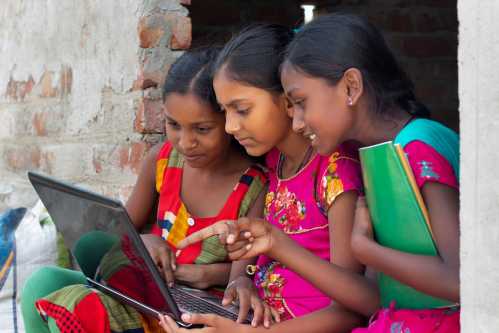
Yet the gap between legal rights, policy structures, and lived experience reveals enforcement challenges as well as questions about how justice systems are designed and who they rely on to function. In northern Uganda, still recovering from conflict, displacement, poverty, and gender-based violence are pervasive. Survivors of violence face stigma, family pressure to reconcile, and fear of retaliation. Enforcement gaps remain, and they are compounded by the absence of a comprehensive witness protection law, high transport and legal costs, limited medical forensic services, and low legal literacy. Customary practices frequently override statutory protections, particularly in land grabbing cases against widows, as these practices are often patriarchal and biased against women.
At WORUDET and other community-based organizations, we are trying to bridge critical gaps, offering legal awareness, mediation support, survivor referrals, and economic empowerment programming. Yet these initiatives operate with constrained resources relative to the magnitude of need. “Rights. Justice. Action.” demands deliberate investment in rural legal aid, mobile courts, survivor-centered services, and sustained community norm change programming. It requires passage and operationalization of key reforms, including the legal aid framework and witness protection legislation. It requires strengthening collaboration between formal justice institutions and trusted community structures, without compromising constitutional guarantees of equality.
Justice must not be a privilege solely for the urban, educated, or wealthy. It must reach the woman farmer in Amuru, the adolescent mother in Kitgum, the widow in Lira, and the girl at risk of child marriage in Pader. On this International Women’s Day, we celebrate progress, but we also need to recommit to action. Because rights without enforcement are hollow, and justice without access is exclusion. For all women and girls, especially those in rural and post-conflict communities, the time for scaled investment and systemic transformation is now.
Access to justice, gender equality, and women’s empowerment in Jamaica: Advancing the International Women’s Day 2026 agenda
Access to justice is a core component of the human rights framework and central to achieving gender equality. The 2026 IWD theme highlights the need to eliminate discriminatory laws and structural barriers that prevent women and girls from realizing their rights. Yet gender-based violence remains a global public health and human rights concern: around one in three women worldwide have experienced intimate partner violence or non-partner sexual violence in their life, reflecting systemic failures in protective and justice mechanisms.
In Jamaica, gender justice remains an evolving priority within broader national development strategies. Research shows that structural gender inequality and patriarchal norms reinforce violence against women by normalizing control and power imbalances. Economic dependence and social norms further increase the prevalence of intimate partner violence. Across Caribbean contexts, deeply entrenched gender norms and limited institutional responsiveness contribute to underreporting and barriers to justice.
Access to justice is multidimensional and includes legal literacy, affordability, institutional accountability, and survivor-centered processes, and contemporary understandings extend beyond court access to emphasize equitable legal outcomes and procedural fairness. However, legislative reform alone does not improve justice outcomes. Legal reforms must be translated into culturally resonant practices to produce meaningful social change.
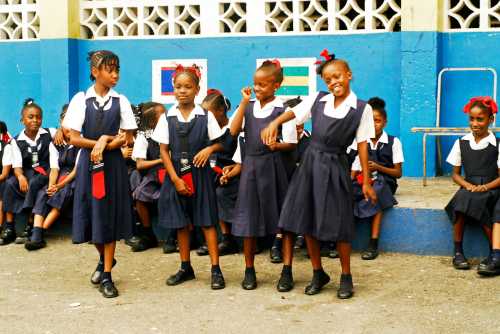
Jamaica has seen important steps taken towards gender justice, including the 2023 amendment to the Domestic Violence Act, which broadened the definition of abuse and enhanced protective penalties. Institutional support mechanisms, such as the Women’s Resource & Outreach Centre (WROC); RISE Life Management Services; the Office of the Children’s Advocate; the Jamaica Constabulary Force – GBV Command, and the Centre for the Investigation of Sexual Offences and Child Abuse (CISOCA) provide critical support. However, effective justice systems require specialized law enforcement training, survivor-centered reporting mechanisms, and integrated legal and psychosocial support services. Cultural norms continue to influence reporting behaviors and societal tolerance of violence.
Therefore, collective condemnation, community engagement, and empowerment strategies, particularly those promoting economic independence and leadership development, are essential to prevention. Advancing access to justice for women and girls in Jamaica requires comprehensive action that integrates legislative strengthening, institutional responsiveness, empowerment, and cultural transformation. Sustainable gender equality is about bridging the gap between legal protections and lived realities, which ultimately depends on systems designed to share responsibility for safety and justice rather than systems that rely on women’s endurance to access what should be guaranteed rights.
Making leadership temporary by design: Women, power, and continuity
As we reflect on this year’s IWD theme, I return to a question that has shaped my own journey: What does it mean to design leadership so that it creates more leaders, not more dependence?
Before leading VOICE-4 in India, the leadership models I knew carried similar messages. Leaders were expected to know everything, and authority required certainty. Vulnerability and failure were private burdens, not shared experiences. While these expectations were rarely named as gendered, they profoundly shaped how women were expected to perform leadership: competent, composed, tireless, and indispensable.
We see this pattern in the social impact and education sectors, where women who endure and hold institutions together through sheer commitment are celebrated. We admire resilience, long tenures, and the ability to carry complexity, yet rarely ask whether our structures distribute leadership or centralize it in ways that exhaust women at the center. Research shows that nonprofit founder transitions often peak around the 10-year mark and again after 25 years, making succession an organizational lifecycle issue. Leadership transitions can take different forms—stepping down or sideways, shifting into stewardship or advisory roles, moving toward collective leadership structures, but all organizations should plan for leadership renewal as part of organizational evolution.
Over the past year, as I transitioned from Executive Director of an organization I shaped for over a decade into a Founder and Strategic Advisor role, a belief that had been forming for years crystallized: leadership should be temporary by design. Not because commitment fades, but because institutions are stronger when we widen the circle of solidarity, stewardship, and decisionmaking.
At VOICE-4, I adopted a co-leadership model grounded in trust, clarity, and feminist values. During our internal transition retreat, I watched the incoming co-leaders hold a difficult strategic conversation without turning to me. They disagreed, reasoned, recalibrated and arrived at clarity together. I felt an unexpected mix of pride and grief. Pride that the organization no longer needed a single center, and grief because stepping back requires releasing the quiet comfort of being indispensable. In that moment, I understood my role had shifted from decisionmaker to steward of continuity.
For many women leaders, indispensability can become both a badge of honor and a trap. I often think of Indian goddesses I saw growing up: multiple arms, each holding a weapon, a symbol of protection, an object of care, or a sign of abundance. It is a powerful symbol, but also a reminder of how easily we romanticize women who hold everything simultaneously. This myth risks exhausting women and building organizations reliant on endless capacity rather than shared power and collective leadership.
If this year’s theme calls us to accelerate progress to advance justice and equality, we must design leadership models that allow women to lead without carrying the weight of permanence. What would it mean to shape leadership as temporary and impact as enduring? And what structures would allow women not only to rise, but to hand over, and rise again in new forms?
Authors


Related Content
The Brookings Institution is committed to quality, independence, and impact.
We are supported by a diverse array of funders. In line with our values and policies, each Brookings publication represents the sole views of its author(s).

Commentary
Translating legal rights into lived equality: Reflections on International Women’s Day 2026
March 5, 2026