This policy brief is part of a series on “Cross-Strait crossroads: Pathways for America’s Taiwan policy” produced by the Brookings Institution in partnership with RAND’s China Research Center.
Peace and stability in the Taiwan Strait are vital to U.S. national security, economic prosperity, and global credibility. Although Beijing has intensified military, economic, and diplomatic pressure on Taiwan—including large-scale exercises and coercive gray-zone tactics—conflict is neither imminent nor inevitable.1 The United States faces the challenge of strengthening deterrence in ways that promote stability without increasing the risk of miscalculation or confrontation. America’s role is not to determine Taiwan’s future, but to prevent the People’s Republic of China (PRC) from using force or coercion to impose its will. Further, America must ensure that any resolution of cross-Strait differences is achieved peacefully and with the consent of Taiwan’s people.
Diplomacy must play a central role in that effort. While military deterrence remains essential, sustained diplomatic engagement with Beijing, Taipei, and like-minded partners is indispensable for communicating intent, discouraging unilateral changes to the status quo, and reinforcing international opposition to the use of force. At the same time, the United States must clearly articulate why Taiwan matters to American interests and ensure that its “One China” policy remains credible, flexible, and aligned with its broader strategy.
This paper outlines a comprehensive diplomatic approach to preserving peace in the Taiwan Strait. It argues for reaffirming and adapting U.S. declaratory policy, strengthening public understanding of Taiwan’s importance, intensifying engagement with both Beijing and Taipei, encouraging cross-Strait dialogue, preventing election interference, and building a coalition of like-minded countries to raise the costs of aggression. Integrated with military, economic, informational, and legal tools, such a strategy can reduce the risk of conflict while safeguarding American interests and regional stability.
U.S. declaratory policy
Since establishing diplomatic relations with the PRC in 1979, the United States has recognized it as “the sole legal Government of China” while maintaining unofficial relations with Taiwan. This forms the foundation of the U.S. “One China” policy. It is distinct from Beijing’s “One China principle,” which holds that “There is but one China in the world, Taiwan is an inalienable part of China’s territory, and the Government of the People’s Republic of China is the sole legal government representing the whole of China.”2 The United States should remain committed to its “One China” policy, which is guided by the Taiwan Relations Act,3 the Three US-China Joint Communiqués,4 and the Six Assurances.5 All the elements of the “One China” policy do not have to be stated every time it is referenced by U.S. officials, but messaging on the “One China” policy should periodically include all the following long-standing statements. The United States:
- Opposes any unilateral changes to the status quo by either side.
- Does not support Taiwan independence.
- Supports cross-Strait dialogue.
- Expects cross-Strait differences to be resolved by peaceful means, free from coercion, in a manner that is acceptable to the people on Taiwan.6
- Does not take a position on the ultimate resolution of cross-Strait differences, provided they are resolved peacefully.
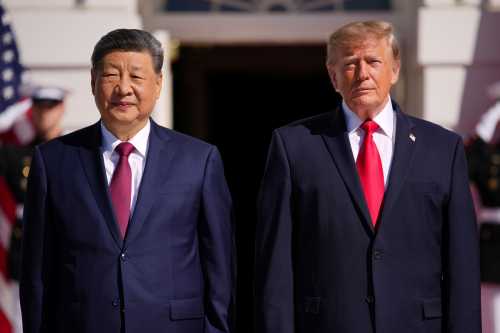
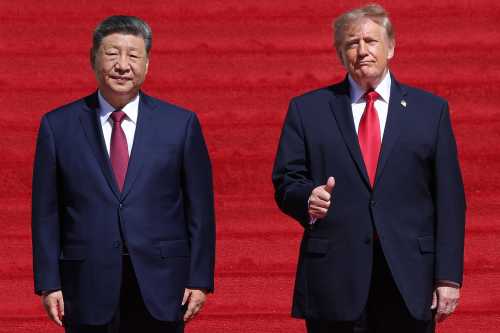
The Trump administration’s commitment to all elements of the “One China” policy is uncertain. In February 2025, the U.S. State Department updated its Taiwan fact sheet, removing the phrase “we do not support Taiwan independence.” Several months later, it pulled down the fact sheet from the website and, as of this writing, has not reposted it. Official documents issued by the administration, including the 2025 National Security Strategy (NSS), do not reference the U.S. “One China” policy, prompting questions in Beijing and other capitals about the direction of U.S. policy. There is speculation that, as part of a deal with Xi Jinping, President Donald Trump might say that he “opposes” Taiwan independence or even “supports peaceful reunification.” Such a concession could embolden Beijing to press for further adjustments in U.S. Taiwan policy, unsettle Taipei, and raise concerns among allies that Washington is moving away from its long-standing position of not taking a stance on Taiwan’s ultimate political status, provided any resolution is peaceful.
If the United States were to abandon its “One China” policy altogether, it would destabilize cross-Strait relations, increase the risk of miscalculation by all parties, and undermine Washington’s ability to deter coercion while maintaining peace and stability in the Taiwan Strait. Yet, the United States has options beyond simply reserving or abandoning the policy. The U.S. “One China” policy is dynamic rather than static, and it has evolved in response to changing circumstances. For instance, U.S. arms sales to Taiwan have increased significantly despite the August 1982 Communiqué with China, in which the United States agreed to “reduce gradually its sales of arms to Taiwan, leading over a period of time to a final resolution.”7 A central reason for maintaining and upgrading these weapon sales is Beijing’s failure to honor its pledge to seek a peaceful resolution of its differences with Taipei.
Going forward, the U.S. “One China” policy should remain flexible and responsive to developments in the Taiwan Strait. The policy contains limitations and internal contradictions and is, in certain respects, suboptimal. Nevertheless, the risks associated with fundamentally changing it exceed any likely benefits.
Articulate why Taiwan matters
Beijing’s accelerated military modernization, more frequent and complex People’s Liberation Army (PLA) operations around Taiwan, and Xi’s insistence that the Taiwan issue cannot be left to future generations have heightened the risk of conflict. Given the very real possibility that the United States could become involved in such a conflict, it is essential for the U.S. government to clearly articulate to the American people the stakes the United States has in Taiwan’s security. Officials have likely refrained from emphasizing Taiwan’s importance in public statements because doing so could increase tensions with the PRC, especially if Beijing interprets them as strengthening the U.S. commitment to defend Taiwan. Nonetheless, if Americans are someday asked to defend Taiwan, they should understand what they are being asked to fight for. This is particularly important because, unlike its formal allies in Asia and Europe, the United States does not have a defense treaty with Taiwan.
In my view, Taiwan matters to the United States for at least three reasons:
- Taiwan is a vibrant democracy of approximately 23.5 million people and, as George W. Bush stated during his presidency, is a “beacon of democracy to Asia and the world.” Taiwan serves as a powerful alternative to the Chinese Communist Party-led party-state political system. Although its democracy is imperfect and faces internal challenges, including intense partisan polarization, it nonetheless presents a compelling example to the PRC and the broader international community of the resilience of democratic institutions and values.
- Taiwan is crucial to U.S. economic competitiveness and prosperity. In 2025, Taiwan was the United States’ fourth-largest trading partner, surpassing Germany. But more importantly, it is one of the world’s leading producers of advanced information and communications technologies, including semiconductors. Taiwan manufactures over 60% of the world’s total output of all semiconductors and more than 90% of the most advanced chips, which are essential for virtually all electronic devices, including computers, cars, smartphones, and military equipment.8 A conflict disrupting Taiwan’s chip production would have immediate and severe consequences for the global economy and U.S. national security.
- Taiwan is central to perceptions of American credibility: How the United States responds to PRC aggression against Taiwan would shape views of U.S. reliability among allies and partners in Asia and beyond. A decision to refrain from defending Taiwan against an unprovoked attack would shatter confidence in U.S. security guarantees. It could prompt some U.S. allies to pursue their own nuclear deterrents and unravel the regional alliance system that has helped to preserve the Pacific Ocean as a barrier against threats to the U.S. homeland.
Various means can be used to build greater public understanding of America’s stake in Taiwan’s security. The president could explain why Taiwan matters to U.S. security and prosperity in his annual State of the Union speech. The national security advisor or the secretary of state could deliver a speech that goes into greater depth, linking Taiwan to broader U.S. interests in the Indo-Pacific. Senior officials can also discuss China’s growing threats to Taiwan and draw connections to U.S. interests in on-the-record briefings. Congress can also play a role by holding more public hearings about Taiwan. Members can talk publicly about the importance of preserving peace and security in the Taiwan Strait and share findings from members’ travel to the region.
Diplomacy toward China
Washington should make it unambiguously clear to Beijing that were it ever to use force against Taiwan to coerce reunification, U.S.-China relations would be irreparably damaged. Even as the United States remains ambiguous about whether and under what circumstances it would defend Taiwan, Washington should ensure that Chinese leaders understand that U.S. intervention is an option and that it has both the political will and military capability to inflict massive harm if China initiates a war of aggression.
In addition to credible military threats, effective deterrence requires credible assurances, preferably by all relevant parties. As my co-authors, Thomas Christensen and Jessica Chen Weiss, and I wrote in Foreign Affairs,
“Credible assurance is not a reward or a carrot. It is a guarantee that a threat is fully conditional on the behavior of its target. … It can and should be made unilaterally to strengthen deterrence, as long as it does not weaken the credibility or capacity to respond to perceived threats.”9
U.S. presidents should continue to provide assurances to China’s leader that the United States remains committed to its “One China” policy and does not seek to use Taiwan as a tool to contain China’s rise. In addition, Washington should also make clear that it would accept any outcome that both sides reach peacefully and that has the consent of the people of Taiwan.
The United States should urge Beijing to strengthen the credibility of its commitment to relying on peaceful means to resolve its differences with Taiwan by providing its own assurances to Washington and Taipei. For example, China could revert to conducting military exercises on its side of the Taiwan Strait centerline, a dividing line that it tacitly observed from 1999 to 2019. Beijing could also revise its 2005 Anti-Secession Law, which set out conditions under which the PRC would use “non-peaceful means” against Taiwan, to make its threat conditional on Taiwan’s behavior.10 For example, Beijing could state that China will refrain from using force as long as Taiwan does not seek formal independence.11
U.S. and Chinese officials should regularly discuss Taiwan at senior and working levels to reduce the risk of misunderstanding and miscalculation. Clear communication helps each side better understand the other’s policies and strategic intentions, reducing the likelihood that routine military activities or political statements are misinterpreted as escalatory moves. Officials posted to U.S. Embassy Beijing should meet frequently with Chinese Communist Party (CCP) and government officials responsible for Taiwan-related diplomacy and policy at the central and local levels, such as the Taiwan Affairs Office, the United Front Work Department, the PLA, and the Ministry of Foreign Affairs. They should also engage PRC Taiwan experts at leading research institutes and universities.
In public statements and official démarches, U.S. officials should condemn all forms of PRC coercion and pressure on Taiwan and insist that Beijing use peaceful and non-coercive means to resolve cross-Strait differences. They should privately encourage the resumption of both cross-Strait dialogue without preconditions and cross-Strait Track 2 dialogues and exchanges. The United States should also urge Chinese officials to recognize that the “one country, two systems” framework is overwhelmingly unpopular and considered unviable by the people and government of Taiwan and advise them to use more flexible and creative approaches toward Taiwan.
The United States should strongly object to Beijing’s increasingly assertive efforts to portray U.N. General Assembly Resolution 2758, which transferred the “China seat” in the United Nations from the Republic of China to the PRC in 1971, as having resolved the dispute over Taiwan’s sovereignty in Beijing’s favor. The United States should also use diplomacy creatively to advocate for Taiwan’s participation in U.N.-affiliated agencies such as the World Health Organization, the International Civil Aviation Organization, the International Maritime Organization, as well as other intergovernmental bodies like INTERPOL, where its absence has potentially large-scale ramifications for regional and global security.
In meetings with Chinese counterparts, U.S. officials should push back on Beijing’s efforts to portray U.S. and allied support for preserving the status quo in the Taiwan Strait as support for Taiwan independence. They should also resist demands that countries jettison their “One China” policies and adopt Beijing’s “One China” principle. The United States should communicate its willingness to impose costs on China if it continues to try to compel adherence to its “One China” principle. For example, senior U.S. officials could publicly affirm that Washington does not recognize the PRC’s claim that Taiwan is part of China and considers Taiwan’s political status as unresolved. Such explicit language is rarely used by U.S. officials because it would likely provoke strong opposition from Beijing and could raise the risk of an escalatory spiral in the bilateral relationship.12
Diplomacy toward Taiwan
U.S. diplomacy toward Taiwan is essential for multiple reasons. Maintaining effective channels of communication with the government of Taiwan is necessary to safeguard America’s interest in preserving peace and stability in the Taiwan Strait. Communication channels are also essential to convey U.S. concerns if Taiwan pursues policies that could trigger an escalatory spiral in cross-Strait tensions. Such channels allow Washington to clarify its red lines, provide early warnings, and offer guidance that can help avert a crisis.
Both public and private diplomacy is vital to provide assurances that the United States will uphold its commitments to Taiwan’s security, which, under the Taiwan Relations Act, include keeping a strong, unofficial relationship with Taiwan consistent with the U.S. “One China” policy; assisting Taiwan in maintaining a sufficient self-defense capability; and maintaining the U.S. capacity “to resist any resort to force or other forms of coercion that would jeopardize the security or the social or economic system of Taiwan.”
Such assurances are crucial because, at its core, Beijing’s Taiwan strategy is designed to erode public morale and gradually compel capitulation. Taiwan should not feel compelled to enter political talks with the PRC because it has no other options; it should only do so voluntarily and with the support of the majority of the Taiwan people.
Washington should develop a strategy to counter growing doubts in Taiwan about the United States’ dependability. While it is not in U.S. interests for Taipei to be overconfident that the United States has its back in all circumstances, the spreading narrative that the United States will eventually abandon Taiwan carries risks. Failure to address this trend of increasing “U.S. skepticism” could help Beijing convince the people of Taiwan that their best and perhaps only option is unification on Beijing’s terms, despite their strong preference to preserve the status quo. Moreover, pessimism about the United States’ willingness to support and defend Taiwan could erode support for a larger defense budget and weaken resolve among the island’s citizens to fight in the event of an attack.13 Since Washington and Taipei have many shared interests, interactions between U.S. and Taiwan officials are routine and should be subject to as few restrictions as possible. The U.S. State Department’s contact guidelines for Taiwan should remain in place but be periodically reviewed and revised as necessary.
The United States should periodically send senior-level officials, including cabinet members, to visit Taiwan and should also welcome visits by senior Taiwan officials. Although Beijing claims that such interactions are “official” and therefore violate the three U.S.-China communiqués, these visits are permitted under the Taiwan Relations Act, which provides for extensive unofficial relations. Senior-level visits should have a specific purpose, such as signing a trade agreement. They should be limited to functional areas such as transportation, education, agriculture, energy, economics/trade, and science and technology. Periodic senior-level exchanges serve U.S. interests by:
- Demonstrating that the United States opposes Beijing’s claim that Taiwan has no right to international engagement.
- Providing cover for other countries to have interactions with Taiwan’s officials.
- Reassuring Taiwan’s public of U.S. support and assuaging fears that the United States is drifting toward accommodation with Beijing.
- Strengthening the confidence of Taiwan’s leaders to pursue defense reform and resilience measures.
- Signaling predictable U.S. policy and showing continuity across administrations.
- Reducing the risk that Beijing miscalculates U.S. resolve based on perceived political divisions.
Congressional and staff delegations should also regularly visit Taiwan to ensure Congress remains informed, to engage in discussions about shared concerns, and to reassure Taiwan of U.S. support.
Taiwan’s president should be permitted to transit the United States upon Taipei’s request, with travel allowed anywhere in the country outside Washington, DC, and with transit arrangements handled in accordance with established precedent.
Encourage cross-Strait dialogue
There has been no official dialogue between the governments in Taipei and Beijing since Tsai Ing-wen took office in 2016.14 Chinese leaders have refused direct contact with the Democratic Progressive Party-led administrations of Chen Shui-bian, Tsai Ing-wen, and Lai Ching-te due to the party’s refusal to accept the 1992 Consensus—which is understood differently in Taipei than it is in Beijing.15 Communication has not only lapsed between Taipei’s Mainland Affairs Council and Beijing’s Taiwan Affairs Office—the agencies responsible for handling cross-Strait relations—but interactions between their respective “white glove” organizations—Taiwan’s Straits Exchange Foundation and the PRC’s Association for Relations Across the Taiwan Strait—have also diminished.
Since the COVID-19 pandemic, cross-Strait scholarly exchanges and dialogues have occurred only sporadically. The convening of the Kuomintang-CCP joint think tank forum in Beijing on February 3 marked the first such meeting since 2016 and signals a deepening of party-to-party dialogue. However, it does not substitute for official communication between the PRC and Taiwan’s elected government. The absence of both official and informal channels heightens the risk of misunderstanding and miscalculation, leaving few mechanisms to de-escalate tensions once they arise.
While Beijing’s precondition for cross-Strait dialogue is that Taipei’s leader endorses the 1992 Consensus, Taiwan President Lai Ching-te insists that talks with China can only take place on the basis of equality, mutual respect, and dignity, not under conditions that imply Taiwan is subordinate to mainland China. He also stresses that Taiwan’s future should be decided by Taiwan’s people, and that any dialogue must respect Taiwan’s democratic system. Neither the preconditions set by Taipei nor by Beijing are likely to be met.
Across multiple U.S. administrations, including those of Presidents Bill Clinton, George W. Bush, Barack Obama, Donald Trump, Joe Biden, and the second Trump administration, Washington has consistently encouraged both sides of the Taiwan Strait to settle their differences peacefully through constructive dialogue. As recently as December 2025, a U.S. State Department official called on Beijing to engage in meaningful talks with Taiwan.16 The United States, however, has refrained from acting as a mediator between Taipei and Beijing, in part because President Ronald Reagan’s Six Assurances included the commitment that “the United States will not exert pressure on Taiwan to enter into negotiations with the PRC.”17 Unless Taiwan consents to a U.S. intermediary role, Washington risks undermining its credibility and damaging its relationship with Taipei by attempting to act as a go-between.
Given rising cross-Strait tensions, U.S. officials should consider whether greater priority should be given to privately urging both governments in Taipei and Beijing to restore contacts. These should begin with the resumption of Track 2 dialogues between scholars from both sides of the Strait, authorized by their respective governments, followed by more effective and regular utilization of channels between Taipei’s Straits Exchange Foundation and Beijing’s Association for Exchanges Across the Taiwan Strait. Cross-Strait agreements that serve both Taipei’s and Beijing’s interests should be more effectively implemented, including those on joint crime-fighting and mutual assistance, air transport, sea transport, and food safety, all of which remain in force.
No interference in elections in Taiwan
The United States should communicate to Beijing that it strongly opposes any interference in Taiwan’s elections. Washington should make clear that this includes a broad range of tactics such as propaganda, disinformation, use of economic carrots to sway voters, and material support to favored candidates via friendly networks.18
At the same time, Washington should maintain its policy of not taking sides in Taiwan’s elections. Regardless of which party or individual is elected, U.S. policy toward Taiwan should remain the same, and the United States’ strong, unofficial relationship with Taiwan should continue. U.S. diplomats posted to the American Institute in Taiwan should engage in frequent discussions with the major political parties in Taiwan to fully understand their positions and convey U.S. concerns, policies, and priorities. It is especially important for the US to deepen its contacts with the two leading opposition parties, the Kuomintang (KMT) and the Taiwan People’s Party.
If the KMT returns to power in 2028, the United States should engage closely with the new government, maintaining ongoing, in-depth discussions about Taipei’s objectives in cross-Strait relations and its strategy toward Beijing. While Washington should convey any concerns about the KMT-led government’s approach to the PRC, it should not oppose efforts by Taipei to restore linkages with Beijing.
Build a coalition with like-minded countries
During the Biden administration, the United States emphasized working with allies to strengthen deterrence in the Taiwan Strait. This included encouraging allies to join maritime patrols, condemn Beijing’s military pressure on Taiwan as destabilizing the cross-Strait status quo, expand support for Taiwan’s participation in international organizations, and enhance exchanges with Taipei. Biden’s approach coincided with many countries’ growing recognition that a crisis or conflict in the Taiwan Strait could have catastrophic economic and security consequences. The result was a notable increase in statements and actions supporting the preservation of the status quo, sending a clear signal to Beijing that the use of force against Taiwan would carry international costs.
The Trump administration rejected this strategy. For example, in 2025, U.S. officials encouraged European allies, including the U.K. and Germany, to focus on the Euro-Atlantic region and discouraged them from deploying military assets to the Indo-Pacific or otherwise contributing to cross-Strait deterrence. While it is reasonable to ask European allies to prioritize defending their continent, discouraging actions that signal a stake in maintaining peace and security in the Taiwan Strait is ill-advised.
The United States should instead use diplomacy to forge a standing coalition of like-minded countries to shape Xi’s calculus regarding the use of force against Taiwan. Beijing has mounted disproportionate diplomatic and propaganda efforts opposing U.S. alliances and U.S.-led coalitions, including the Quad (India, Japan, and Australia), AUKUS (the U.K. and Australia), and U.S.-Japan-Republic of Korea trilateral cooperation. Beijing routinely frames these partnerships as evidence of “encirclement” and “containment,” indicating that China views coalition-building as a significant threat. The United States should seek to leverage these insecurities to strengthen deterrence in the Taiwan Strait.19
Washington should articulate a set of positions that like-minded partners can endorse, including opposition to the use of force, opposition to unilateral changes in the status quo by either side of the Taiwan Strait, and support for the peaceful resolution of differences. A meeting of the signatories could be convened to discuss steps that could be taken collectively or by a subset of countries to protect peace and stability in the Taiwan Strait. Examples include:
- Jointly declaring support for Taiwan’s meaningful participation in international organizations that require sovereignty for membership.
- Criticizing Beijing’s distortion of U.N. General Assembly Resolution 2758 to establish its “One China” principle as international law.
- Coordinating contributions to Taiwan’s whole-of-society defense resilience program.
- Warning Beijing against excluding Taiwan’s participation in the Asia-Pacific Economic Cooperation forum in 2026.
- Preparing measures to impose costs on China if it uses force against Taiwan.
As part of its coalition-building efforts, the United States and its like-minded partners should support countries targeted by Chinese economic coercion or other punitive actions for engaging with Taiwan. Washington’s silence in response to Beijing’s moves to punish Japan for Prime Minister Sanae Takaichi’s statement to the Japanese Diet—that a PRC attack on Taiwan could constitute a “survival-threatening situation” under Japanese law, thereby permitting military intervention—undermines U.S. interests by fueling fears that the United States might abandon its allies.20
Coalition members could use coordinated public messaging to increase the costs of Beijing’s retaliatory actions. If China restricts imports from a target country, coalition partners could help that country access alternative markets to offset economic harm. Beyond crisis response, the coalition could focus on anticipating and deterring Chinese pressure by strengthening members’ resilience to economic coercion and making the consequences of coercive behavior predictable and public.
Conclusion
Preserving peace in the Taiwan Strait will require sustained American leadership, strategic coherence, and disciplined diplomacy. The United States cannot control Beijing’s ambitions or Taipei’s politics, but it can shape the environment in which decisions are made. By clearly articulating its interests, reinforcing deterrence in concert with allies and partners, maintaining credible communication channels with both sides of the Strait, and building a coalition prepared to oppose coercion and raise the costs of aggression, Washington can reduce the risk of miscalculation and conflict. The objective is not to predetermine Taiwan’s future, but to ensure that it is decided peacefully and without coercion. A steady, principled, and internationally supported strategy offers the best prospect for deterring the use of force while preserving stability and safeguarding U.S. interests.
In Partnership With
Author

Related Content
-
Acknowledgements and disclosures
Thanks goes to Adam Lammon for editing and Rachel Slattery and Adrien Chorn for design.
The views expressed in this document are those of the authors and do not necessarily reflect RAND’s or Brookings’ opinions.
-
Footnotes
- Jose M. Macias III and Benjamin Jensen, “Signals in the swarm: The data behind China’s maritime gray zone campaign near Taiwan,” Center for Strategic and International Studies, October 8, 2025, https://www.csis.org/analysis/signals-swarm-data-behind-chinas-maritime-gray-zone-campaign-near-taiwan; Derek Grossman, “The Chinese Communist Party’s gray zone tactics against Taiwan,” (Washington, DC: Global Taiwan Institute, March 2025), https://www.rand.org/pubs/external_publications/EP70899.html.
- “Statement by the Ministry of Foreign Affairs of the People’s Republic of China,” Embassy of the People’s Republic of China in the United States of America, August 2, 2022, https://us.china-embassy.gov.cn/eng/zgyw/202208/t20220802_10732293.htm.
- The Taiwan Relations Act established a framework for unofficial relations with Taiwan. Its key provisions include that the United States “make available to Taiwan such defense articles and defense services in such quantity as may be necessary to enable Taiwan to maintain a sufficient self-defense capability” and that the United States will “maintain the capacity … to resist any resort to force or other forms of coercion that would jeopardize the security, or social or economic system, of the people of Taiwan.” See “H.R.2479 – Taiwan Relations Act,” 96th Congress, 1979, https://www.congress.gov/bill/96th-congress/house-bill/2479.
- The Three Joint Communiqués refer to the Shanghai Communique signed in 1972, the Normalization Communiqué signed in 1979, and the August 17th Communiqué signed in 1982. Each document contains carefully negotiated language on Taiwan.
- The “Six Assurances,” made by President Ronald Reagan in 1982, were commitments to Taiwan intended to maintain its security and clarify U.S. policy following the normalization of relations with the PRC. See Susan V. Lawrence, “President Reagan’s Six Assurances to Taiwan,” Congressional Research Service, last updated February 19, 2026, https://www.congress.gov/crs-product/IF11665.
- Some U.S. administrations, including the Biden administration, stated that any agreement must be acceptable to the people on both sides of the Strait, but the PRC does not hold referendums that allow the Chinese people to cast their votes.
- “Chinese communique, August 1982,” Ronald Reagan Presidential Library, 1982, https://www.reaganlibrary.gov/public/2020-12/40-373-7789427-CFOA219-003-2020.pdf.
- “Taiwan – Semiconductors including chip design for AI,” International Trade Administration, last published December 1, 2025, https://www.trade.gov/country-commercial-guides/taiwan-semiconductors-including-chip-design-ai.
- Bonnie S. Glaser, Jessica Chen Weiss, and Thomas J. Christensen, “Taiwan and the true sources of deterrence,” Foreign Affairs, November 30, 2023, https://www.foreignaffairs.com/taiwan/taiwan-china-true-sources-deterrence.
- “China enacted historical Anti-Secession Law,” Embassy of the People’s Republic of China in the Republic of Namibia, March 18, 2005, https://na.china-embassy.gov.cn/eng/sgxw/200503/t20050318_6553850.htm.
- Ibid.
- The American Institute in Taiwan, which is the de facto U.S. diplomatic mission in Taipei, issued a statement in September 2025 that explicitly said that World War II-era documents, including the Cairo Declaration and Potsdam Proclamation, did not determine Taiwan’s final political status. This position was subsequently confirmed by the U.S. Department of State. For many years prior to this episode, Washington had avoided making such an explicit statement. See CNA, “AIT comments on Taiwan accurate: State Department,” Taipei Times, September 16, 2025, https://www.taipeitimes.com/News/front/archives/2025/09/16/2003843862.
- Bonnie S. Glaser and Jennifer Lan, “Taiwan’s growing distrust of the United States,” German Marshall Fund, August 18, 2025. https://www.gmfus.org/news/taiwans-growing-distrust-united-states.
- Javier C. Hernández, “China suspends diplomatic contact with Taiwan,” The New York Times, June 25, 2016, https://www.nytimes.com/2016/06/26/world/asia/china-suspends-diplomatic-contact-with-taiwan.html.
- In Taiwan, the 1992 Consensus is generally understood as an agreement that there is “one China,” with each side able to interpret its meaning. In Xi Jinping’s January 2, 2019, speech marking the 40th anniversary of the message to compatriots in Taiwan, he defined the 1992 Consensus as “both sides of the Taiwan Straits belong to one China and will work together toward national reunification.” See Xi Jinping, “Speech at the meeting marking the 40th anniversary of the issuance of the message to compatriots in Taiwan,” Center for Strategic and International Studies, January 2, 2019, https://interpret.csis.org/translations/speech-at-the-meeting-marking-the-40th-anniversary-of-the-issuance-of-the-message-to-compatriots-in-taiwan.
- Esme Yeh, “US affirms Taiwan commitments,” Taipei Times, December 21, 2025, https://www.taipeitimes.com/News/front/archives/2025/12/21/2003849243.
- Susan V. Lawrence, “President Reagan’s Six Assurances.”
- Alan Yu, Michael Clark, and Megan Shahi, “Taiwan’s election: PRC interference and its implications for the 2024 election landscape,” Center for American Progress, February 1, 2024, https://www.americanprogress.org/article/taiwans-election-prc-interference-and-its-implications-for-the-2024-election-landscape/.
- “Foreign Ministry Spokesperson Zhao Lijian’s regular press conference on February 11, 2022” [外交部发言人赵立坚主持例行记者会], Ministry of Foreign Affairs of the People’s Republic of China, February 11, 2022, https://www.fmprc.gov.cn/fyrbt_673021/jzhsl_673025/202202/t20220211_10641427.shtml.
- Gabriele Ninivaggi, “Takaichi’s Taiwan tumult: A closer look at the Japanese leader’s contentious remarks,” The Japan Times, December 3, 2025, https://www.japantimes.co.jp/news/2025/12/03/japan/explainer/explainer-japan-existential-crisis/.
The Brookings Institution is committed to quality, independence, and impact.
We are supported by a diverse array of funders. In line with our values and policies, each Brookings publication represents the sole views of its author(s).