This essay has been adapted from Fiona Hill’s delivery of the IWM Institute Annual Lecture 2026 at the Imperial War Museum London on April 29.
Growing up in North East England during the height of the Cold War, the themes reflected in the collections of the Imperial War Museum in London, explaining how the U.K. coped with both the First and the Second World Wars, and then prepared to survive what many anticipated would be a nuclear third world war between the United States and the USSR, are very relevant to me. These three wars, both hot and cold, shaped my outlook on life and my chosen career as a historian and foreign policy expert. They also taught me the importance of resilience, which is the primary focus of this lecture.
Let me first draw out why these wonderful collections have so much resonance.
History tells us how wars end, but it rarely tells us how they start (beyond the triggering events). As you can see for yourselves in the collections, countries rarely anticipate a war they will have to fight, nor are they prepared for the war they set out to fight. Every war turns out differently. The battlefield constantly evolves. Militaries must adapt to the emergencies they face in the demands of the moment. They improvise weapons and personal equipment like body armor and gas masks, and they build new military defenses right there on the battlefield. Societies shore up the home front against new perils.
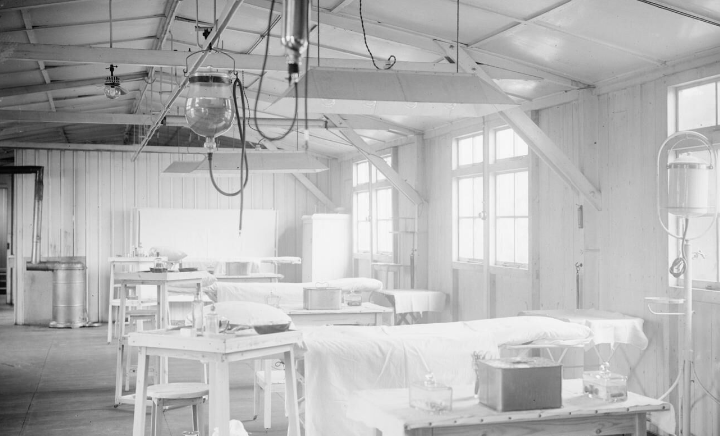
Operating theatre suite at No 23 Casualty Clearing Station in France. (Imperial War Museums © IWM (Q 33441))
Warfare is innovation
The story of warfare is the story of innovation. In World War I, the U.K. was forced to draw up a conscription law for men aged 18-41 when the first rush of volunteers dried up. When married as well as single men were called up, women and children had to fill in the gaps in the workplace. In WWI, no one anticipated trench warfare and fighting a war below as well as above ground. The U.K. military did not have the necessary mortars for trench fighting. So, as a stopgap measure, before these trench mortars could be mass-produced, a Mr. C.P. Leach of South Kensington invented a wooden catapult with help from Gamages’ department store. You can see examples of Leach or Gamage catapults in the collections.
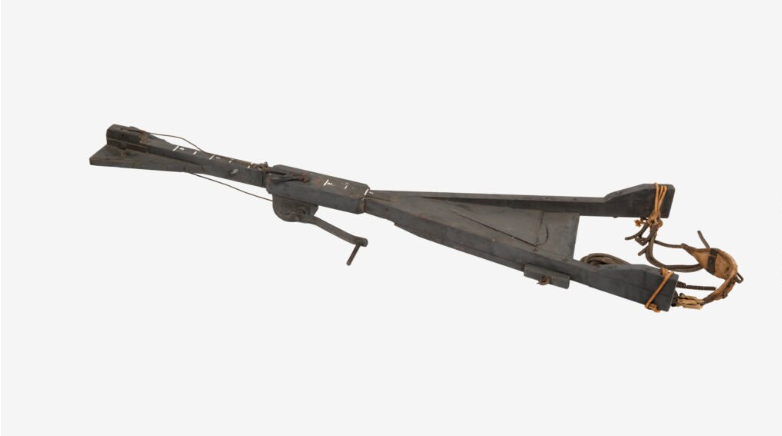
Rubbers for the Leach catapult and a section of string. (Imperial War Museums © IWM (ORD 50.1))
The U.K. government stepped up military health services—just as Florence Nightingale and her team of nurses did during the Crimean War in the 1850s. They created Casualty Clearing Stations near the front. They developed blood transfusions, splints for fractures, and new antiseptics. You can see the bloodstained jacket of Second Lieutenant Harold Cope downstairs. It was cut off on the battlefield in the Somme to save his life. Joseph Pilates, a German national interned in England during the war, created resistance apparatus and techniques to assist badly injured, bedridden soldiers like Harold Cope restore their strength and mobility during recovery.
These innovations shaped the way we think about war preparation and even our well-being today.
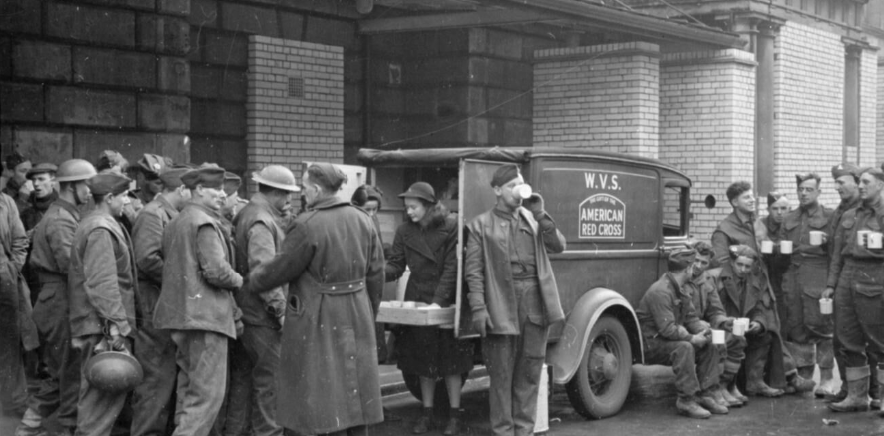
Patience ‘Boo’ Brand and Rachel Bingham serve tea to men of the Royal Engineers from the back of a WVS tea car, donated to the WVS by the American Red Cross. (Imperial War Museums © IWM (D 2171))
The necessity of civil defense planning
In the Second World War, civil defense planning preceded the war, drawing on the still recent experiences of WWI, and foreseeing that the home territory would likely be under attack from advances in military aviation. The British government understood that the next war would not just be fought by military forces on a distant battlefield. Emergency services, rescue teams, and relief services were set up with volunteer workers, including the Women’s Voluntary Service (WVS), which was established in 1938. The WVS had a million members by the end of the war. In 1939, women accounted for roughly 22 million to 24 million people in the population of England and Wales, and about 5 million women were in the workforce. As the war dragged on, this rose to more than 7 million. By 1943, about 36% of all working-age women were in employment or in National Service.
Despite the early preparations, the whole of society had to work together to deal with the magnitude of threats the U.K. suddenly faced—like submarine attacks against civilian as well as military shipping on the high seas; the cut-off of food and other essential supplies; dive bombers that could reach the British mainland; and fierce barrages of German V-1 flying bombs, or “Doodlebugs” and “buzz bombs,” that were deployed to lethal, terrifying effect from 1944 against London. The V-1s were the first cruise missiles—not yet nuclear-tipped.
Sometimes, when you take in the lack of preparedness for this onslaught on the homeland; when you consider Dunkirk and the tiny boats, like the “Tamzine” in the collection downstairs, that pulled off the extraordinary rescue of trapped British and French troops; when you think about the Blitz and the mass evacuation of 1.5 million children in just three days from London and other big cities (a total of 3 million children and other vulnerable members of society over the entire war), you wonder how the U.K. survived.

The Tamzine was requisitioned for use in Operation Dynamo, the evacuation of the BEF from the beaches of Dunkirk, 27 May – 4 June 1940, and is the smallest vessel known to have participated in this dramatic event. (Imperial War Museums © IWM (MAR 556))
So let me emphasize what a massive effort we are talking about here. Britain made it through both world wars because its society proved more resilient than initially anticipated. It put up with evacuations, strict rationing, stringent blackouts, and massive casualties. The British and Commonwealth deaths in Normandy in 1944 were equivalent to the worst battles of the First World War.
Everyone was touched by war between 1914 and 1945. Some people and places never quite recovered from the destruction and the losses. Nowhere was ever the same again.
My immediate family experienced both wars directly in ways depicted in the museum’s collections, including its photos and physical artifact displays. In World War I, in 1914, my paternal grandfather joined the Royal Field Artillery as a driver, training and managing the horses that hauled the guns to the frontline. He was shelled, bayonetted, and gassed, but still served through the end of the war in 1918. My maternal grandfather was in the cavalry but was saved from deployment by the Armistice.
In December 1914, both sides of my family, both my grandmothers, were directly affected by the German bombardment of West Hartlepool and other towns like Scarborough and Whitby along the U.K.’s northeast coast by German warships. You can see pictures of the devastation in the museum. This was the first successful military assault on the British coast since the Norman invasion. The people who died were the first casualties of the war on British soil. The attack was a harbinger of far worse to come in World War II.
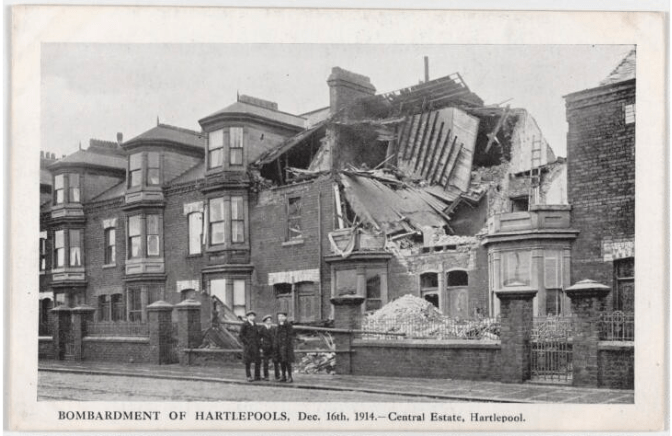
Damage inflicted to housing in Central Estate, Hartlepool, during the Imperial German Navy’s bombardment of the town on 16 December 1914. (Imperial War Museums © IWM (HU 128023))
My paternal grandmother’s aunt was killed in her house in West Hartlepool. My maternal grandmother’s best friend was killed by a shell, and her family had to flee from the bombardment along the seafront. These specific attacks on civilians became a rallying cry for fighting to defend the homeland in the first year of the war. They had a deeply personal impact on my grandmothers.
My paternal grandmother, Sissie, was 16 when World War I broke out. She had left school at 13 to work in a leather factory in her hometown of Crook in County Durham. Her aunt’s death in the barrage was a big blow. They had been particularly close. After this, her family ties seemed to shrivel. Sissie was what they called a “big lass” in the north of England. Some of her aunt’s family became heavyweight boxing champions. While the men were at war, Sissie did the hardest manual labor in the leather works. She carried and tanned hides. At some point, she was injured when a stack of wet hides fell on top of her, crushing her neck and her back. This accident left her with crippling arthritis in old age.
My maternal grandmother, Vi, was only 10 when the First World War broke out. She was born in West Hartlepool and narrowly escaped being killed herself in the German bombing. She was on the way to school when her school friend took a direct hit a short distance in front of her. Grandma Vi frequently related the story with wide-eyed shock. Her family was lucky to escape the carnage. Their house was damaged, and they moved out of Hartlepool right after the shelling. Her father worked as the personal coachman for Sir Stephen Furness, one of the local industrialists and landowners. After the bombardment, Sir Stephen gave my great-grandfather the tenancy of one of the Furness family farms, Belasis Hall, in Haverton Hill near Billingham in Teesside.
In World War II, that farm’s location became a liability. It was right next to ICI, Imperial Chemicals Inc., once the world’s largest chemical complex, and a critical manufacturer of synthetic ammonia for explosives and aviation fuel during the war. My grandmother had married by then, and her family had moved after the death of her father. But, in 1942, Belasis Hall farm took a direct hit from a bomb intended for ICI. The bomb came down the chimney and blew the main building practically to pieces. The farm had once been part of a medieval, moated manor house that was first built as a stronghold for one of William the Conqueror’s commanders in the 11th century. 900 years later, it was not strong enough to withstand a German bomb.
In World War II, my mother’s hometown, Billingham, was repeatedly bombed because of its proximity to the massive industrial works. My grandfather was a fire guard for the local council, rushing around the ICI factory putting out incendiary bombs and flares. My grandmother Vi was in the Women’s Voluntary Service. She managed food rationing for the local grocery store and ran improvised classes with the Women’s Institute from the front room of her council house when schools were closed during the Blitz. She volunteered in her local community throughout her life. And both sides of my family—grandparents and parents—dug for victory in their gardens, allotments, and community plots, and at various points housed family, friends, and strangers displaced by the war as they made their way to somewhere safer.
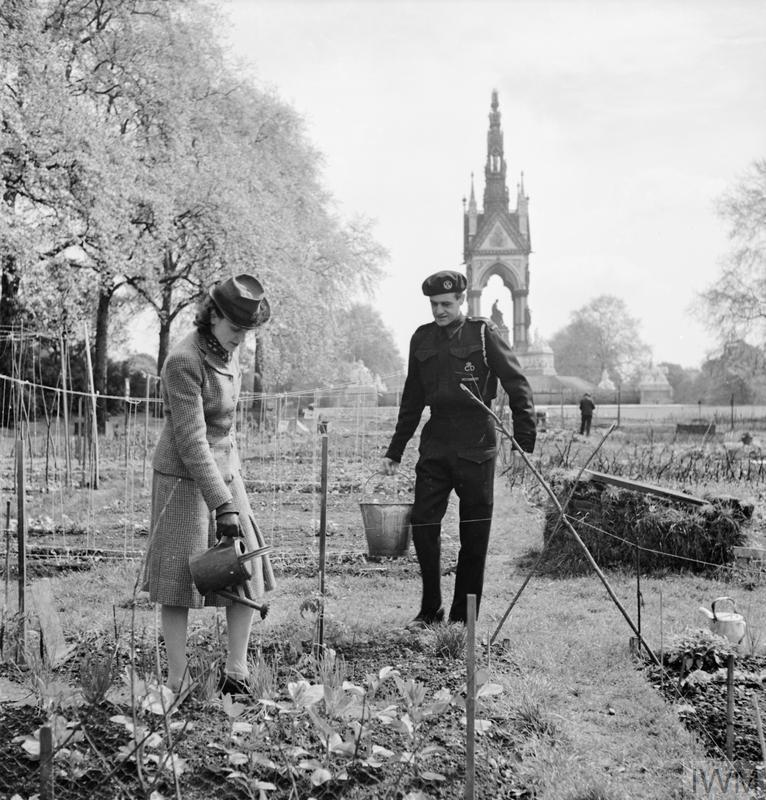
A woman waters the vegetables on her allotment in Kensington Gardens as a Westminster Civil Defence Warden (possibly her husband), carries a bucket towards her. (Imperial War Museums © IWM (D 8336))
Wars have a lasting imprint on people and society. My family maintained the skills and practices—essentially the muscle memories—they developed in wartime throughout the Cold War. They grew their own food and made sure they had everything on hand in case disaster struck. They still had thick blackout curtains on the windows, hand-cranked radios, masses of first aid supplies (my mother was one of the community nurses assigned to take action if needed), and all kinds of emergency information pamphlets. The kitchen pantry had—it seemed to me at least—ridiculous amounts of spam and chicory camp coffee stashed away for when rationing started again. I didn’t relish eating or drinking either of those—especially if we were cramped together in the cupboard under the stairs for days waiting for the all clear from a nuclear attack (as prefigured in the famous 1984 BBC drama “Threads” about the aftermath of nuclear war in the northern English city of Sheffield).
My family expected there would be difficult times ahead. They prepared for the worst, even if they hoped for the best. It’s what they learned to do from their own experience.
I left for the United States in 1989, just as the Cold War came to an end. Since then, the U.K. seems to have dropped its guard, forgotten the civil defense lessons of its past, and not kept its societal response muscles in shape. The U.K. seems less resilient than it should be, given mounting geopolitical crises and new risks to the homeland.
Fast forward four decades from my 1989 departure, and in 2024-2025, I was one of three lead reviewers for the U.K.’s Strategic Defense Review (SDR), chaired by Lord George Robertson, the former U.K. secretary of state for defense and NATO secretary general. The SDR was a first-of-its-kind external review of Britain’s defense posture at a time when war had returned to Europe. The review solicited input from the public, all branches of the armed forces, other parts of government, and allies and partners. We had 8,000 separate submissions of outside input, conducted public opinion polls, and convened a series of “citizens assemblies” or focus groups to visit U.K. military bases and offer their perspectives on the U.K.’s defense. The final report was published in early June 2025.
One of our major recommendations was for the government to launch a national discussion or conversation about defense and the role of society—not just the U.K.’s armed forces—in addressing and meeting the U.K.’s strategic challenges. We concluded that the British public was well-aware that the essence of U.K. defense was about ensuring deterrence, pursuing resilience, and restoring readiness—or, as some of the participants in the focus groups put it, making sure the U.K. was adequately “insured” in the event of a war or major crisis. We recommended that the U.K. explicitly adopt a “whole-of-society approach” toward its defense. We also stated that time was of the essence. The threats to the U.K. were likely to get worse, not better. We could not delay in taking action.
So, almost a year on from the publication of the SDR report, where are we now? The Ministry of Defense has taken the report’s operational recommendations seriously. It has implemented a number of important changes and defense reforms we recommended. But the threat environment is far worse than before, and the government writ large does not seem prepared to launch a national conversation to level with the public about just how serious the situation is.
I am going to divide the rest of this talk into two parts: the threat environment and then, figuring out what we can do about it.
The threat environment
Let’s review what has happened over the past year on four sets of geopolitical developments that affect the U.K. directly.
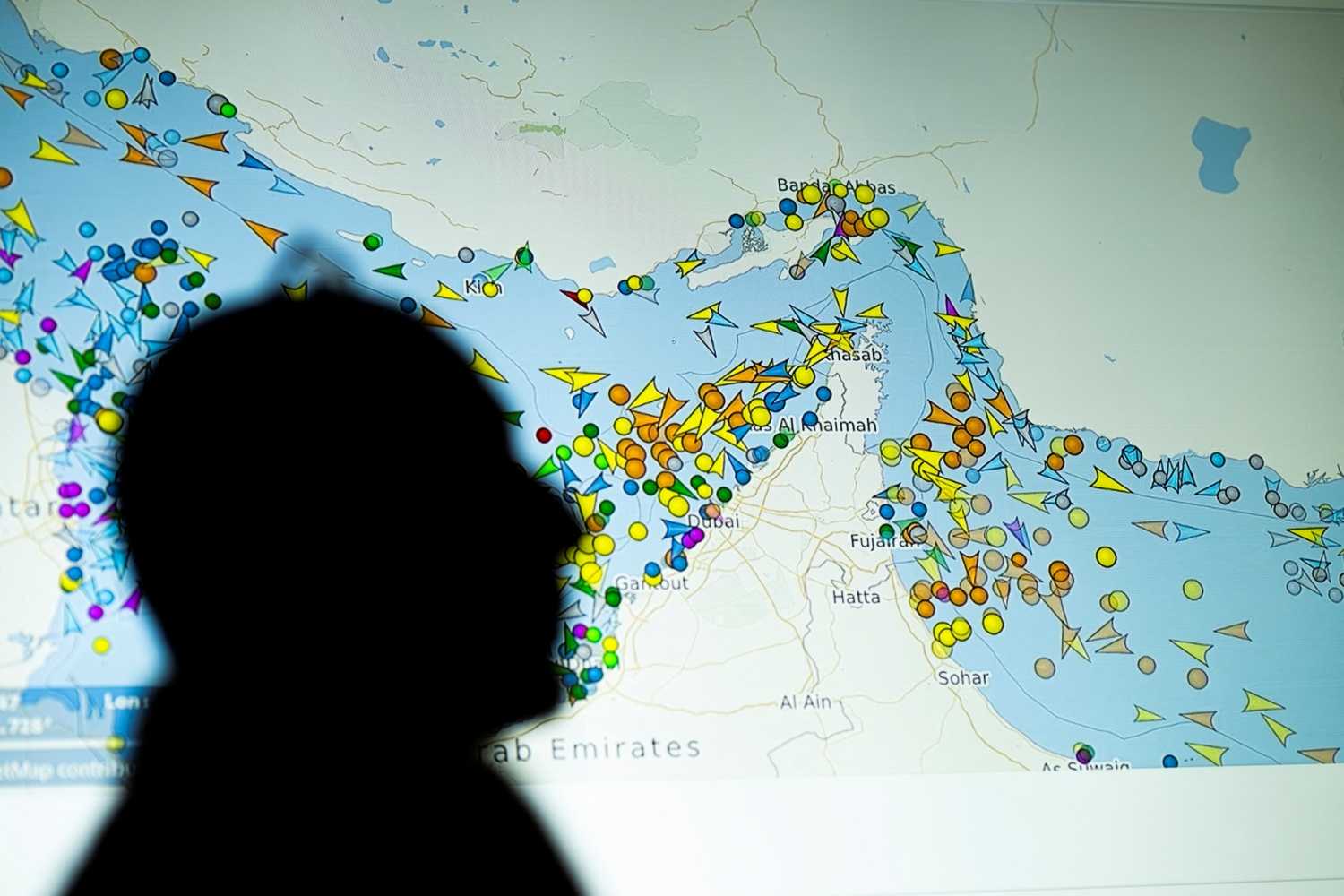
First, we now have a full-on war or series of interconnected wars in the Middle East, with the United States and Israel attacking Iran, Israel attacking Lebanon, and no resolution to the brutal war in Gaza in the wake of Hamas’ devastating surprise attack on Israel on October 7, 2023. Pakistan is also at war with Afghanistan on Iran’s eastern flank.
Second, Russia’s war in Ukraine is in its fifth year. It is the largest land war in Europe since World War II, with horrific casualty rates for both Russia and Ukraine. The war in Ukraine was one of the prompts for launching the SDR. The Ukraine war illustrates every day the threats to civilians, critical national infrastructure, and vital economic activity that the U.K. could face in a wartime scenario. So does war in the Middle East. The background to these wars is the breakdown of the rules and norms that have regulated the post-World War II international order.
U.K. overseas military and economic interests and U.K. citizens have been harmed by Iran’s retaliatory drone and missile attacks and Iran’s successful efforts to block shipping through the Strait of Hormuz. This underscores the prospective perils the U.K. faces from directed attacks on any kind of vital transportation, trade, or communications chokepoint closer to home. The U.K. has already experienced sabotage and cyberattacks by Russia and a relentless barrage of propaganda and disinformation. We cannot rule out similar attacks by Iran, given its long-standing hostility toward the U.K.
If a year ago in the SDR, we contemplated the increasing threat of war to the U.K. and the world, extrapolating from the situation in Ukraine, we can now say we are seeing and experiencing the consequences of a world at war. No extrapolation is necessary given what is happening in the Gulf and the erosion of the Gulf states’ much-vaunted positions as safe havens for global finance, sport, travel, and tourism.
Even in 2024-2025, when we were working on the report, the war in Ukraine had cost the United Kingdom billions of pounds in responding to its various impacts, including extra government spending to offset a rapid increase in energy prices. The wars in the Middle East and the destruction of Gulf energy facilities will cost many billions more. A world at war will be detrimental to the U.K. economy and individual livelihoods and well-being. It will make the overhaul of the welfare state and addressing the U.K.’s domestic deficiencies even harder than it was before.
Third, and critically, we must now contend with a shift in the United States’ position away from its 80-year role as the primary arbiter and guarantor of international law—and, most importantly, from the U.K. perspective, of European security. We anticipated this prospect and its likely impacts in the SDR process during the 2024 U.S. presidential election campaign. To provide a bit of context, we handed in the initial draft of the final report to the Ministry of Defense in February/March 2025, just ahead of the series of speeches in Brussels and Munich, where both the told their European counterparts that the United States was ceding responsibility for NATO to Europe.
We, the review team, knew there would have to be an increase in defense spending if this happened. But U.K. budgets were and are still very tight. We were given a clear fiscal constraint at the beginning of the review. Furthermore, in the back and forth across the U.K. government for finalizing the report between March and June, no one wanted to pull the plug on the political, economic, and military relationship with the United States. Understandably, too much was at stake.
Fourth, and finally for these purposes, we did not prefigure in the SDR the dramatic U.S. shift under President Donald Trump from peacemaker to “warmaker.” Trump ran his election campaign on avoiding so-called “forever wars,” and the current U.S. National Security Strategy explicitly states that the United States will focus on its region, the Western Hemisphere, and the challenge of China, but will turn away from military involvement in the Middle East as well as Europe and Africa.
Of course, the current confrontation between the United States and Israel and Iran has been festering and flaring up for 47 years. We have seen many instances of proxy war and appalling attacks by the Iranian regime, including against its own citizens. The United States has had many prior military interventions in the Middle East and elsewhere over the past 80 years, so some of this is not so surprising. But the U.S.-Israel attack on Iran has had global ramifications, and it is bringing the Ukraine and Middle East conflicts together.
As the collections in the Imperial War Museums show, major wars between and among great powers frequently develop across multiple fronts. Military developments and actions in one spill over into others. In this case, China, North Korea, and Iran have supported Russia in its war with Ukraine—driven and brought together by their common desire and intent to harm U.S. interests. Iran is now being attacked by the United States, and Ukraine is offering battlefield lessons to the United States and to Gulf states attacked by the same kind of Iranian drones that Russia has adopted and used since 2022.
We were particularly concerned in the SDR about the way in which the war in Ukraine was transforming warfare and would impact the conduct of future wars. We know from World War I and World War II, as well as many other historic conflicts, that major state wars of scale and complexity don’t just reshape regional maps; they transform global affairs and the way we think about everything from the mundane to the strategic. Now we see this happening. The drone warfare and related innovations that have emerged from the war in Ukraine are now at play in the Middle East. We have yet to see just how these innovations will affect our societies beyond warfare. But we will.
A whole-of-society approach
Having talked about the dramatic changes in the geopolitical landscape, I now want to review the “whole-of-society” aspects of the SDR process and report.
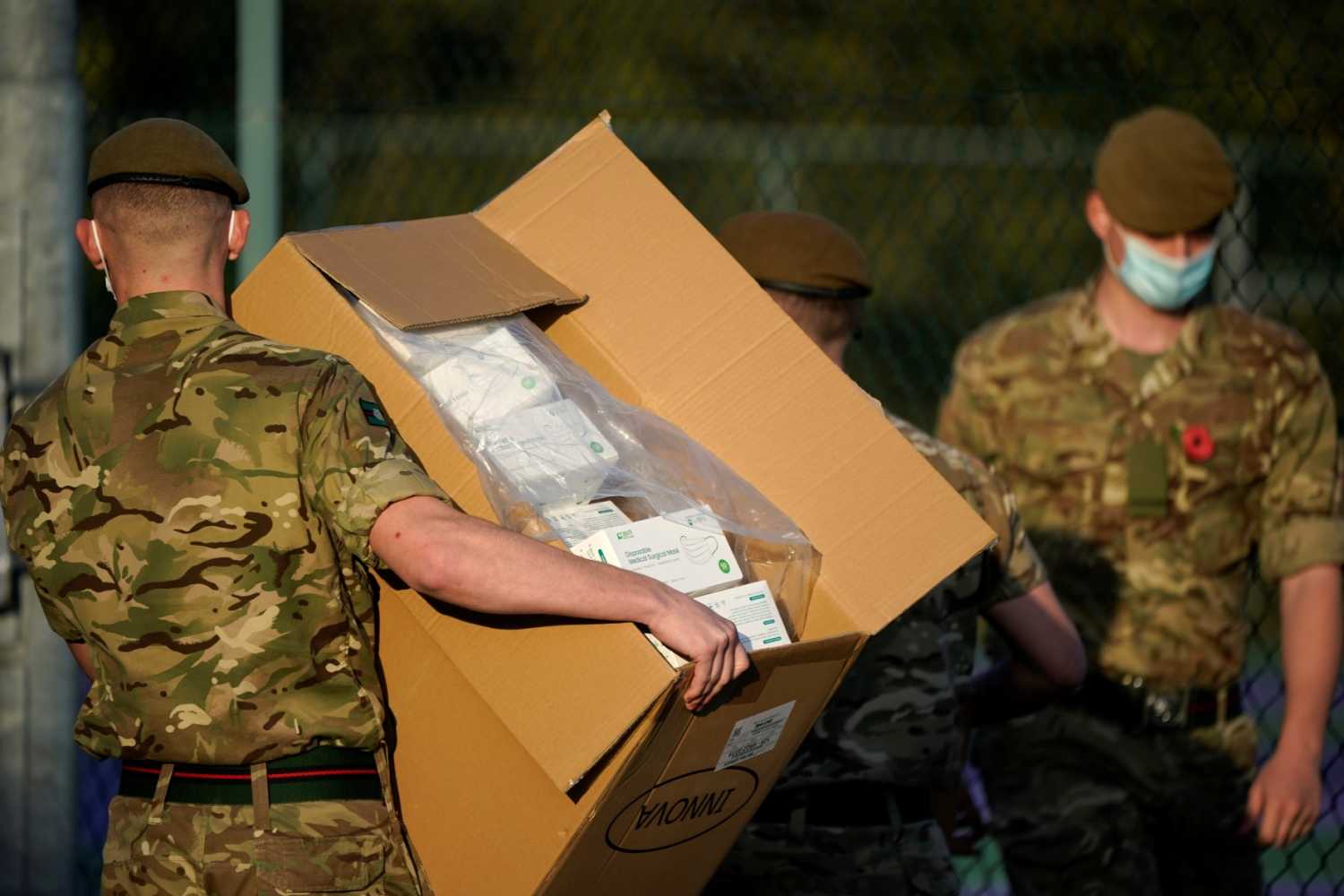
Between July 2024 and March 2025, when the U.K. Strategic Defense Review team was trying to keep on top of every twist and turn of events and factor them into our deliberations, it was clear that whatever recommendations we came up with for defense reform and future force posture would not be sufficient to address all the difficulties the U.K. faced in this dangerous world. We delved into technological and climate change, and all the challenges these bring with them to the defense picture. We considered the experience and lessons from COVID-19 and the risk from future pandemics, and the ongoing challenges to defense, medicine, public health, and recruitment. We highlighted—even if it was only briefly—these issues and everything else that was raised and analyzed during the review process in the final report. We had to keep the report short in the hope that people and policymakers would actually read it, which was a difficult task.
For the SDR, we also had to “stay in our lane” with respect to what officially falls under the direct purview of the U.K. Ministry of Defense. There were multiple internal and external reviews going on simultaneously across the U.K. government last year, many of which touched on some of the same range of challenges that we addressed. We, the reviewers, were told that a mandate for doing something more comprehensive would come later with the U.K.’s National Security Strategy, which was appropriately titled “Security for the British People in a Dangerous World.” This was published a few weeks after the SDR. And we were told there would eventually be a National Preparedness Strategy. In the year following the SDR’s publication, the government and parliament would press ahead, preparing and passing specific legislation related to readiness, resilience, and civil defense. Indeed, work on this is currently underway, including committee hearings in , which I took part in last month, and a joint committee in parliament just this week.
But, as the rapid pace of events illustrates, the U.K. does not have the luxury of time to address everything in the comprehensive and methodical manner we might all like. As the exhibits here in the Imperial War Museum London underscore, and as the SDR Chair Lord George Robertston has pointed out many times in the last few months, war will take you by surprise. You don’t go looking for war, but it may come looking for you at home, where you think you are safe, as Ukrainians and residents of the Gulf have more recently found out, and as many of our families discovered in 1914 and 1939.
As our other SDR cochair, General Sir Richard Barrons, has also pointed out, for the first time since the Cold War, the U.K. homeland is now “back on the pitch.” This is because modern war is fought by a range of means. It is fought with long-range missiles and drones, economic measures, financial sanctions, cyberattacks, sabotage, political influence operations, disinformation, and propaganda.
For the review, this meant engaging with the idea of resilience as something strategic and societal. The sources of the U.K.’s resilience we contemplated in the SDR were not just military and defense-industrial capabilities, nor natural resources, nor economic competitiveness. They included social capital and communal bonds, a shared sense of identity and purpose (key for social cohesion), and education and training, which are essential for societal glue. They also included a source of resilience in creating a real sense of agency for individuals, as well as providing capacity building for communities and skills for recruits into the armed forces. The British health care system (the NHS in all its frailties), its transportation networks (or lack thereof), and the need for critical national infrastructure protection were just as important for defense as the production and provision of weapons and materiel. We recognized that the country needs to be “fit for purpose” for dealing with any and every shock to the system.
Resilience is underappreciated as a critical national security and political objective. But the concept of pursuing resilience as well as restoring readiness—the country’s ability to prepare for and respond to military threats—was a principal theme in the SDR. The review team discussed at length how to frame national thinking about strengthening national defense at the state, governmental, and societal levels.
The idea of resilience gives us a deeper understanding of how to respond to current geopolitical trends and societal crises. Being resilient as a state, a society, or as an individual means avoiding single points of failure, reducing dependencies and vulnerabilities, and building up the “wherewithal” or the resources and capacities to deal with difficulties.
Some European countries already take the idea of strategic resilience very seriously. In some cases, like Ukraine, because it has to right now, and in others, like Finland, because its history suggests it should.
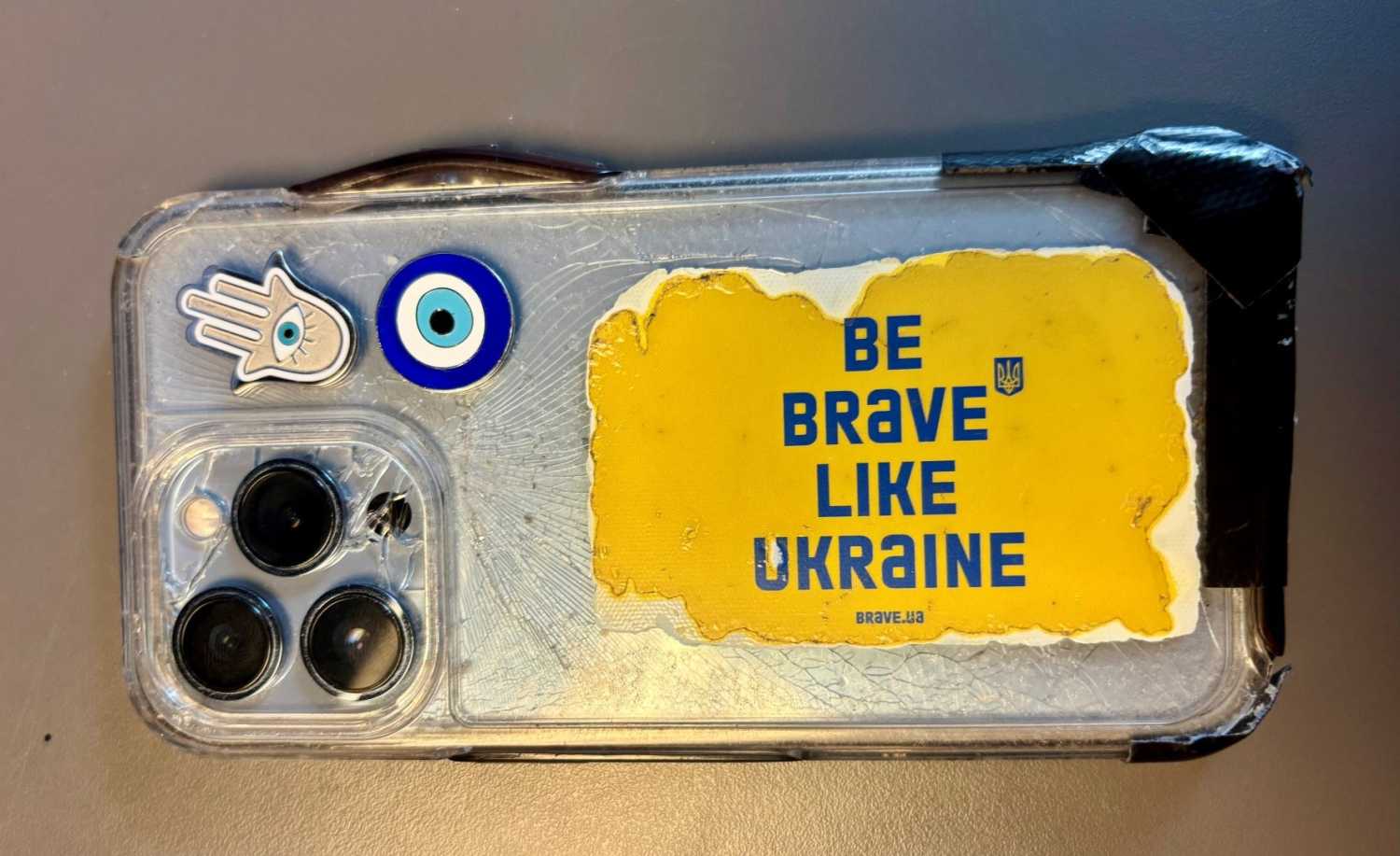
Ukraine is frequently singled out for epitomizing “resilience.” I have a sticker on the back of my phone from a Ukrainian friend: “Be Brave Like Ukraine.” It is especially battered, as is my phone, after I literally dropped it over a precipice, taking an ill-advised photo from a castle rampart in Germany. Somehow, the phone and the sticker survived the fall. Ukraine itself fell off a precipice into a horrific war when Russia invaded in February 2022. The whole of Ukrainian society was forced into action to pull the country back up and survive the ordeal.
From the first days of the war to the present day, Ukraine’s fight for survival has been a bottom-up, not just top-down, effort. This is war by crowdsourcing. Drones were developed and other equipment adapted in rapid time by soldiers facing the necessity of the battlefield, with the help of ordinary citizens—and supporters abroad—who launched fundraisers to buy weapons and equipment alongside Ukrainian government procurement officials. National infrastructure is repaired in some fashion as soon as the Russians destroy it. Ukrainian schools and universities have kept going by heading underground to the subway and Cold War bunkers, even in the middle of class. Ukrainian society and its economy have become highly networked. Hierarchies have flattened so everyone can respond to an emergency. Ukraine is battered and battle-hardened but not beaten.
In Finland, because of lingering concerns since World War II and during the Cold War about the risk of a Russian invasion, the country has adopted a formal “whole-of-society approach” to defense and national preparedness. Citizens and the state share a clear understanding of the risks the country faces and the commitments they need to assume. In essence, Finland has a social contract where citizens are expected to take action separate from the state. There are distinct roles for the armed forces and for everyone else in times of war and peace. Communities, agencies, and industries—even Finnish supermarkets—are seen as integral to the country’s defense. They are expected to maintain updated information and training for preparedness and resilience.
In places like Finland, and other Nordic countries like Norway and Sweden, as well as the Baltic countries, the prevailing idea is that if you are prepared for one crisis, you are prepared for another. In the immediate aftermath of Russia’s full-scale invasion of Ukraine, after decades (in Finland’s case) and centuries (in Sweden’s) of self-reliance and neutrality, both countries joined NATO. Their leaders recognized the limits of their go-it-alone approach as small states on Russia’s borders in a new period of major interstate war. They also wanted to bring their model of preparedness to the collective defense of their European neighbors as new frontline allies. In fact, just as the SDR was underway, the European Union commissioned the former Finnish president to prepare a report for the rest of Europe: “Safer Together: Strengthening Europe’s Civilian and Military Preparedness and Readiness.”
The U.K. can certainly learn from the Ukrainians, the Finns, and other countries when thinking about resilience—but frankly, it can also learn from its own history. In both world wars, the U.K. created new government institutions and voluntary organizations to deal with economic warfare, crippling food shortages, medical emergencies and mass casualties, homeland and civil defense, massive population displacement, and information warfare. It stepped up new military manufacturing and production. Creating a whole-of-society response to current challenges requires action across the entire U.K. government and engaging U.K. society at the national and local levels.
We recognized through the SDR that the U.K. could build resilience through place-based programs—which could include drawing on the work of great institutions like the Imperial War Museums—to engage people directly in talking about the threats and their responses.
In conclusion, the U.K. is perfectly capable of creating its own roadmap for re-harnessing the power of social capital and community to bolster strategic resilience. We undoubtedly need some new recommendations for national, regional, and local actions that will be different from the past. But they will still be complementary to that earlier spirit. The core idea of bolstering national and societal preparedness at the grassroots through new forms of collective action runs through the U.K.’s response to World Wars I and II and shaped the U.K.’s stance during the Cold War.
As the collections in all five branches of the Imperial War Museum across England remind us: We have done this before. All our lives and our society have been shaped by the wars of the past. We still have the capacities and capabilities to deal with a world at war. And some of the most terrible moments have also brought out the best in human nature and innovation.
Author

Related Content



-
Acknowledgements and disclosures
The author would like to thank Caroline Grassmuck for her assistance, the curator and staff at the Imperial War Museums for their support, Adam Lammon for editing, and Rachel Slattery for layout.
The Brookings Institution is committed to quality, independence, and impact.
We are supported by a diverse array of funders. In line with our values and policies, each Brookings publication represents the sole views of its author(s).