




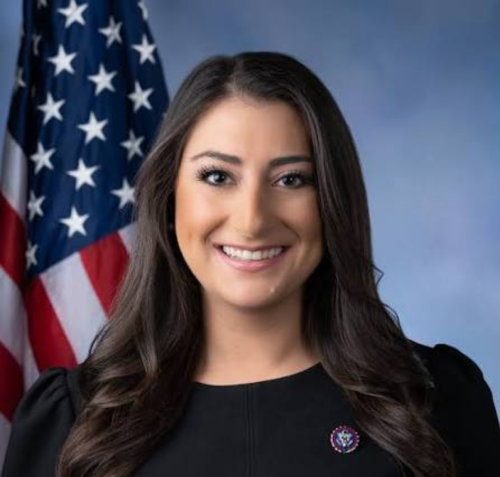
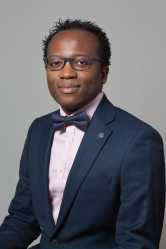
In the final episode of season 5, host Landry Signé sits with the Hon. Sara Jacobs, representative for California’s 51st district and ranking member of the Subcommittee on Africa of the U.S. House Foreign Affairs Committee. Amidst the backdrop of the 81st UN General Assembly, their discussion highlights how the U.S. can position itself to improve multilateral governance and support peace and security internationally.
Transcript
JACOBS: What I’m continuously trying to push my colleagues on is that we need to engage with Africa for its own sake, not because it’s part of some chessboard that we’re, like, trying to compete with the Chinese or the Russians on.
[music]
SIGNÉ: Hello, welcome to season five of the Foresight Africa podcast. As always, I am your host and executive producer Landry Signé, senior fellow in the Brookings Institution’s Africa Growth Initiative. Today’s episode is the last of our fifth season. Over the past eight months, we have examined U.S.-Africa relations from the perspective of trade, investment, migration, diplomacy, and culture.
To bring this season to a close, we are honored to be joined by the Honorable Sara Jacobs, congresswoman for California’s 51st District in the U.S. House of Representative. Congresswoman Jacobs is the ranking member of the Subcommittee on Africa in the House Foreign Affairs Committee and is also a member of the House Armed Services Committee. She has also been an active voice in and out of Congress for constructive U.S. engagement around international peace and security issues.
Congresswoman Jacobs, thank you so much for welcoming us today.
JACOBS: Thank you for having me.
[1:58]
SIGNÉ: As we speak, the United Nations is gathering for its 81st General Assembly at a time when the U.S. relationship with multilateral organizations is under increasing pressure. What do you see as the ideal relationships between the U.S. and the United Nations?
[2:23]
JACOBS: Well, I think it’s important that the United States plays a leading role at the UN because we know the UN can do a lot of really important things on these kinds of supranational problems that are really hard for any one country to address on their own. Right? Climate change, nuclear nonproliferation, AI, all these other areas.
But I think two things can be true: It’s important that the U.S. plays a leading role and engages, and the UN is a really important institution, and the UN really needs reform. And you know, I think, for instance, the UN right now is going through their UN80 Reform process, and I think it’s important that member states make sure that that’s not just a cost cutting exercise, but that’s a real sort of strategic plan on how we get the UN that we need for the future.
I think we need reform of the Security Council that was really based on the kinds of, you know, power structures that were in place in 1945 that are very different than what they are now. I think it’s important that Africa gets a seat at the Security Council, for instance, a permanent seat. And, you know, I think it’s important that we hold both those truths, right, that the UN is a really, really important institution, and there’s a lot of reform that we need to do that the U.S. should play a leading role in.
[3:43]
SIGNÉ: Amazing, Congresswoman! What actions can the U.S. government, including Congress, take to facilitate this kind of partnerships?
[3:53]
JACOBS: Well, I think first of all, it’s important that we pay our dues in full. Congress has really handicapped the U.S.’ ability to do that. In the ‘90s, Congress passed a cap on the dues the U.S. can pay to peacekeeping, and so we’ve been in arrears to peacekeeping for a long time. And so I’ve actually introduced a bill that would ensure the U.S. actually pays our dues in full, which I think would be a really important first start to make sure that the U.S. is really engaging in the UN in a way that actually helps build our leadership.
[4:26]
SIGNÉ: Insightful! This season of Foresight Africa has been focused on U.S.-Africa relations. What do you see as the most promising U.S.-Africa opportunities, and how can the U.S. best take advantage for these opportunities.
[4:48]
JACOBS: Look, I think we’re in a really interesting moment for U.S.-Africa relations, because a lot of the actions of the Trump administration, I would say, have really hurt our engagement. Right? The cuts to USAID, the cuts to foreign assistance have left many Africans feeling like the U.S. doesn’t care and that we’re not a reliable partner.
At the same time, I think that it’s an important moment to really double down on this from aid to trade model and really make sure that we are treating our African partners like partners, not like recipients of aid.
And, you know, I was really struck that a lot of what we heard from African countries after the aid cuts was how, you know, they didn’t want to be dependent on aid forever. Right? There was not quite the sort of backlash that we thought we were gonna see. And so I do think it’s important that we really treat our African partners like partners.
I think there are some opportunities right now. I think the general idea of the health MOUs that this administration is doing is is a good one. Right? How do we have, like, multi-year compacts where it’s very clear what the U.S. has committed to do, what we’re expecting from the partner countries, what they should be getting ready to be able to take on themselves.
I am worried that the implementation of these MOUs is being weaponized to get these really harmful like third country transfer agreements, mineral deals, other kinds of things that we know this administration is very focused on that are not in the best interest of the African people. But I do think that we need to recognize that you can’t just cut off aid and expect trade to come the next day.
There’s some real capacities that need to be developed. And so, to me, I think we need to be thinking about how do we create these longer term agreements so that you do have a set agreement of when U.S. assistance is going to stop and what what countries need to do to prepare for that moment.
[6:53]
SIGNÉ: Insightful, Congresswoman. I really like that notion of partnerships, but also of long-term agreement configuration, because this is also important from an investment perspective.
One issue you have long championed is for the U.S. to reform how and when it delivers security assistance for foreign governments. In 2022, you wrote an op-ed on the need to invest in good governance as part of counterterrorism efforts, and you have also advocated linking this kind of support to effective military governance. You explain to our listeners why this is such an important priority for global security and for U.S. interest?
[7:52]
JACOBS: So, when I worked at the State Department, one of the big projects I worked on was how we counter and prevent violent extremism. And we looked at all of the empirical evidence that’s been done, and one of the things that was very clear was that one of the main drivers of people or communities being susceptible to violent extremism was state-sponsored violence against themselves or someone they loved.
And so in many ways, in the name of counterterrorism, the U.S. has been doing things that might actually be creating the very problem we’re trying to solve. And so that’s why I think it’s so important that we shift and change the way we do our security assistance because we don’t want to be part of governments and militaries that are abusing their people.
And there are already laws on the books preventing that but they’re kind of blunt instruments. And so what I’ve proposed is a security assistance compacts approach where every country would be analyzed and indexed based on their security governance and there would be four tiers. If you have very little or not that good security governance, you’re in tier one; you get very basic support.
And then as you go up: tier two, tier three, tier four. Tier four you basically are eligible for all security assistance. In tier two and three, what we do is we create a compact model where these governments can enter into a compact with the United States that we make investments and we help them do the kinds of things that would get their security governance to the next tier so that it’s not just about punishing people but really helping them build the capacities and positive conditionality.
[9:37]
SIGNÉ: I really like that configuration where various government are enabled from depending on your starting point. So thank you so much Congresswoman. You have been a very vocal supporter of UN peacekeeping supports, including in Africa. What advantages does the UN’s peacekeeping models offer over unilateral action and what are some continued challenges?
[10:07]
JACOBS: Look, I think UN peacekeeping is an incredibly important model for how we can do burden sharing and we know that it is useful tool, that it costs much less than U.S. unilateral intervention. And I think we have seen some real successes in peacekeeping like in Sierra Leone. We’ve also seen some real failures of peacekeeping like in Haiti where peacekeepers did not uphold the standards we want from them, like in Mali where the mission was not really resourced or unable to do what, what was asking of them.
And so I think the way we need to think about peacekeeping is that it’s a really important tool but it’s only a tool and it will only be successful if you have sort of the broader architecture around it to actually address the conflict and get to a resolution because a peacekeeping mission alone can’t do that without the broader sort of political buy-in, resourcing, et cetera.
[11:08]
SIGNÉ: Fascinating! Throughout your three terms in the House of Representatives, Congresswoman, and your leadership in its subcommittees and caucuses, what accomplishments are you the most proud?
[11:26]
JACOBS: It’s a good question. Especially hard to think about right now as we’re in the midst of the chaos of Washington, D.C. But I think one would be the work I’ve been doing to make sure that we’re holding our allies to the same standards we hold everyone else.
I think this is incredibly important, not just from a moral standpoint, but also from a strategic standpoint as we want to make sure we’re able to build those kinds of coalitions that we know make us successful in this sort of new chaotic world.
And so I’m really proud of Block the Bombs bill and the Stand Up for Sudan Act that would do that, that would hold our allies Israel and UAE to the same standards we hold everyone else and make sure that we’re holding them accountable when they don’t act according to our standards.
I think another would be my work to protect civilians. I founded the Protection of Civilians in Conflict Caucus in my first term. We’ve been doing a lot of really important work, including getting some important fixes to how the U.S. military does their work, setting up a civilian harm center of excellence, getting some statutory language around civilian harm, and also getting changes to the DoD Manual of War that really actually materially impact how how our military does their work.
And I guess the third would be just really thinking about how we do things differently. So like the security assistance bill we talked about, really focusing on localization and trying to get us to do localization, of our foreign assistance differently. Getting a bill passed that tries to get the State Department out into the countries more expeditionary diplomacy so they’re not just trapped in the embassy and not really able to do their work. and really just, you know, always trying to think about how we can be doing the actual sort of statecraft better.
[13:15]
SIGNÉ: Amazing, Congresswoman! Why is it so important to have conversations about Africa within the U.S., and have you noticed any developments throughout your career in how we discuss and think about U.S.-Africa relations.
[13:38]
JACOBS: I mean, Africa is an incredibly important continent. Right? It’s got many of the fastest growing economies in the world, the fastest growing population in the world. I think by 2050 one in four people in the world will be African. So it’s an incredibly important place for the U.S. to be engaged with.
And you know, I think for a long time it hasn’t gotten the attention that it deserves. You know, you asked me about changes, and I think one of the things that’s been an interesting change that I’ve seen is around strategic competition and how we’re viewing Africa.
And you know, what I’m continuously trying to push my colleagues on is that we need to engage with Africa for its own sake, not because it’s part of some chessboard that we’re, like, trying to compete with the Chinese or the Russians on.
And I think it’s important that we don’t just try and compete with China or Russia, like, one for one. Like they are potentially gonna fund this road, so we have to build a road. They’re going to potentially, like, support this authoritarian regime, so we have to support that authoritarian regime.
I think it’s really important that we invest in Africa, that we engage with Africa, but we should do it on our terms and on what makes sense for our strategic goals and what makes sense for the African people, and that doesn’t necessarily meaning competing one for one.
And so, you know, for me, I think it’s really important that we are talking about Africa for its own sake, and and how important it is and why it matters for U.S. security, not in relation to whatever competition, but just because it’s an important place that has all these growing economies and populations.
[15:19]
SIGNÉ: This is very meaningful, Congresswoman, and I really love your enthusiasm, which is aligned with the findings that we have published, with the Africa Growth Initiative and Brookings Institution.
What role do evidence base insights from research institutions like Brookings play in informing the work of the Congress and shaping a more prosperous U.S.-Africa relationships?
[15:46]
JACOBS: We really rely and use a lot outside partners and organizations and their expertise. You know, we have really small staffs. I have one person on my team who works, you know, full-time on foreign affairs, and that’s rare in a House member’s office. And so we really rely on the expertise and partnership of people in outside organizations like Brookings to help us be able to do our work, to think up new ideas, to do research that we don’t have the capacity to do from the inside.
SIGNÉ: Fantastic. We’ll do more.
JACOBS: Excellent!
SIGNÉ: On this beautiful note, thank you so much Congresswoman Jacobs for taking the time to engage with us and for sharing your words of wisdom.
JACOBS: Absolutely. Thanks so much for having me and for all of your great work.
SIGNÉ: Thank you.
[music]
I am Landry Signé, and this has been Foresight Africa. Thank you, listeners, for joining me today. The Foresight Africa podcast is brought to you by the Brookings Podcast Network. Send your feedback and questions to podcasts at Brookings dot edu.
My special thanks to the production team, including Ike Blake, supervising producer; Fred Dews, producer; Dafe Oputu, Izzy Taylor, and Aysha House, associate producers; and Daniel Morales and Teddy Wansink, video producers.
The show’s art was designed by Shavanthi Mendis. Additional promotional support for this podcast comes from my colleagues in Brookings Global and the Office of Communications at Brookings.
Participants
- Subscribe to Foresight Africa on Apple, Spotify, Afripods, or wherever you listen to podcasts.
- Listen to previous episodes.
- Watch episodes on YouTube.
- Learn about other Brookings podcasts from the Brookings Podcast Network.
- Sign up for the podcasts newsletter for occasional updates on featured episodes and new shows.
- Send feedback to [email protected].
The Brookings Institution is committed to quality, independence, and impact.
We are supported by a diverse array of funders. In line with our values and policies, each Brookings publication represents the sole views of its author(s).
Commentary
PodcastShifting US perspectives on Africa: A conversation with Rep. Sara Jacobs
Listen on
Foresight Africa Podcast
September 10, 2026