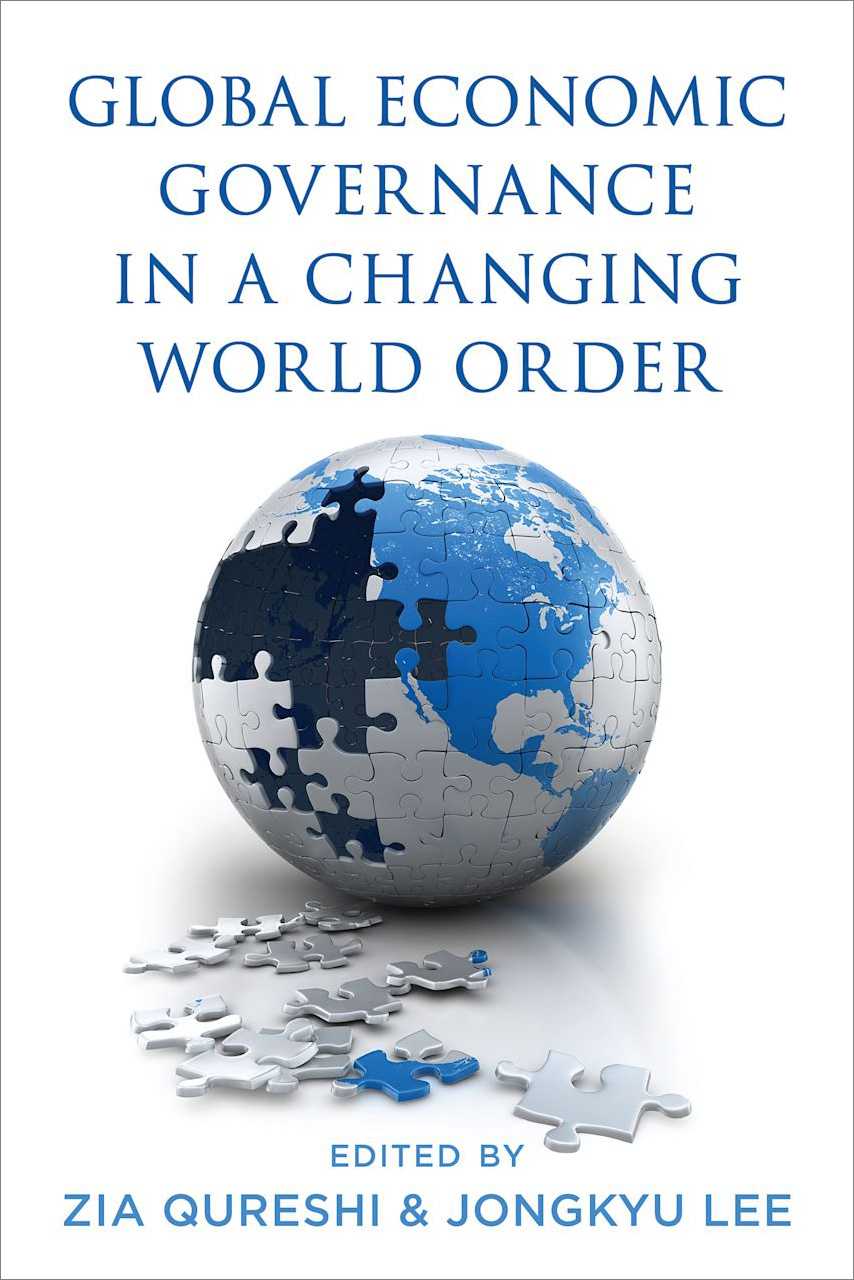
Our world is more connected than ever before. Many of today’s big challenges are global in nature. From the provision of rules underpinning international trade and finance to the governance of transformative new technologies and management of climate change, cooperation among nations is vital. Yet global economic governance is faltering. Increasingly outpaced by a dynamic global economy, it now confronts a profoundly changing geopolitical and technological landscape.
This timely book, with contributions from leading experts, examines how global economic governance needs to adapt to the new challenges and the shifting world order. It offers a vision for change that is ambitious yet pragmatic. It presents an agenda for systemic reform and suggests practical pathways for countries to cooperate on common governance challenges—in trade, finance, artificial intelligence, and climate change—even as the world faces intense strategic competition between incumbent and emerging major powers.
Essential reading for policymakers and practitioners in navigating the changing global context, the book offers valuable analysis and insights to a wider readership interested in world affairs.
Contents
Foreword
Cecilia Elena Rouse and Se-Jik Kim
- Overview: New World, New Governance
Zia Qureshi and Jongkyu Lee
Part I. Global Governance in a World of Change
- Globalization and Global Governance in Transition
George Papaconstantinou and Jean Pisani-Ferry - How Geopolitics Shapes Multilateralism
Peter A. Petri - Between Minilateralism and Universalism
Wonhyuk Lim - The Global South and Multilateralism
Kyunghoon Kim
Part II. New Challenges in Key Areas of International Cooperation
- Trade Governance in a Security-Conscious World
Simon J. Evenett - Ensuring Global Financial Stability in an Era of Disruption
Jun Il Kim, Jongsoo Hong, Changseok Ma, and Juyoung Yang - Competitive Cooperation: AI Governance amid Challenging Geopolitics
Elham Tabassi - Shaping Climate Cooperation in a More Contested World
Ki Young Park
Authors
Edited by