Brookings is leading a multiyear project to study how states, regions, and localities can better partner to solve the country’s most pressing surface transportation challenges. This piece introduces the project.
America’s surface transportation system is the workhorse of our economy. Every mile of road, rail, sidewalk, and trail keeps the country moving each day. These assets make sure our stores can stay stocked and packages reach our front door. Simply put, surface transportation keeps our economy functional.
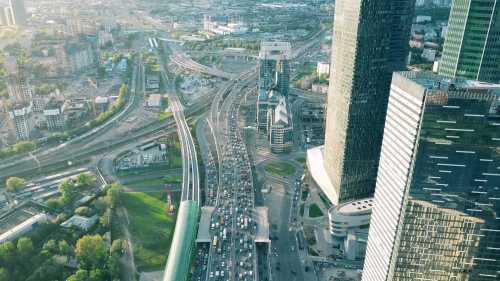
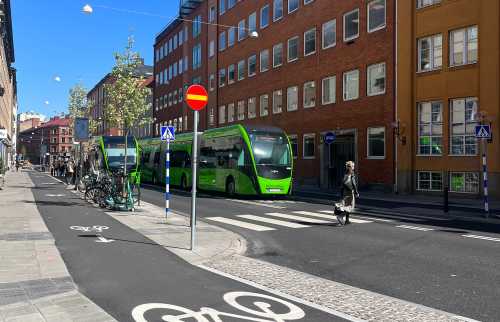
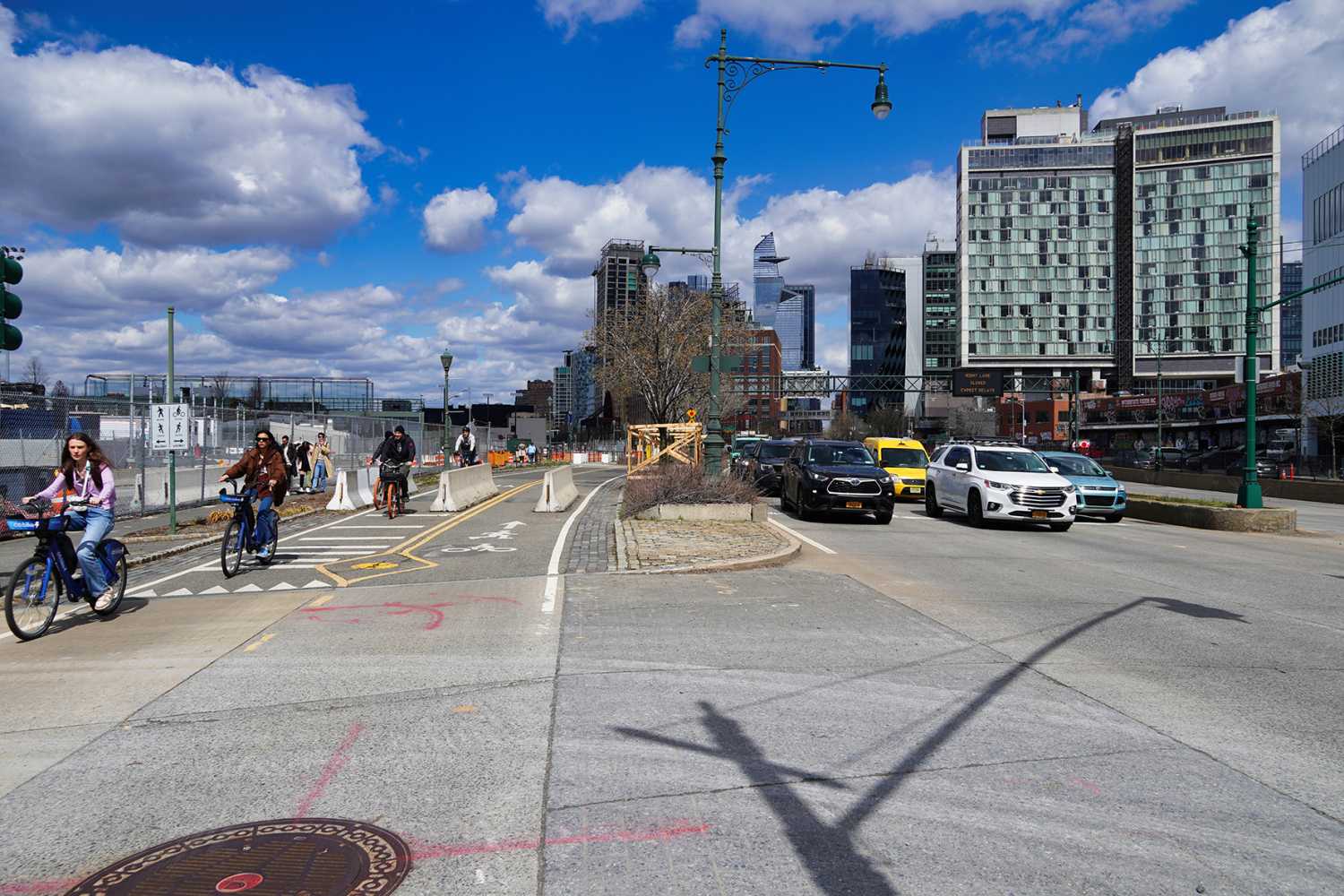
Yet this foundational infrastructure system is showing serious signs of distress. The signs are there for every driver, passenger, and runner to see: Sudden shifts between high- and low-quality roads, especially when getting on and off urban highways; a real sense of danger when biking or walking along the country’s major commercial corridors; being caught between the high costs of owning a car and transit rides that take too long.
Contrast those challenges with what’s working well. Driving on highways outside of town—the proverbial “open road”—is usually a smooth and dependable experience for a family on a quick road trip or a trucker driving goods between markets. America’s freight rail network functions similarly well for trains running far outside of built-up places.
These successes and failures didn’t happen by accident. It’s the job of government officials to balance larger end goals—including economic growth, household prosperity, and public health—when deciding where transportation assets are built, how they’re designed, and the rules for how they’re used.
Today, we’re living in a country defined by a transportation policy paradigm focused overwhelmingly on two big priorities: accelerating interstate commerce and promoting large-lot housing. But pursuing those goals came with consequences: We built metropolitan transportation systems that fail to keep users safe, demand excessive amounts of personal spending, reduce consumer choice, and are overly expensive to maintain.
Transportation governance has to evolve. The country needs a new paradigm—one that rebalances big-picture priorities and recognizes the shortcomings that have developed in built-up places.
Of course, it’s easier to call for a new paradigm than to achieve one. States, regional entities, and municipalities all claim different authorities over long-range planning, design decisions, project selection, permitting, and revenue collections—and those authorities vary across every state. Such a broad range of responsibilities makes it relatively easy for governments to work at cross-purposes and toward conflicting goals.
The good news is that U.S. policymakers have achieved a grand realignment before. When motor vehicles promised to supercharge goods trade, labor productivity, and a new suburban housing model, lawmakers and their partners seized the opportunity. Enough states, regions, and municipalities adopted a policy paradigm that could deliver new kinds of high-speed roads to tap that potential.
Today’s stakeholders will need to put similar effort into developing a new intergovernmental paradigm to address our most stubborn challenges. In other words, rebalancing any place’s priorities will require reconfiguring how governments work together.
A new transportation policy paradigm begins with rebalanced goals
Surface transportation infrastructure takes decades to realize its full effects. The back-end work to draft plans and predevelop projects takes considerable time. Most construction projects are relatively small and quick to complete, but it’s not uncommon for the largest projects—such as major highway modernizations or new transit lines—to take years.
The real magic only happens after construction is greenlit or complete. Households and businesses respond to the new infrastructure—moving or building new homes, commercial districts, and factories. Travel patterns shift, and new plans and projects develop. It’s a complex, never-ending cycle.
This slow-moving timeline is why stakeholders should revisit the overarching goals for their surface transportation networks. When people working in the same places can agree on common goals, it gets a whole lot easier for them to figure out where the network is falling short and diagnose why.
One of our tasks during this multiyear project was to map out some common goals any state, region, or municipality would want to achieve. Fortunately, there are reference points. Every state and metropolitan planning organization includes larger goals within their long-range plans. The U.S. Department of Transportation also includes goals in its strategic plan, which has gone through multiple recent updates. Using those reference points and our opinions from the literature, we came up with seven goals across three categories.
|
Promote industrial competitiveness |
|
|
Improve household prosperity |
|
|
Support public health and asset resilience |
|
We believe these goals are ones that every jurisdiction—from the municipal to state level—can agree on. Help industries grow. Enable every household to flourish. Protect human life, the natural world, and the transportation assets the community already owns.1
It’s tantalizing for transportation professionals to treat operations as a goal. For example, deploying an exciting new technology2 or building our way out of congestion.3 But when professionals lose sight of higher-order goals, operational progress is often mistaken for an actual improvement in people’s lives.
The US is regularly failing to meet many common goals, especially in built-up places
Using those goals as a starting point, it becomes easier to see where our current surface transportation networks are falling short—and where those shortfalls most frequently occur.
Existing transportation networks stifle industrial competitiveness. Businesses face real accessibility challenges in metro areas. There are concentrated trucking delays on highways within and surrounding metro areas. Connectors to ports, airports, and intermodal terminals are especially congested, with past studies showing urban speeds to be about one-third slower than rural counterparts. Truck parking can be difficult, whether along highways (typically, parking where drivers can sleep) or for deliveries. These challenges directly feed into industry’s bottom line; for example, they necessitate the carrying of extra inventory to compensate for deliveries that may not arrive on time. Meanwhile, industries can struggle to attract and retain workers, as many can’t reliably reach job sites.
It’s hard to keep business running smoothly when too many roads aren’t. Physical quality of surface transportation infrastructure is inconsistent across the country. America’s rural interstates are in better condition than their urban counterparts. Major state-owned roadways similarly outperform their local counterparts, especially in urbanized areas. There’s also a large backlog of investment needs, which the Federal Highway Administration estimated would take $83 billion annually to keep the same size by 2042, plus another $70 billion to eliminate.

Transportation also fails to make Americans prosperous. Affordability is a major concern among the public, and transportation is getting considerably more expensive. For years, transportation has been the second–highest category of household spending (17% in 2024), trailing only housing but ahead of food, health care, and education. One explanatory factor is the cost to own and maintain a vehicle, which surpassed $9,500 in 2024, and where used vehicle prices and maintenance costs are rising especially fast.4 Of course, the fact that so many Americans own cars—easily one of the highest rates in the world—is a factor unto itself.

Matters are made worse by the household accessibility challenges that transportation costs compound, especially in metro areas. The average trip distance now exceeds 12 miles, reflecting just how far apart our communities have grown in recent decades and why cars are an essential good to most. Those long distances leave drivers particularly exposed to congestion, which leads to lower effective access to regional job opportunities and other key destinations. However, in metropolitan neighborhoods that offer competitive access by transit (and presumably biking and walking), households can reduce transportation costs without experiencing an income hit.
Finally, and certainly most urgently, is public health, because there’s no question that Americans aren’t safe on our country’s roads. In 2025 alone, 36,640 people died on the nation’s roads—and that was an improvement from 2024. The U.S. is also trending in the wrong direction while most of our global peers keep making their roads safer. Roads are especially dangerous for young people, where motor vehicles are one of the top two causes of death for people ages 5 to their mid-20s.5 The overall situation is especially dire for pedestrians: 83% of pedestrian fatalities are in urban areas and associated with design decisions, while tens of millions of people breathe in low-quality air each day, for which surface transportation is a major culprit.

Of course, the country is still committed to purposeful investment in these systems. Pavement conditions across the entire interstate highway system are relatively strong. Even with changing weather conditions threatening infrastructure resilience more each year, governments are tracking asset quality closer and have typically been quick to respond when failures occur. Lawmakers and the public regularly choose to tax themselves to pay for local roads and regional transit. And we know goals can animate progress: Following multiple critical failures, a national commitment to improving bridges has led to steady improvements in quality.
Yet so many of today’s capital investments reflect the preferences of yesterday’s policymakers. States and many municipalities made interstate trade and greenfield land development their top priorities, and those efforts were successful. But those goals crowded others out, and we allowed other major challenges to take root.
Widespread challenges demand coordinated solutions
Widespread challenges such as safety, affordability, and accessibility don’t belong to any one jurisdiction. A dangerous intersection impacts anyone who travels there, whether by foot, bicycle, or car. The inability to get to a new job in a region hurts the job seeker living in one neighborhood, the business located in another, and patrons coming from everywhere. A pothole-strewn road can pop any driver’s tire. No one cares who owns the road or runs the buses and trains; people just want to feel safe and have a good array of transportation options to choose from.
Since the challenges are everyone’s problem, it’s vital to recognize that no government can solve them alone. The pressure is on states, regional entities, and municipalities who serve the same constituents to first agree on what goals they want to pursue, then commit the resources to coordinate their policies to address those goals.
But before America can adopt a new intergovernmental paradigm, we need to know what’s currently working and what’s not. The evidence is clear that current policies are doing a great job maintaining most highway miles. But which policies are causing states, regions, and municipalities to work at cross-purposes when it comes to safety, affordability, and other shared challenges inside built-up places?
The problem is that our depth of knowledge is shallow. Intergovernmental partnerships are a strikingly understudied component of U.S. transportation policy, especially from a practitioner’s point of view. For example, there isn’t readily available information on how states organize their government to understand and translate local needs, such as how Colorado created the Department of Local Affairs. Practitioners don’t know if state transportation departments have an office that considers real estate development. The list of knowledge gaps goes on, including in revenue sharing, project design authorities, permitting timelines, performance measurement, and much more.
This isn’t just an academic problem, either—these knowledge gaps create serious knock-on effects. If a state legislator, county commissioner, or any other public official wants to find innovative approaches to intergovernmental partnerships, it’s not clear where to look. And without knowledge of best practices, reformers can’t look at legislation or agency rules from another state as a reference point. It’s a similar issue for federal policymakers, who may not understand how to tweak laws around long-range planning and project selection to create stronger state-regional-local partnerships.
To summarize: We know intergovernmental alignment is essential to achieve big transportation goals, but we also know too little about how states and their regional and local partners are currently misaligned.
The laboratories of democracy, still hard at work, and ready to move even faster
While intergovernmental partnerships may be understudied, there are still significant policy innovations happening across the country. Legislatures in Minnesota and Washington are testing new ways to share revenues with localities. Building on work led by the National Association of City Transportation Officials and their members, more states are adopting context-sensitive roadway design standards. States such as Florida are using new competitive grant programs to incentivize more regional coordination.
These are just a small slice of the findings from our initial inventory of partnership-focused policies from across the country. Overall, that original knowledge will demonstrate that plenty of innovative partnerships exist today, with many of them focused on finding new ways to pursue shared economic, social, and environmental goals in built-up places. Those successful practices can serve as a model for the states, regions, and municipalities looking for new paths forward.
Authors


-
Acknowledgements and disclosures
The authors thank Michael Gaynor for editing, Nick Mourtoupalas for web design, and the rest of the Brookings Metro communications team for their support. The authors are solely responsible for all remaining errors and omissions.
The Brookings Institution would like to thank Arnold Ventures for its generous support of this research. Brookings Metro is also grateful to the Metropolitan Council, a network of business, civic, and philanthropic leaders that provides both financial and intellectual support to the program. The views expressed in this report are solely those of its authors and do not represent the views of the Brookings Institution and its donors, their officers, or employees.
-
Footnotes
- In a more academic framing, supporting such broad-based goals is one reason why transportation is considered such an obvious example of a public good. Surface transportation networks create all kinds of positive and negative externalities, both sides of which are difficult if not impossible for any one individual or business to appreciate. Therefore, building a publicly accessible network and managing it with externalities in mind is a pathway to promote shared prosperity.
- All transportation, beyond our own two feet, is technology, and we’re very excited about recent advancements such as autonomous vehicles and more affordable electric vehicles of all shapes and sizes. But those technologies are just tools to help achieve bigger goals.
- If lawmakers and the public really want to achieve durable congestion reductions, the only proven answer is charging for highway use, and using those revenues to reinvest in more affordable alternatives. Such policies can promote industrial competitiveness and household affordability while not negatively impacting timely access to opportunities. See successful examples such as London, Stockholm, and New York.
- Source: Brookings analysis of 2026 and 2020 Bureau of Labor Statistics data.
- Emergency department visit rates are also double for people ages 15 to 24.
The Brookings Institution is committed to quality, independence, and impact.
We are supported by a diverse array of funders. In line with our values and policies, each Brookings publication represents the sole views of its author(s).