




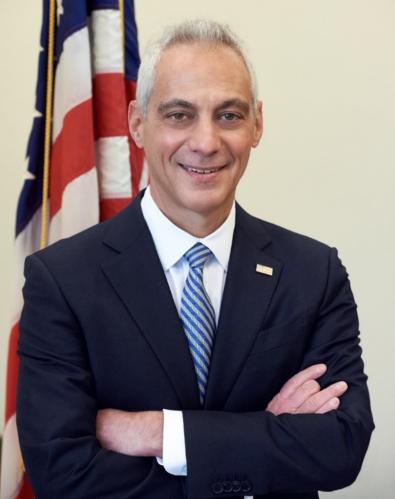
Culture wars have distracted America’s K-12 system at the expense of students, says former U.S. Ambassador and Chicago Mayor Rahm Emanuel. On this episode of The Current, Emanuel sits down with Jon Valant, director of the Brown Center on Education Policy, to diagnose what went wrong and how some schools are trying to get it right.
Transcript
EMANUEL: Democrats in my view, by abandoning standards and accountability, have abandoned our kids and our teachers. Republicans have basically said, here’s your voucher, go figure it out on yourself. And the truth is you can’t really address it that way. And they have basically wanted to basically throw in the towel on public school. And my problem is both parties’ extremes. No standards, no funding. Our kids are falling through the cracks.
[music]
VALANT: This is The Current, part of the Brookings Podcast Network. I’m Jon Valant, the director of the Brown Center on Education Policy here at Brookings, and I’m joined today by Ambassador Rahm Emanuel, who’s here to talk about education and the workforce. Ambassador, thanks for joining us.
EMANUEL: Thanks for having me.
[0:44]
VALANT: So you have quite the resume and quite the background when it comes to experience in and around government. And most recently that feature is being our ambassador to Japan. And as we get going and talking about our education system here, I’m curious if that experience changed the way you see our own education system and maybe the challenges that we have here.
[1:02]
EMANUEL: Yes. Remember, right before I become ambassador I’m mayor of Chicago for eight years. We did universal kindergarten, universal pre-K for four year olds. Never existed before in the city. But the other thing I had to do was I hired about 7,000 adults to do safe passage routes so kids could walk eight blocks to school.
In Japan, five-year-olds walk to school all by themselves. Not a worry In the world. They’re this tall, their backpack’s this big, their little baseball [hat]. They get to a crosswalk, they know exactly where to go. Their hand goes up, cars stop, and they walk across the street. And now I know you were thinking about an educational program, but we in America have stolen our childhood from our children. So my first lesson give children in America back their childhood.
[1:48]
VALANT: I like it. I like it. And so if we’re, if we’re talking about our K-12 education system here in the U.S., we at the Brown Center have been trying to understand how we got to the point we’re at right now, particularly in our politics, where it feels like the issues that we argue about are so far from what feel like the real issues for education system.
And I’ll, I’ll let you define it, the issues as you’d like, but we have declining academic performance. We have issues with absenteeism. We have new technologies that are showing up in schools that schools don’t know how to use. We have a changing workforce. And so how did we, how did we get to the place where what we’re fighting about is just not what it feels like we should be talking about?
[2:26]
EMANUEL: How how about four years of fighting about bathroom access and not classroom excellence? How about that? How about worrying about what pronoun a child used for the self-description, but not noticing 30 other kids in the classroom don’t know what a pronoun is and can’t tell you?
The culture wars in our classroom? Dumbest thing I’ve ever seen. The idea that Abraham Lincoln was taken off a school’s name? But we couldn’t tell you whether the kids in the school knew why Abraham Lincoln was an icon. We as adults lost focus.
So one of the things I’m trying to do from pre-K all the way through BA is offer a reform agenda. Because doing more of the same is going to get you more of the same results. I think it’s pathetic, pathetic that you literally have a 30-year low on reading and math scores and you know more about the president’s position on windmills than you do about how to fix that problem.
I grew up in a time of politics where Governor Bill Clinton, Governor Riley, Governor Hunt, Governor Winter were leaders in education, which is one of the reasons today the South, you’re seeing the kind of economic growth in the South that it was always lagging.
So one, I think the whole system needs to be upgraded to the economy of today and tomorrow. The future’s been forgiven on, and we were getting basically a Chapter 11 on that. So what I would do is update it.
[3:51]
Now, I went to Mississippi a couple months ago because I think their phonics example is a direct rebuttal of this stupid mistake made 20 years ago following this Columbia professor, and getting back to the basics and time. On phonics, teacher training around phonics, teacher support around phonics constantly. Time for kids on reading, starting not in third grade, but all the way earlier. Repeat kind of example in getting there. And then now doing what they’re doing for fourth, fifth, and sixth grade, which is reading curriculum excellence so you don’t lose that momentum. But Tennessee, Alabama, and Louisiana, they’re replicating Mississippi, all seeing similar growth.
So in the elementary years for a headline: return to the fundamentals. That’s also true about math. Alabama’s showing certain gains in fourth grade math. I don’t, I haven’t seen it firsthand. But my reading of it says that.
Second, if elementary is about returning to the fundamentals, which I believe it is, and time on task and on subject, the high schools are about fundamental reform. They haven’t changed in a hundred plus years and the economy’s changed. We did– and I say we, Dr. Janis Jackson and I– did two things, three things in Chicago, four probably for this podcast. Freshmen on track. That’s an early kind of canary in the coal mine.
Two, we’ve set a goal– almost got there– 50% of our kids would graduate with college credit under their belt. Bring college into the high school years so parents don’t have to pay a second time. Keep kids intellectually stimulated and engaged and give them confidence they can do the next chapter.
Third, first city to implement this, you’re in a B average, we made community college free for you; 20,000 kids did that.
Four, and probably the point of the spear, we established a program called Learn.Plan.Succeed. You couldn’t graduate high school and get your diploma without showing us a letter of acceptance from a college, a community college, a branch of the armed forces, or vocational school. Not just your children or my children, but every child in the Chicago public school system had full knowledge and support of what they were doing next. We set expectations, gave them support, but they had to meet those expectations. And we got close to just shy of 98% in of the Chicago public school system. We had a hundred thousand kids in high school around that number.
Then post-high school, I just announced this plan built on my exposure to what’s called Helmets to Hardhats, people coming out of the military, going into the vocational ed. So we will give you a $10,000 signing bonus when you come out of the Army, Navy, Marines, Air Force to choose a life of carpentry, electrician, et cetera. And reward that choice because you’ve proven a lot in the armed forces. I want you to get a signing bonus. I don’t think we should be paying $50,000 signing bonus for ICE. Separate subject. But choose a life here.
So the Ford CEO of never tells us again that he’s got 5,000 positions paying six figures, can’t fill ‘em. Or the head of the broadband industry says, I have 150,000 electrician jobs, can’t fill ‘em. Or the General Dynamics that has for 10 years fallen short on submarine production because they don’t have enough trained workers.
We have a high class problem. People are trying to get a middle class life. Employers are trying to find trained people, and Washington is sitting around staring in the sky. So I’ve laid that out. Next I’m going to talk about fundamentally reforming the community college system where almost 40% of our kids go to school and basically are an afterthought.
[7:18]
VALANT: So you’re laying out quite a few different ideas and you have not been shy about putting forth ideas and even white papers on a number of subjects. So you mentioned the skills to service
EMANUEL: white paper?
VALANT: A white paper. This is Brooking, so
EMANUEL: yeah, yeah.
VALANT: But in addition to that, you’ve you’ve talked about national service and potentially compelling people to to spend some time giving back to the country, whether it’s through the military or AmeriCorps or some other program
EMANUEL: whatever, yeah.
VALANT: And even before we dig into all of the details of those programs, I’m hearing you cite a blue city– so you’re talking about Chicago, where you were mayor. I’m hearing you cite red states, these southern states that have gotten some, some good performance and
[7:54]
EMANUEL: no, I don’t mean to interrupt you.
VALANT: Yeah, please.
EMANUEL: So remember the question. I will go anywhere to find success. There isn’t a red state; there’s a state in America. If Mississippi has an answer to what’s ailing America, game on. I want success that we can scale as a country regardless of where you want to call yourself home, but as long as it’s in the United States, we’re going to invest in you.
VALANT: So there isn’t a red state, but there is a Republican Party; and there isn’t a blue state, but there’s a Democratic Party. And you’ve been, you’ve been critical of both of both parties.
EMANUEL: Yes.
VALANT: And I think, I think I I have seen you say that you feel that the Republican Party has abandoned public schools and Democrats have abandoned standards and accountability.
EMANUEL: Yeah.
VALANT: Could you say more about that?
[8:37]
EMANUEL: Sure. Let me start with Democrats. I mean– and I can say this coming out of both chief of staff and mayor or whatever– but mainly, look, there is a valid criticism that we so overemphasize the testing, we were teaching to the test. Fair. But the answer wasn’t to throw out testing or accountability, which is what we did, and we now have the results.
So the answer was to dial it into the sweet spot. But what we did is either first gear or fifth gear. We either did nothing and let kids and teachers wallow, or we did, which is overemphasized, which was teach to the test. Woman in Hattiesburg, who was a principal there that took the kind of– they have nine schools in Hattiesburg –took it from the worst to now the best. And if I remember right, the mayor of of Hattiesburg sends her own kids now to a school that 10 years ago she would never have done. And she says, look, tests are your friends. It’s a means to measure what you’re trying to achieve. It’s not what the end goal is. So, Democrats, in my view, by abandoning standards and accountability, have abandoned our kids and our teachers. Fair criticism of what happened in the past. But the goal, the objective is not to throw it out.
Republicans have basically said, here’s your voucher, go figure it out on yourself. And the truth is, whether you’re in a city of Chicago and you have a pretty good parochial system there as a, you can’t really address it that way. And they have basically wanted to basically throw in the towel on public school.
[10:15]
And my problem is both parties’ extremes. No standards, no funding. Our kids are falling through the cracks. When I became mayor about a decade earlier, Secretary of Education William Bennett called Chicago the worst public school system in America. When I walked out, eight years later, Sean Reardon at Stanford, leading demographer, called Chicago, largest public school system, the best in the country. We had eight consecutive years of graduation growth from 56 to 83. Our reading and math scores left our kids six months ahead of other kids in similar economic and demographic groups.
So not to kind of wonk out on this stuff, but no, it was 24/7, seven days a week every year for eight years. It took a lot. But we made the gains that are worthy of being in public office. And so to me, that’s what you have to do.
And I do think both parties have failed. Both parties will fund 43 job training programs across nine to 15 separate agencies in departments. None of that’s going to address what you just, what what literally has been in the newspaper the last six months. And not only will not address it, won’t even discuss that they’re failing. We have massive amount of training programs that are massively failing the people that rely on them and the employers that need them– both the future employee and the future employer need something.
There’s no shortage of thinking about what to do. The only person served by these 43 job training programs across nine agencies, are the chairmans and and the ranking member of a committee with oversight. They’re not serving anybody out in the country.
And then most importantly, the American dream is unaffordable. There are good paying jobs that will be secured from AI, like the trades, that we’re not focused at getting people. We finally have, the biggest barrier was the trades were seen as second class. My attitude is it’s primary, not second class, and we better start investing in it.
And that gives, as I saw in Michigan where I recently laid out this program, a woman that worked in a flower shop is now the foreman as a carpenter making 50 bucks an hour plus benefits. And the repurposing of that nuclear facility? She’s got about seven more years straight, just at that facility, she’s making $50 an hour plus benefits. That’s a middle class life.
There’s literally thousands of positions like that that we can give people access to the American Dream, a job that is protected from AI, and that they need an America needs them to need.
[12:54]
VALANT: And how much of that can we do through federal policy, especially as we’re talking about education policy?
[13:00]
EMANUEL: There’s, there’s two or three. One is you can do some of it, like what I just said. I’d rather take the signing bonus for ICE and turning it into the trades. Arresting Americans, shooting Americans is not my priority. Training Americans to build America would be my priority. Tough leaders require tough times, making tough choices. That’s what I would do.
Second is you can incentivize state and local to do certain things. And the federal government can either both do it directly or set up the carrot and stick in the way that state and local governments make the right choices and individuals.
[13:37]
VALANT: So going back to Chicago, because you did quite a lot in Chicago, and I’m curious about the lessons from what happened, but also the the difficulties in getting things done. What is it that the rest of the country can learn from what Chicago went through while you were mayor?
[13:50]
EMANUEL: Well, one, you know, I joke I’m 5’8″ and 148 dripping wet; I used to be 6’2″ and 250. Look, we did certain things right, certain things wrong. You’re never going to get it a hundred percent. When I became mayor, we had the shortest school day and the shortest school year in the United States of America. Teachers said, the union leadership said, oh, you just want to babysit. No, I don’t. I want to use the time. And then we set minimums. How much has to go into reading? How much has to go to math? You want to excel, go beyond that.
We then did universal kindergarten, and we did universal pre-K for every 4-year-old. But those are some of the changes. Both more time, both through kindergarten, pre-K, but also more time during the day. Okay, that’s A.
B, we fundamentally changed the high schools I already told you about. We also fundamentally reformed the community college system. I mean, the community college system was a total afterthought. World Bank came in and studied, called it a model for the country.
Now I got off to a bad start. I owned a lot of it with the president of the teacher’s union, made, kind of, created some problems. Not some, a lot, but we also got along in my last second term. There are other things that we, you know, we did school closings, but we had to. But, there’s other ways you could have done what I did. So there was mistakes there.
So, but the end of the day, did we improve our graduation rate from 56 to 83? Yes. Did we get almost 20% of our kids to 67% of our kids going to college and community college? Yes. Did we have reading and math scores …? Yes. Did our community college system by being free serve 20,000 kids, of which 75% were the first ones to go to college and finish high school in their family?
And second, we saved parents a choice between a second mortgage and bankruptcy versus their kids and the American Dream.
So we got, I think we got the big stuff right. We got even the small stuff right. And we made also mistakes that made it tougher. But I saw education as a reason I ran. And so you gotta have that kind of drive.
But I also saw, we were for the city of Chicago seven consecutive years was the number one city for corporate relocation, and for seven consecutive years was the number one city for direct foreign investment in America.
[16:13]
VALANT: What is it that you think are the biggest misconceptions that Americans have about our education system or our workforce?
[16:19]
EMANUEL: I think there is, based on my trips around the country, palpable anxiety and anxiousness that we’re not focused as a country. I’ve never met a parent that’s comfortable with where their school is from the sense of reading and math. Some are more comfortable than others, but we, those of us that seek public office, we have become complacent with a 50% failure rate when we never used to.
Whatever you want to say about Ronald Reagan’s presidency, the Nation at Risk was a wakeup call. And whatever you want to say after that, Democratic, Republican presidents and governors of both parties focused on it. My tenure starts in national politics working for a guy called Governor Bill Clinton, who took that challenge seriously. I think the Americans know, the public, that we have a challenge. They’re desperate for the leadership to make the choices. I think President Obama’s “Race to the Top” is the right way for the federal government to incentivize the right choices while still keeping state and local kind of the more driving factor.
Look, one example of Mississippi and then I’ll be quiet here. You didn’t have a choice to opt in or out of phonics. They did it state down. You’re doing this. And then they gave them the support, the teacher training, the the requirement for kids to start early in life, reading, the focus on time for reading, the focus on a child if they were falling behind, a tutor.
So in Tennessee, Louisiana, Alabama, all replicated this and all are seeing similar gains. So my view, don’t throw a towel in on a single child. Can’t afford it.
VALANT: Well, with that, thank you Ambassador Emanuel for joining us today.
EMANUEL: Thanks.
[music]
VALANT: To our listeners, if you’d like to learn more about our work on education policy, please check out the Brown Center on Education policy and visit Brookings dot edu.
Thanks for listening to The Current.
Participants

More information:
- Listen to The Current on Apple, Spotify, YouTube, or wherever you like to get podcasts.
- Learn about other Brookings podcasts from the Brookings Podcast Network.
- Sign up for the podcasts newsletter for occasional updates on featured episodes and new shows.
- Send feedback email to [email protected].
The Brookings Institution is committed to quality, independence, and impact.
We are supported by a diverse array of funders. In line with our values and policies, each Brookings publication represents the sole views of its author(s).


Commentary
PodcastRahm Emanuel: Both parties are failing American students
Listen on
The Current Podcast
April 7, 2026