Welcome to Global Currents, a source of timely commentary and analysis on key developments in international economic policy and global markets. We’ll be addressing pressing issues such as changes in oil prices due to the conflict with Iran, the implication of sanctions and trade policy announcements on international trade and security, and the repercussions of rising sovereign debt on global financial markets. We’ll also use those developments as a window into the larger forces shaping the global economy, examining topics such as how trade policy is reshaping global production, investment, and supply chains; what the Russia sanctions program reveals about the promise and limits of economic statecraft; and how rising public debt is changing governments’ room to maneuver in an era of heightened geopolitical and economic uncertainty. Today’s post is intended as a teaser. We highlight five topics that will shape the global economy in the years ahead. For each topic, we present an initial perspective and lay out key questions to be addressed in future posts.
A tariff roller coaster ride: U.S. trade policy has entered a period of substantial volatility. The chart below tracks how our estimate of the average U.S. tariff rate has evolved since President Trump returned to office, holding the import basket constant to isolate changes in tariff policy from changes in the composition of imports. The striking feature is not simply that tariffs are higher than they were at the start of 2025. It is how frequently the tariff regime has changed as the administration has shifted among legal authorities, negotiated exemptions, and introduced new sectoral measures. With the expiration of the Section 122 tariffs and the announcement of new Section 301 tariffs coinciding with publication of this piece, we will be watching how the administration uses other executive authorities to reshape U.S. trade policy—and what those actions reveal about the evolving role of tariffs as instruments of both commercial policy and geopolitical strategy. (Note: The estimated average tariff rate depicted below assumes Section 301 forced labor tariffs based on USTR’s June 2, 2026 proposed action.)

Oil prices and the on-again, off-again war with Iran: Oil prices in recent months never rose to the level many anticipated. We will disentangle why this is—including the role that depleted emergency inventories play—and will provide commentary on where we see things going. The chart below shows the spot (dark blue line) and front-month futures (light blue line) price for Brent, the global benchmark. The chart shows rising prices in the wake of renewed hostilities. We’ll be watching to see if prices rise as high as some people think they will. Understanding why markets respond the way they do will matter for how aggressively to use tools like a U.S. blockade going forward.

Lessons from Russia sanctions: Recent years have seen highly unusual and innovative policies to counter aggression from oil exporters, including—most importantly—the G7 oil price cap on Russia that was introduced late in 2022. We will flag lessons for policymakers and implications for markets looking forward. The light blue bars in the chart below show the rapid rise of the shadow fleet in transporting Russian oil out of its ports in the Baltic as markets adapted to the G7 oil price cap. We’ll be watching whether new sanctions and proposed secondary tariffs slow that adaptation—or whether the shadow fleet continues to expand.

Diminishing fiscal space across the G10 and bond yields: Public spending needs across all advanced economies are rising because of defense build-ups and efforts to dampen the impact of high energy prices. In most cases, deficits have remained permanently wider than they were before COVID. Yet long-term government bond yields aren’t rising at the expected pace, including in the U.S. There is one exception, however, which is Japan. The fact that its long-term yields are up so much—even as the yen continues to weaken—is an alarming signal. We plan to discuss this, why it is happening, and its implications for the rest of the advanced world. The light blue line in the figure below is the trade-weighted yen against its G10 peers.

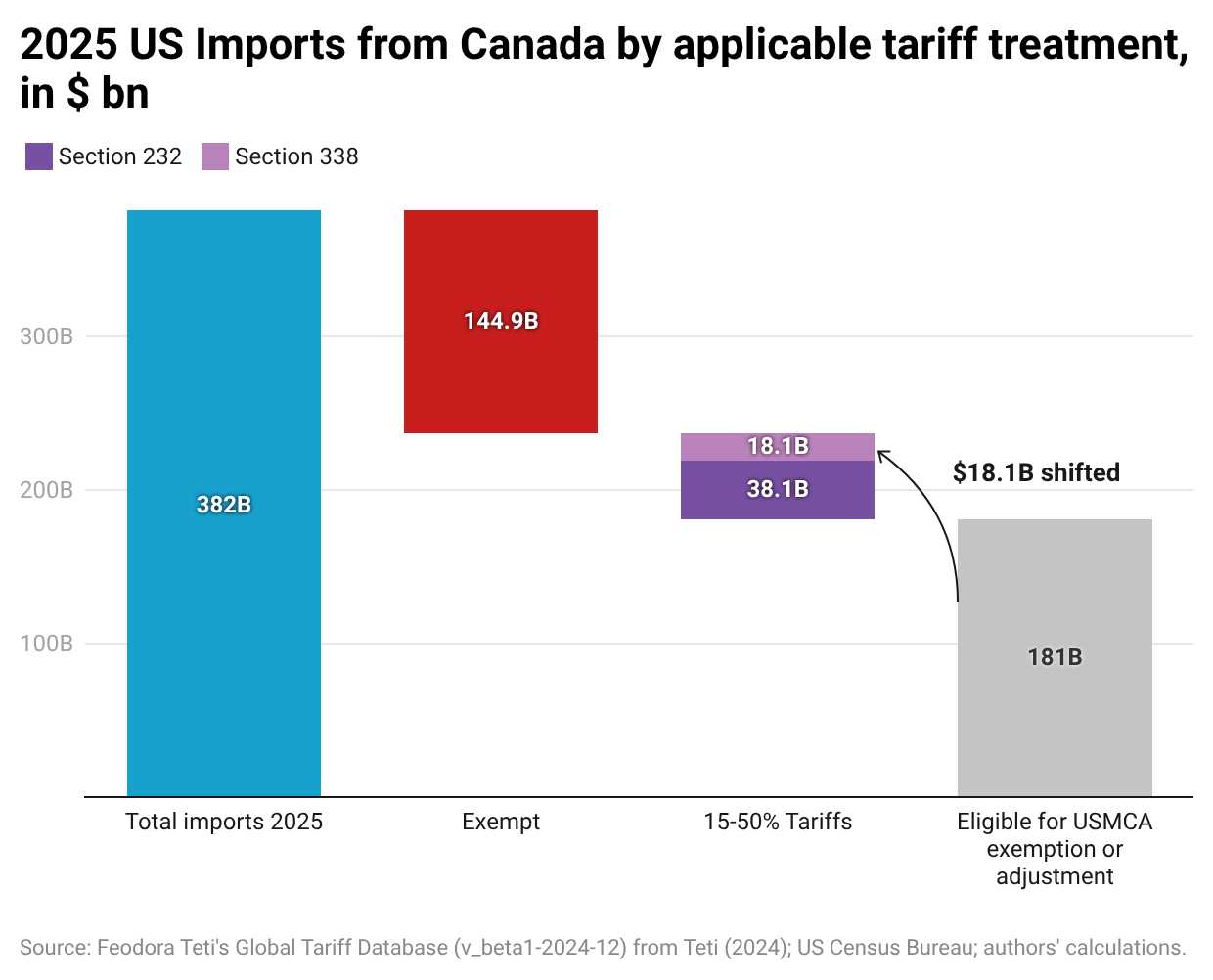
Section 338 makes its 21st Century debut: On July 20, the Trump administration invoked Section 338 of the Tariff Act of 1930—a long-dormant authority allowing the president to impose tariffs when another country discriminates against U.S. commerce—to issue imposing 50% tariffs on what we estimate to be approximately $18.1 billion of Canadian imports beginning August 19. As the figure shows, the action affects only a small share of U.S. imports from Canada. Unlike the now-expired Section 122 tariffs—and the Section 301 tariffs that took effect today, which largely overlap them—the Section 338 tariffs target a relatively small set of imports but with much higher duties. This action takes place amid ongoing USMCA negotiations, and the administration notes in its fact sheet that Canada and China were the only countries to retaliate against earlier U.S. tariff actions. The significance of the action lies less in the amount of trade it covers than in what it may represent: the emergence of Section 338 as a new instrument of U.S. economic statecraft. We will be watching whether Section 338 remains confined to this instance or becomes a recurring instrument of U.S. trade policy and economic statecraft, how courts and Congress respond, and whether its use affects not only trade flows and prices but also investment and production decisions on both sides of the border. (Note: Imports value estimates by category have not been updated to reflect any changes in exemptions or adjustments associated with USTR’s July 23 Section 301 action.)
Authors


The Brookings Institution is committed to quality, independence, and impact.
We are supported by a diverse array of funders. In line with our values and policies, each Brookings publication represents the sole views of its author(s).