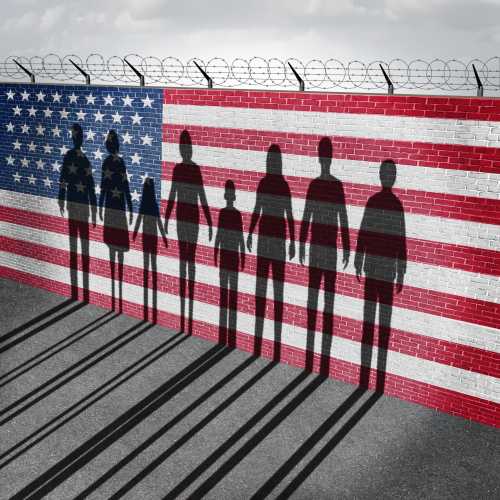
Last year, the Trump administration’s Department of Homeland Security launched Operation Metro Surge, sending over 3,000 federal agents to the Minneapolis-Saint Paul metropolitan area to arrest undocumented noncitizens. In addition to the deaths of two U.S. citizens, the operation had stark consequences for Native American citizens of federally recognized Tribal nations, who were racially profiled and detained by Immigration and Customs Enforcement (ICE) officers.
These events are not simply operational errors. They reflect deep structural deficiencies in agency training, inadequate regulatory guidance, and the current administration’s failure to fully embrace its treaty and trust responsibility to the 575 federally recognized Tribal nations.
Compounding this enforcement crisis is a constitutional conundrum. On April 1, oral arguments before the Supreme Court in the case of Trump v. Barbara exposed a disquieting dissonance: Under the test for U.S. citizenship the administration is urging the court to adopt, Native American birthright citizenship may be in question, at least in the view of the solicitor general. For the descendants of the peoples who inhabited this continent for millennia before the U.S. Constitution was drafted, that proposition demands a conclusive response from the administration.
This report analyzes the historical, legal, and operational dimensions of this predicament and sets out a framework for targeted reforms. Three categories of action are imperative and achievable: 1) binding regulatory action by DHS affirming the validity of Tribal identification in immigration enforcement encounters; 2) mandatory training for ICE and Customs and Border Protection (CBP) officers in federal Indian law; and 3) congressional legislation to abolish the Bureau of Indian Affairs’ (BIA) Certificate of Degree of Indian Blood program, and confirm that Tribal governments are the sole authorities on their own citizenship.
Native American citizenship: From constitutional exclusion to statutory inclusion
The legal status of Native Americans within the American constitutional order is not necessarily settled by the Constitution itself. The framers of the original Constitution of 1788 classified Native people as “Indians not taxed,” excluding them from the representational apportionment process and the political franchise. The Fourteenth Amendment’s citizenship clause—intended primarily to remedy the injustice of the Dred Scott decision declaring that African Americans were not U.S. citizens—did not directly address the citizenship status of Native people.12
The Supreme Court made that omission explicit in Elk v. Wilkins (1884), holding that John Elk, a Native American who was born on the Winnebago Reservation and later moved to the city of Omaha, Neb., where he paid taxes and sought to register to vote, was not entitled to citizenship absent formal naturalization. In the opinion of the court, Native Americans owed their primary allegiance to their Tribal governments rather than to the United States, notwithstanding deliberate actions to separate from the Tribe and become part of general society.
Justice John Marshall Harlan’s dissent from this decision warned of a class of persons with “no nationality whatever,” and identified the constitutional gap that would persist for four decades3:
There is still in this country a despised and rejected class of persons with no nationality whatever, who, born in our territory, owing no allegiance to any foreign power, and subject, as residents of the states, to all the burdens of government, are not yet members of any political community, nor entitled to any of the rights, privileges, or immunities of citizens of the United States.
Elk v. Wilkins, 112 U.S. 99 (1884).
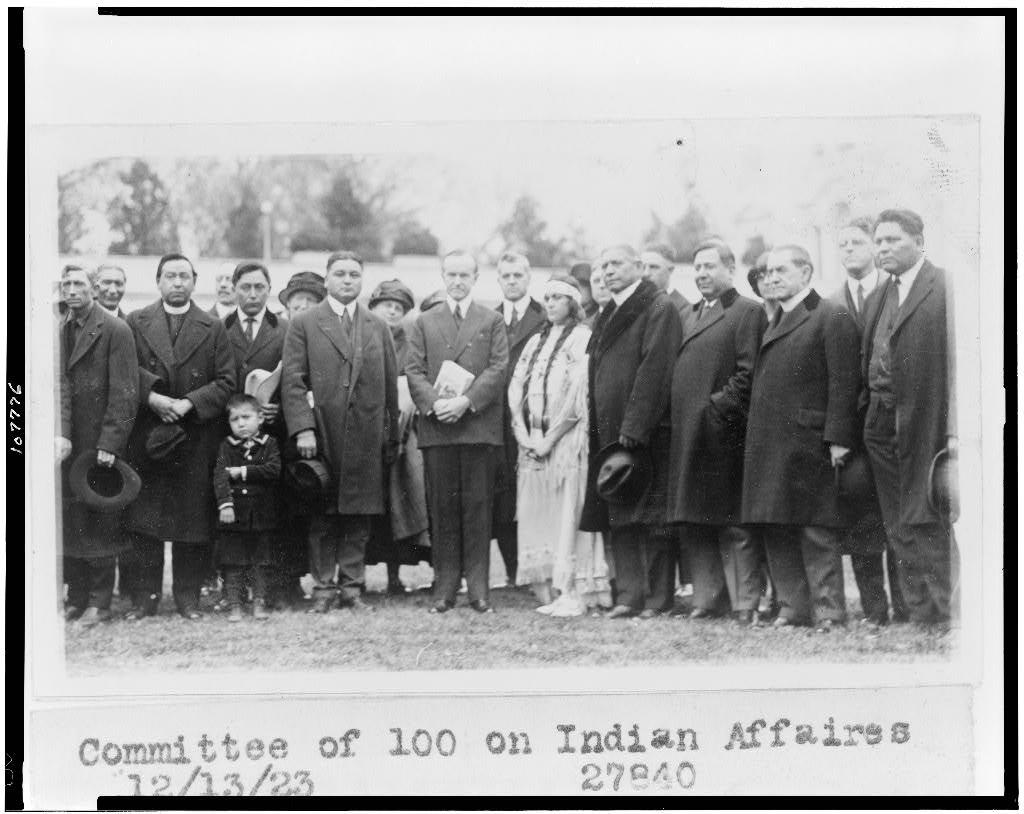
Forty years later, Congress closed that gap with the Indian Citizenship Act of 1924, which conferred birthright citizenship on all Native Americans born within the United States.4 At the time of its passage, more than 40% of the Native population had not been recognized as citizens of the nation that had both dispossessed them of their Tribal lands and confined them on federally controlled reservations. The act, however belated, was an incomplete correction; it confirmed citizenship without rescinding the legal frameworks of assimilation and dispossession that surrounded it.
Trump v. Barbara and the uncertainty of Native citizenship
The current administration’s legal theory in Trump v. Barbara—which proposes to condition birthright citizenship on parental domicile rather than place of birth—relies heavily on the legal exception found in Elk v. Wilkins.5 That reliance carries a deeply troubling historical symmetry: A doctrine forged to deny citizenship to Native Americans is now being deployed in service of denying citizenship to children of undocumented immigrants.
Taken to its logical conclusion, the government’s domicile-based framework could render Native American citizenship a function solely of the Indian Citizenship Act of 1924, rather than an enlightened understanding of the Fourteenth Amendment. Moreover, as Congress’ authority over Native American affairs has been deemed “plenary” (i.e., complete and exclusive), that status is tenuous in an unchecked government.67
Supreme Court Justice Neil Gorsuch—whose jurisprudence on Tribal sovereignty is among the most developed on the current court—pressed Solicitor General D. John Sauer directly on this implication.
The solicitor general’s halting response offered no reassurance of the legal foundation of Native citizenship. That apparent skepticism could change an inviolable constitutional right into a mere legislative privilege subject to revision.
There is, however, a critical backstop: inherent Tribal sovereignty, or the natural authority that Tribes possess to govern themselves and make decisions regarding their own affairs, which predates the establishment of the United States. This unique status is based on the political relationships between inherently sovereign Tribal nations and their people as well as the political relationships between the United States and Tribal nations and Native people—recognized within the Constitution itself. The Supreme Court has consistently and repeatedly acknowledged the enduring authority of Tribal sovereignty.8 Thus, if the Supreme Court were to adopt the administration’s domicile test for citizenship, based on the force of Tribal sovereignty and the weight of history, Native American citizenship would endure.
Operation Metro Surge and its impacts on Native people
In December 2025, the Department of Homeland Security launched Operation Metro Surge in the Minneapolis-Saint Paul metropolitan area. Over the course of the next three months, DHS deployed more than 3,000 ICE and CBP agents in what officials described as the largest immigration enforcement operation in American history.9
Although the operation’s stated objectives were focused on the removal of undocumented noncitizens, its consequences were much broader and traumatic: the death of two U.S. citizens, the detention of Native Americans and Tribal citizens, and the prolonged partial shutdown of the Department of Homeland Security, along with the ensuing congressional impasse.
The Minneapolis metropolitan area is home to one of the oldest and largest urban Native American communities in the United States. That community was built in part by the federal Indian Relocation Program of the 1950s and 1960s, which induced tens of thousands of Native people to leave their reservation homes for cities such as Minneapolis, Chicago, and Los Angeles. Paradoxically, the federal government that fostered this assimilation policy is now using its immigration apparatus to sweep up Native people in urban centers.
This result was predictable. ICE agents have been trained to identify undocumented noncitizens in accordance with a recent Supreme Court opinion permitting federal immigration stops based on “appearance, language, and other factors.” This decision has led to practices known as “Kavanaugh stops,” which have been criticized for enabling racial profiling. In a city with a substantial Native population that includes individuals of mixed Native and Latino or Hispanic heritage, the result was the profiling of Tribal citizens whose physical appearances were treated as a proxy for immigration status.10
A telling case is Jose Roberto Ramirez, a 20-year-old citizen of the Red Lake Nation in northern Minnesota, who on January 8 was forcibly detained by ICE agents in a suburban Minneapolis neighborhood. Videos of the scene show ICE agents drawing guns, dragging Ramirez from his car, and handcuffing him. Although his aunt showed his birth certificate and U.S. passport, agents refused to release him; one even told Ramirez “he wasn’t from here.” ICE detained Ramirez for several hours before letting him go without charges.
Encounters such as this one illustrate the sense of insecurity for U.S. citizens in minority communities. For Native Americans, this means that having both an official Tribal ID and being a U.S. citizen no longer guarantee freedom from federal custody if an ICE agent decides they fit a certain profile.
ICE has refused to recognize Tribal identification cards
A central operational failure in Minneapolis—and in documented encounters elsewhere—was ICE’s refusal to recognize Tribal identification cards. This rejection is not a matter of the validity of such cards. Tribal IDs issued by federally recognized Tribes are accepted for federal employment verification under Form I-9, for REAL ID compliance at TSA security checkpoints, and for U.S. passport card purposes at land and sea borders.11 The same federal government that accepts these documents in other law enforcement and regulatory contexts has failed to instruct its immigration officers to do the same.
The lapse is an institutional gap in training and operational response. ICE’s Enforcement and Removal Operations Academy does not include mandatory training on Tribal identification documents or on the broader landscape of federal Indian law.12 The agency’s operational focus on identifying and removing noncitizens has not been aligned with instructions on accepting Tribal citizenship documentation. The result is an institutional posture in which officers are neither equipped nor required to recognize the citizenship credentials of a specific class of U.S. citizens.
The response from Tribal nations was swift and organizationally impressive. Several Minnesota Tribes established pop-up identification distribution stations to ensure citizens could demonstrate their status. The Navajo Nation—the largest Tribal nation by land area and enrolled population—issued formal advisories and launched an Immigration Crisis Initiative that included a direct assistance hotline. The Native American Rights Fund and the National Congress of American Indians published legal guidance. These responses reinforced the rights of Native people within the political realm of Tribal sovereignty.
The Certificate of Degree of Indian Blood and Native identity problem
The federal government has long grappled with identifying Native Americans. Its early attempt was the use of Certificates of Degree of Indian Blood (CDIB) issued by the Department of the Interior’s Bureau of Indian Affairs. The BIA established the process of issuing CDIBs for the purpose of identifying Native Americans eligible for land assignments under the General Allotment Act of 1887 (commonly referred to as the Dawes Act) and other assimilation policies. At the time, a BIA-issued CDIB equated to membership (or citizenship) in the Tribe. Today, Tribal membership is determined by each Tribe’s own laws, and the Supreme Court has firmly held that Tribes possess the inherent authority to determine their own membership.13
The CDIB as a federally defined measurement of Native identity is a colonial remnant that no longer comports with current federal Indian law constructed around Tribal sovereignty and self-determination. Tribes that continue to use CDIBs—such as the Cherokee Nation and Choctaw Nation, which base Tribal citizenship on lineal descendancy (i.e., direct descendancy from a Tribal citizen) and not blood quantum (a fractional measurement of an individual’s Native ancestry)—use the CDIB to document lineal descent from an ancestor on the Dawes Rolls, which is a political standard rather than biological one.14
The inconsistency within the federal system is bewildering. ICE and CBP reject Tribal identification cards as proof of citizenship and will detain a Native person based on a racial profile. But another federal agency—the BIA—continues to issue CDIB documents as a form of Native identity and use them to establish Indian preference in hiring for federal jobs. The continued operation of the CDIB program is difficult to reconcile with the overarching policy of Tribal sovereignty and self-determination, and DHS needs to institute reforms to its detention practices.
The Mullin appointment presents an opportunity for reform
On March 24, Markwayne Mullin was confirmed as the secretary of the Department of Homeland Security. As a citizen of the Cherokee Nation, Secretary Mullin now stands at the intersection of law, policy, and power to ensure his agency upholds the federal trust relationship with Native nations. Secretary Mullin carries the same Tribal citizenship card that ICE officers have dismissed in field encounters with Native people across the country, and thus holds the responsibility, both politically and personally, to honor and protect that privilege. The question is not whether Secretary Mullin understands the issue of respecting tribal IDs—it is whether he will translate that understanding into binding institutional change during his term in office.
To do this, Secretary Mullin must first restore DHS funding following a prolonged partial federal shutdown that has left more than 100,000 department employees working without pay and forced the resignation of hundreds of TSA staff. His immediate operational and political challenges will compete with the reforms needed to address ICE practices involving Native Americans. Additionally, institutional inertia within a department as large as DHS is formidable even under conditions of political stability. Even so, Secretary Mullin has a unique opportunity to make a lasting impression on DHS policy by visibly honoring the federal trust responsibility to Tribal nations and ensuring that the operational reality aligns with legal principles that safeguard Tribal sovereignty.
Policy recommendations
The following recommendations include actions achievable within existing administrative authority as well as those requiring congressional action and longer-term Tribal governance deliberation.
Department of Homeland Security
- Promulgate a binding regulation—not internal guidance—affirming that a valid Tribal identification card issued by a federally recognized Tribe constitutes sufficient evidence of U.S. citizenship in any immigration enforcement field encounter. The absence of such a rule is the single most direct cause of the field-level recognition failure documented in Minneapolis and elsewhere.
- Overhaul ICE Enforcement and Removal Operations Academy curricula to include mandatory instruction in federal Indian law, covering: the political (not racial) nature of Tribal citizenship; the government-to-government relationship between the United States and the 575 federally recognized Tribal nations; the treaty and trust responsibilities of the federal government; and the dual citizenship status of Tribal members.
- Establish a dedicated Tribal Affairs coordination office within ICE’s Enforcement and Removal Operations, staffed by personnel with substantive federal Indian law expertise and authorized to serve as a real-time liaison to Tribal governments when Tribal citizens are detained.
- Require ICE to collect, maintain, and publicly report data on all encounters in which Tribal identification is presented, all detentions of individuals identifying as Tribal citizens, and the resolution of such cases. Accountability for structural failures requires a data infrastructure that currently does not exist.
- Engage directly with Tribal governments to develop formal memoranda of understanding governing the treatment of Tribal citizens in immigration enforcement contexts, modeled on the protocols that exist for other categories of federal-Tribal interaction.
Congress
- Amend the Indian Citizenship Act of 1924 to clarify that Native American citizenship is a constitutional right under the Fourteenth Amendment rather than a statutory privilege. The administration’s reliance on Elk v. Wilkins in Trump v. Barbara and the solicitor general’s inability to affirm constitutional birthright citizenship for Native people under the government’s own legal theory have exposed a genuine and exploitable vulnerability that legislative clarification would close.
- Abolish the BIA’s Certificate of Degree of Indian Blood program and formally recognize, by statute, that Tribal governments are the sole authorities on the determination of their own citizenship. The CDIB is a bureaucratic anachronism rooted in colonialism that federal policy officially repudiated in the Indian Self-Determination and Education Assistance Act of 1975. Its continued operation is inconsistent with the principles that statute embodies.
- Require, through appropriations or authorizing legislation, that DHS implement mandatory federal Indian law training for all ICE and CBP field officers, with performance standards and compliance reporting.
- Authorize funding for Tribal governments to upgrade identification infrastructure, including support for the development of enhanced Tribal identification cards meeting Western Hemisphere Travel Initiative standards.
State and local governments
- In states with substantial Native American populations (e.g., California, Minnesota, New Mexico, Oklahoma, Montana, and the Dakotas), enact statutes formally recognizing Tribal identification cards as valid proof of citizenship for all state governmental purposes, and require commensurate training for state and local law enforcement officers.
- Avoid voluntary cooperation agreements with federal immigration enforcement in contexts that create disproportionate exposure to racial profiling for Tribal citizens and others.
- Fund assistance programs for urban Native residents—particularly those displaced from reservation territories by the federal Indian Relocation Program—to access Tribal enrollment offices and obtain current identification documents. The logistical and financial burden of obtaining identification is a historical byproduct of federal policy decisions.
Tribal governments
- Tribal nations that have not yet issued enhanced identification cards meeting Western Hemisphere Travel Initiative standards should evaluate the feasibility of doing so. Enhanced cards carry federal recognition at ports of entry and provide a stronger evidentiary foundation in field encounters.
- Engage directly with Secretary Mullin to negotiate formal DHS protocols governing encounters with Tribal citizens, leveraging the secretary’s personal familiarity with Tribal citizenship and his established record of meeting with Tribal governments.
- Use this political moment to accelerate internal reconsideration of citizenship criteria that were shaped by federal pressure rather than Indigenous tradition. Blood quantum requirements embedded in Tribal constitutions frequently reflect the terms that the federal government demanded during allotment-era negotiations—not the kinship-, cultural-, and community-based definitions of belonging that governed Tribal nations before those demands were made. The development of more inclusive citizenship frameworks is both a matter of justice and a demographic and political imperative.
Conclusion
The treatment of Native American citizens during federal immigration enforcement operations in Minneapolis since late 2025 is a story about institutional architecture—about what happens when a federal agency built to identify and remove noncitizens deploys into communities of U.S. citizens without the training, regulatory guidance, or coordination structures necessary to distinguish between the two.
The legal dimensions of this failure are equally serious. In response to any question about whether they hold birthright citizenship as a constitutional matter, Native Americans, whose ancestors inhabited this continent for millennia before Europeans arrived, deserve a firm legal foundation.
Secretary Mullin’s appointment offers a genuine and time-limited opportunity for agency reform. The structural reforms identified in this report—a binding DHS regulation on Tribal ID recognition, mandatory federal Indian law training, a dedicated Tribal affairs coordination function, ending the issuance of CDIBs, and congressional clarification of Native birthright citizenship—are achievable, specific, and grounded in existing legal frameworks and agency authorities. Secretary Mullin has a historic opportunity as well as the standing, relationships, and personal knowledge to advance this agenda.
Author

-
Acknowledgements and disclosures
The author would like to thank Dillon Turman, citizen of the Cherokee Nation and University of New Mexico law student, for research contributions to this report.
-
Footnotes
- In the Dred Scott decision, the Supreme Court declared that no Black person could be a citizen because they were not a “people of the United States.” Writing for the majority, Chief Justice Roger Taney referred to Black people as “an unfortunate race” and regarded them as “beings of an inferior order, and altogether unfit to associate with the white race, either in social or political relations; and so far inferior, that they had no rights which the white man was bound to respect.” Dred Scott v. Sandford, 60 U.S. (19 How.) 393, 407 (1856).
- The claim that Native Americans were not subject to U.S. jurisdiction in 1868 may seem surprising. At that time, however, much of the West was still unchartered and unsettled, and Native American Tribes controlled vast swaths of territory independent of any state or federal law. Thus, the understanding that reservation Indians were not subject to federal jurisdiction was consistent with prevailing federal policy at the time.
- At the time Congress adopted the 14th Amendment in 1868, the modern concept of illegal immigration did not exist. But the court and members of Congress did recognize a small number of long-standing exceptions to the broad guarantee of birthright citizenship. Congress agreed that children of foreign diplomats would not become U.S. citizens, nor the children of hostile foreign forces occupying U.S. territory. And initially, it also said that the children of Native Americans were not born citizens because, as an entire population, they were not considered “subject to the jurisdiction” of U.S. law, as described in the amendment, and therefore not citizens.
- The campaign to grant full U.S. citizenship to Native Americans gained momentum in the early 20th century. During World War I, thousands of Native Americans served in the U.S. military despite not being recognized as citizens. Their service highlighted the injustice of their exclusion from the right to vote and fully participate in American civic society. Calls for reform, led by Tribal leaders, culminated in the passage of the Indian Citizenship Act of 1924.
- In the lead–up to the oral arguments in Trump v. Barbara, No. 25-365 (2026), the Trump administration seized on the Tribal exception as a key piece of historical evidence that it says supports its position that the children of undocumented immigrants and temporary legal residents are similarly not “completely subject” to the nation’s “political jurisdiction.” Like the Tribes, undocumented immigrants “owe allegiance” elsewhere, according to the administration.
- In the 1886 landmark Supreme Court decision of U.S. v. Kagama, 118 U.S. 375, the court upheld Congress’ authority to enact legislation affecting Tribal criminal jurisdiction and announced a new legal doctrine that Congress has plenary power—expansive, virtually unlimited authority to regulate Tribes broad and exclusive power to regulate the affairs of Native American Tribes—pursuant to the Indian Commerce Clause of the Constitution.
- Many Indian law scholars view the plenary power doctrine as a tool that fosters and formalizes the legal oppression of Indian people by an unchecked federal government, despite the Supreme Court’s repeated affirmation of the inherent and retained rights of Tribal self-government. Thus, a legal paradox: While the court acknowledges the plenary power of Congress over Indian affairs, it also acknowledges a critical backstop—enduring inherent Tribal sovereignty.
- In Morton v. Mancari, 417 U.S. 535, 554–55 (1974), the Supreme Court unanimously affirmed the principle of inherent Tribal sovereignty and has since continuously upheld this principle. See Haaland v. Brackeen, 599 U.S. 255, 308 (2023) (Gorsuch, J., concurring), explaining that, before colonization, Tribal nations “existed as ‘self-governing sovereign political communities’” and that “such entities do not ‘cease to be sovereign and independent’” (quoting United States v. Wheeler, 435 U.S. 313, 322–23 (1978), and Worcester v. Georgia, 31 U.S. 515, 561 (1832).
- Santana, Rebecca; Balsamo, Mike (January 6, 2026). Homeland Security plans 2,000 officers in Minnesota for its “largest immigration operation ever.” The Associated Press. Archived from the original on January 7, 2026.
- In the case of Noem v. Vazquez Perdomo (2025), Justice Kavanaugh’s concurring opinion indicated support for the use of racial profiling by immigration agents, allowing them to stop individuals based on apparent race or ethnicity, accented or non-English speech, presence in certain locations (such as day-labor sites), or employment in fields often done by undocumented workers. A few months later in Trump v. Illinois (2025), a decision involving an issue concerning the administration’s authority to deploy the National Guard troops to Chicago to support immigration enforcement, Justice Kavanaugh included a footnote clarifying that federal officers “must not make interior immigration stops or arrests based on race or ethnicity.” The purpose of the note appears to modify the previous endorsement of racial profiling.
- Several Tribes issue Enhanced Tribal Cards (ETCs) that are legal identification documents recognized under 8 C.F.R. § 235.1(e) (2024). See also Western Hemisphere Travel Initiative: Designation of an Approved Native American Tribal Card Issued by the Kickapoo Traditional Tribe of Texas as an Acceptable Document To Denote Identity and Citizenship for Entry in the United States at Land and Sea Ports of Entry, 87 Fed. Reg. 37,879 (June 24, 2022) (representative designation notice under § 7209 of the Intelligence Reform and Terrorism Prevention Act of 2004, Pub. L. No. 108-458, 118 Stat. 3638). Some Tribes, such as the Tlingit and Haida Tribe, also issue enhanced Tribal cards with security features that meet the requirements of the Western Hemisphere Travel Initiative. Many Tribes’ identification cards do not meet these standards.
- In a December 17, 2025, letter to then Secretary of Homeland Security Kristi Noem, several members of the U.S. Senate stated that ICE had represented that “the ICE Enforcement and Removal Operations (ERO) Academy does not train ERO officers to require any specific document to prove U.S. citizenship.” See United States Senate Committee on Indian Affairs (press release and letter). However, a review of publicly available DHS and ICE training information does not identify an entity designated as an “Enforcement and Removal Operations Academy.” Rather, ICE personnel, including ERO officers, are trained primarily through programs conducted at the Federal Law Enforcement Training Centers (FLETC), including the Basic Immigration Law Enforcement Training Program and related ICE-administered instruction. Accordingly, the reference to an “ERO Academy” appears to be shorthand for ERO-specific training conducted within the broader FLETC and ICE training framework, rather than a standalone academy with an independent institutional structure.
- In Santa Clara Pueblo v. Martinez, 436 U.S. 49 (1978), a landmark case on the significance of Tribal sovereignty, the Supreme Court upheld a Tribal law that delineated qualifications of Tribal membership based on Tribal customs and traditions. The Supreme Court emphasized the importance of Tribal sovereignty, ruling that federal courts do not have jurisdiction to intrude in such Tribal matters.
- Formal affiliation with a Native American Tribe, known as membership or citizenship, is determined by each Tribe. It can be established through lineal descent, blood quantum, or a blend of factors. Lineal descent means that individuals must prove they are directly descended from someone listed on the Tribe’s original membership rolls. Some Tribes have adopted the Dawes Rolls (lists of members established through the allotment process) as their base roll. This method allows descendants to qualify for membership regardless of their blood quantum. Blood quantum refers to the measurement of a person’s ancestry as measured by a fraction (e.g., one-half or one-quarter). Introduced by the federal government in the late 19th and early 20th centuries, blood quantum was originally used to limit Tribal citizenship and reduce federal obligations to Native people and Tribes.
The Brookings Institution is committed to quality, independence, and impact.
We are supported by a diverse array of funders. In line with our values and policies, each Brookings publication represents the sole views of its author(s).