Executive summary
Despite repeated rounds of education policy reform, a significant gap persists between policy aspirations and learning outcomes in Pakistan. Empirical studies indicate that approximately 80% of children at the late primary stage cannot read and understand an age-appropriate text (World Bank 2024). While this figure is striking, comparable—and in some regions higher—learning poverty rates have been documented across South Asia (78%) and sub-Saharan Africa (89%), suggesting that the challenges Pakistan faces are part of a broader learning crisis in low- and middle-income countries (World Bank et al. 2022).
While national frameworks in Pakistan such as the Single National Curriculum (SNC) and local frameworks such as Provincial Education Sector Plans (PESPs) articulate aspirations for 21st-century competencies, existing research points to a gap between these aspirations and the opportunities available to learners in the classroom (Khurram 2025).
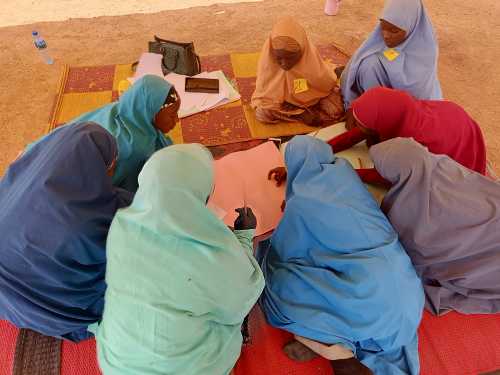
This qualitative study examined how and why this gap persists, guided by NEST’s shared exploratory question: how are education systems creating opportunities for children and young people to learn what matters? Data were collected across Pakistan’s four main provinces and the Islamabad Capital Territory (ICT) through five focus group discussions (FGDs), 15 key informant interviews (KIIs), nine semi-structured interviews, and two non-participant field observations.
The study’s 59 participants included teachers, policymakers, parents, curriculum and assessment experts, civil society representatives, and program representatives from Technical and Vocational Education and Training (TVET) institutions.
The findings revealed that opportunities to learn what matters are significantly constrained across five interconnected themes: (1) policy and purpose; (2) curriculum and pedagogy; (3) assessment systems; (4) governance; and (5) resource flows. Existing literature and study participants consistently pointed to limited system-level commitment to a broad educational purpose, considerable constraints in teacher preparation, infrastructure, and assessment design, and weak alignment across the actors and governance levels responsible for delivering change. These conditions were found to be mutually implicated across all five themes. Therefore, the data do not support attributing any single challenge to one isolated cause but rather point to how these conditions interact and compound each other in ways that collectively constrain systems transformation.
The recommendations draw on the 4P framework (purpose, pedagogy, positioning, and power), an action framework developed by CUE, to capture the key domains through which education systems move toward transformation (Sengeh and Winthrop 2022). The report provides four recommendations for local policymakers: clarifying the purpose of education through participatory mechanisms; reforming pre-service and in-service training around competency-based, inquiry-led, and experiential approaches; aligning all system components behind a common educational purpose; and redistributing power among the actors who define and shape learning opportunities and outcomes.
Authors



-
Acknowledgements and disclosures
The authors would like to express gratitude to all study participants who generously shared their experiences and provided valuable insights into Pakistan’s education system realities. We also thank research consultant Moiz Hussain for his dedication throughout the process and the research advisory committee members for their expert guidance. Additionally, we acknowledge the invaluable support and direction provided by NEST, which shaped this inquiry.
We would also like to acknowledge the contribution of our reviewer Ghulam Omar Qargha, fellow at the Brookings Institution Center for Universal Education (CUE) and our editor Jennifer L. O’Donoghue, senior fellow and deputy director of CUE, for their guidance and support during the writing and review process.
Brookings gratefully acknowledges the support provided by the LEGO Foundation. Brookings recognizes that the value it provides is in its commitment to quality, independence, and impact. Activities supported by its donors reflect this commitment.
The Brookings Institution is committed to quality, independence, and impact.
We are supported by a diverse array of funders. In line with our values and policies, each Brookings publication represents the sole views of its author(s).