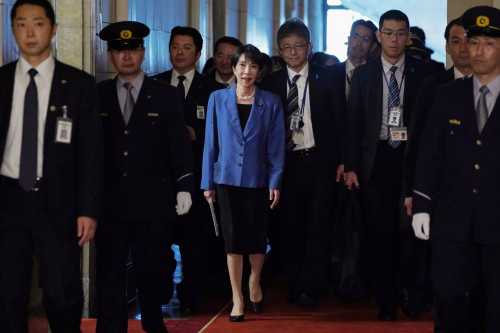
Japan’s Lower House election last Sunday has put to rest the image of Japanese politics as a staid or sedate affair. On the contrary, Japanese politics erupted into high drama when Prime Minister Sanae Takaichi called for a snap election just three months into her tenure. Election-eve polls had predicted a strong victory for Takaichi and her Liberal Democratic Party (LDP), but no one expected the final tally: at 316 seats, the LDP achieved a supermajority. Japan’s first-ever female leader delivered the biggest win for her party since its creation 70 years ago.
The voters’ choice will loom large for the future of Japan’s domestic politics, the management of its economy, and the conduct of its foreign policy.
Throwing caution to the wind
Over the past few weeks, all major political parties threw caution to the wind. On January 23, Takaichi boldly called for a snap election, aiming to reverse the streak of electoral losses that the LDP had experienced in the past two national elections. Takaichi’s gambit hinged on her ability to convert her own popularity (with approval rates hovering around 70%) into votes. It also depended on her ability to lure back the party’s conservative base. Many of those voters had not warmed to her liberal predecessor, Prime Minister Shigeru Ishiba, and had instead drifted toward newer political forces like the far-right Sanseito party in last summer’s Upper House election. Also, because of a clear generational divide in Takaichi’s support base, she would need to entice younger voters to actually show up at the polls.
As the vote approached, shifting political alliances had added to the uncertainty. The collapse of the 26-year-old LDP-Kometo coalition immediately after Takaichi assumed office thrust many LDP candidates into uncharted waters, since they had long benefitted from the support of Komeito voters. Moreover, the alliance the LDP brokered with the Ishin party to replace Komeito did not extend to electoral coordination. In fact, LDP and Isshin candidates were set to compete against each other in several electoral districts.
Takaichi used the ultimate lever in parliamentary politics: to call a general election at the time of her choosing. But the other parties have agency too. And they went all in, raising the political stakes. The Constitutional Democratic Party of Japan (CDP; the largest opposition force) and Komeito announced a stunning merger just days before the election to form a new Centrist Reform Alliance (CRA). With the backing of organized voting blocs—the labor union Rengo and members of the Buddhist sect Soka Gakkai—the merged parties positioned themselves as a center-left alternative to the conservative LDP, and they hoped to reshape the political contest. Ishin, for its part, saw in the snap election an opportunity to push yet again for a core political project: to change Osaka’s administrative status into a metropolis, akin to making it a second capital city. To that end, Ishin’s president and the governor of Osaka, Hirofumi Yoshimura, and the mayor of Osaka resigned from their government posts to ask voters to renew their mandate.
The 2026 parliamentary election was a spicy brew of differing political motivations. Takaichi aimed to make the election a referendum on her leadership brand just a few months into the job. The CDP and Komeito framed the contest as a moment of party realignment and the emergence of a liberal alternative to conservative politics, while Ishin doubled down on its regional identity despite its long-standing need to grow nationally.
Elections have consequences
Despite the challenges, Takaichi delivered a landslide victory for her party. The LDP grew its number of Lower House seats from 198 to 316, crossing the supermajority threshold of 310 seats. Ishin failed to expand nationally, essentially retaining its overall position (from 34 to 36 seats). Altogether, the LDP-Ishin coalition went from a razor-thin majority to seizing 352 out of 465 seats.
Takaichi owed her resounding win to her ability to bring back LDP supporters, retain sizable support among independent voters, and mobilize the youth vote. It is a broad coalition stitched together with messages of pragmatic conservatism and economic relief, but coalescing as well from the lack of appealing alternatives. In other words, the conservative landslide resulted from the CRA’s crumbling, as it lost more than two-thirds of the 167 seats previously held by the CDP and Komeito, falling to just 49. A last-minute partial tie-up (the merger did not extend to their Upper House groups) produced voter confusion, not enthusiasm, especially as political expediency necessitated changes to party positions (the CDP had to abandon its opposition to the 2015 national security laws and nuclear power restarts). The CRA’s failure may confirm the eclipse of organized voting blocs, which had long been an important feature of Japanese politics.
The effects of Japan’s snap election will reverberate far and wide. It has delivered a major party realignment—though not the one the CRA had hoped for. The LDP has achieved a rare commanding position in the Diet, and Takaichi has cemented her clout as party leader. She now enjoys a strong mandate to advance her agenda, bolstered by her party’s Lower House supermajority—which can override the Upper House—and the absence of another electoral test for several years.
However, there is no room for complacency. The inroads made by non-traditional parties like Sanseito (which expanded from two seats to 15) and Mirai (winning for the first time 11 seats) attest to some segments of the Japanese electorate’s continuing frustration with the establishment. The last three national elections have confirmed considerable volatility in popular preferences, with voters first shunning and then embracing the LDP. Having provided Takaichi with a strong political foundation, the public will now expect tangible results.
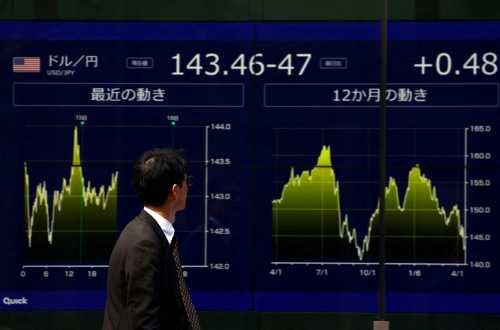
With this victory, Takaichi has freer rein to implement her vision for economic revival. Rhetoric aside, her economic strategy differs in fundamental ways from Abenomics, coined by former Prime Minister Shinzo Abe. This is a must since Japan’s economy has moved from a deflationary to an inflationary environment. But the thrust of Sanaenomics—fiscal spending and industrial policy—is not without risk or controversy. While Abe pushed to increase the consumption tax twice, Takaichi rattled the bond market with her campaign proposal to freeze the food consumption tax for two years. And Takaichi has plans for much larger fiscal spending, both to alleviate cost-of-living concerns and to reignite growth by nurturing strategic sectors. The line between economics and security will shrink with Takaichi’s targeting of the defense sector as part of “crisis-management” industrial policy. The road to success is, nevertheless, paved with obstacles: persistent inflation and a stubbornly weak yen, investor nervousness about fiscal profligacy in an economy with high levels of public debt to GDP, and the checkered record of past stimulus packages and industrial targeting.
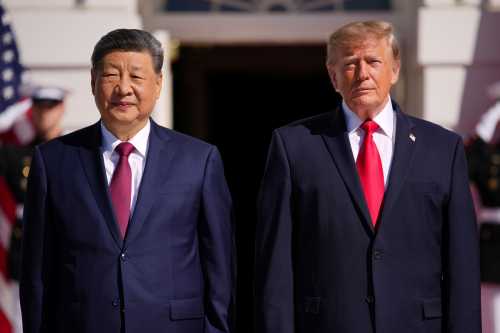
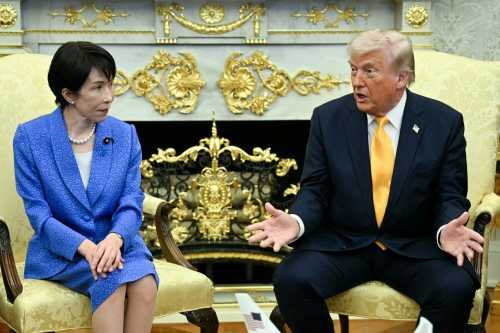
The national election will matter for diplomacy, especially with key leadership summits on the horizon: Takaichi’s visit to Washington in March, and U.S. President Donald Trump’s trip to Beijing in April. When Takaichi met with Trump and Chinese President Xi Jinping last fall, she was a debutante prime minister presiding over a minority government. She now enjoys a heightened international stature as a leader with commanding domestic support. This is certainly an important asset, but how far it will go is an open question.
Xi’s campaign pressure to punish Takaichi for suggesting Japan’s possible involvement in a Taiwan contingency backfired if the intention was to render her a weak leader. But Xi may be in no hurry to thaw relations with Tokyo, both because he opposes Takaichi’s security and economic policies, and because he knows his actions do not risk harming his engagement with the United States. The American president broke protocol in endorsing Takaichi on the eve of the election. Yet this provides no guarantee that Trump will have Takaichi’s back when he meets with Xi, especially given Trump’s penchant for subordinating allied interests to his great powers’ dealings.
Takaichi succeeded where her predecessor failed: by portraying herself as the agent of LDP transformation and energizing a new generation of Japanese voters. Yet bigger tasks await her in translating the change message into outcomes that secure livelihoods and shelter Japan from brutish world politics.
Author

japan
-
Acknowledgements and disclosures
The author would like to thank Ariqa Herrera for research support as well as Adam Lammon for editing.
The Brookings Institution is committed to quality, independence, and impact.
We are supported by a diverse array of funders. In line with our values and policies, each Brookings publication represents the sole views of its author(s).
Commentary
Japan’s thunderbolt election: Takaichi resets politics, economics, and diplomacy
The voters’ choice will loom large for the future of Japan’s domestic politics, the management of its economy, and the conduct of its foreign policy.
February 10, 2026