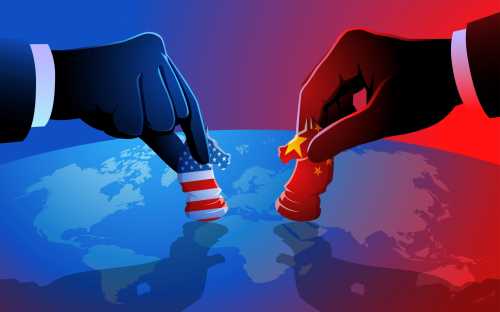
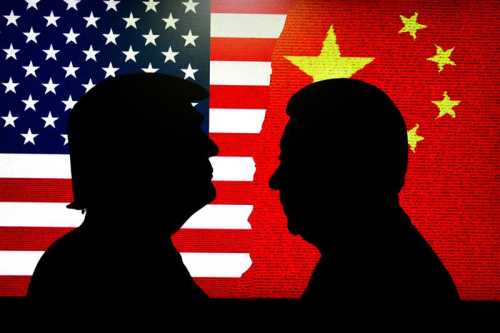
With Presidents Donald Trump and Xi Jinping set to meet multiple times in 2026—and with Trump embracing the language of a U.S.-China “G2”—governments across the Indo-Pacific are watching developments closely. Does this rhetorical shift in Washington signal a strategic thaw or merely a tactical pause in competitive dynamics? How might a more transactional relationship between Washington and Beijing reshape the strategic calculations of states whose prosperity and security remain deeply intertwined with both powers?
Setting the scene
This compilation brings together leading scholars and policy experts from across Asia to assess how U.S.-China relations may evolve over the coming year—and what that trajectory means for their respective countries. While perspectives vary, a common thread emerges: expectations of short-term stabilization are tempered by skepticism about any fundamental reset. Most contributors foresee not a grand bargain but continued U.S.-China strategic rivalry—albeit managed through leader-level engagement and transactional dealmaking alongside enduring technological, economic, and security competition.
For states across the Indo-Pacific, a loosely defined “G2” presents both opportunity and risk. A tactical easing of U.S.-China tensions may lower the near-term danger of escalation. Yet an international order increasingly centered around great powers could marginalize smaller states, reduce their agency to influence regional outcomes, entrench spheres of influence, and weaken multilateral norms. The region is not standing still. Governments are hedging, diversifying partnerships, strengthening their own defense capabilities, and investing in areas critical to their national resilience.
The essays that follow show how regional actors are navigating the evolving U.S.-China relationship—not as bystanders, but as strategic agents actively maneuvering amid uncertainty and shaping the strategic environment around them.
Trump’s G2 and Australia’s dilemma
In the past, framing the United States and China’s bilateral relationship as a G2 generated considerable anxiety within other countries, especially American allies, because it implied that the United States and China, together and exclusively, would reshape global order and institutions with minimal external input. For Australia, the alliance with the United States enhances Australia’s role and relevance in the region, in addition to offering it some level of protection against coercion by a great power such as China. Were there to be a G2, this long-standing benefit of the alliance would be significantly curtailed.
The meaning or significance of Trump’s description of his meeting with Xi as a G2 is not yet fully clear. However, it does not seem that Trump is seeking to create a G2 world in the above sense of the term. Instead, Trump’s use of the term “G2” merely reflects his view that the United States and China are the two most materially powerful countries in the system. The implication is that what these two countries do has unique consequences for the rest of the world.
How will U.S.-China relations evolve over the coming year? In his second term, Trump does not seem to act with the assumption that the United States and China are engaged in an ideological rivalry driven by diametrically opposed values. However, Trump seeks to achieve U.S. material (i.e., economic, military, and technological) primacy—even if he places less importance on the institutional and normative aspects of U.S. leadership and power—and sees China as the only country able to challenge the United States in this material sense.
Therefore, and on the basis that the U.S.-China relationship is a competitive if not geopolitically rivalrous one, elements of coordination and cooperation will be tactical or pragmatic rather than strategic. The United States will still seek deals and arrangements to secure relative gains vis-à-vis China, even if many aspects of the relationship will not be overtly hostile. Militarily, the United States is committed to a strategy of denial up to the first island chain, which includes Taiwan, Japan, and the Philippines. While this is not the same as containing China, it still means the United States will demand that allies accept a greater burden in contributing to this collective denial strategy and deterring China from using force against Taiwan or preventing the South China Sea from becoming a militarized “Chinese lake.”
What does this mean for Australia? The current government in Australia is comfortable with Trump’s less overtly confrontational approach to China, particularly as it compares to the more confrontational approach Trump took in his first term. While Australia has deep concerns about many Chinese policies and behaviors, the current government is wary of smaller powers being pressured to assume a more significant role in any great power rivalry.
Even so, Trump’s self-styled G2 approach to China is very much about Trump and a small group of trusted advisers negotiating a bilateral arrangement with Beijing. For this reason, Canberra is concerned with the minimal visibility and input given to regional allies, such as Australia, when it comes to how the United States conducts its relationship with China.
This explains Australian enthusiasm for Canadian Prime Minister Mark Carney’s speech at Davos, which offered a clarion call for middle powers to band together and create new and better rules and institutions that suit their interests, rather than those of great powers. Although one can argue that Carney’s speech was more intended as a narrower criticism of Trump than a reimagining of global politics, it is aligned with Australia’s response in Asia, which is to work with countries like Japan to advance preferred regional rules and institutions. While doing so does not exclude the United States, it is a deliberate attempt to proactively make it difficult for the United States to impose new rules and institutions on Australia.
However, China remains Australia’s primary challenge. When it comes to constraining Beijing, there is no alternative to the United States. Therefore, the nature of any bilateral deal between the United States and China remains a great source of anxiety for Australia.
The G2’s revival and Indonesia’s strategic calculus
Trump’s revival of the U.S.-China “G2” concept, reinforced by a series of bilateral leader-level meetings in 2026, has renewed expectations of improved global governance through dialogue and consultation. Such expectations should be treated with caution. The G2 is a strongman-to-strongman framework—an exclusive mechanism shaped by narrow national interests rather than a commitment to shared global responsibility.
Trump remains firmly anchored in an “America First” agenda despite increasing structural vulnerabilities. The tit-for-tat trade measures of 2025 demonstrated Washington’s limited capacity to force Beijing to concede. The United States remains heavily dependent on China for rare earths and processed minerals, which are essential to its defense industry and advanced technologies. China, meanwhile, recognizes that its comprehensive national power has not yet matched that of the United States. While Beijing can blunt U.S. pressure, it lacks the capacity to overpower Washington. Instead, China remains focused on gradually undermining U.S. hegemony and positioning itself as the central node of an emerging order—one in which both large and small states increasingly depend on Beijing, consistent with Xi Jinping’s vision of “moving closer to the center stage.”
Under these conditions, the most likely outcome of a revived G2 is not genuine co-governance but strategic delay. As Ryan Hass’ third scenario for the trajectory of U.S.-China relations suggests, both powers are likely to prioritize stability and buy time while reducing their mutual dependence. The G2 thus functions as a temporary pause before a renewed phase of strategic rivalry.
From a Southeast Asian perspective, shared governance between two rival great powers is difficult to sustain. When the Cambodia-Thai conflict erupted in May 2025, the United States and China competed to play the role of mediator. On the sidelines of the Association of Southeast Asian Nations (ASEAN) Foreign Ministers’ Meetings in early July, China expressed its willingness to facilitate negotiations. However, it was the United States that ultimately played a decisive role by exerting pressure on the conflicting parties. Trump warned that the prolonged conflict would impede the ongoing tariff negotiations. The ceasefire agreement was eventually secured on July 28, 2025, with Malaysia serving as the ASEAN rotating chair. The agreement was described as being “co-organised” by the United States with China’s “active participation.”
Less than a month later, the conflict resumed, and Thai Prime Minister Anutin Charnvirakul expressed little confidence in the July agreement’s effectiveness. His statement reflected Thai distrust that the U.S.-brokered initiative was driven by economic coercion rather than by a genuine commitment to regional peace and stability. Washington’s mediation appeared aligned with its “America First” agenda, aimed at advancing domestic political interests, including bolstering Trump’s popularity, as was evident at the October 2025 ASEAN Summit.
For its part, had Beijing succeeded in mediating the conflict, it would likely have portrayed the outcome as validation of its Global Security Initiative—much as it did following the Saudi-Iran rapprochement in March 2023. In short, the United States’ and China’s involvement in brokering regional peace was limited and ultimately self-serving, reinforcing regional skepticism toward major-power-style leadership.
As for Indonesia, foreign policy under President Prabowo Subianto is likely to remain highly personalized. He favors unconventional diplomacy to elevate Indonesia’s international profile, and projects himself as a strongman who prefers direct engagement with fellow strongmen, particularly from major powers. His controversial foreign policy choices reflect this logic: China’s influence is evident in Indonesia’s decision to join BRICS, while U.S. considerations underpin Jakarta’s participation in Trump’s “Board of Peace.” The same calculus explains Prabowo’s decision to skip the G7 Summit in Canada in favor of meeting President Vladimir Putin in Russia.
A G2 dynamic characterized by buying time and building insulation would provide Prabowo with greater strategic room to maneuver. Indonesia would feel less constrained by needing to avoid offending one side in favor of the other. In practical terms, the Prabowo administration is likely to continue negotiating a better trade deal with the United States, particularly in the wake of the controversial U.S.-Indonesia reciprocal trade agreement signed on February 19, 2026, which has been widely perceived by Indonesians as unfair.
Simultaneously, Prabowo will seek to deepen bilateral cooperation with China—also in traditionally underdeveloped areas such as defense. Indonesia and China have formally described their relationship as a strategic partnership since 2005. Yet defense cooperation has long received limited attention. Beijing’s behavior in the South China Sea has made Jakarta cautious, thereby limiting the scope for deeper military collaboration. Over the past two decades, Indonesia’s procurement of Chinese military equipment, as well as bilateral defense dialogue and joint exercises, has remained modest.
In April 2025, however, China and Indonesia elevated their defense engagement by conducting an inaugural 2+2 ministerial meeting that brought together their foreign and defense ministers. This signaled a potential shift toward more institutionalized security cooperation. The momentum continued in October 2025, when Indonesia decided to purchase 42 Chinese-made J-10 fighter jets as part of Prabowo’s broader strategy to diversify Indonesian defense modernization. Whether this renewed Indonesia-China defense engagement will translate into substantive and sustained strategic alignment, however, remains uncertain.
Regarding Indonesia’s role in regional multilateralism, Prabowo is unlikely to invest significant political capital in ASEAN, despite many scholars’ recommendations. The organization’s slow progress on the Myanmar crisis and the South China Sea code of conduct has reinforced perceptions of institutional paralysis rooted in a lack of cohesion. Given Prabowo’s belief that the current era favors strongman leadership over multilateral mechanisms, ASEAN is likely to remain secondary in Indonesia’s foreign policy calculus.
Trump and Xi are scheduled to meet at the end of March, ahead of two further potential meetings later in the year: the Asia-Pacific Economic Cooperation (APEC) conference in Shenzhen in November and the G20 summit in Florida in December. Beijing aims to stabilize U.S.-China relations in 2026, with Ambassador Xie Feng calling for “mutual support at key international events.” Yet even if diplomacy produces a temporary tariff truce, U.S.-China competition will persist. The reason is simple: the United States and China are engaged in entirely different games, pursuing distinct strategic objectives on separate fronts. The Indo-Pacific region, as the engine of global economic growth, reflects broader U.S.-China competition.
China’s increasingly assertive behavior across the Taiwan Strait and in the South China Sea will continue to command international attention and provoke debate. Although the regional security environment has not experienced a sea change comparable to that on the Eurasian continent, the Indo-Pacific remains a high-stakes arena where regional tensions are tightly intertwined with global strategic competition.
Economically, the divergence is stark. The Trump administration has targeted China’s semiconductor industry, imposed export controls, and pressured countries such as Panama to limit Beijing’s influence. China, by contrast, is pursuing a long-term artificial intelligence (AI) “diffusion strategy,” investing heavily in emerging technologies to revitalize its economy, build new supply chains, create interdependencies, and position itself as the world’s next dominant superpower.
China’s 2024 AI Plus policy integrates AI across six domains: technology, industry, consumption, applications for people’s livelihoods, governance, and international cooperation. Accordingly, the AI strategy constitutes a comprehensive national framework that extends into foreign policy, particularly in shaping global AI standards, governance mechanisms, and international cooperation.
Strategic implications for the Indo-Pacific
Artificial intelligence is often framed as a technological or economic issue. Increasingly, however, regional dynamics in Asia are shaped by competition for AI leadership.
Within China’s strategic framework, AI plays a central role in foreign policy. It serves not only as a driver of economic modernization but also as a tool to deepen regional cooperation and strengthen political-economic ties. Given that many advanced technologies—such as satellites and drones—are dual-use, expanded AI cooperation may also influence future military alignments and strategic balances.
Across Southeast Asia, economic concerns often outweigh fears of large-scale conflict over Taiwan or in the South China Sea. Export-dependent ASEAN economies are particularly sensitive to the economic consequences of U.S. tariff policies and the potential domestic instability such measures could trigger. Against this backdrop, China’s AI strategy is quietly shaping de facto realities on the ground while influencing emerging technological standards and norms. The upgraded ASEAN-China Free Trade Area places digital trade at the core of bilateral relations, while the newly opened China-ASEAN AI Application Cooperation Center in Nanning aims to promote collaboration in agriculture, education, transportation, health care, manufacturing, and construction. Initiatives like these seek to position China as a regional AI hub.
Japan’s distinct strategic environment
Japan faces a markedly different strategic landscape. Since Russia’s invasion of Ukraine, Tokyo’s security environment has deteriorated sharply. Relations with Russia have worsened, China’s activity in the East and South China Seas—including around the Senkaku Islands—has intensified, North Korea continues to advance its nuclear and missile programs, and China-Russia and Russia-North Korea military coordination have deepened. The Japanese government increasingly describes the surrounding security environment as “the most severe and complex since the postwar era.”
In this context, any U.S.-China accommodation would carry significant implications for Japan. Senior officials within the Liberal Democratic Party warn that Japan risks losing strategic presence if overshadowed by great-power bargaining. These anxieties have reinforced Japan’s determination to strengthen its alliance with the United States. Prime Minister Sanae Takaichi’s visit to Washington in March, before the Trump-Xi meeting, is crucial for encouraging continued U.S. engagement in East Asia. Japan has reaffirmed its commitment to invest and finance $550 billion (approximately 86 trillion yen) in the United States, even after “reciprocal tariffs” were deemed unconstitutional by the U.S. Supreme Court.
At the same time, Japan is deepening cooperation with the G7 and other like-minded partners, particularly in resource and energy security. Nevertheless, uncertainties persist, including the possibility that renewed China-G7 engagement or instability in the Middle East could dilute attention to the Indo-Pacific.
Amid mounting pressure, Japan has stepped up its independent strategic initiatives. The government is revising three key national security documents to accelerate defense modernization and expand the export of defense equipment. As Takaichi emphasized, “We will defend our own country with our own hands. No one will help a country that lacks that resolve.”
Japan is also strengthening its regional security partnerships. Japan and the Philippines have rapidly deepened their defense cooperation in response to China’s maritime assertiveness. The Reciprocal Access Agreement, which facilitates mutual troop visits, entered into force in September 2025, and a subsequent Acquisition and Cross-Servicing Agreement enables reciprocal logistic support, tightening bilateral operational coordination.
Economic security has likewise become central to Japanese strategy. Japan is investing in critical resource resilience—including deep-sea rare earth development near Minamitorishima—while advancing a public-private industrial strategy spanning 17 strategic sectors such as rare earths, AI, and robotics.
Broader Indo-Pacific implications
The United States and China may succeed in navigating a truce, but competition in the Indo-Pacific is defined by a deeper struggle over standards, supply chains, and strategic technologies more than tariffs. China’s AI strategy is to seek dominance: embedding its technologies in regional infrastructure, shaping governance frameworks, and positioning its standards as the default architecture for digital development. If consolidated, this standards-setting power will translate into long-term strategic leverage in its competition with the United States.
ASEAN sits at the heart of this rivalry. As both powers compete to shape the region’s future economy, Southeast Asian states become pivotal arenas where competing technological ecosystems, trade rules, and governance models vie for adoption. Japan, meanwhile, views U.S.-China technological competition through a security lens: ensuring that allied AI capabilities, supply-chain resilience, and defense innovation keep pace is essential to preventing strategic asymmetry in the region.
As emerging technologies—particularly AI—reshape regional dynamics, technological leadership will increasingly define strategic influence. Securing advantages in these fields and establishing rules grounded in shared norms will be critical to shaping the regional order.
Malaysia and the emerging US-China G2
The concept of the G2 first appeared from U.S. think tank circles in the late 2000s. Prominent American strategic thinkers Zbigniew Brzezinski and Fred Bergsten were the most articulate advocates of this idea, and they envisioned U.S.-China shared leadership, cooperation, and co-governance through existing institutional frameworks and rules. The concept apparently gained some traction within the Obama administration, but it was never translated into any official policy or statement. There were, of course, well-founded doubts about China’s long-term intentions as a rising power, and about whether U.S. and Chinese interests and strategic visions sufficiently converged to sustain a G2 framework.
For its part, China proposed the concept of a “New Type of Great Power Relations” as a guiding framework for U.S.-China relations in the 21st century. Rather than advocating joint global leadership and co-governance, as the G2 implied, Beijing’s formulation stressed mutual respect for sovereignty and core interests, particularly on issues it defined as nonnegotiable. The proposal, however, was met with skepticism in Washington and never gained any traction.
U.S.-China relations went from bad to worse in the subsequent years, and the term “Cold War 2.0“ reflected the realities more than “G2.” Nonetheless, Trump revived the G2 concept prior to his meeting with Xi in October 2025, but without much elaboration. Trump’s intuitive understanding of the G2 concept is very different from its original meaning. Trump’s G2 envisions a flexible, bifurcated hierarchy in which the United States and China stand as the two foremost superpowers exercising disproportionate power over global affairs. Raw power, transactional arrangements, and dealmaking matter more than institutions, norms, or rules.
Beijing expresses no interest in Trump’s G2 formula, yet it clearly recognizes opportunities it can exploit. With high-level exchanges planned for 2026, including a scheduled visit by Trump to China in April and a possible reciprocal trip by Xi to the United States later in the year, China will likely aim to lock in transactional gains, formalize understandings, and press for clearer parameters delineating each side’s core interests, especially on Taiwan. The irony is that in seeking a pragmatic grand bargain that tacitly acknowledges spheres of influence, Trump’s G2 may end up approximating, to some degree, Beijing’s long-advocated “New Type of Great Power Relations.”
For Malaysia, these dynamics have mixed implications. On the one hand, even a tentative and tactically driven U.S.-China rapprochement, framed in G2 terms, could dampen strategic volatility, introduce some predictability into major-power relations, and expand the space for cooperation on transnational challenges, an outcome Malaysia would broadly welcome. A modest easing of tensions between Washington and Beijing would lower the risk of their direct armed conflict, thereby preserving the strategic space for countries like Malaysia to sustain their long-standing policy of neutrality and hedging.
On the other hand, a G2 conceived in raw power terms would entrench hierarchical and bipolar dynamics and privilege power-centric mechanisms over inclusive rule-based processes, a trajectory fundamentally at odds with Malaysia’s time-honored commitment to multilateralism, ASEAN centrality, and a rules-based regional order.
Recognizing both the potential openings and inherent constraints of U.S.-China competition, Malaysia’s foreign policy in 2026 will continue to prioritize pragmatic engagement, strategic diversification, and the reinforcement of multilateral and regional frameworks. It will maintain clear-eyed interactions with both Washington and Beijing, cooperating where interests align while carefully avoiding commitments that could be interpreted as taking sides. ASEAN will remain the cornerstone of Malaysia’s external posture, providing both a diplomatic buffer and a platform to amplify regional influence. Beyond the region, Malaysia will deepen partnerships with middle powers and emerging economies to enhance economic resilience, technological capacity, and strategic flexibility. At the same time, it will champion multilateralism and advocate for the Global South, leveraging collective frameworks to navigate the uncertainties of a polarized international order.
Calmer waters amidst harder choices: The Philippines in a stabilizing US-China rivalry
U.S.-China relations are entering a period of cautious recalibration. Both sides have recently emphasized the benefits of keeping communication channels open, recognizing the costs of unchecked calculation. This pragmatic recognition of a possible G2 dynamic carries implications beyond rhetoric. Countries caught between this rivalry, such as the Philippines, are already adjusting their respective foreign policies to reflect this shifting environment.
Manila’s China policy entered 2026 with obvious recalibrations, despite the familiar pattern of tensions at sea. Recent exchanges of heated tirades between Philippine lawmakers and the Chinese Embassy in Manila notwithstanding, Malacañang‘s level-headedness and relative restraint are indicative of a renewed strategic emphasis in a continued diplomatic engagement with Beijing. On January 29, the two countries resumed dialogue after relations were frozen for more than a year, as foreign affairs officials met to discuss bilateral relations ahead of regional talks on a code of conduct in the South China Sea.
Building on this renewed emphasis on diplomacy, the Philippine Department of Foreign Affairs also recently appointed its first spokesperson for maritime affairs. The move appears aimed at better managing national rhetoric toward China, especially after a period characterized by a more assertive approach that regularly called out Beijing’s actions in disputed waters. This recalibration can be seen as Manila’s proactive response in light of a possible G2 arrangement, and more broadly, given changing U.S. priorities beyond the region under Trump. Coupled with the Philippines’ continuous efforts to engage with like-minded nations in the region, such as Japan and Australia, the country remains cognizant of the limitations of its alliance with the United States, especially as U.S.-China relations show signs of stabilization.
Indeed, the signs have been evident since early last year, particularly after Washington imposed 19% reciprocal tariffs on one of its oldest and most trustworthy allies. The Marcos administration’s subsequent efforts to secure meaningful relief yielded little, resulting in only a marginal 1% reduction. Meanwhile, Beijing has placed Southeast Asia at the center of its efforts to strengthen regional supply chains and diversify its economic partnerships beyond traditional Western markets. Trump’s renewed focus on Europe and the Western Hemisphere, together with his more tempered approach toward China, raises questions about the sustainability of Manila’s long-standing emphasis on territorial disputes in managing its relations with major powers in the region.
The Philippines’ strategic choices are shaped not only by U.S.-China dynamics, but also by domestic and regional realities that increasingly favor recalibration and steadier diplomacy. As ASEAN chair in 2026, Manila will need to constructively engage China, particularly if it hopes to advance negotiations on a regional code of conduct or secure meaningful progress under its leadership. Vice President Sara Duterte’s recent announcement of her 2028 presidential bid also raises the prospect of a political shift that could bring back a more China-friendly administration in Malacañang. Against the backdrop of a more stable U.S.-China relationship, a future Marcos Jr. administration facing mounting pressure at home is likely to seek stability with China rather than sustained confrontation. Any adjustment will not mean abandoning claims in the West Philippine Sea, but it may signal a quieter, more calculated assertion of them, shaped less by assertive rhetoric and more by an attempt toward calmer diplomacy.
While the post-liberal world in the making is on shifting sands, the long competition between America and China continues to shape the foundation for a new international order. If Mark Twain’s insight into the rhymes of history is valid, the confrontation between Beijing and Washington is inherently structural (i.e., not about misperceptions), strategic (i.e., not about short-term tactics), and, therefore, most likely unavoidable despite all the rhetorical fuss that suggests otherwise.
In 2015, Xi stated that the “Pacific Ocean has vast space for both China and the United States.” In 2023, at the APEC summit, Xi remarked that “The world is big enough to accommodate both countries.” China’s ambition and confidence have clearly grown over the years. Now, with China’s Global Security, Development, Civilization, and Governance Initiatives, Beijing has no intention of hiding its worldwide aspirations. Furthermore, since 2025, China has effortlessly taken over such vocabularies as free trade, climate change, multilateralism, and the liberal international order, once rightfully reserved for America.
Considering that America and China are so proud and confident, the least likely outcome of their competition is one side yielding without a fight. Under the second Trump administration, “small yards and high fences” are replaced by big yards and higher and mobile fences. Yet, thus far, China appears well-prepared—as seen in the sectors of rare-earth elements, soybeans, and chipmaking—to utilize holes in the yards and cracks in the fences.
Sino-U.S. relations as a structural problem will continue to walk on thin ice, with some occasional impromptu patchwork. Despite the scheduled summits in 2026 between Presidents Trump and Xi, with the best optics and maximum protocol, finding a shortcut to responsibly managing the competition will not be easy. Unless Washington is willing to cede the Indo-Pacific as China’s sphere of influence, that is.
Torn between Trump’s dictum of “America first” and Xi’s demand for “standing on the right side of history,” South Korea’s diplomacy is navigating through the ever-tapering channel of U.S.-China dynamics. While new Korea-U.S. industrialization schemes may accentuate China’s diminishing pull since the THAAD controversy, the U.S. administration’s dwindling military support for Seoul against Pyongyang will highlight South Korea’s growing security conundrum.
When the push comes to shove, Seoul’s commonsensical choice would be its treaty ally (the United States) over its strategic cooperative partner (China). Yet, given the progressive government’s typical proclivity toward accommodating China’s preferences and tolerating North Korea’s provocations, as well as America’s new thinking on allies as negotiable commodities, the politics of distance may play a bigger role. In other words, if the United States is perceived as far away—both geographically and psychologically, with increasing focus on the Western Hemisphere—appeasement may become more appealing in Seoul’s approach to Beijing.
South Korea faces three formidable challenges: prudent positioning in U.S.-China strategic competition, devising an effective yet workable scheme for defense maximization, and making common voices with like-minded countries—such as Australia, Canada, Germany, and Japan. Critical tests await the Lee Jae Myung administration’s “pragmatic” diplomacy.
Managing a tactical pause: Singapore and the future of US-China rivalry
Following the October 2025 meeting between Trump and Xi in Busan, South Korea, the two men are expected to meet up to an additional four times this year. Trump also described U.S. relations with China as a “G2,” although whether that means greater U.S.-China cooperation and engagement or a grand bargain for global co-leadership is unclear.
These meetings and the establishment of communication channels between the two leaders have helped stabilize U.S.-China relations momentarily, and steps have been taken to de-escalate their trade dispute. However, these efforts do not constitute a comprehensive trade agreement or a grand strategic bargain. Singaporean policymakers are clear-eyed that both sides’ greater restraint does not represent a reset of relations or an end to their strategic competition. Singapore’s Minister for Foreign Affairs Vivian Balakrishnan remarked at the Bloomberg New Economy Forum in November 2025 that “I think what we have witnessed so far is a tactical pause. The fundamental problem between the US and China is an almost complete lack of strategic trust … what you have seen so far is not a strategic realignment or a sudden dawn of strategic trust.”
Uncertainties continue to color the geopolitical and geoeconomic landscape in the year ahead. U.S.-China relations can quickly turn tumultuous again. If, at any time, Trump is dissatisfied with Chinese trade policies or if he sees it as strategically advantageous, he might revive tariffs and other coercive measures. Anti-China sentiments among the American political establishment and the public persist and will continue to be a driver of U.S. policies toward China.
With expectations that there will be no fundamental change in the U.S.-China rivalry in the foreseeable future, Singapore policymakers are taking a long view of the island’s strategic choices. Singapore is “actively choosing“ not between the United States and China, but based on principles and calculations of its national interest. It will continue to deepen cooperation with both the United States and China while simultaneously playing an active role in shaping the emerging international order, specifically in areas related to trade, rules, and law, all of which are the nation’s lifeblood. This means doing more and coming up with innovative ways to deepen trade ties, promote economic integration, and regulate new forms of economy like the digital economy.
Singapore will pursue free trade agreements (FTAs) with increasing intensity. It is reaching out to Africa—negotiating an FTA with the East African Community in addition to bilateral investment treaties with several African countries. In fall 2025, it launched the Future of Investment and Trade Partnership with 15 other states from Africa, Asia, Europe, Latin America, the Middle East, and the Pacific. The aim is to promote free trade and devise innovative solutions to trade and investment barriers.
Singapore is also engaging in rule-setting to regulate digital trade and data flows. For instance, Chile, New Zealand, and Singapore signed a Digital Economy Partnership Agreement (DEPA) in 2020, with South Korea joining in early 2026 and Costa Rica on its way to becoming the fifth member. The DEPA will continue to expand as several other countries have applied to join. The Singapore government is also actively preparing Singaporeans for the future by investing in reskilling workers, AI and technology, and climate adaptation and mitigation strategies.
Singapore’s approach to these turbulent times is aptly summed up by Prime Minister Lawrence Wong at Singapore’s National Day Rally in August 2025: “We are not going to sit back and resign ourselves to being mere bystanders … We will take charge of our own destiny. We will shape the future we want – through our own actions, and our own choices.”
Wong’s statement also makes clear that a grand bargain version of “G2,” in which the United States and China divide the world into spheres of influence, will not be in Singapore’s interest. While any easing of U.S.-China tensions would be welcomed, Singapore and other Southeast Asian states are wary of becoming a Chinese sphere of influence that could severely curtail their room for maneuverability and limit their sovereignty. A survey of elites from six Southeast Asian states that I conducted indicates that elites, including Singapore’s, prefer that ASEAN leads the region. Although Chinese influence is accepted as inevitable, regional elites do not want the region to be under Chinese dominance and exclusive control. The survey revealed that elites do not view China’s political values as socially desirable. Hence, the rhetoric from Singaporean leaders has focused on “multipolarity”—a vision of world order where power is more diffused, offering smaller and middle powers diverse choices of strategic partners.
Nevertheless, these preferences and aspirations will encounter significant roadblocks. The rules-based international order, globalization, multilateralism, and peace and stability that Singapore has benefited from are rapidly eroding. In a might-makes-right world, in which rules and laws are frequently violated by the great powers, the future of small states can be precarious. Singapore’s small and open economy is reliant on global trade and investment, making it particularly vulnerable to the international system’s vagaries. Its choices could become increasingly constrained if U.S.-China rivalry escalates or if a grand bargain between them emerges. Despite these vulnerabilities, however, Balakrishnan underscored Singapore’s determination to forge its own path when he told Singapore’s parliament in February this year that Singapore will have to say “no” to foreign powers, even if it has to pay a price for doing so.
Taiwan amid uncertainty in US-China relations
How should Taiwan interpret recent U.S. policy toward China? Trump’s invocation of a “G2” framing for U.S.-China relations, coupled with planned summit meetings with Xi in 2026, has raised questions about whether Washington’s China strategy may be shifting. Some observers warn that accommodation—even appeasement—could follow. Others openly call for a “new normalization“ in U.S.-China relations. In Taiwan, such speculation has revived a familiar concern: that Taiwan might once again be treated as a bargaining chip in Washington’s broader dealings with Beijing.
While a change of course in Trump’s China policy cannot be entirely dismissed, rhetorical fluctuations should not be mistaken for structural change. Tensions in U.S.-China relations have indeed eased somewhat in recent months, as each side recognizes vulnerabilities the other could exploit during escalation, but the underlying structure of strategic competition is still intact. As Ryan Hass argues, the more plausible trajectory is for both sides to “buy time and build insulation” rather than to fundamentally reverse course.
For Taiwan, indicators of continued U.S. support remain significant. Evidence includes the Trump administration’s record-breaking $11 billion arms package announced in December 2025, and the 2026 U.S. National Defense Strategy’s emphasis on denial defense along the first island chain, as well as joint efforts aimed at reducing exposure to Chinese economic coercion and a reciprocal tariff arrangement designed to strengthen economic and supply-chain cooperation. At the same time, the Taiwan government has been actively aligning concrete, sustained interests with those of the United States—from trade and investment cooperation and technological leadership to defense preparedness—to deepen a mutually beneficial partnership and ensure its durability regardless of how U.S.-China relations evolve.
However, many in Taiwan are deeply unsettled by the possibility that great-power politics could unfold at the expense of Taiwan’s interests. What strategy should Taiwan pursue in this uncertain environment?
A sensible response for Taiwan is to adopt a layered strategy: reinforcing its multifaceted partnership with the United States while expanding ties with other countries across a wider range of domains. This approach is already implicit in many aspects of Taiwan’s current policy, though it has not always been clearly articulated. It reflects the reality that Taiwan’s international relationships operate at different levels and serve different purposes. The United States remains Taiwan’s core security partner, while regional actors, like-minded democracies, and broader economic and technological networks constitute additional layers of engagement. Taken together, these layers provide Taiwan with a framework for strengthening security, expanding diplomatic space, and enhancing economic and technological cooperation despite the uncertainties surrounding U.S.-China relations.
At the core of this approach is Taiwan’s security relationship with the United States. Washington remains central to Taiwan’s security, and realistically, meaningful security cooperation with other countries is implausible without U.S. involvement. That said, there are still steps Taiwan can take proactively. Like Japan and other U.S. allies, President Lai Ching-te has raised Taiwan’s defense budget, aiming to exceed 3% of GDP in 2026 and reach 5% by 2030. A Taiwan capable of defending itself advances not only its own security but also that of the United States and its regional partners seeking to deter Chinese coercion.
Building on this shared interest in regional deterrence, Taiwan should continue exploring opportunities for regional security coordination. Such efforts have long been constrained by the region’s general reluctance to engage Taiwan, but the strategic environment is changing as Beijing continues its military build-up. Uncertainty surrounding U.S. policy also prompts regional actors to seek greater policy autonomy and resilience. Taiwan should signal its determination to assume greater responsibility for regional security while exploring avenues of cooperation that were previously difficult to pursue.
While Taiwan’s policy direction of strengthening self-defense capabilities—and thereby maintaining its strategic relevance—is clear, its implementation faces domestic obstacles rooted in political division. At the time of writing, it remains uncertain whether the government’s proposed $40 billion special defense budget—widely regarded as vital to Taiwan’s deterrence posture—will pass, given continuing opposition and efforts by the legislative majority formed by the Kuomintang and the smaller Taiwan People’s Party to cut funding. This resistance has raised serious concerns in Washington about Taiwan’s resolve to defend itself. Persistent internal division is no longer merely a domestic political issue; it risks eroding Taiwan’s credibility and becoming a self-inflicted vulnerability. A minimum degree of consensus on China policy is therefore essential to sustaining Taiwan’s security. Forging such a consensus is daunting, but difficulty does not negate necessity. Whether Taiwan’s democratic politics can generate this minimum consensus will be a litmus test of its political system.
Beyond security, Taiwan should broaden its network of partnerships across diplomatic, economic, and technological domains. For decades, Taiwan has sought to overcome diplomatic isolation, which has been a central obstacle to its international engagement. In recent years, Taiwan has made progress in countering China’s sovereign claim over the island. Legislatures in many countries—including several like-minded democracies in Europe—have clarified the meaning of United Nations General Assembly Resolution 2758, rejecting Beijing’s claim that the resolution embodies its “One China” principle. These developments are significant, but given China’s influence across international organizations, Taiwan’s participation will require a much broader base of international support and is likely to remain limited in the near future. In the meantime, Taiwan should continue developing innovative bilateral and multilateral platforms. One example is the Global Cooperation and Training Framework, originally a U.S.-Taiwan bilateral initiative that has evolved into a multilateral platform, enabling Taiwan to engage with cross-regional partners on global governance issues outside the formal international system.
Taiwan is also pursuing economic diversification to reduce dependence on the Chinese market. One of its most important international economic objectives is accession to the Comprehensive and Progressive Agreement for Trans-Pacific Partnership (CPTPP). Accession would not only support Taiwan’s growth but also deepen its supply-chain integration with member economies and enhance its economic resilience. Taiwan’s application has effectively been stalled, as accession requires unanimous consent among CPTPP members and political considerations—including pressure from China—complicate that process. Near-term progress appears unlikely, but Taipei should continue making the case for accession by positioning itself as an indispensable and trusted economic and technological partner to CPTPP economies.
Taiwan should also leverage its technological leadership in semiconductors and advanced manufacturing to strengthen ties with countries investing heavily in AI development. TSMC has expanded investments in the United States, Japan, and Germany—moves regarded as both commercially and strategically sensible, and that also deepen supply-chain partnerships with key technology economies. At the same time, Taiwan continues to ensure that the most advanced semiconductor production remains anchored on the island, keeping it at the leading edge of global AI development. Taiwan should therefore welcome international cooperation, presenting its technological strength as an asset for partners. Properly managed, such cooperation can mitigate concerns voiced by some in Washington that the United States has become dangerously reliant on Taiwan’s semiconductor supply in the event of a crisis.
A final strategic dimension concerns whether Taiwan should recalibrate its stance toward China. Yet the structural conditions for cross-Strait stabilization are unfavorable, both militarily and politically. China continues its extensive military expansion, particularly to develop the capabilities required for a Taiwan contingency. Taiwan is facing mounting pressure from China’s gray-zone operations and increasingly close-in military exercises encircling the island. Under international law, such conduct amounts to a prohibited “threat of force” in violation of the U.N. Charter, warranting resistance not only from Taiwan but also from the broader international community. Beijing has also refused communication with Taiwan’s government unless it accepts the “1992 Consensus,” which, from Beijing’s perspective, embodies China’s sovereign claim over Taiwan. Yet China’s “one country, two systems” formula remains widely unpopular among the Taiwanese public. Any democratically elected leader would therefore find it extremely difficult to enter dialogue on such terms—a political reality that Beijing appears unwilling to acknowledge. Unless Beijing changes both its behavior and its demands, a cross-strait détente is unlikely.
Despite the uncertainties surrounding U.S.-China relations, Taiwan is not without strategic options. A layered approach—deepening cooperation with the United States while expanding partnerships across security, diplomatic, economic, and technological domains—offers a practical framework for managing risk while maintaining Taiwan’s core security relationship. Such a strategy requires credible self-defense, domestic political cohesion in addressing China’s challenge, and sustained, proactive, and creative efforts to broaden Taiwan’s international engagement. Taiwan cannot control the trajectory of U.S.-China relations, but by strengthening these foundations, it can increase its resilience regardless of how that relationship evolves.
Vietnam’s ‘bamboo diplomacy’ in a G2 world
The growing unpredictability of U.S.-China relations is a source of anxiety for many countries, and Vietnam is not an exception. Like many of its neighbors in Southeast Asia, Vietnam has long rejected binary choices, nurturing relations with both the United States and China, with both of whom it signed comprehensive strategic partnerships. Its defense doctrine rejects formal alliances, coalitions, or even hosting foreign bases—with exceptions given if national interests are at stake. (Vietnamese refer to this as the “three no’s and one depends“ policy.) Vietnam’s “bamboo diplomacy” philosophy emphasizes flexibility and adaptation, and has long encouraged a multi-alignment approach. These elements were fixtures of Hanoi’s approach to international relations well before Trump’s return to the White House, but they are only growing in importance as Vietnam tries to further hedge its bets by diversifying markets and partners.
Obviously, both China and the United States—given their huge economic and military heft—remain of paramount importance, and good relations with both underpin Vietnam’s growth, prosperity, and stability. Yet at the same time, both China and the United States are also at the core of Hanoi’s main security concerns. On the Chinese side lies the threat of friction because of overlapping claims in the South China Sea, which resonates with Hanoi’s historical experience of Chinese expansionism. As for the United States, Vietnamese Communist Party leaders have worried that Washington never fully gave up the regime change mission that began during the Vietnam War (or, as the Vietnamese describe it, the “American war”). The Trump administration’s intervention in Venezuela, as well as its threats against Cuba’s communist leadership, has only reinforced such fears. A Vietnamese saying encapsulates these threat perceptions: “If you choose the Chinese, you may lose the country. If you choose the Americans, you may lose the party.”
But there are also new things to worry about: the trade wars. So far, Vietnam is coping with Trump’s tariffs (which currently stand at 20% on Vietnamese products, with a 40% levy on transshipment goods), but uncertainty persists. Now, with a series of Trump-Xi meetings approaching, the big question is whether the leaders will reinvent the power dynamic between them. It is already clear that Trump does not see U.S.-China relations as a competition between systems of government, where allies and partners play a crucial role, and would prefer a more transactional dynamic. In that world—where a G2 comprising Washington and Beijing strikes deals on some issues, competes over others, and leaves other players to fend for themselves—Hanoi is uncertain how it would protect its interests. A world in which the United States gains certain economic prerogatives in exchange for concessions on the regional security architecture, which at some point could begin to look like a Chinese sphere of influence, would leave Hanoi highly exposed to coercion from Beijing.
Even if somewhat skeptical that Xi and Trump could imminently reach such an agreement, Vietnam is likely to be circumspect about it, while doing what it can to maximize its bargaining power and minimize the costs it will need to bear. This is reflected in Hanoi’s decision to join Trump’s Board of Peace, in which it may have limited faith, but which provides a way to gain Trump’s good graces and, therefore, secure leverage in potential future dealings with Washington. This paid off immediately: after Secretary General To Lam’s attendance at the Board of Peace meeting, Vietnam was removed from the strategic export control list, where it had been since the Cold War.
Hanoi continues to upgrade its defense capabilities to strengthen deterrence by both investing in advanced U.S. weapon systems and Vietnam’s own industrial base. It takes a similar approach when it comes to dual-use emerging technology. The government has fast-tracked approvals to allow American tech giants into the Vietnamese market, while at the same time investing in a homegrown semiconductor chip fabrication plant. Vietnam’s long-standing collaboration with South Korea’s Samsung is another example of its ability to expand alternatives beyond the United States or China. Vietnam understands that the future of great power competition is about tech dominance, and it is positioning itself so that it has a “bargaining chip” for both.
Authors











Related Content
The Brookings Institution is committed to quality, independence, and impact.
We are supported by a diverse array of funders. In line with our values and policies, each Brookings publication represents the sole views of its author(s).

Commentary
Indo-Pacific perspectives on the prospect of a US-China G2
March 13, 2026