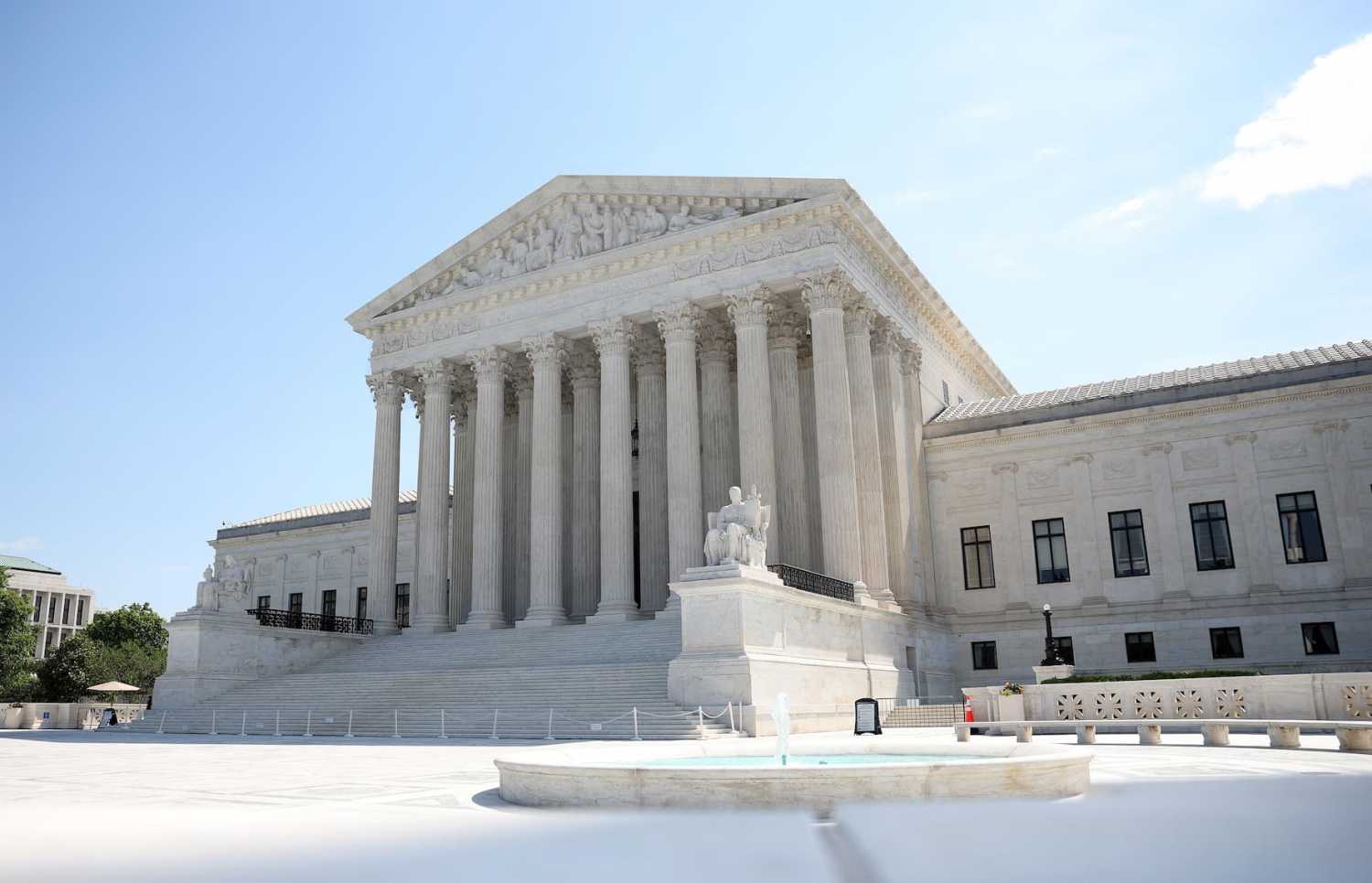
On Nov. 21, 2025, the Congressional Study Group on Foreign Relations and National Security convened virtually for a special session revisiting two topics it had previously examined that are now before the U.S. Supreme Court. In Trump v. Illinois, the court is reviewing the legality of the administration’s efforts to federalize and deploy the Illinois National Guard to support federal immigration and law enforcement efforts in Chicago. And in Learning Resources, Inc. v. Trump, the court is weighing whether President Trump may use the International Emergency Economic Powers Act (IEEPA)—a statute most commonly used to impose sanctions—to set tariffs on global imports. The session aimed to give participants a clear sense of the issues in each case, the range of possible outcomes, and the implications each may have for the broader legal and policy questions in play.
The study group was joined by two outside experts who had participated in the relevant prior sessions and who took part in a discussion led by study group coordinator Scott R. Anderson:
- Chris Mirasola, an assistant professor of law at the University of Houston Law Center and a former attorney-advisor at the U.S. Department of Defense, who joined for the discussion of domestic military deployments; and
- Peter Harrell, a visiting scholar at the Institute of International Economic Law at the Georgetown University Law Center and a former senior director for international economics and competitiveness at the National Security Council, who joined for the discussion of IEEPA tariffs.
The session was divided into two discussions, with Mirasola addressing the domestic military deployment litigation in the first half and Harrell addressing the IEEPA tariff litigation during the second.
Mirasola opened by mapping the current landscape of domestic military deployments, which he noted had shifted meaningfully since the study group’s March 2025 session on the subject. He distinguished among several categories of recent deployments: “nonconsensual” deployments over the objection of state officials (such as in Los Angeles, Portland, and Chicago), which have generally rested on 10 U.S.C. § 12406 and the executive’s asserted protective power; “consensual” deployments undertaken with state cooperation (such as in Memphis), which have relied on 32 U.S.C. § 502(f); and the distinct case of Washington, D.C., which implicates city-specific National Guard authorities alongside the protective power and Section 502(f). He observed that these efforts had met a mixed reception in the lower courts—with district courts in several jurisdictions finding the deployments unlawful, and appellate panels and en banc courts divided—before the Chicago dispute reached the Supreme Court in Trump v. Illinois.
Mirasola explained that the case before the court centers specifically on the federalization of the Guard under Section 12406, that the government had sought but not obtained an administrative stay, and that the court had taken the notable step of requesting additional briefing on the statute’s “regular forces” language. The principal questions the justices face, he suggested, include the meaning and implication of that “regular forces” language, the degree of deference owed to presidential determinations under Section 12406 in light of Martin v. Mott, and the 10th Amendment claims pressed by the state.
Looking beyond Chicago, Mirasola cautioned that the court’s decision could carry consequences for other pending deployments and for adjacent legal questions not directly before the court—including the scope of the protective power, the reach of the Posse Comitatus Act, and the availability of the Insurrection Act as an alternative basis for domestic deployment.
Harrell then turned to the tariff litigation, framing the dispute around what exactly is being challenged: the administration’s global “reciprocal” tariffs and its separate trafficking-related tariffs, both imposed under IEEPA. He explained that these actions raise several distinct questions—whether a genuine national emergency exists, whether the tariffs are responsive to that emergency, and, most centrally for the Supreme Court litigation, whether IEEPA authorizes them at all. Harrell identified three broader doctrines bearing on that authorization question: the tradition of national security deference to the executive, the nondelegation doctrine, and the major questions doctrine. He walked through the principal arguments that courts and litigants have advanced against the tariffs, including that IEEPA’s authority to “regulate” imports does not encompass the power to impose tariffs, that the statute does not generally reach revenue-generating measures, that Congress has historically used specific tariff language when it intends to delegate such authority, and that IEEPA’s legislative history suggests it was not meant to displace more specific tariff legislation, including the Trade Act of 1974. He noted that the major questions doctrine could offer the court a way to “split the baby,” potentially sustaining some tariffs while rejecting others.
Harrell then sketched what different outcomes might mean for policy: A complete administration win would leave the tariff program intact; a partial win might eliminate the global reciprocal tariffs while leaving room for narrower measures; and a significant administration loss would mean little or no IEEPA tariff authority. In that last scenario, he discussed the alternative tariff authorities the administration could turn to, how much of the current program they might replicate, and the trade-offs each would entail in terms of speed, flexibility, and procedural prerequisites.
After each discussion, the study group concluded with an open session during which attendees were free to comment on and pose questions regarding the various issues raised. As with all sessions of the study group, the discussion was conducted under the Chatham House Rule, meaning that statements made there are not for attribution without the permission of the speaker.
The Brookings Institution is committed to quality, independence, and impact.
We are supported by a diverse array of funders. In line with our values and policies, each Brookings publication represents the sole views of its author(s).