School building environments matter for student learning
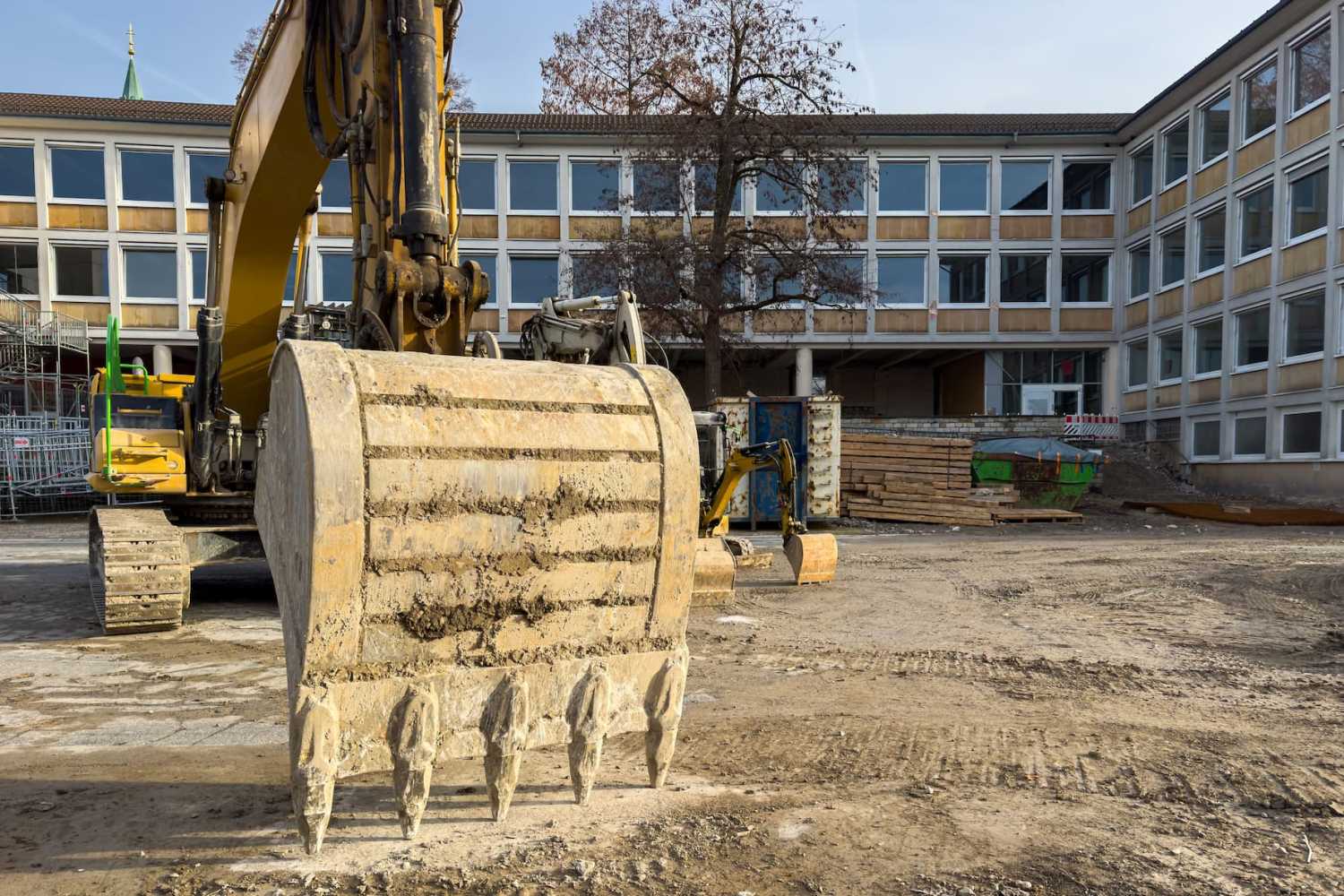
When policymakers discuss educational inequality, the conversation usually centers on teachers, curriculum, or school funding. Yet one important factor often receives far less attention: the condition of the school building itself.
The aging of the nation’s school infrastructure has brought this issue into sharper focus. According to a report from the National Center for Education Statistics (NCES), the average public school building is 49 years old. Thirty-eight percent of these buildings were constructed before 1970, and roughly one-quarter have never undergone a major renovation.
This matters more than we might realize. A growing body of evidence shows that school facilities influence student achievement, enrollment, behavior, and nearby property values. For example, one study found that elementary and middle school construction increases reading scores by 0.15 standard deviations and public school enrollment by 17% six years after construction. Another study found that deficiencies in school infrastructure are associated with a 16% higher rate of hospitalization among children with asthma. At the same time, substantial disparities persist in the quality of school facilities, suggesting that unequal access to adequate school buildings may be an important, and often overlooked, dimension of educational inequality.
New findings from New York state
We have been studying issues related to facilities in hopes of giving policymakers a more nuanced understanding of the disparities related to facilities and the factors that contribute to them. In a forthcoming study, we share evidence from New York state (setting aside New York City, which has distinct systems that are not directly comparable to the rest of the state).
For the study, we linked data from school building inspections conducted by engineers and architects with administrative education data. This allows us to assess the overall state of school building conditions, how building conditions vary across student racial and ethnic groups, and what role structural factors—such as school funding sources—play in explaining these gaps.
We find that students of color are systematically more likely than white students to attend schools with poorer physical conditions. Importantly, we find that these disparities are closely tied to how school facilities are financed. In New York state, capital projects such as new construction and renovations or repairs are primarily financed by localities (with long-term bonds and capital reserve funds). The state supplements this with building aid to cover eligible construction costs in districts with less wealth. Our findings suggest that nearly one-third of the difference in school building conditions between students of color and white students is linked to differences in local property tax revenue—and that state building aid narrows the gap in building conditions.
Most public schools in New York state are in good condition, but not all students benefit equally
Using data from more than 2,300 public schools, we examined 23 measures of school facility quality spanning three main dimensions: building aesthetics, environmental conditions, and access to health and recreational facilities.
Overall, New York’s schools perform reasonably well on many measures. More than 90% of schools received reports of clean classrooms, no excessive noise, and no vermin, while 75% have good lighting. Heating and cooling system conditions are generally adequate (94% and 88% of schools, respectively), and 92% have no mold exposure. Most schools also have access to basic health and recreational facilities: 90% have a health office, and most students have access to either playground equipment or athletic fields. These (and other) findings from the reports appear in Figure 1.
However, statewide averages mask some important disparities. Schools serving predominantly students of color consistently fare worse on measures of building quality than schools serving mostly white students. These differences appear across nearly every dimension examined. For example, schools serving mostly students of color are 15 percentage points less likely to receive a good cleanliness rating and 12 percentage points less likely to have good lighting. They are 26 percentage points less likely to have satisfactory ventilation systems and 7 percentage points more likely to report mold. They are also 19 percentage points less likely to have athletic fields and 12 percentage points less likely to have a health office. These differences matter for students. For example, improvements in overall building quality can increase academic performance. Effective ventilation can mitigate the educational and behavioral effects of heat and outdoor air pollution. Recreational facilities can support physical activity and student well-being.
The disparities become even clearer when examining student-level exposure by race and ethnicity. Hispanic students are the most likely to attend schools with poorer building conditions across virtually every measure. Black students also experience below-average facility conditions, although not to the same extent.
Property wealth continues to shape school infrastructure
How do such disparities come about? Our analysis points to one factor more than any other: differences in local property wealth. Local property tax revenue explains nearly one-third of the racial gap in overall school building conditions. An earlier study has shown that communities with stronger property tax bases can invest more in maintaining, renovating, and expanding school facilities. We find that wealthier communities also contribute more through private donations, further widening differences in school infrastructure.
At the same time, our findings offer an encouraging message for policymakers: State building aid works to offset the school condition disparities created by gaps in local property tax capacity. Without current state support for school construction and renovation, racial disparities in school building conditions would be about 17% larger. Although state building aid does not eliminate racial gaps, it plays an important equalizing role.
School infrastructure is education policy
School facilities are often treated as separate from core educational investments. This distinction warrants reconsideration. Students spend more than 1,200 hours each year in school environments, yet the quality of those physical environments is not close to being ideal or equally distributed.
The good news is that these disparities are not inevitable or unsolvable. Our findings suggest several practical steps that could help narrow infrastructure gaps. First, states and the federal government can strengthen targeted building aid for districts serving students with the greatest needs. Because state aid has the potential to offset part of facility inequalities created by local wealth, expanding these programs could significantly reduce disparities.
Second, policymakers should reconsider the heavy reliance on local property taxes to finance school capital projects. Communities with weaker tax bases face greater challenges maintaining school facilities, even when facility needs are high. A more progressive capital finance system could help ensure that school building quality depends less on where students live.
Third, states should improve transparency around school facility conditions. New York provides a strong example: Its detailed, standardized building-condition data make it possible to assess variation in infrastructure conditions across schools. Other states, including Maryland, Colorado, Rhode Island, and New Mexico, also maintain statewide school building reports or databases. Expanding this kind of regular, public reporting on building quality, environmental conditions, and recreational infrastructure would help policymakers identify schools with the greatest needs and better target investments.
Finally, infrastructure planning should prioritize improvements most likely to benefit students. Research points particularly to environmental conditions—such as ventilation, air quality, and temperature—as affecting students’ engagement and learning. This research shows that school facility investments are not merely maintenance projects. They are long-term investments in student growth.
Related Content


Authors



The Brookings Institution is committed to quality, independence, and impact.
We are supported by a diverse array of funders. In line with our values and policies, each Brookings publication represents the sole views of its author(s).