




Tony Pipa, senior fellow at the Center for Sustainable Development and host of the Reimagine Rural podcast, sits down with Kentucky Governor Andy Beshear to discuss what the governor calls the “biggest threat to rural healthcare in my lifetime.” With nearly 200 rural hospitals having closed since 2005, the stakes for rural America have never been higher. In this episode, Governor Beshear breaks down the devastating economic ripple effects of these closures, from lost jobs to reduced workforce productivity. He notes that rural hospitals are often the largest payrolls in their communities and explains why he believes new federal policy proposals could shutter 35 hospitals in Kentucky alone.
Transcript
BESHEAR: And if these hospitals close, it’s not just the hospital closing, it’ll be the local restaurant, the local coffee shop, possibly the local bank or insurance agency, because again, so much of the economy of these communities goes through that rural hospital.
[music]
PIPA: Hi, I’m Tony Pipa, and this is The Current, a part of the Brookings Podcast Network. I’m a senior fellow at the Center for Sustainable Development at the Brookings Institution and host of the reimagine Rural podcast, where I visit rural towns across America to get the story from local leaders and residents about how their towns are managing to thrive among economic and social change.
I also help lead a bipartisan effort with the American Enterprise Institute called America’s Rural Future, a commission co-chaired by former Senator Heidi Heitkamp of North Dakota and former Governor Chris Sununu of New Hampshire to develop and publish a national rural strategy in the fall of 2027.
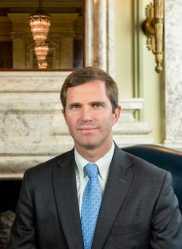
So I’m pleased to be joined today by the Honorable Andy Beshear, who’s in his second term as governor of Kentucky, to discuss the challenges and opportunities facing rural health care systems and what they mean for economic opportunity in rural places.
Governor Beshear, it’s a pleasure to have you here today..
BESHEAR: Thanks for having me on.
PIPA: Some of our listeners might not be aware of the unique challenges faced by rural health care systems. I’m originally from rural Pennsylvania, and the hospital where I was born no longer exists. And in fact, we’ve seen nearly 200 rural hospital closures since 2005.
Now, the Commonwealth of Kentucky is the tenth most rural state in the union. More than 40% of your population’s rural. And I’m sure that makes you acutely aware of what’s facing the health care systems serving those people.
[1:45]
BESHEAR: Absolutely. Rural health care is so critical, but it is challenging. You know, I believe that health care is a basic human right, and you ought to be able to see your doctor close to where you live. When you can do that, it improves our efficiency in the workforce. It means you don’t have to take as much time off. That gets your population healthier. And yes, rural health care facilities, especially rural hospitals, have great jobs.
And and I think what people don’t recognize enough is how important they are to these local economies. They are typically the largest payroll, the second largest employer. And so to any rural community that has a rural hospital it is the economic driver.
PIPA: So we’ve seen a lot of policy changes at the federal level as it relates to health care. What do those changes mean for the health care systems throughout rural Kentucky and even rural America?
[2:41]
BESHEAR: Well, if you go back in time, I believe that the ACA, especially as it allowed us to expand Medicaid, was especially helpful to rural America. You know, there’s just a larger percentage, in at least our rural areas, of folks covered by Medicaid. About half of Kentucky’s kids are covered. About 70% of our long-term care costs for our seniors are are covered. And so what that allowed us to do was to keep rural hospitals open when a lot of states that did not expand Medicaid saw them close.
But now what we see under this Trump administration is the biggest threat to rural health care in my lifetime. What I call the “big ugly bill,” he calls it something else, is going to potentially shutter or at least significantly hurt 35 rural hospitals in my state. It could result in 20,000 health care workers losing their jobs. Coverage for 200,000 Kentuckians are on the line. And that’s just the cuts in that bill.
When you amplify that by a Congress that was willing to vote “yes” to extend a tax cut for the wealthy, but vote no to extend a tax credit for health care for working Americans, it’s a double hit to to rural health care. Because if people roll off that insurance offered on the state health care exchanges, that’s even fewer dollars going to those same rural hospitals because those private insurance plans pay more, are are helpful to those hospitals.
So when you see both of those sources drying up, what we’re going to see across rural America is fewer options, people having to drive hours just to give birth. Just a real difficult challenge that our American families are going to bear the brunt of.
And if these hospitals close, it’s not just the hospital closing, it’ll be the local restaurant, the local coffee shop, possibly the local bank or insurance agency, because again, so much of the economy of these communities goes through that rural hospital.
PIPA: Yeah. I’m not sure many people realize that health care and social services are the fourth largest employer by industry in rural America. But talk a little bit also about immediate impacts on the local community about potentially a rural hospital closing. What does it mean though for sort of the future of those particular places? What does it mean for the quality of life in those places and being able to attract the kind of businesses and the kind of economy that you want to be able to sustain those communities?
[5:16]
BESHEAR: Well, I think it it hurts in in two ways. First, our people, our families are less healthy. They’re with us less time on on this earth. They may struggle more with different health care conditions because they can’t see someone close to them.
But for our economies in rural America, oh, it’s going to make us so much less efficient, because now instead of taking off two hours of work to see a doctor, you gotta take a whole day. Then if your kids need to go see a specialist, you take another day. If you have aging parents and they need to see somebody, you take a a third day.
What were minor issues of hours that a company in rural America could could otherwise handle through scheduling is now going to become really, really problematic.
And a less healthy workforce shows up to work less. They work fewer hours. They they don’t work as well. And sometimes because of of getting unhealthy, you can’t work as hard.
So I think that that that “big ugly bill” and the the failure to extend those tax credits on the ACA uh make us a less productive, less competitive America in both urban and rural settings.
PIPA: What has it meant for your state government? What what then does the responsibility fall to the state government? And how are you having to respond to this?
[6:37]
BESHEAR: No state is going to be able to make up for the damage that’s being caused by the federal government right now in full. I mean, when you look at just the the size of the the cuts in the “big ugly bill,” more than a trillion dollars that’s going into Medicaid, my entire budget is seventeen billion dollars. And so I think what you’ll see is states try to blunt the pain, but there is a lot of of pain coming.
Everything from what can we do to try to make health care a a little more affordable? What type of efforts can we make so the new red tape, having to requalify for Medicaid every six months instead of every year, knowing that these are families that already face a lot of challenges, what can we do to help them?
You then look at some new changes on the federal level where nursing scholarships are going to become less generous, not fund what’s fully needed in an area that that we have a a short fall in. Even a a crisis in in health care across the country. We’re going to look at at helping there too.
And so I think you’ll see, you know, a patchwork of different approaches across the country. We’re certainly going to step up in Kentucky. But it’s only going to serve to blunt some of the pain that’s that’s going to be felt by our people.
PIPA: Talk to me about how your state has approached the the new $50 billion available through the Rural Health Transformation Program. The deadline for states to apply just passed. Some legislators saw those funds at filling some of the gaps in the changes in Medicaid. Others see it as an investment in the future of rural health care. How do you view this program? What what is the approach that the state’s taken with that program?
[8:17]
BESHEAR: Well, we’ve applied and we’re going to compete for as many of those dollars. But I look at this program as the United States being sold a false bill of goods. When I look at what it was called, it was called a “rural hospital fund” that was going to be there to help rural hospitals that were going to get hit so hard. But that’s not what it is at all. I mean, you use the correct term. Now Dr. Oz and others are saying they’re not going to “bandaid” rural hospitals. And instead it looks like it’s going to be used more to promote, say, telehealth. And telehealth is okay for certain things, but but if you move to telehealth, you’re eliminating those jobs in in rural America. And sometimes you need to go in to be able to see your doctor or your provider face to face.
So I’m I’m concerned that these funds aren’t going to help that clinic that’s desperately needed in rural America stay open. They’re not going to be there to to help that that delivery wing on the only hospital in an hour-and-a-half to to stay open so people don’t have to drive two to three hours to give birth, stay in a hotel the last part of their third trimester.
That’s what that fund, at least they told us politically, was going to to be there for. And that’s not how the government’s going to let it be used.
PIPA: Are there particular policy mechanisms, federal or state, that you that you would suggest or see as most stabilizing for this situation, for these areas?
[9:46]
BESHEAR: Well, what I think we we really need to do is is rescind at least the parts of the “big ugly bill” on Medicaid– I’d also say on SNAP and some of the others –because there there are some policies that that we could pass that are going to help at the margins.
But what they’ve done is is taken a hatchet to both rural health care and rural economies. Because again, if you say that that telehealth will help fill some of those gaps, yes it will, it’ll help fill some of the health care gaps. But if that’s your answer to the rural hospital closing, you’re not answering the blow to the rural economy at all.
PIPA: How how can leaders best communicate the importance of these systems to a broader audience so that they really understand what’s what’s happening?
[10:32]
BESHEAR: Well, not all these cuts are going to happen at the same time, but let me say, they’re also not going to wait until 2027 to start implementing them. Every health care system I’ve talked to says that they’re going to have to start making these cuts now and and over the next year.
But some people might not notice them because it’s one practice shutting down here, another line of service shutting down there. I think as leaders, we’ve got to communicate these across the country, and how they’re happening, and what it means that the future looks like.
Certainly in Louisville the U of L hospital system was creating a new birthing center in an area of of Jefferson County, our largest county that doesn’t have one, where you have to go 45 plus minutes. It was something that was needed. But they had to put that on hold and then even cancel it because of the “big ugly bill.”
In in Virginia, in that governor’s race, Governor-Elect Spanberger I thought talked powerfully about two rural hospitals that shut down after this news. I still remember the day they passed it. I was at a a a baseball showcase with my son. And there was a nurse there watching her son who worked at an eastern Kentucky clinic that was 100% Medicaid. And they’d already received an email that said that if they passed the bill, they were shutting down.
We’ve gotta tell these real stories and the impact on them. But we’ve also gotta make sure that we have messengers, real Americans, that are impacted by these cuts that can tell their story authentically.
PIPA: Well, governor, I really appreciate you spending the time with us today talking about these important issues. I did an episode for the Reimagine Rural podcast this summer that talked about just how those rural hospitals are an economic anchor. And I think it’s really important that we understand the interdependencies in those local economies and the part that health care plays. So I really appreciate you coming on and giving us the perspective from Kentucky.
BESHEAR: No, I appreciate you because when something threatens the largest payroll in a community, the second largest employer in the community after the public school, then it’s bad policy and you shouldn’t do it.
[music]
PIPA: Thanks very much.
BESHEAR: Thank you.
PIPA: To learn more about Brookings research on health policy, visit our website, Brookings dot edu where you can also find and listen to my podcast, Reimagine Rural.
Participants

More information:
- Listen to The Current on Apple, Spotify, YouTube, or wherever you like to get podcasts.
- Learn about other Brookings podcasts from the Brookings Podcast Network.
- Sign up for the podcasts newsletter for occasional updates on featured episodes and new shows.
- Send feedback email to [email protected].
The Brookings Institution is committed to quality, independence, and impact.
We are supported by a diverse array of funders. In line with our values and policies, each Brookings publication represents the sole views of its author(s).


Commentary
PodcastGov. Andy Beshear: How health care powers rural economies
Listen on
The Brookings Current
December 19, 2025