Executive Summary1
For adolescent girls living in highly marginalized contexts, agency is part of an everyday struggle. Girls make decisions about their lives while navigating social structures, norms, and systems. Yet the agency of girls and young women living in marginalized contexts is often misunderstood, unrecognized, underdeveloped, and/or actively stifled, making it vital that efforts to promote agency in marginalized contexts start with girls themselves.
The current report shares the results of participatory, collaborative, and action-oriented research conducted by members of the Learning and Action Alliance for Girls’ Agency (LAAGA) with girls who are out of school in Yar Gaya and Nassarawa GRA in Kano state and Iseyin in Oyo. We outline the context of these communities, describe our girl-centered methodological approach, share what we have learned with girls, and propose priorities and strategies to mobilize actors to transform systems with and for girls’ agency.
Agency was generally defined by the girls in Kano and Oyo as the ability to make decisions about their lives, particularly in relation to education, work, and marriage, within social and economic constraints. Girls associated agency with being respected, being able to stay in school, and having some control over their future paths. The expression of agency was dynamic and contextual, shaped by interacting individual, relational, and systemic factors.
- At the individual level: Financial autonomy was foundational for girls in Oyo state, and skills and beliefs such as critical thinking, communication, interpersonal skills, confidence, and commitment reinforced agency. Across all communities, spirituality sustained girls in pursuit of their goals amid adversity.
- At the relational level: Family was the most visible shaper of girls’ agency, both as a support and sometimes a constraint on girls’ life choices. Women—mothers, sisters, peers, and mentors—were pivotal to expanding space and possibility for girls, and safe and reflective spaces served as key catalysts for girls’ ability to dream, decide, and take action.
- At the systems level: Girls reported that systemic factors largely constrained the exercise of their agency, especially those that excluded girls from formal education. Poverty was a limitation not only for girls but also for families and schools looking to support them. Entrenched patriarchal norms were seen to structure decisionmaking and restrict opportunity. Finally, early pregnancy was identified as a system-produced barrier to girls’ agency.
It is key that efforts to promote girls’ agency with and for girls who are out of school in Kano and Oyo states, and similar contexts in Nigeria (and globally), take an (eco)systemic approach, working with girls, their peers, and the key adults around them to strengthen their shared ability to co-construct aspirations, make expansive decisions, and take strategic action in their lives and the lives of their communities. At a minimum, this means:
- Girls strengthening skills, knowledge, beliefs, and leadership for agency.
- Families strengthening skills, knowledge, beliefs, and practices for co-agency with girls.
- Educators, community, religious, and business leaders, and program implementers strengthening skills and practices to be girls’ agency champions and build networks for girls’ agency.
- National and local policymakers and authorities working to ensure flexible and relevant educational pathways, economic livelihoods, and equitable gender norms.
- Global researchers and funders promoting girl-centered approaches to research, programming, and policy that incorporate individual, relational, and systemic components of agency.
Achieving this will require collaboration and coordinated efforts across diverse local and global education systems. We all have something to learn (and do) to more effectively engage adolescent girls in marginalized contexts, strengthen their agency to resist exclusion, and work together toward more equitable societies.
Authors



Related Content
-
Acknowledgements and disclosures
We would like to express our gratitude first to the girls, families, and community members in Iseyin, Yar Gaya, and Nassarawa GRA for their deep engagement and ongoing participation with this project and for their permission to share their stories. Many thanks to Isa Walis for her ongoing collaboration, to Judith-Ann Walker for connecting us to key actors in Kano, and to our colleagues at LAAGA for their thought partnership throughout. Our deepest appreciation also goes to community leader Chief Awojobi and the members of the Iseyin Girls Support Committee.
This work would not be possible without the efforts of our research team and field enumerators—Favour Suberu, Idara Daniels, Oyinkansola Adekoya, and Olaide Falet—and our local translator, Opeyemi Oyewusi. Special appreciation to our peer reviewers, Modupe Olateju and Linice Sanga, and to Rebecca Winthrop as editor. Finally, we are deeply indebted to our colleagues at the Brookings Institution for their support in the design and implementation of this research, especially Atenea Rosa- do-Viurques, Anya Kasubhai, and Nica Basuel.
The Brookings Institution is a nonprofit organization devoted to independent research and policy solutions. Its mission is to conduct high-quality, independent research and, based on that research, to provide innovative, practical recommendations for policymakers and the public. The conclusions and recommendations of any Brookings publication are solely those of its author(s) and do not reflect the views of the Institution, its management, or its other scholars.
Brookings gratefully acknowledges the support provided by Echidna Giving, Stone Family Foundation, and the LEGO Foundation.
Brookings recognizes that the value it provides is in its commitment to quality, independence, and impact. Activities supported by its donors reflect this commitment.
A NOTE ON THE USE OF PHOTOS
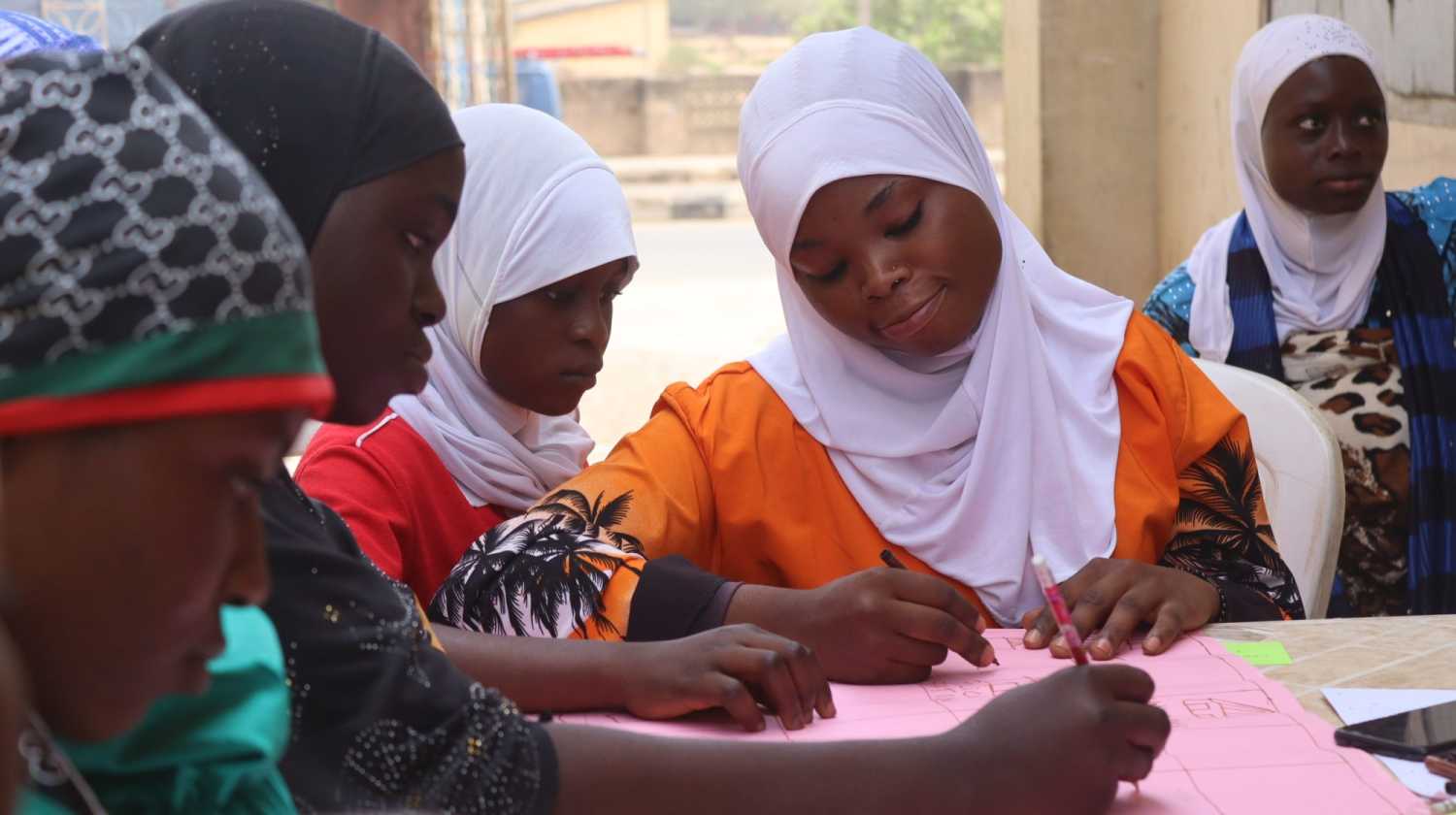
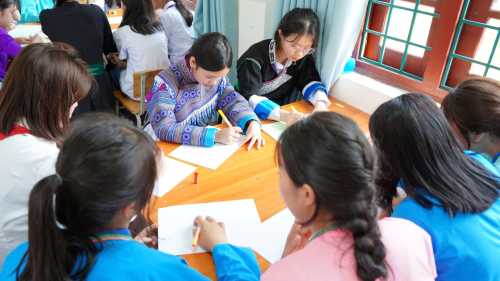
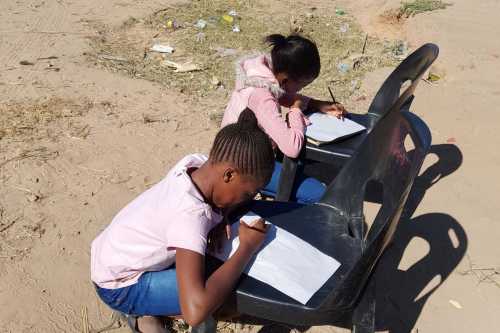
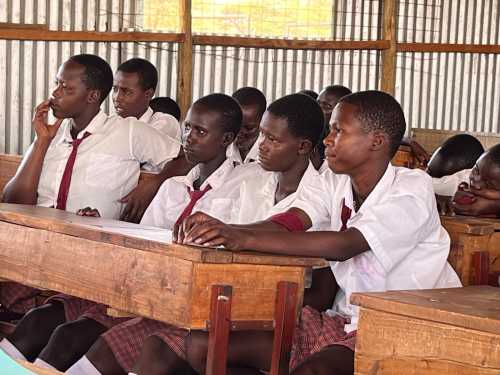
In keeping with LAAGA’s ethical standards, girls were invited to participate in the public sharing of this research in ways that felt comfortable to them. Photos used in this brief reflect girls’ interest and assent (as well as consent of their guardians) to be part of the sharing of the lessons on girls’ agency they have co-constructed.
-
Footnotes
- This report is part of a series of LAAGA research with girls in communities across eight countries. As such, parts of the executive summary and introduction, as well as the “why explore agency” and “concluding remarks” sections of this report are common across LAAGA’s 2026 case reports and have been adapted from LAAGA case reports originally published in Kinyanjui et al., 2025; Mhongera et al., 2025; Siddiqa and Rosado-Viurques, 2025; and Tran and O’Donoghue, 2025.
The Brookings Institution is committed to quality, independence, and impact.
We are supported by a diverse array of funders. In line with our values and policies, each Brookings publication represents the sole views of its author(s).