I remember my father asking me, when I was only six years old, “What do you want to be when you grow up?” It was a simple question, but one that sparked my curiosity about the possibilities ahead of me. Years later, through my work with One Girl Can (OGC), I came to see how much it matters for young people to have the information, support, and exposure they need to answer that question.
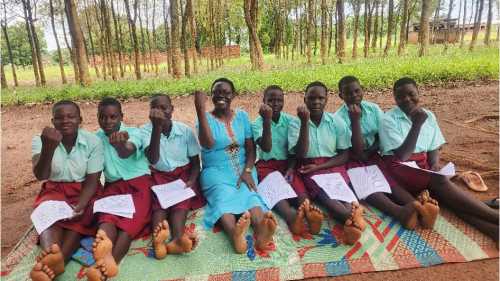
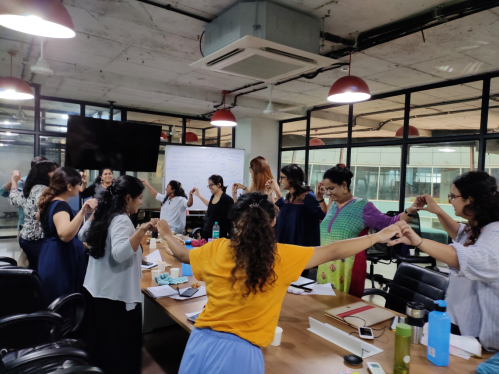
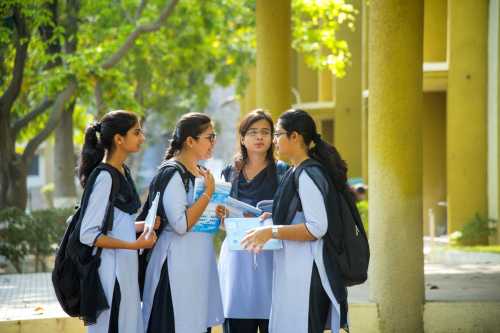
I grew up in Kenya and attended St. Theresa Mbooni Girls’ Secondary School in Makueni County. Years later, I returned to the same school in a very different role. Through OGC, I became part of efforts to support girls in this and other secondary schools to think more intentionally about their futures. Through mentorship workshops in 11 partner schools across Kenya, OGC mentors worked with girls to explore career paths, consider possibilities beyond those traditionally associated with women, and challenge gender stereotypes about what they could study, become, and contribute to.
I saw how powerful this kind of mentoring could be.
A conversation with a mentor could introduce a girl to a career she had never considered. Meeting a woman working in a male-dominated field could make a previously unimaginable pathway feel possible. Having someone ask about her interests, strengths, and ambitions could give her permission to think beyond the expectations around her.
At One Girl Can, this shift in what girls saw as possible was reflected in the pathways many scholarship recipients pursued. Almost 80% of OGC university scholarship recipients study STEM-related fields. For me, this pointed to what can happen when girls have access to information, encouragement, mentorship, and role models that challenge traditional gender expectations.
But that work also left me with more questions.
What happens to young people who do not have access to these opportunities? What happens to those whose schools cannot help them understand the different pathways available after secondary school? What about a young person in a rural community with limited exposure to universities, colleges, technical and vocational education and training (TVET) institutions, or the changing world of work?
These questions matter because the transition from school to what comes next is not always straightforward. Across Africa, more than 72 million young people are not in employment, education, or training, and two-thirds of them are young women.
Part of the challenge begins with what young people are able to imagine for themselves.
Young people’s career aspirations often remain concentrated in a narrow range of traditional occupations, while according to OECD survey data, two in five 15-year-olds report having no clear career plans. Gender norms and stereotypes can further shape aspirations and opportunities, influencing what subjects, careers, and futures girls and boys perceive as appropriate or attainable.
There is also a gap between aspirations and labor-market realities. Across ten African countries, an OECD analysis found substantial mismatches between young people’s aspirations and available jobs. The response, in my view, is not to lower aspirations but to provide better information about emerging opportunities and the skills different pathways require.
This gap between aspiration and information is where career guidance matters.
The decisions facing young people after secondary school are significant: university, TVET, employment, entrepreneurship, or another pathway. Gender, socioeconomic circumstances, and where a young person grows up can shape the opportunities they can see, access, and pursue. Rural youth may have less exposure to career information, networks, role models, and institutions than their urban peers.
My experience at One Girl Can made me increasingly interested in what happens between the classroom and the world beyond it. Are young people receiving the information they need? Are girls and boys equally encouraged to explore different possibilities? And are schools equipped to provide guidance that responds to the changing world of work?
These are questions I am now exploring as an Echidna Global Scholar at the Brookings Institution.
Kenya has provided career guidance and counseling within its education system for several decades, with efforts to strengthen these services through initiatives such as the 2014 Career Guidance Handbook and the 2023 National Policy Framework for Career Guidance in Kenya. Yet a gap remains between policy and practice. The 2023 policy highlights challenges including weak provision, limited professionalization, changing education and labor markets, and difficult school-to-work transitions.
Against this backdrop, my research examines how Kenya can strengthen its existing career guidance systems to support more equitable school-to-work transitions for rural youth, with particular attention to making these systems more gender-responsive.
Again, I keep coming back to that simple question my father asked me when I was six: What do you want to be when you grow up?
Perhaps the more important question is whether we are giving every young person a genuine opportunity to answer it.
Author
Related Content
The Brookings Institution is committed to quality, independence, and impact.
We are supported by a diverse array of funders. In line with our values and policies, each Brookings publication represents the sole views of its author(s).
Commentary
A simple question, a harder answer: Career guidance and rural youth in Kenya
September 18, 2026