In 2016, Nigerian American activist Ayọ (formerly Opal) Tometi appeared before the United Nations to address state-sanctioned violence. Only three years prior, Tometi had joined forces with queer activists Alicia Garza and Patrisse Cullors to launch Black Lives Matter (BLM). What began as a hashtag on social media evolved into a protest movement that shook the nation to its core. BLM gained national and global attention after the 2014 police shooting of teenager Michael Brown Jr., in Ferguson, Missouri, when the world demanded justice for Brown’s family and unarmed Black people who were killed by police. By spring 2015, BLM marches and demonstrations began to sweep across European cities, including London, Paris, Amsterdam, and Berlin. Within a few months, the movement boasted an estimated 26 chapters across the globe.
As one of the founders of the movement, Tometi had been invited to offer remarks at the UN General Assembly in July 2016. To confront the persistent problems of structural racism and discrimination, the UN had organized a two-day meeting that brought together influential leaders from around the world. Tometi’s presence at the UN underscores BLM’s central role in shaping national and global narratives on human rights in the 21st century. As she and other BLM activists had argued, state-sanctioned violence was an ongoing human rights crisis that required an international response. The global problem of white supremacy, she explained at the UN, is “deeply embedded into social and cultural fabrics throughout society and spread through media and entertainment, education, and other systems.” She called on human rights defenders all over the world to advocate for the expansion of rights for all people—and especially members of marginalized groups who bore the brunt of economic and racial inequality.
By linking national concerns to global ones and calling for a broad vision of rights and freedom, Tometi was building on a rich intellectual tradition of Black women who came before her. For centuries, Black women in the United States have been at the forefront of national movements to expand civil and human rights. Even before they were recognized as citizens of the United States, women such as Maria W. Stewart, Frances Ellen Watkins Harper, and Ida B. Wells challenged injustice in their communities and beyond—and they utilized diverse strategies to fight for the rights and dignity of all people. Their efforts paved the way for a new generation of Black women activists who employed multiple strategies—such as community-based activism, mass lobbying, public protest, and international appeal—aimed at dismantling systems of oppression.
Such was the case for Black American lobbyist Aretha B. McKinley. Although she is not often remembered in American history, her impact as a lobbyist and human rights activist has undoubtedly left its mark. McKinley was an advocate for the rights of Black Americans and other marginalized groups during the 1960s. While she was born and raised in Virginia, the majority of her early work for social and political engagement was in New York City. She then moved to Harlem in the 1930s, becoming an active member in Alpha Kappa Alpha (AKA) Sorority, Inc. During the late 1940s, she became involved in the Consumers’ Protection Committee (CPC), an organization established in 1947 to challenge discriminatory pricing schemes in Black communities—especially the high prices that Harlem stores charged for poor-quality goods. McKinley’s involvement in the committee brought her into contact with a group of like-minded Black women, such as community leaders Irma Wilson and Aloncita Johnson Flood.
As I note in my latest book, McKinley strengthened her political networks as she also thrust herself into the work of improving social conditions for Black people. In 1949, she was elected recording secretary for the New York chapter of the NAACP and later headed its National Emergency Civil Rights Mobilization where she worked to promote civil rights legislation. By the late 1950s, McKinley worked to galvanize Black women across the country with a focus on challenging segregation, unfair labor practices, and unequal housing.
In 1959, McKinley became the first woman elected to serve as national director of the American Council on Human Rights, the lobbying arm of several Black Greek-letter organizations. Through the council, she publicly advocated for the importance of protecting and defending the rights and freedom of all people. Under her leadership, the group hosted community workshops on topics such as leadership, voting, health, housing, and employment. During a time when Black people were disenfranchised by white supremacist violence, poll taxes, literacy tests, and other discriminatory tactics, McKinley implored Black Americans to resist at every turn.
As McKinley explained in a 1960 press conference:
If something is not done now, millions of intelligent voters will be denied the privilege of casting their ballots …This is not a party issue; it is a national issue. The denied vote cuts across party lines, and it is about time something was done about it.
In a subsequent speech, she called on all Americans to “promote the supreme worth of every human being; to defend and promote the dignity of man; to defend and promote the use of democratic method in all human relationships.” Like Maria W. Stewart, Ida B. Wells and other Black women more than a century earlier, McKinley pointed to the reality that the fight for expanded rights on American soil was only part of a larger struggle to secure “a world of peace, freedom, and justice.”
In later years, many other Black women in the United States echoed McKinley’s arguments. From grassroots organizers such as LaTosha Brown of Black Voters Matter to public officials such as Stacey Abrams of Fair Fight Action and Congresswoman Ayanna Pressley, Black women have consistently advocated for the expansion of rights and freedoms, calling on Americans to recognize the dignity and humanity of all people. Beyond rhetoric, these women have also been at the forefront of shaping public policy. Pressley, for example, has been a vocal advocate for the John Lewis Voting Rights Advancement Act and frequently frames voting rights as both a sacred democratic principle and a human rights issue.
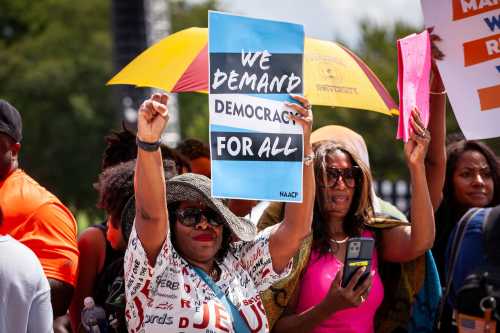
Amid escalating attacks on voting rights, deepening economic inequality, and rising white supremacist violence in the United States and across the globe, policymakers must pursue strategies that underscore the profound interconnection between the struggles for civil rights and human rights. Such efforts could include the creation of a centralized domestic human rights monitoring system, potentially in collaboration with the UN, that would enable local communities and grassroots organizations to document and report racial injustices linked to international human rights obligations.
Additional initiatives, including the establishment of a federally funded transnational Black women’s policy network, could strengthen alliances among policymakers and activists in the United States and abroad who, despite working in different political and cultural contexts, confront many of the same challenges, including state-sanctioned violence, economic injustice, and racial inequality.
Although securing these protections remains especially difficult in the current national and global political climate, the struggle is no less urgent today than it was in decades past. Building on the legacies of generations of Black women who came before, this work continues toward what Aretha B. McKinley argued in 1960 was “a world of peace, freedom, and justice.”
Related Content
2026
Author
-
Acknowledgements and disclosures
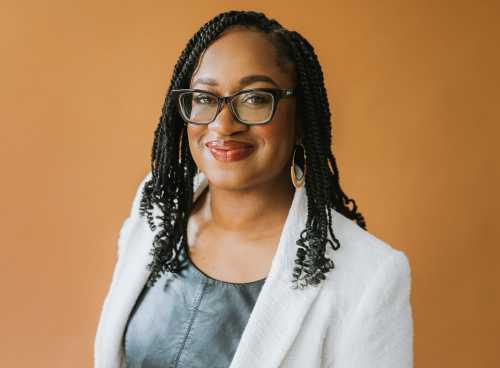
Keisha N. Blain is a renowned historian of the 20th century United States with broad interests and specializations in African American History, the modern African Diaspora, and Women’s and Gender Studies. She is a Professor of Africana Studies and History at Brown University. Blain is the author and editor of eight books, including Set the World on Fire: Black Nationalist Women and the Global Struggle for Freedom (2018); and Without Fear: Black Women and the Making of Human Rights (2025).
The Brookings Institution is committed to quality, independence, and impact.
We are supported by a diverse array of funders. In line with our values and policies, each Brookings publication represents the sole views of its author(s).


Commentary
Black women and their legacies of civil and human rights activism
June 29, 2026