



What does Beijing really want from the war in Iran, and what do Washington and Tehran want from China? On this episode of The Beijing Brief, Jon Czin speaks with co-host Ryan Hass and experts Suzanne Maloney and Mara Karlin about the triangular interplay among the United States, China, and Iran. They explore China-Iran relations, Beijing’s role in regional dynamics, and Washington’s strategic positioning vis-à-vis China considering the conflict.
- Listen to The Beijing Brief on Apple, Spotify, or wherever you like to get podcasts.
- Watch episodes on YouTube.
- Learn about other Brookings podcasts from the Brookings Podcast Network.
- Sign up for the podcasts newsletter for occasional updates on featured episodes and new shows.
- Send feedback email to [email protected].
Transcript
[music]
CZIN: Hello, you’re listening to The Beijing Brief from the John L. Thornton China Center at Brookings, part of the Brookings Podcast Network. I’m Jon Czin, a fellow in the China Center and co-host of The Beijing Brief a biweekly podcast focused on unpacking the forces shaping U.S.-China relations and China’s political, economic, and technological ambitions.
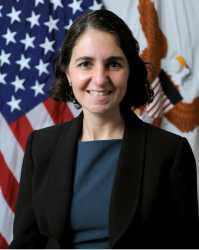
Today, I’m delighted to be joined by a couple of our colleagues from the Foreign Policy Program. We have Suzanne Maloney joining us. Suzanne is the vice president and director of Foreign Policy at Brookings, as well as one of the world’s preeminent scholars of Iran. So Suzanne, thank you very much for joining us today.
MALONEY: Glad to be here.
CZIN: And we are also joined by our wonderful colleague, Mara Karlin, who’s a distinguished visiting fellow here at Brookings, as well as a professor of practice at Johns Hopkins SAIS. So, Mara, thanks for joining us.
KARLIN: Thanks for having me.
[0:47]
CZIN: And of course, my co-host, Ryan Hass, is here with us today. We have turned the tables on him this time, though, and he will now be the subject of this inquisition rather than doing the interrogation himself. So, you know, I’m experiencing a little Schadenfreude today.
So I think as many of our viewers will know this is a dynamic time in the Middle East and for for China. And just to set the stage, after U.S. and Israeli strikes on Iran starting in February, Tehran launched retaliatory attacks across the region and shut down the Strait of Hormuz. Beijing so far has taken a largely cautious, on-the-sidelines approach until the April 8th ceasefire when China reportedly pushed Iran to the negotiating table at the last minute.
More recently, President Trump is saying that President Xi will give him, quote, “a big, fat bear hug” over opening the Strait of Hormuz, which is quite a prognostication and quite an image for all of us, I think. The news on this issue is changing constantly, and just for full disclosure, we are recording on April 30th, so if the news does not change by the time you listen to this, I will frankly be shocked.
So what we really want to do today is take a step back from the immediate and urgent dynamics in the region that are going on and take a step back and look at the broader strategic picture, especially since this is a China focused podcast, and really get a handle on the interplay in this triangular relationship among Beijing, Tehran, and Washington in this moment. And I think where we want to start the conversation is by exploring the bilateral dynamics that are embedded in this. How is each side viewing one another?
So Suzanne, if we could start with you, how important is China to Iran and its interests? And given the relationship that has been such a talk of the town here in Washington, is Iran getting what it would hope for or expect from in its relationship with Beijing?
[2:28]
MALONEY: Well, I think that’s a great question. And there are a variety of interpretations of how important Iran is to China and how important China is to Iran. But I think, for the Iranians, this has been a relationship they’ve been investing in for decades. This has been critical to their reconstruction after the Iran-Iraq war.
And most importantly, over the course of the past several years, it has been their lifeline for their economy as the Trump administration, during the first term, walked away from the Iran nuclear deal, reimposed maximum pressure sanctions that effectively cut Iran off from the international financial system. That made it difficult for Iran to accept payment for its oil exports and even to transport, ship, and process those oil exports.
And so China, with a kind of multiplicity of small teapot refineries, became the preferred destination for most of Iran’s oil, and that has really kept the Iranian economy afloat.
I think that, you know, there have been more expansive descriptions of the Tehran-Beijing relationship, and probably more expansive ambitions from the Iranian side. Several years ago, there was a glorious strategic partnership signed between the two countries that promised something in the order of $400 billion of trade and investment. I don’t think anything like that, maybe 1% or 2% of that, has actually been achieved.
And yet the fact that the Iranians have been able to stay afloat economically during this really difficult time, I think is an indication that it is still a crucial relationship for them. There’s a lot that the two countries share in terms of an outlook, a a kind of emphasis on self-reliance, resentment of American pressure and American sanctions.
And so, while as I’m sure we’ll discuss, Iran is not the only country in the region that the Chinese care about and are invested in. For the Iranians, this is still fairly important.
[4:21]
KARLIN: You know, if I could build on this. You’ll recall in Washington about two years or so ago everyone was obsessing over how our adversaries were aligning: China, Russia, Iran, and a smidge of North Korea. And I think what’s been so interesting here is, yes, the Chinese have been helpful to some extent, but there’s a ceiling on that assistance. The Russians as well, and there’s a ceiling on that.
And especially when we look at America’s relationship with its allies, which has gotten even sportier through this conflict, and these are allies usually who’d be willing, frankly, to fight and die for American national security interests, you in no way see Beijing or Moscow doing that for Tehran.
[5:03]
CZIN: Yeah, I think that’s right. And I think that’s a great segue to the question I wanted to ask you, Ryan, about how does Beijing see this. You know, where does Iran fit into its constellation of partnerships? Just to tip my own hand, it feels like, based on your comment, Suzanne, and my own thinking about this, like so many of China’s relationships, it’s extremely asymmetrical, right, where China might be very important to country X or have an outside trade relationship with them, but they might not be as important to Beijing. What’s your sense though?
[5:29]
HASS: Well, I largely agree, but I’m still sort of struggling to get the thought of Xi Jinping and Donald Trump hugging each other out of my mind. The only leader that I can think of that has hugged Xi Jinping is Narendra Modi from India. So if Donald Trump pulls it off, my hat’s off to him.
But to to answer your question, I think that from China’s perspective, Iran is a mid-tier partner. If you look at sort of the chronology, the language that they use to describe their partnerships, Iran fits roughly alongside the UAE and Saudi Arabia in terms of the status of partnership that it has.
I would also note that it’s been since 2016 that Xi Jinping has traveled to Iran, which places Iran far behind just about every other neighbor that China has or near neighbor. There is no real affinity personally between Iran’s leadership and China’s leadership. There’s no ideological affinity between the two of them either.
And I think it’s worth observing that when the Iran supreme leader was killed at the start of this conflict, it took two days for China to respond. There wasn’t any massive outpouring of grief. They sent a vice minister to the Iranian embassy to sign a condolence book.
And so I think that that sort of gives us a bit of a a context and flavor for the lack of emotion that exists in this relationship. It’s a very unsentimental relationship from from China’s perspective.
[6:38]
CZIN: You know, and Suzanne, I want to come back to you too, because I’m very mindful of the fact that this is not the only relationship that Beijing has in the region. And you alluded to this in your opening comments. So can we talk a little bit about Beijing’s other relationships in the region, especially with the Gulf States that have been such a focal point in this particular conflict?
[6:54]
MALONEY: Yeah, I think, you know, for any investor–and I I believe that the Chinese probably look at the region, both from a strategic point of view, but also from an investment point of view–the better bet is on the Arab side of the Gulf. And that is clearly where Xi Jinping has invested both his time and where we see the real build out of relationship.
You’ll recall when we were out in Dubai back in November, what was striking to me was just the degree of Chinese presence there. It’s it’s marked at this point in time, and there’s an enormous amount of trade and investment, and particularly around tech. This is, I think, a critical component.
So, you know, Iran is an interest for the Chinese. I think there’s probably some preference to see this war end sooner rather than later, because while the Chinese have been able to withstand the closure of the strait, you know, it highlights a vulnerability and it will put pressure, I think, on the broader global economy, which will have implications for the Chinese. The real important interest, I think, is in expanding the relationships with Riyadh, Abu Dhabi, Dubai, and Doha.
[7:54]
CZIN: Does that track with your assessment, Ryan?
[7:55]
HASS: Absolutely. I completely agree.
CZIN: I think that’s right. I think that’s kind of gotten lost in the conversation because there has been so much focus on this kind of new axis of evil or whatever you want to call it. Right?
That, like, from my perspective, this is very different from the Russia-Ukraine conflict, right, where China’s clearly much more invested in that relationship with Moscow than it is in its relations with Europe, even though they have a lot at stake economically in in Europe.
From my perspective, I think it’s just the opposite almost in this conflict, where their balance of interest is really more with, like you said, Suzanne, with the Gulf States than it is with Iran. So I think that’s kind of an important important corrective in I think what people are now calling a narrative violation here in Washington. Right? Like, this kind of cuts across the the conventional wisdom. And I think it’s an important point to make for our listeners.
In terms of how we see China playing a role in this, I feel like we’re getting conflicting signals in some of the press reporting. There’s both the talk about the role China may have played as a potential peacemaker in this, potentially nudging the initial ceasefire across the line. But then we see these episodic reports, too, about the kind of support that China is providing to to Iran. Right? A lot of it’s dual use, military technology, they do have that longstanding defense relationship.
So, Mara, let’s go back to this conversation about that China-Iran nexus and how it looks from Washington. How do you see the administration’s perspective on this evolving? Right? Are they primarily focused on seeing China’s potentially constructive and, you know, this will be the the focal point of their bear hug, or is there more consternations? Because I feel like we get conflicting signals from the administration. Right? You have that on the one hand at the same time that Trump’s own Treasury department is imposing new sanctions on China for its nexus with Iran.
[9:31]
KARLIN: Look, I think a decade or so ago, there was a lot of debate about what role China would play in the region, especially as the U.S. was trying to somewhat downgrade, not terribly successfully, its involvement in the Middle East.
And what’s been sort of fascinating to see is that China just hasn’t set the agenda in the region, even in areas or in moments where the U.S. has not kind of had this robust role. Frankly, I haven’t heard a whole lot of folks saying, But what does Beijing want? And what should we do based on Beijing? And how are they convening us, et cetera?
You get these really episodic kind of events where they’ll talk about it or they’ll say a thing, but they are not setting the agenda in the region. And frankly, they could be. I mean, they could be a whole lot more involved and they’ve chosen not to, which I find really fascinating. I defer to the China experts on why that is.
Turning to the next piece of your question on the Trump administration, I mean, frankly, I think they’ve been pretty clear that countering China is not their priority. You see this in their National Security strategy, which highlights China as an economic threat, but not as a meaningful security one. You see this in their National Defense Strategy, which really prioritize challenges coming from the Western hemisphere.
And this is notable, not least because the last Trump administration very much elevated China and great power competition as a concern. So I think if you had to do a tally sheet on the whole, you would see a lot more efforts to cooperate with and hug China than you would to actually meaningfully compete China, particularly on the security front.
[11:02]
CZIN: It’s really interesting. Ryan, I’d love to get your take on both those questions, right, why is Beijing not stepping in, number one, to to fill the vacuum? And number two, how the Trump administration is seeing China, especially in the context of the Middle East?
[11:15]
HASS: Well, within the halls of Brookings, there has been a bit of a debate about how China is approaching the situation in Iran. And I think from the grand strategist viewpoint, there is, as Mara was saying, this question, why isn’t China being more proactive, engaging, seizing any opportunity for leadership?
But I think from the China watching view, I think it’s pretty straightforward. Number one, they don’t see the Middle East as a prize be coveted. In fact, they see the misadventures that the United States has undertaken over the last couple of decades as a cautionary tale against overextending in a non-central, non-core region to their overall interest.
But secondly, I think that the Chinese just have a different theory of the case for how to accumulate power and influence on the world stage. They’re not seeking out Kissengerian gambits to, you know, to shock the world and take on initiative. They have a long-term, patient, steady approach that is premised upon the notion that centrality and supply chains, and technological and innovation dominance will serve as sources of attraction and magnetism to pull countries closer to them over time.
And so from that vantage point, they are proceeding according to plan, and they’re not going to get knocked off course by what’s happening in in the Gulf.
On the U.S. side of the equation, I mean, I very much agree with what Mara said, I think there is a tension within the Trump administration, within Washington, D.C. There are plenty of people in Washington who sort of want to take it to the Chinese for providing this dual use or or some types of support to Iran. But the president doesn’t seem to be bought into that. The president seems very committed to wanting to keep things on a steady track, particularly as he prepares to travel to Beijing later this month. And between now and the president’s trip to Beijing in May, I think that we’ll stay on that course.
[12:51]
CZIN: Yeah. And adjacent to that, as we talked about in an earlier episode, right, there’s also this school of thought from people adjacent to the administration that what we’ve done with Iran and also with Venezuela is somehow designed to box China in. Right? That we’re picking off their partners one by one. And I know in the China community, there’s a fair bit of skepticism about that argument. But curious to hear your take.
[13:10]
KARLIN: I’m similarly skeptical, both as someone who thinks about strategy and defense, and also someone who thinks about the Middle East. I mean, frankly, it would seem to me what the U.S. has demonstrated in its alleged efforts to box in China is that it can, in a very ad hoc way, for a period of time, change what’s happening vis-a-vis a country. But not even necessarily meaningfully, and definitely not necessarily in line with U.S. national security interests.
So, you know, with the Venezuela case study, while the U.S. military is operationally so extraordinary, it took out one individual. It did not change a regime. Obviously, when we see what’s happened in the Middle East, and even just looking beyond the region and how much radioactivity it has introduced, which was already not butterflies and unicorns, but into our relationships with our European allies in particular, and a lot of our our partners and allies in Asia as well, I I think fundamentally it shows China, it would seem to me that, yes, the U.S. military can project power. It can go just about anywhere at any time in a way that no other military can in the world. And also it’s not entirely clear it can achieve U.S. national security interests.
[14:19]
CZIN: Hmm. That’s really, that’s really quite striking. Suzanne?
[14:22]
MALONEY: I would just jump in on that and say, you know, I think one of the takeaways from this entire campaign is that the U.S. has exquisite intelligence and targeting capabilities, but that does not necessarily achieve strategic outcomes. And that would have to be one lesson that the Chinese are taking from this.
In terms of how the debate is playing out in Washington, I think what’s been interesting for me is to hear, especially as it appears that the war has not been as successful as the president anticipated, and certainly not on the timeline that he anticipated, that there is a bit of a shift in some of the justification, maybe not from the administration itself, but from those who are very supportive in the administration and of the war.
And so what I’ve begun to hear in recent weeks is an argument that the campaign was not focused on regime change, it was not focused even just on degrading Iran’s military capabilities, but it was focused on essentially weakening the kind of CRINK, the axis of authoritarians.
I’m not really sure the argument holds, but I do think that we’re seeing this kind of shifting narrative away from the, you know, sort of intangible benefits of some kind of change in the Iranian government to posit Iran as part of a larger effort to ensure U.S. strategic dominance around the world.
[15:37]
CZIN: Yeah. That’s a really interesting point. And I I I’ve kind of had the same sense, too, that some of this is retconning a rationale onto events as they develop. Right? It reminds me of that famous quip from Ben Franklin that it’s a wonderful thing to be a reasonable creature, because then you can find a reason for whatever it is you want to do. Right? And so that seems very much in that vein.
But that, that also gets to a point I wanted to to lift up from Ryan’s comments, too, about how Beijing is viewing all this. Because one of the things that’s been striking to me, and I want to be a little provocative here, is that, you know, the Middle East role in international relations it seems to me has changed over time. Like, this is not the the Middle East of an earlier generation where it was the locus of great power competition, right, where you have Henry Kissinger, again to allude to him, shuttling around doing that kind of diplomacy. Because this was the potential flashpoint, like back in the ‘70s where two great powers kind of brush up against each other, or even a decade ago, right, during the Obama administration with the interventions in Syria where the two powers are going to really brush up against each other.
That seems to have really changed. And I think from the Chinese perspective, from, you know, our own conversations with the Chinese and my reading of Chinese analysts, they certainly see it that way. But I’m curious to hear your sense. I mean, it’s obviously, as we’ve seen, extremely important in a lot of ways, especially for for supply chains, but has the Middle East’s overall importance, especially in the context of great power competition, really shifted over time?
[16:55]
KARLIN: Well, look, you do have the challenge that the U.S. is a global power unlike any other global power. So you have to be able to walk and chew gum in a wide range of places.
That said, I think it has been clear now for probably a decade or so that the challenge posed by China is completely different than any other challenge that the U.S. has to worry about for its national security interests. And it doesn’t matter if you’re looking economically, in military terms, diplomatically. On any one of those axes, I think it is, it is playing a special role. And that’s just not the case with the Middle East. You know, in in 2019 or so, Tamara Wittes and I wrote this piece in Foreign Affairs where we talked about America’s Middle East purgatory. And effectively, we were saying, look, America has gone so back-and-forth about how we understand and think about this region, and we just really cannot acknowledge that it matters, but it probably doesn’t matter as much as we think it does. And the other challenges have perhaps gotten a lot more looming. And so we need to get ourselves out of purgatory. I think recent events have demonstrated that’s totally not the case.
I’ll just give you two really telling case studies on the military front that I think if you’re sitting in Beijing, you might be excited about. So one is that the U.S. has expended between 25% and 50% of about seven munitions that are most relevant if it got into a conflict with China. That is not great for Washington, seems to be pretty fantastic if you’re sitting in Beijing.
The other is looking at U.S. carrier strike groups. So three U.S. carrier strike groups are in the Middle East right now. That’s the equivalent of what we had when the Iraq War started in 2003. The U.S. military has 11, so you might be thinking, three, that’s not that big of a deal. But here’s the problem. At any one time, you never get more than three and four doing things. Right? The rest are in maintenance or they’re dealing with construction, you, you name it. Right? And so what you’ve seen this overwhelming kind of preponderance of the U.S. military focused on this region, we’re now dealing with the Strait of Hormuz challenge, which is just sucking the readiness out of the Navy, and you’ll end up rotating ships, and they’ll just keep on going and going.
It seems to me all of this is really telling Beijing, we were smart not to spend too much time, attention, and energy on this region, and we were smart to let the United States keep doing so.
[19:16]
CZIN: Yeah. Yeah. That’s, it’s disconcerting to hear all that when you, when you stack it up like that. Like, I keep joking now that we’re in our, basically our third Persian Gulf War, this is kind of, you know, our Godfather III moment, right? Like just when we thought we were out, we got sucked back in.
KARLIN: It was a really good film.
[19:30]
CZIN: Yeah. Ryan, I wanted to get, get your take. I mean, Mara talked about the the redeployment of so many assets from the Indo-PACOM theater into the Middle East. What’s your take on how Beijing is seeing that? Right? Because there is this school of thought on the other end of the spectrum, that Beijing is gleeful about what’s going on and that strikes me as not quite right necessarily.
[19:48]
HASS: Yeah. I mean, my overall sense is that Beijing has neither anguish nor enthusiasm about what’s going on. I think if given a choice, Beijing would prefer for the war to end yesterday. I think that the pre-conflict status quo was serving their interests pretty well. They were getting what they needed. They valued the stability, the predictability of the environment in which they were operating in.
I think that the level of uncertainty and the disruption to supply chains, global supply chains, is deeply unsettling and uncomfortable for them. And particularly at a moment when they have just launched their Five-year Plan for their economic development and social development for the next five years.
And so all these things, I think, argue for for China to want to see this end. The challenge is that the Chinese just don’t have a tradition of active, intensive diplomacy to try to bring these types of conflicts to an end. They are much better at lofty rhetorical statements, calling for all parties to shut down their arms than they are the sort of the the hard, dirty work of mediating and negotiating between warring parties.
[20:43]
CZIN: So, I mean, that would suggest then you’re, you’re pretty skeptical that they’re going to play any meaningful role going forward in this.
[20:49]
HASS: I think that if, if they were presented an opportunity to host a signing ceremony at the end of a peace agreement, I think that they would welcome the chance to to show off the, you know, the beauty of Beijing. Short of that, I I don’t think the Chinese have a tradition of being actively involved and of putting their leaders in a position of failing on the world stage, which is something that, you know, in their airbrushed media environment, the Chinese people are just not accustomed to seeing.
[21:12]
MALONEY: I think, you know, Mara referenced the National Defense Strategy of the current administration earlier and, you know, there was, like, one paragraph, I think, in that on the Middle East. And so one of the dilemmas, and something that must be puzzling Beijing, is the extent to which we have been promising to pivot to Asia, and we have been seemingly unable to do so in a kind of concerted and sustained way.
And this war, I think, fundamentally not just leaves us really bogged down there at the moment, but probably for the foreseeable future, because we have now left our partners and allies in the region far more exposed to Iran’s willingness to retaliate against them and to use asymmetric capabilities to target their economic and energy infrastructure in a way that frankly does have vital importance, at least for the moment, to the United States.
And so, in that sense, I think it is probably net advantage for Beijing that this war has played out the way it has. Obviously, if it were to continue in a way that were to jeopardize their energy security, then that might look very different. But for the moment, we are now fixed with large assets in the Middle East for a long time.
We have in some cases, I think, not just alienated partners and allies in in Europe and elsewhere, but also in the region. We have some repair work to do and some confidence building to engage in.
And that is going to distract us as well as the kind of munition shortages that are going to make us more vulnerable in in the Indo-Pacific.
So, you know, in that sense, the dilemma is how is it that the United States can unravel its involvement in the Middle East rather than why isn’t China becoming more involved?
[22:48]
CZIN: That’s a great point. It’s a great way to put it. And given the fact that we are so focused now on the Middle East, again, I mean, two thoughts come to mind. Number one, we talked earlier about the National Security Strategy and the National Defense Strategy. It shows in many ways, of course, what a short shelf life those had. Right? They really captured a moment in time. Right? They said we’re not going to get involved in any more Middle East wars, and that only lasted, what, like, 10 weeks before we shifted gears? Right? So so very, very ephemeral documents, it would seem.
The other point I wanted to raise too, because I know, Ryan, you and I always get this question as China people. There’s this kind of mechanistic expectation that if there’s a vacuum in the Middle East, China’s going to go in. But on the other side of the world, there’s also this expectation, well, if the Americans are distracted in the Middle East, surely now is the time to go after Taiwan. Right?
So I just would like to hear your thoughts on the record about how this affects and shapes Beijing’s calculations on the Taiwan issue.
[23:36]
HASS: You know, my short answer is less than people would assume. Listening to Mara really provided a a stark portrait of how distracted and how depleted we are by events in the Gulf right now. And yet, China has not made any observable change in its overall posture towards Taiwan. Part of the reason for that, I think, is the point that Mara was making that, yes, the United States has extraordinary military capabilities. But being able to translate military power into strategic objectives is very hard, as has been proven in Ukraine and now in the case of Iran. And so it’s easy to start a war, it’s hard to end it.
And the broader reason why I don’t think we’ve should expect China’s posture towards Taiwan to change is because China has a plan. The plan is to gradually, steadily wear down the psychological confidence of the people of Taiwan until they reach a point at which they just conclude that resistance is futile, that their best path to peace and prosperity runs through Beijing. And the Chinese use this aphorism that, you know, when the melon is ripe, it’ll fall from the vine. They’re not looking to shoot the melon off the vine. They’re waiting for the melon to fall off the vine, and I think that that is being borne out in the way that they’re responding to this moment.
[24:42]
CZIN: All right, let’s do a quick lightning round to to close out this conversation. What do you think is one aspect of this triangular dynamic among Beijing, Tehran, and Washington that is just understudied or under discussed in this moment? Or about the war more broadly?
[24:59]
MALONEY: In terms of the triangular dynamic, I think we’re spending too little time talking to and listening to voices from Riyadh and Dubai and Abu Dhabi, and the other capitals of the of the Gulf. I think that they are important players from the Chinese perspective. They’re important players from the American perspective. And they’re going to still be there when this war ends and they’re going to likely be left with a recalcitrant, impoverished, embattled Iranian regime. And that creates acute security dilemmas. And they will also have new financial and economic pressures as a result of the war. And that will likely make them increasingly open to different relationships with Beijing.
[25:41]
CZIN: And it’s really interesting, especially given what we talked about earlier with the the relationship that China does have with Iran. Right? I mean, that’s my sense, too. It’s not necessarily going to really hurt them necessarily over the long term. I heard an anonymous Gulf ambassador quoted in the Financial Times saying, “We know which side China’s on. China’s on China’s side.” Right?
KARLIN: Talk about sober.
CZIN: Yeah.
[26:02]
KARLIN: I think Suzanne is spot on. That that makes a lot of sense. It seems to me also where we’re not probably spending enough energy as Washington is working with the Europeans. Now, clearly there has been, to put it lightly, perturbation across Europe, and they have demonstrated that through this conflict. The Strait of Hormuz debacle has brought them in unenthusiastically.
It is not in the U.S. interest that everyone is focused on the Strait of Hormuz. Frankly, you could even imagine this sort of blockade, counter blockade situation turning into what we saw in Iraq for a number of years, with the Operation Northern and Southern Watch, which would be really problematic for the U.S. military itself, and frankly just, I think, cause a bunch of unhelpful distractions as well.
So I think it would be useful for Washington to be putting greater focus on trying to mend fences with the Europeans, who are actually trying to think through ways to help with a reopening and some sort of stability and security of the strait once we hit some sort of more kind of frozen ceasefire, if you will.
[27:03]
HASS: I guess the one thought that I would put on the table is how is the events in the Gulf going to play into President Trump’s plans to travel to Beijing in the middle of May. And I would say two things. The first on the surface, I don’t think that Iran is going to be a prominent feature of the discussion between the two leaders when they sit down with each other.
I think that we’ve heard, you know, this idea of qiu tong cun yi 求同存异[求同存異, this idea of reserving your differences and focusing on commonalities. So to the extent that the two leaders have a conversation about Iran, I think it’ll be around areas where they have common interests such as reopening the Strait of Hormuz.
But underneath the surface, historically the Chinese push hardest on their objectives when they feel like the United States is in the toughest jam. And so dealing with the Soviet Union during the Cold War, trying to get out of the Vietnam War, dealing with the global financial crisis, these were the moments when the Chinese were the most aggressive at pushing the United States on their objectives and their interests.
And to the extent that the Chinese, rightly or wrongly, conclude that that President Trump is stuck and is struggling with the fallout of events in the Gulf, I think that that could create a backdrop for the Chinese to become even more sort of aggressive at pushing for their top interests and objectives when President Trump travels to Beijing.
[28:10]
CZIN: Yeah. This reminds me of something one of our Chinese colleagues said to us at the end of last year, even before this all got underway, right, after China imposed expansive rare earth export controls in the runup to the Busan meeting. They said, “It’s not that we don’t think the U.S. has leverage, it’s that we think you don’t have the stomach to use it against us.” And that was before this current conflagration.
So it’s kind of a sober and depressing note to end on. But I think it’s probably a natural point to end the conversation. So Mara, Suzanne, thank you very much for joining us. And Ryan, thanks for being on the hot seat on the other side this time. We appreciate it.
HASS: I look forward to flipping seats with you next time.
CZIN: Yeah. Yeah, you’re welcome. For more in depth analysis from our team, visit the China Center on the Brookings website at Brookings dot edu slash ChinaCenter. You can also subscribe to our monthly newsletter, The China Bulletin for the latest updates. Thank you.
Participants



The Brookings Institution is committed to quality, independence, and impact.
We are supported by a diverse array of funders. In line with our values and policies, each Brookings publication represents the sole views of its author(s).

Commentary
PodcastBeijing’s playbook for the US-Iran war
Listen on
The Beijing Brief
May 8, 2026