The U.S.-Mexico border stretches nearly 2,000 miles, from the Gulf of Mexico to the Pacific Coast, and in recent months it has become the focus of unprecedented public investment. Billions of federal dollars have been allocated toward border enforcement, surveillance technology, and physical infrastructure. Yet just beyond this expanding border apparatus, many of the communities that live and work along the border remain disconnected from the basic public infrastructure that shapes daily life.
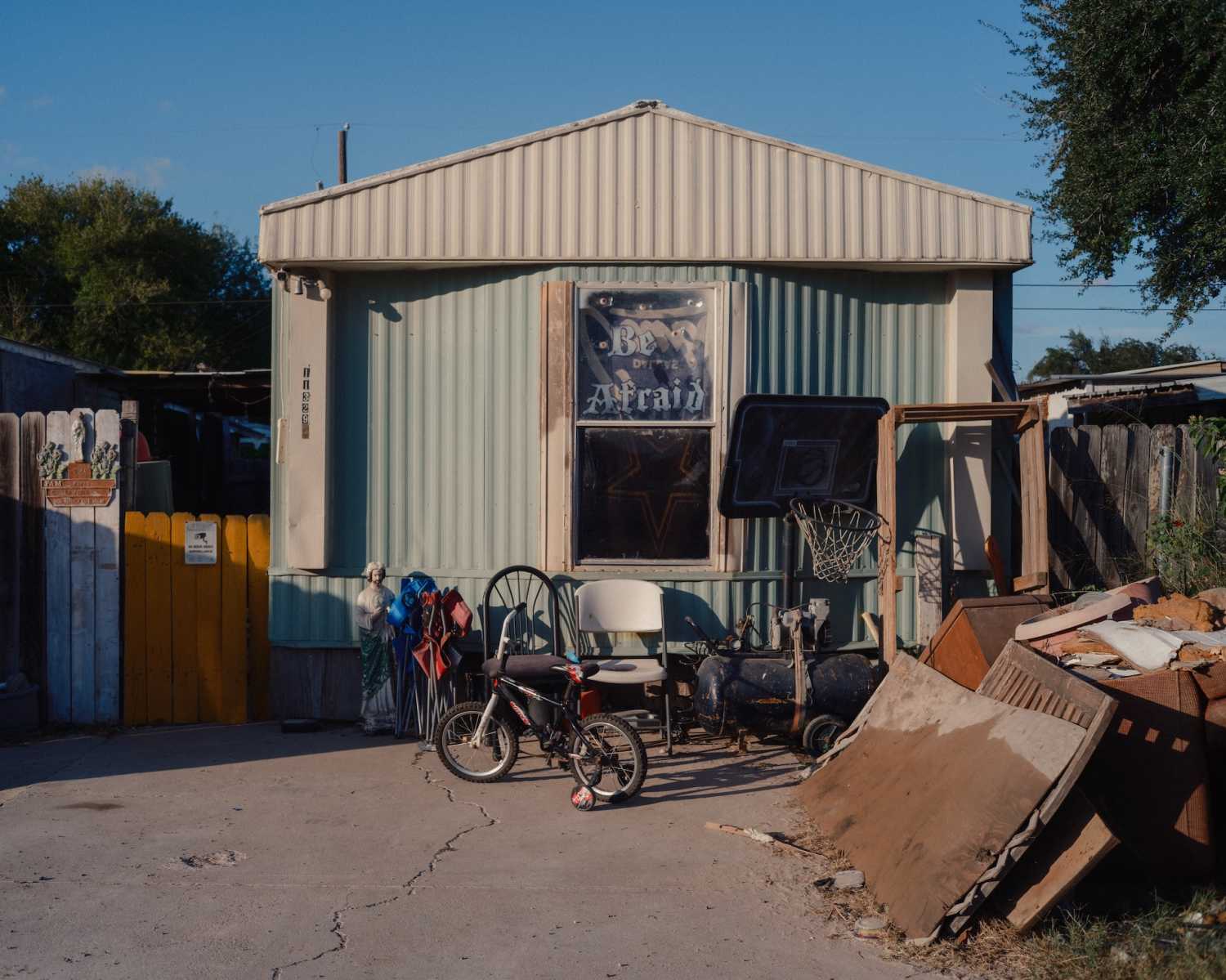
Along this vast corridor are thousands of unincorporated, economically distressed settlements known as “colonias.” These peri-urban communities—transitional zones or “fringes” surrounding city outskirts where urban and rural land uses mix—often lack paved roads, drainage systems, safe drinking water, and access to essential services. While colonias exist across all four U.S.-Mexico border states (Texas, New Mexico, Arizona, and California), they are heavily concentrated in South Texas. These colonias are frequently described as “forgotten America,” and residents there face persistent poverty, environmental risk, and limited political representation despite living in regions with growing populations and economic activity.
This report examines why colonia communities along the U.S.-Mexico border remain disconnected from core public investments despite rapid population growth, rising federal spending, and increased regional integration. Focusing on the Rio Grande Valley of South Texas, the report brings together demographic, economic, environmental, and health data to show how infrastructure deficits persist not as an accident of geography, but as a consequence of fragmented governance and misaligned policy frameworks.
By situating colonia conditions within broader patterns of border development and federal program design, the analysis highlights how current funding and oversight systems continue to exclude some of the fastest-growing and most vulnerable communities in the country—and identifies opportunities to better align public investment with on-the-ground needs.
Colonia communities are embedded in growth regions, not isolated at the margins
Colonias are often mischaracterized as remote or disconnected settlements. In reality, they are deeply embedded within rapidly growing border regions, particularly in South Texas (see Map 1). Understanding where colonias are located and how they intersect with regional growth patterns is essential to explaining why exclusion persists despite economic expansion.
Colonia residents face the compounding challenges of poverty and limited political representation. Today, 33 of the 109 counties on the U.S.-Mexico border are classified as “Persistent Poverty Counties,” meaning they have maintained poverty rates of 20% or higher for three consecutive decades. Many of these counties contain hundreds of colonias, making them critical sites for understanding inequality and resilience along the border.
Estimates suggest there are roughly 2,400 colonias nationwide, with Texas accounting for the vast majority. The Texas Office of the Attorney General identifies roughly 1,800 colonias in the state (though some estimates place the figure well above 2,000), most of which are concentrated in the southernmost counties of the state, commonly referred to as the Rio Grande Valley. These communities represent the largest concentration of colonia residents in the United States.
The counties of the Rio Grande Valley—comprising Hidalgo, Cameron, Willacy, and Starr counties—consistently ranks among the 15 poorest in the state, and have been identified by the University of Michigan’s Index of Deep Disadvantageas one of the most disadvantaged clusters in the nation—a measure that captures poverty, life expectancy, and social mobility. Together, roughly 1,200 colonias across the Rio Grande Valley are home to an estimated 188,455 residents. Despite this concentration, the region is often overlooked in national policy discussions because its population is spread across multiple midsized cities rather than one large urban center like El Paso or San Diego.
Yet the Rio Grande Valley is anything but marginal. Its binational population of approximately 2.67 million makes it the second-largest border metro region in the United States, surpassed only by the San Diego-Tijuana region. The Valley also includes three of the 10 U.S. metropolitan areas with the highest share of Latino or Hispanic-owned employer businesses (McAllen-Edinburg-Mission, Brownsville-Harlingen, and Rio Grande City-Roma), and its population is expected to double by 2045. These trends underscore both the region’s economic potential and the magnitude of its infrastructure challenges.
The current moment is particularly consequential. Border spending is skyrocketing, and urbanization is accelerating. Texas has spent more than $11 billion on border security initiatives, while the federal One Big Beautiful Bill Act allocatesmore than $170 billion over four years for border and interior enforcement.
At the same time, census undercounts are worsening. The 2020 census undercounted Texas by an estimated 2% (more than 500,000 residents statewide), with the largest omissions occurring among immigrants, low-income households, and non-English speakers. In the Rio Grande Valley, census self-response rates were under 50%, compared to a national average of over 60%, further obscuring the scale and location of need.
As attention and resources continue to prioritize border security and enforcement, colonia communities risk remaining excluded from the basic infrastructure investments required to support safe, healthy, and stable living conditions.
Colonias emerged from border growth without regulatory or infrastructure safeguards
Colonias are sometimes compared to the “Hoovervilles” of the Great Depression, in that they reflect poverty-driven, self-built communities lacking infrastructure. However, colonias differ in important ways. They are more structured, legally formed (though poorly regulated), and enduring products of border region economic development rather than temporary encampments.
Their emergence is closely tied to post-World War II border industrialization. Following the end of the Bracero Programin 1964, the Border Industrialization Program—often referred to as the “maquiladora” program—sought to attract foreign investment and expand employment opportunities along the U.S.-Mexico border. Rapid industrial growth fueled population expansion and increased demand for affordable housing, most of which was concentrated in major cities. Surrounding areas, however, remained sparsely inhabited.
Developers capitalized on this gap by subdividing inexpensive land just beyond city limits, frequently without providing essential infrastructure. Weak county enforcement and the use of contracts for deed—agreements that delayed property ownership until full loan payment—allowed these communities to expand with little oversight. Over time, low-income families, many employed in regional manufacturing and agricultural industries, built homes that persisted for generations.
As these settlements took shape, they did so at very different scales. According to the Texas Office of the Attorney General’s Colonias Database, individual colonias can range from small clusters of roughly 10 residents to larger communities with populations exceeding 1,000. In some cases, continued population growth and consolidation have eventually led to colonia communities incorporating as independent municipalities.
Public attention to colonias grew in the late 1980s. In a 1989 New York Times article, journalist Peter Applebome described colonias as “one of the nation’s most wrenching public health problems”—a characterization that would spark federal recognition in the 1990 Cranston-Gonzalez National Affordable Housing Act. The act formally defined colonias, yet it excluded hundreds of communities that formed or expanded after its enactment—a limitation that continues to shape policy responses today.
While some colonias have become official municipalities, most remain unincorporated, meaning they exist outside the legal boundaries of cities and towns—placing primary governance responsibility with county governments. Counties in Texas have limited regulatory authority: Unlike municipalities, they cannot enforce zoning or subdivision standards without specific statutory authorization. This jurisdictional gap is precisely what allowed colonias to proliferate in the first place. Today, colonia residents pay county taxes but receive fewer services than incorporated communities nearby, and remain especially vulnerable as surrounding regions grow.
The Rio Grande Valley concentrates both the largest colonia population and some of the deepest structural disadvantages in the US
The Rio Grande Valley contains the largest concentration of colonia residents in the United States, embedding some of the region’s most disadvantaged communities within a rapidly growing border economy. While the Valley has seen its population and economic activity grow, colonia residents have not benefited from these gains. Instead, colonias consistently lag behind the surrounding region, the state of Texas, and the nation across key socioeconomic indicators.
Across every major socioeconomic indicator, colonias exhibit a steep disadvantage compared to the region, state, and nation.
Colonias in the Rio Grande Valley are characterized by a young population facing persistent socioeconomic disadvantage. Although residents are deeply embedded within a growing regional economy, they continue to struggle with lower incomes, higher poverty rates, and lower educational attainment than surrounding communities.
Colonia residents are markedly younger than the broader population (see Figure 1), with a median age of 30—almost nine years younger than the national median (39) and almost six years younger than the Texas state median (36). The population is overwhelmingly Latino or Hispanic, accounting for 93.3% of residents, which is slightly higher than the share in the broader Rio Grande Valley (91.3%). Over one-quarter of colonia residents are foreign-born, and 18% speak only English at home, reflecting a population that is both young and diverse, yet often navigating economic opportunity with limited resources.
Economic indicators illustrate how colonias remain excluded from the benefits of regional and statewide growth. Because most available data are reported at the census tract level, the estimates presented here reflect conditions in tracts containing colonia communities rather than measurements drawn exclusively from colonia households. Even with this limitation, the data reveal substantial economic disparities.
Recent estimates place median household income in Rio Grande Valley colonias at approximately $45,252 (see Figure 2). This figure remains significantly lower than the broader benchmarks: roughly $31,000 below the Texas state median and $33,000 below the national median. Even when measured against colonias across the state, where median household income reaches around $47,738, the Rio Grande Valley colonias fall short, underscoring the persistence of income disparities despite overall regional expansion. Although incomes in these tracts have increased compared with earlier estimates (such as the Federal Reserve Bank of Dallas’ 2015 assessment, which reported median household incomes at $28,928), the gains have not been sufficient to close the gap with the state or nation.
Labor market indicators further reflect these inequalities. Unemployment rates in census tracts containing colonias are as high as 7.4%, compared to 6.2% in the broader region, 4.3% statewide, and 5.2% nationally. The employment-to-population ratio tells a similar story: While the national rate stands at 59.8% and the state rate at 62.2%, only an estimated 52.6% of working-age colonia residents are employed, compared to 54.4% across the Rio Grande Valley. Together, these patterns highlight the extent to which colonias remain economically disadvantaged; poverty rates hold at approximately 27%, consistent with long-standing classifications of persistent poverty, despite their proximity to expanding urban job markets.
These economic disadvantages intersect directly with educational outcomes (see Figure 3). Educational attainment in Rio Grande Valley colonias remains substantially lower than in the surrounding region, the state, and the nation. An estimated 37% of colonia adults lack a high school diploma—roughly three times both the state and national rates. An additional 26.5% have only a high school diploma, meaning nearly two-thirds of colonia adults have not progressed beyond secondary schooling.
Postsecondary attainment remains especially limited. Only 36% of colonia residents report any college attendance, and just 13.9% hold a bachelor’s degree or higher, compared to nearly 20% in the broader Rio Grande Valley, 33% statewide, and 35% nationally. These gaps constrain access to higher-wage employment and reinforce cycles of disadvantage even as the surrounding region continues to grow.
Colonia households face severe structural barriers to securing safe, affordable, and equitable housing
Colonia communities defy conventional housing narratives. Despite having higher homeownership rates than the surrounding regions, many residents live in substandard housing without reliable access to basic infrastructure such as water, sewer, or drainage systems. This paradox—high homeownership rates alongside poor living conditions—reflects a housing system where land is often acquired through informal financing arrangements, such as contracts for deed, and where infrastructure investments frequently lag behind residential development.
Colonia households enter the housing market with fewer financial tools, less leverage, and limited pathways to qualify for traditional mortgage programs. According to the Housing Assistance Council (HAC) and Fannie Mae, mortgage lending in colonias is among the lowest of any housing market in the United States. While the national rate of loan originations is approximately 100.8 loans per 1,000 owner-occupied units, Colonia Investment Areas (CIAs)—census tracts HAC has identified as containing at least one officially recognized colonia—average just 61.5 loans per 1,000 units.
Rural CIAs fare even worse, averaging approximately 47.5 loans per 1,000 units—well below both the overall CIA average and broader benchmarks. In both cases, origination rates remain nearly two to three times lower than the average lending rate across the broader U.S.-Mexico border region (129.9 loans per 1,000), underscoring that colonia communities face barriers that extend beyond typical rural credit constraints.
When loans are available, they differ sharply from national patterns. Nationally, roughly three-quarters of home loans are conventional mortgages; in CIAs, only half are conventional. Manufactured home loans—used for prefabricated housing units such as mobile homes—account for 15% of all loan originations in colonias, compared to just 1.8% nationally. Unlike traditional mortgages tied to site-built homes, manufactured housing loans are often structured as personal property or “chattel” loans, which typically have less favorable terms and fewer consumer protections, and may finance assets that depreciate rather than appreciate over time. As a result, these loans offer greater financial risks and fewer opportunities for long-term equity accumulation and wealth-building, reinforcing housing precarity.
Yet despite these constraints, colonia residents exhibit relatively higher homeownership rates. Approximately 79% of housing units in colonias are owner-occupied, compared to 71.6% regionally, 70.2% statewide, and 65% nationally. This ownership rate exists alongside substantially lower housing values; median home values in 2023 were approximately $94,259 in colonias, compared to $113,084 across the region, $243,180 statewide, and $303,400 nationally.
Ownership, however, does not guarantee adequate living conditions or wealth accumulation. Mobile homes account for 17.3% of colonia housing, and these units are more frequently financed differently than site-built homes. When manufactured homes are financed as personal property rather than real property, their long-term value and the equity households build in them can be more uncertain and closely tied to land tenure and local housing conditions. In some cases, owners may face constraints in refinancing or selling compared to traditional homeowners.
At the same time, many colonia households rely on aging and small water systems, private wells, or informal hookups that frequently fail to meet state or federal drinking water standards. Data from the last state assessment of colonias from 2014 showed more than 37,000 Texas colonia residents lacked potable water or functional sewage systems, with an additional 126,000 facing intermediate public health risks.
These infrastructure deficits translate directly into health and environmental exposure. In a two-year study published in 2025 by the Texas A&M University School of Public Health and Methodist Healthcare Ministries of South Texas, researchers detected uranium, nickel, and arsenic in all water samples collected from 203 homes. The study also found arsenic levels in residents’ urine samples that were 23% to 27% higher than those of comparison populations. These findings underscore how housing and infrastructure gaps in colonias expose residents to heightened environmental and health risks, which compound existing socioeconomic vulnerabilities.
Regional water systems and flood dynamics place colonia communities at disproportionate environmental risk
Environmental risks facing colonia communities in the Rio Grande Valley extend beyond household infrastructure deficiencies, to the regional water systems that surround and flow through them. Polluted reservoirs, drainage channels, and flood-prone waterways intersect directly with colonia geography, compounding health and safety risks for residents already living with limited protective infrastructure.
The Rio Grande Valley contains four designated Superfund sites, including one—the Donna Reservoir and Canal—federally designated by the U.S. Environmental Protection Agency. The reservoir is located in Hidalgo County, which contains the highest concentration of colonias in the region and serves the area between the cities of Alamo and Donna, where colonia density is particularly high.
Concerns about contamination at the Donna Reservoir date back decades. In 1993, the EPA detected harmful chemicals in fish while investigating unusually high rates of neural tube birth defects in nearby infants. Tests revealed extremely elevated levels of polychlorinated biphenyls (PCBs)—among the highest ever recorded in fish. The site was added to the National Priorities List (NPL) in March 2008, and fish consumption advisories have remained in effect since. Despite this long-standing designation, a 2015 study by the University of Texas San Antonio Health Science Center, the University of Texas Rio Grande Valley, and the Texas A&M University Health Science Center found that few of the residents living near the reservoir reported awareness of its Superfund designation.
The Donna Reservoir is not an isolated case. Other regional waterways that intersect with colonia communities face similar environmental hazards. The Arroyo Colorado, a 90-mile distributary channel of the Rio Grande, stretches from Mission, Texas, to the Laguna Madre near South Padre Island and serves as the primary drainage outlet for much of the Rio Grande Valley. It carries agricultural runoff, wastewater discharges, and urban stormwater from the surrounding communities.
While the Arroyo Colorado plays a critical role in flood control and irrigation drainage, these same functions have contributed to its severe pollution. The Texas Commission on Environmental Quality (TCEQ) has issued multiple fish consumption advisories due to elevated levels of mercury and PCBs. High concentrations of nutrients, bacteria, and sediment flow through areas where many colonias lack adequate wastewater treatment and flood mitigation infrastructure, reinforcing a cycle of environmental exposure and infrastructural vulnerability.
Flooding further intensifies these risks. Nationally, 44% of Latino or Hispanic Americans live in counties with elevated flood risks, compared to 35% of non-Latino or Hispanic Americans. Exposure is especially acute in the Rio Grande Valley, where overall flood risk is estimated at 92%, and approximately 95% of colonias are located in areas prone to 100-year floods, compared to just 6% of Texans and 5% of Americans nationally.
Colonias’ exposure to more frequent flooding is also substantial. This report’s geospatial analysis finds that about 29% of colonias—home to more than 80,000 residents—are located within areas prone to 10-year floods. In addition, analysis of state administrative classifications indicates that approximately 20% of colonias are in areas consistently identified as flood-prone, underscoring the widespread nature of flood vulnerability across these communities.
In March 2025, the region experienced one of its most severe flooding events in decades, with rainfall ranging from 6 to 12 inches across much of South Texas and reaching up to 21.5 inches in parts of Cameron County, such as Harlingen. The Arroyo Colorado crested to an all-time high of over 30 feet, prompting disaster declarations across multiple counties.
The flooding disrupted daily life across the region, forcing temporary closures of more than 20 school districts as well as numerous college campuses and businesses. While no comprehensive assessments have yet examined the flood’s impact on colonias, satellite imagery suggests that many colonias located in low-lying, poorly draining areas were likely among the hardest hit.
Severe health care gaps across the Rio Grande Valley continue to strain colonia communities
Health outcomes in the Rio Grande Valley reflect long-standing gaps in health care access and system capacity that disproportionately affect colonia communities. Limited provider availability, high rates of uninsurance, and constrained safety net resources shape residents’ ability to prevent, manage, and treat chronic illness.
The region has faced structural health care challenges for decades. During the rollout of the Affordable Care Act, the city of McAllen drew national attention following a New Yorker article that highlighted inefficiencies and uneven care delivery in the local health care system. Over 15 years later, many of the challenges identified at that time remain largely unchanged.
Provider shortages continue to constrain access to care across the region. All four counties in the Rio Grande Valley are designated as Medically Underserved Areas (MUAs) by the U.S. Department of Health and Human Services. The region has one of the lowest physician-to-patient ratios in the United States, with just one physician for every 862 residents—more than double the number of residents per physician nationally. These shortages are especially consequential for colonia residents, who are more likely to rely on already strained safety net providers.
Insurance gaps further exacerbate these challenges. Roughly 29% of residents under the age of 65 in both the Rio Grande Valley and its colonias are uninsured—approximately 10 percentage points higher than the state average (18.6%) and nearly three times the national rate (9.7%).
At the same time, reliance on Medicaid is substantially higher. Among residents under 65, Medicaid covers an estimated 46.6% of colonia residents and 43% of those in the broader Rio Grande Valley, compared to 26% statewide and 35% nationally. Across all ages, Medicaid coverage remains elevated as well, reaching 29.9% of colonia residents and 27.1% across the region, versus 13.9% in Texas and 17.3% nationally.
Despite this elevated reliance, overall coverage remains constrained. Texas is one of 10 states that has not expandedMedicaid under the Affordable Care Act, limiting eligibility for low-income adults without dependent children. As a result, even with higher Medicaid participation, significant coverage gaps persist—gaps that would likely narrow under expansion.
These access and coverage gaps are reflected in poor health outcomes (see Figure 6). The Rio Grande Valley is frequently cited as one of the regions with the highest obesity rate in the country. For the past two years, McAllen has ranked as the most overweight city in the United States, with 45% of adults classified as obese and an additional 31% as overweight. The city also reports the second-highest share of obese teenagers and ranks fifth nationally for childhood obesity.
Elevated obesity rates extend beyond municipal boundaries and into colonia communities. Across the Rio Grande Valley, 47.1% of adults are obese, with rates slightly higher in colonias, at 47.4%. These figures are roughly 10 percentage points higher than the statewide average (36.9%) and 7 percentage points higher than the national average (40.4%).
Moreover, colonia residents experience disproportionately high rates of chronic disease. Diabetes prevalence reaches 19.6% in colonias, compared with 18.7% across the broader region, 13.3% statewide, and 12.1% nationally. Colonia residents also see slightly higher rates of high blood pressure, which affects 34.5% of colonia residents, compared with 33.3% regionally, 32.8% statewide, and 32.9% nationally.
Together with environmental exposures and limited access to preventive and primary care, these conditions contribute to a higher burden of preventable chronic illness and poorer long-term health outcomes among colonia residents.
Fragmented governance and outdated definitions keep colonias invisible within public investment systems
Colonias remain difficult to track, regulate, and serve not because of lack of need, but because governance systems are fragmented across jurisdictions and anchored to outdated definitions. Inaccurate inventories, inconsistent oversight, and rigid eligibility rules undermine accountability and limit the ability of public investment to reach colonia communities.
At the state level, basic data challenges obscure the scope of the problem. Although this analysis draws on American Community Survey (ACS) five-year estimates and data from the Texas Office of the Attorney General, both sources are constrained by persistent undercounts. Of the 36 Latino or Hispanic-majority hard-to-count counties in the nation during the 2020 census, 20 were in Texas, including the four counties that make up the Rio Grande Valley. As mentioned above, census self-response rates in these counties hover under 50%, limiting the accuracy of population-based funding formulas and program targeting.
Additional limitations arise from the use of ACS five-year estimates, which combine data collected across multiple economic periods. The 2019-2023 estimates used in this report span the final year of the pre-pandemic economy, the COVID-19 recession, and the subsequent period of rapid recovery and high inflation. Pandemic-related data collection disruptions also affected the 2020 ACS cycle, meaning some estimates rely on a reduced or adjusted sample. While five-year estimates remain the most reliable tool for analyzing small geographies such as colonias, these constraints introduce additional uncertainty when interpreting precise levels of economic conditions.
State systems underutilize funding and limit investment in colonia communities
The problem doesn’t stop at census undercounts. The Texas Office of the Attorney General’s Colonias Database does not provide a reliable or current inventory of colonias. Several areas listed as colonias no longer exist in that form, having been replaced by golf courses, cemeteries, apartment complexes, or other developments. The Texas Office of Colonia Initiatives (OCI), housed within the secretary of state’s office, repeatedly attempted to address these inaccuracies, requesting legislative authority in 2010 and 2014 to declassify developed communities. No reforms were adopted, and in 2017, the state eliminated nearly $860,000 in funding for the program, dissolving the OCI and further weakening oversight capacity.
In the absence of the OCI, the Texas Department of Agriculture has attempted to reestablish a portion of the state’s colonia oversight function through its 2022 Colonia Planning and Needs Assessment. While the effort aims to standardize reporting across 67 border counties, it remains limited in scope. Notably, the assessment does not attempt to identify colonias that emerged or expanded after 1990, leaving many communities lacking formal recognition. Communities that are not formally identified within state inventories may be excluded from colonia-targeted funding streams and programs (e.g., the Economically Distressed Areas Program, the Colonia Construction Fund, and Colonia Self-Help Centers).
One of the primary federal mechanisms intended to support colonia infrastructure is the Community Development Block Grant (CDBG) program, which includes a dedicated set-aside for colonia communities administered at the state level (up to 10% for Arizona, New Mexico, and Texas, and 5% for California). In Texas, for example, where the CDBG non-entitlement allocation was $68 million in 2023, the colonias in the state would receive up to $6 million to $7 million. However, access to these funds depends on local governments’ ability to apply for and manage projects, rather than on the scale of need.
Despite housing more than 40% of Texas’ colonias, Hidalgo County received just $1.5 million in CDBG colonia set-aside funds over the entire 2014 to 2023 period. Cameron County received $2.65 million over the same decade. Together, the two counties at the heart of colonia settlement in the United States received roughly $4.2 million across 10 years—a figure that reflects not a formal shortfall in allocation, but the barriers that prevent local governments from successfully competing for a statewide pool of funds.
Across Texas as a whole, reported colonia set-aside awards reached only 38% of the state’s estimated allocation—the lowest rate among the four border states. By comparison, Arizona reached 74.9% of its estimated allocation, California reached 62.3%, and New Mexico reached 43%.
Federal systems fail to track and properly target colonia investment
These state-level limitations are reinforced—and often magnified—at the federal level. A 2024 Government Accountability Office (GAO) investigation found that only two out of five federal agencies serving colonias—the Department of Housing and Urban Development (HUD) and the EPA— have systems in place to track whether their funds reach these communities. However, even these systems have important limitations. Within HUD, administrative data used to monitor CDBG investments are often incomplete and subject to reporting gaps, making it difficult to accurately measure colonia-targeted funding or determine whether those resources reach the communities they are intended to serve.
Other agencies, such as the U.S. Department of Agriculture (USDA), lack basic mechanisms to identify colonia projects, undermining transparency and accountability. Despite administering some of the nation’s most significant rural infrastructure and housing programs, the USDA has no system to identify colonia investments. Between Fiscal Years 2020 and 2023, the agency obligated an estimated $103 million across the four border states, yet it remains unclear how much—if any—of that funding reached colonia communities.
While HUD’s CDBG colonia set-aside remains one of the primary federal funding mechanisms for these communities, its impact has been limited. The GAO finds that federal support for colonias diminished after 2010, oversight weakened, and funding streams became increasingly vulnerable to eligibility loss as communities they were designed to serve continue to grow—cutting them off from the very colonia-targeted grants meant to address their needs.
Underlying these failures is a broader structural mismatch in how federal programs define place. Brookings analysis of rural America highlights how rigid distinctions between “rural” and “urban” obscure communities in which conditions do not fit neatly into either category. Colonias in several counties across the country exemplify this problem: They are rural in infrastructure and services, but metropolitan in geography. This mismatch complicates eligibility for federal programs that rely on county-level population thresholds rather than on-the-ground conditions.
For example, under current federal rules, counties with populations exceeding 1 million are ineligible for certain colonia-targeted CDBG funds. As Hidalgo County approaches that threshold, it risks losing access to infrastructure dollars intended to serve its most vulnerable populations. The GAO estimates that nearly 60% of colonias could soon be excluded from HUD’s set-aside program due to population growth. Local officials argue that these rules fail to reflect reality: High-poverty counties such as Hidalgo and Cameron are effectively shut out of funding despite housing the majority of Texas’ colonia communities.
Improving conditions in Rio Grande Valley colonias requires a coordinated, place-based policy response across levels of government
The challenges facing colonia communities are interconnected and institutional in nature. Persistent infrastructure gaps, environmental exposure, health disparities, and exclusion from public investment are not the result of isolated policy failures, but of misaligned governance systems operating across the local, state, and federal level. Addressing these challenges requires coordinated, place-based reforms rather than piecemeal fixes.
The following recommendations focus on strengthening governance capacity, modernizing eligibility rules, and improving accountability so that public investments more consistently reach colonia communities.
- Strengthen county-level coordination through a regional compact. Because colonias lie outside municipal boundaries, counties bear primary responsibility for infrastructure planning, subdivision oversight, and service delivery. Hidalgo, Cameron, Starr, and Willacy counties should establish a formal inter-county compact to coordinate colonia infrastructure priorities, align capital improvement plans, and jointly pursue state and federal funding. By pooling administrative capacity and planning authority, counties can reduce fragmentation, improve funding competitiveness, and accelerate the delivery of essential services. Partnerships with nonprofit organizations and community-based groups would further support data collection, grant development, and community engagement.
- Reestablish the Texas Office of Colonia Initiatives and restore its ombudsperson network. At the state level, rebuilding oversight capacity is essential. Before its elimination in 2017, the Texas OCI maintained a network of ombudspersons who served as dedicated liaisons between colonia residents and regional and state agencies. A reestablished OCI—equipped with statutory authority to update, correct, and expand the statewide colonia inventory and supported by a restored ombudsperson network—would provide durable, resident-facing infrastructure to ensure colonia conditions are accurately tracked and addressed over time.
- Establish a regional infrastructure project pipeline to move colonia needs from eligibility to implementation. Even when colonia communities become eligible for state and federal infrastructure funding, many lack the technical capacity to develop fundable projects. Counties—either through the regional compact proposed above or a reestablished OCI—should create a shared project development hub to support engineering, environmental review, permitting, and grant packaging for colonia infrastructure projects. This pipeline should be paired with dedicated predevelopment support, including technical assistance and, critically, state or local grants (as opposed to matching funds or loans). Because colonias operate within low-revenue tax bases with limited capital reserves, placing match requirements on local governments risks replicating the same access barriers that have historically excluded low-capacity communities from the programs they most need. Together, these resources would give counties the footing to bundle small-scale water, drainage, road, and wastewater projects into competitive applications. By addressing project readiness upfront, this approach could accelerate delivery, reduce administrative burden, and ensure that newly eligible colonias can actually access available infrastructure dollars.
- Update population thresholds for colonia-targeted funding. At the federal level, eligibility rules must better reflect on-the-ground conditions. The current rule excluding counties with populations over 1 million from receiving colonia-allocated CDBG funds no longer aligns with the realities of rapid population growth in the Rio Grande Valley. Updating this threshold to account for micro-level conditions rather than county population totals would prevent high-need communities from losing access to critical infrastructure resources. A reestablished OCI—or a comparable federal or state partner—could support this reform by conducting periodic census-style assessments of colonia conditions.
- Modernize the federal definition of colonias to reflect post-1990 development patterns. Federal colonia policy remains anchored to a statutory definition tied to communities that existed prior to the enactment of the Cranston-Gonzalez National Affordable Housing Act in 1990. This framework excludes colonia-like communities that formed or expanded after that date, even when they face comparable deficits in housing quality, water access, and infrastructure. Congress should update the colonia definition—or authorize HUD to adopt a supplemental administrative classification—to ensure post-1990 communities that meet objective infrastructure and socioeconomic criteria are eligible for assistance.
- Require consistent federal tracking and reporting of investments reaching colonias. Finally, improving accountability is critical. The GAO has found that most federal agencies serving border regions lack mechanisms to track whether their investments reach colonias. Requiring standardized reporting—using a shared colonia identifier or inventory—would improve transparency, inform funding decisions, and reduce the risk that colonias remain invisible within broader county-level investments.
Improving quality of life in Rio Grande Valley colonias—and in colonia communities across the U.S.-Mexico border—will require sustained coordination across levels of government. A place-based approach that aligns governance structures, modernizes policy definitions, and strengthens accountability can ensure that public investment reflects lived conditions and supports long-term community stability.
Methodology
This report draws on ACS 2019-2023 five-year estimates, the Centers for Disease Control and Prevention’s 2024 PLACES health indicators, and the Texas Office of the Attorney General colonia database. ACS five-year estimates are used to stabilize data for geographies, such as colonias, where annual samples are often too small for reliable analysis. However, the 2019-2023 estimates span multiple economic conditions, including the pre-pandemic economy, the COVID-19 recession, and the subsequent recovery period marked by high inflation. Pandemic-related data collection disruptions also affected the 2020 ACS cycle, introducing additional uncertainty into some estimates.
PLACES health indicators are modeled estimates derived from multiple data sources, including decennial census population counts, annual county population estimates, and ACS five-year estimates. Because ACS tracts often include both colonia and non-colonia households, the resulting estimates reflect approximations of colonia conditions rather than measurements drawn exclusively from colonia households.
The Brookings Institution is committed to quality, independence, and impact.
We are supported by a diverse array of funders. In line with our values and policies, each Brookings publication represents the sole views of its author(s).