President Trump has extended the African Growth and Opportunity Act (AGOA) for two years, included in the Continuing Appropriations and Extensions Act (signed on September 2). Last month, the Senate voted to extend AGOA with a 90-6 majority, and on September 1 the House acted similarly with a vote of 370-48.
This is an achievement worth celebrating. For more than 25 years, AGOA has anchored the commercial relationship between the United States and Africa. Its extension preserves duty-free access to the U.S. market for eligible African countries and demonstrates that engagement with Africa continues to command overwhelming bipartisan support.
By extending the legislation for only two years, however, Congress avoided a critical question: how to modernize AGOA.
The governments, businesses, workers, trade associations, and civil-society organizations that helped secure the extension must now remain engaged in shaping what follows in 2028. The modernization of AGOA should build on Africa’s preferential access to the U.S. market by transforming the U.S.-Africa commercial relationship into a mutually beneficial relationship based on investment, regional integration, digital trade, industrial development, and more reciprocal commercial relations.
What stakeholder comments tell us
To understand how stakeholders believe AGOA should evolve, I reviewed the 123 submissions made in response to the Office of the United States Trade Representative (USTR)’s April request for public comments.
Of those submissions, 81 came from U.S. companies, trade associations, labor organizations, NGOs, think tanks, and other entities. Another 42 were submitted by African governments, embassies, manufacturers, trade organizations, and universities. That breadth of participation matters. AGOA’s future cannot be shaped only by policymakers in Washington or by the largest trade associations or companies. The firms that use its preferences, the workers whose livelihoods depend on them, the African manufacturers seeking to move up the value chain, and the officials responsible for implementing trade rules all bring experience that should inform the next phase.
My reading of the record leads to two conclusions. First, there is broad support for AGOA, but no single view of how it should be modernized. Second, the disagreements are not peripheral. They reveal the policy choices Congress and the administration must confront: policy certainty versus periodic political leverage, greater reciprocity versus AGOA’s development purpose, flexible global sourcing versus stronger African regional value chains, and access to critical minerals versus incentives for African processing and value addition.
These are not reasons to delay modernization. These perspectives need to be addressed and integrated over the next two years to ensure AGOA’s ongoing relevance.
A long-term extension
The clearest point of convergence in the submissions is the need for a long-term extension, generally between 10 and 15 years.
As the U.S. Chamber of Commerce put it, a 15-year extension would give the program the time required to strengthen investment and supply-chain resilience. The Foundation for Defense of Democracies similarly argues for a 10- to 15-year reauthorization calibrated to private-sector capital-expenditure cycles. The National Retail Federation emphasizes that retailers depend on predictable and enforceable rules when making long-term sourcing and investment decisions.
African manufacturers face the same constraint: Companies cannot readily build factories, train workers, develop suppliers, or enter long-term contracts when market access may expire before those investments generate returns. A two-year extension can preserve existing orders, but it is unlikely by itself to stimulate the next generation of manufacturing and industrial investment.
That distinction is critical. The extension protects the trade AGOA has already created, but it may not generate the additional investment that modernization is intended to produce.
Labor organizations introduce another important dimension. The United Steelworkers did not oppose reauthorization but called for it to be paired with renewal of the Trade Adjustment Assistance (TAA) program, a federal program to retrain and compensate businesses negatively impacted by trade agreements. The AFL-CIO also supported modernization alongside TAA. Their submissions are a reminder that a durable trade framework must demonstrate benefits not only for firms and investors, but also for workers in the United States and Africa.
The “lapse-and-restore” cycle surrounding trade preferences has real economic consequences. Neither China nor the European Union periodically turns its commercial relationship with Africa on and off. If the United States wants AGOA to support long-term investment, Congress will eventually have to align the timeframe of the legislation with the timeframe on which businesses make decisions.
Competitiveness must begin with a compelling partnership
Many submissions position AGOA within intensifying global competition in Africa. That concern is well founded.
Two-way U.S.-Africa trade remains less than half its 2008 peak of $105 billion. China’s trade with Africa is roughly four times larger than that of the United States, and on May 1, 2026, China implemented a zero-tariff policy covering goods from 53 African countries. AGOA currently has 33 beneficiary countries. China has also employed a “bundled and fast” infrastructure-financing model that the United States has struggled to match. China and the European Union each account for approximately 20% of sub-Saharan Africa’s goods import, while India, Turkey, and countries in the Middle East are rapidly expanding their commercial presence.
The ONE Campaign warns that allowing AGOA to lapse would cede U.S. strategic, diplomatic, and economic influence to competitors by deepening their relationships with African markets. StarKist similarly argues that AGOA reinforces the broader U.S. presence on the continent.
Yet competition with China cannot be the principal rationale for U.S. engagement. African countries are not simply arenas in which outside powers compete. They are markets pursuing their own industrial, technological, and regional-integration ambitions.
A modernized AGOA will be durable only if it offers a compelling proposition to both sides: greater commercial opportunity for U.S. firms and workers, and greater investment, productive capacity, employment, and value creation in Africa.
The Corporate Council on Africa (CCA) argues that this will require programs that go “beyond AGOA” to address critical minerals, services, and the digital economy. CCA also recalls that AGOA was intended to encourage progress toward more reciprocal trade arrangements and that regional trade hubs were created to connect African and American businesses.
The next framework should build on that ambition while recognizing a changed African landscape, particularly the continued implementation of the African Continental Free Trade Area (AfCFTA). Modernization should support, rather than fragment, Africa’s effort to create a more integrated continental market.
“Reciprocity” requires a more precise definition
A recurring theme, particularly among U.S. agricultural organizations, is that AGOA beneficiaries should provide greater access to African markets for American products.
The Meat Institute, whose member companies account for more than 95% of U.S. meat and poultry production, argues that several beneficiaries have sheltered inefficient domestic production from global competition. Its submission criticizes barriers in South Africa, Nigeria, Angola, Côte d’Ivoire, Ghana, Kenya, and Namibia. Rather than disengage, its argument is to use targeted reforms to expand trade.
The USA Poultry & Egg Export Council notes that the United States exported 336,000 metric tons of poultry products to AGOA-eligible countries in 2025, accounting for 10.1% of total U.S. poultry exports. While that represents significant growth since AGOA was enacted, the Council argues that exports remain below their potential. It points in particular to the preferential access European suppliers receive through Economic Partnership Agreements.
These concerns cannot be dismissed. A sustainable U.S.-Africa commercial relationship must produce visible benefits on both sides. But “reciprocity” needs to be defined with care.
It can mean equal tariff concessions, the removal of specific non-tariff barriers, greater regulatory transparency, or a gradual transition toward negotiated trade agreements. These approaches would have very different consequences for economies at different levels of development.
A modernized framework should distinguish between legitimate market access concerns and demands that could overwhelm emerging industries or undermine AGOA’s development objectives. Reciprocity should be calibrated, transparent, and linked to the capacity of individual economies. It should also be developed through consultation with African governments and private-sector practitioners, rather than imposed as a uniform condition from Washington.
Bringing AGOA into the digital era
AGOA was designed for an era when international commerce was dominated by trade in physical goods. It does not adequately reflect a global—and African—economy increasingly shaped by services, data flows, cybersecurity, artificial intelligence, and digitally enabled trade.
The Information Technology Industry Council, which represents many of the largest U.S. technology companies, argues that AGOA needs to be brought into line with this new commercial reality. The Coalition of Services Industries points out that Africa is already a significant market for digitally delivered services. In 2023, African economies exported $36 billion in digitally delivered services and imported $55 billion.
The Computer and Communications Industry Association contends that modernization offers an opportunity to address barriers to cross-border digital trade and investment. The Initiative for a Digital Africa, a network that includes African members, raises concerns about data-localization requirements, internet shutdowns, and discriminatory digital taxes, and suggests that a modernized AGOA can help reinforce an open digital environment that supports long-term U.S.-Africa digital connectivity.
These concerns deserve consideration, but they should not be treated as the entire digital policy agenda. Modernization must also account for African priorities involving digital sovereignty, domestic innovation, cybersecurity, affordable connectivity, and the development of local digital industries. The objective should not simply be to remove regulations regarded as barriers by established technology companies. It should be to create trusted and interoperable digital markets that expand African participation as well as cross-border investment.
The Center for Emerging Economies proposes a U.S.-Africa Digital Trade Working Group under AGOA to develop shared approaches to data governance, digital interoperability, and trade facilitation aligned with the AfCFTA Digital Trade Protocol. This proposal deserves serious consideration. Alignment with the AfCFTA would connect U.S. commercial policy to African-led integration rather than creating a parallel set of rules.
Such an approach would also be consistent with the African Union’s Digital Transformation Strategy, which seeks to use digital adoption to advance integration, inclusive growth and employment.
Critical minerals: Access or transformation?
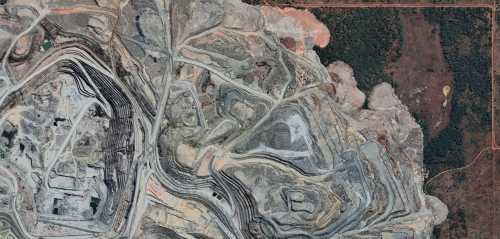
Critical minerals have become a major U.S. priority since AGOA was last extended in 2015. Numerous submissions propose using AGOA to strengthen supply-chain security.
The Climate Leadership Council recommends adding the U.S. Geological Survey’s list of critical minerals to AGOA-eligible products. It also proposes preserving preferential access for critical mineral exports from countries that graduate from AGOA because they cross the program’s income threshold.
Several submissions push the discussion beyond supply chain access toward African processing and value addition. Friends of the Congo proposes a new critical minerals processing tier that would provide enhanced treatment for semi-processed and refined minerals. The Diplomacy Lab Capstone project at American University similarly recommends extending duty-free treatment to value-added mineral products.
These proposals identify one of the central tests of modernization. Will a new framework principally help the United States diversify its access to raw materials, or will it also help African countries build processing capacity, develop skilled employment, and retain more of the value generated by their resources?
It needs to do both, but achieving this will require more than tariff preferences: It will require financing, reliable energy, infrastructure, technical capacity, and standards that facilitate responsible production.
AGOA preferences should therefore be linked more deliberately with the tools of the Development Finance Corporation (DFC), the Export-Import Bank (Exim), and other U.S. agencies capable of financing commercially viable projects. Without that implementation machinery, a critical minerals provision could change the origin of U.S. imports without changing the underlying economics of extraction.
Apparel rules reveal the larger modernization challenge
The debate over AGOA’s Third-Country Fabric (TCF) Provision illustrates the choices confronting policymakers.
The provision allows apparel manufacturers in lesser-developed AGOA countries to use yarn and fabric from third countries while retaining duty-free access to the United States. It has helped African producers participate in global apparel supply chains even where fabric of the necessary scale, quality, price, or lead time is not available locally.
Levi Strauss argues that AGOA’s textile and apparel provisions remain essential to continued investment. The National Retail Federation similarly contends that the TCF rule is necessary because regional inputs are not always available on commercially viable terms.
Importantly, that assessment is shared by institutions closer to African production, including the African Coalition for Trade and the Kenya Association of Manufacturers. Their submissions underscore that removing the provision too quickly could make African apparel less competitive, jeopardizing existing factories, orders, and jobs.
The American Apparel & Footwear Association, which represents 1,100 brands and 3.6 million U.S. workers, adds that “the third-country provision helps to sustain and expand export opportunities for U.S. cotton growers, textile producers and related industries and the thousands of American farmers and workers they employ.”
Other U.S. textile manufacturers see the issue differently. Milliken & Company, a South Carolina manufacturer of high-performance fabrics, favors AGOA modernization but argues that apparel produced with inputs from Bangladesh, China, India, and Pakistan should no longer receive preferential treatment. Those countries provide approximately 80% of the fabric used in AGOA-eligible apparel. The National Council of Textile Organizations shares concerns about third-country inputs, while the National Retail Federation calls for clearer rules and enforcement to prevent transshipment.
The challenge is to balance the immediate competitiveness of African apparel production, the interests of U.S. cotton and textile producers, and the longer-term objective of building more integrated African industries. Simply choosing one constituency over another would not constitute modernization.
What should happen during the two-year window?
The strongest message from the submissions is that AGOA should evolve from a program based principally on non-reciprocal tariff preferences into a modern commercial partnership.
This should consist of a long-term reauthorization, a calibrated approach to reciprocity, stronger alignment with the AfCFTA and African value chains, and a clear focus on how to leverage the digital economy to mutual benefit. A priority for the United States is to accelerate its commercial diplomacy to ensure agencies such as the DFC, Exim, and USTDA work in a seamless and time-efficient way to support American business and innovation in Africa in the AGOA context.
The extension through 2028 provides a limited window to develop a future-oriented commercial and development framework for AGOA, but the work needs to begin now.
Author

Related Content
The Brookings Institution is committed to quality, independence, and impact.
We are supported by a diverse array of funders. In line with our values and policies, each Brookings publication represents the sole views of its author(s).

Commentary
AGOA was extended for two years—now the real work begins
September 17, 2026