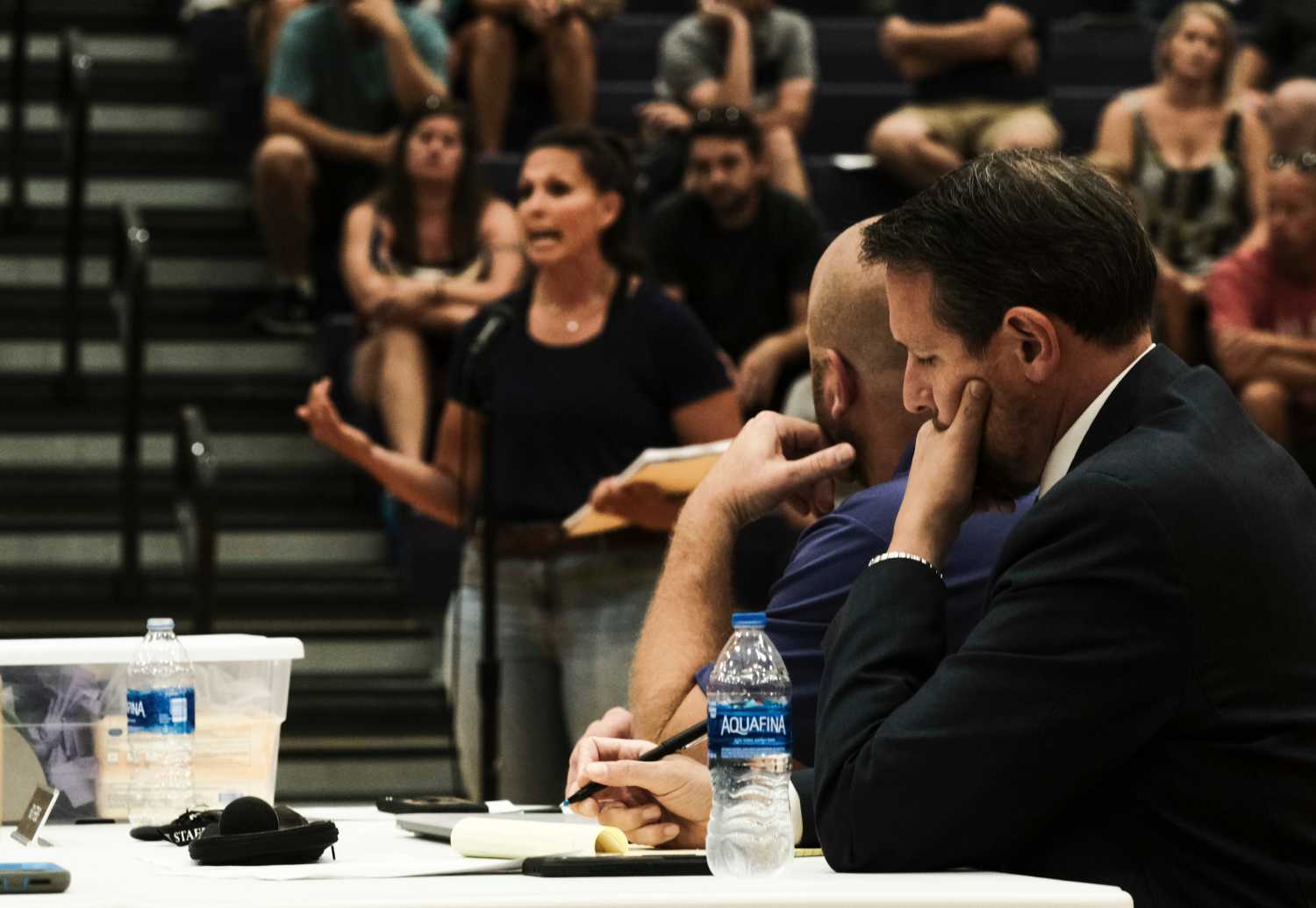
In the early 2020s, America’s local school boards found themselves in the spotlight. The COVID-19 pandemic forced education leaders to make high-stakes decisions on school closures, remote learning, and safety protocols. Those decisions sparked controversy that, in many places, played out in school board meeting rooms. Media reporting offered a helpful look into these meetings. Local reporters from Alaska to Florida documented conflicts over issues such as mask mandates, while national reporters sought to tell a broader story. As time passed, stories about pandemic-related conflicts gave way to stories about social issues involving race, gender, and sexuality. America’s school boards, it seemed, remained aflame in conflict, and local reporters were there covering it.
In fact, much of what we know about the spread of these conflicts comes from media reporting. These accounts suggest that COVID-19 and culture-war conflicts involving schools were widespread in the early 2020s. However, we lack a systematic understanding of where, when, and in what types of districts these conflicts occurred. This chapter, together with the rest of this report—particularly the board member survey in Chapter 2—aims to fill that gap.
Here, we document and analyze media reporting on pandemic and culture-war conflicts for a nationally representative sample of school districts. We examine reports from 2018 through 2024, allowing us to track media coverage of school board conflicts from before the pandemic until several years after its onset. By merging information from web-scraped news articles with data on the characteristics of school districts and their communities, we assess when and where issues arose.
To preview our main results, we find that:
- Nationally, 10% of school districts—representing about 30% of public school students—had at least one media report of a conflict related to COVID-19 masking policies, critical race theory (CRT), book bans, or issues involving transgender students.
- Media coverage of conflicts over COVID-19 masking policies and CRT peaked in 2021 and then steadily declined to near pre-pandemic levels by 2024.
- Media coverage of conflicts over book bans and issues involving transgender students peaked in 2023, and, although declining in 2024, remained well above pre-pandemic levels.
- Media reporting on culture-war conflicts was most common in large districts, urban areas, and politically liberal (“blue”) and moderate (“purple”) communities.
A systematic analysis of media reports provides an important view of how the conflicts involving schools unfolded. However, it cannot provide the complete picture. Analyses of media reporting are inherently limited by the shortcomings of the media itself (e.g., a tendency to focus on more sensational events), as well as the declining presence of local journalism. This is why we supplement the media analysis with a survey of board members—and could be why the survey results suggest more widespread conflict than the media reports suggest. Still, media reports provide real-time documentation of conflicts across school districts nationwide and are essential for understanding the nature and evolution of these conflicts at scale.
Data and methods
For this study, we built a dataset of media reports by web-scraping Google search results (from the “News” tab) for school district conflicts from 2018 to 2024. We focused on collecting news reports from a stratified random sample of school districts across the country. This allowed us to determine where and when there were reports of conflicts over a prespecified set of COVID-19 and culture-war issues.
Sampling and weighting
We used a stratified sampling strategy based on the National Center for Education Statistics’ 12 locale type categories (e.g., City-Large and Rural-Remote). We randomly selected 200 school districts from each locale type—unless there were fewer than 200 districts in a locale type, in which case we included all of them. This yielded a final sample of 2,337 school districts for which we searched for media reports. By oversampling certain types of districts, we ensured that our sample would reflect the geographic diversity of America’s school districts. We then applied weights so that the weighted sample would be representative of school districts across the country.
This chapter presents results with and without enrollment weights (based on the number of students enrolled in a district). This distinction matters for how to interpret results:
- Estimates without enrollment weights are representative of school districts nationwide. They give every district equal weight regardless of how many students are enrolled. These estimates allow for statements such as, “About 10% of school districts had at least one reported conflict.”
- Estimates with enrollment weights are representative of the public school student population. They give more weight to large districts (such as Los Angeles Unified) than small districts. These estimates allow for statements such as, “About 30% of public school students are in districts with at least one reported conflict.”
Selection of COVID-19 and culture-war issues
Our objective is to assess the prevalence, timing, and location of conflicts that involved school boards. To do this, we first needed to identify a discrete, manageable set of issues as the subject of our searches. We prioritized issues that: 1) had been prominent in education politics from 2018 through 2024 (based on our initial screening of articles and Google Trends1 data); and 2) used distinctive language that was well suited for web-scraping media reports.
We chose four issues that satisfied both criteria: COVID-19 mask mandates, CRT, book bans, and transgender students’ rights. Figure A1.1 displays the overall public search interest in each topic, based on Google Trends data, during our study period.
We considered several other issues but chose not to include them. The Google Trends data in Figure A1.2, which comes from Google search term popularity, helps illustrate why. For example, diversity, equity, and inclusion (DEI) became a prominent issue involving schools but not until after 2024. COVID-19 vaccine mandates were discussed from 2020 to 2024 but not with the same frequency as COVID-19 mask mandates. Racism, as a general term, was not precise enough to distinguish culture-war conflicts from other articles containing the term (dating back to the 2010s). Finally, school reopenings were an extremely common subject of news coverage and public search—in fact, we excluded it from Figure A1.2 because its peak was so much higher than the other issues’ peaks. However, coverage of school reopenings was so widespread that an analysis of articles on that topic would not have been informative.
Scraping news reports
To create our database of news articles, we used Python to scrape Google search results from the “News” tab (which includes a broad range of local and national media outlets). For each district, we combined Boolean search strings with the district name and issue-specific keywords (e.g., “school district” AND “CRT”). We conducted searches each year between 2018 and 2024 for each topic, resulting in 81,795 unique Google searches. The web-scraping collected metadata for each article, including the title, description, source, data, and link to the article.
After retrieving article metadata, we manually reviewed each article to determine if a conflict had occurred. We focused on whether the article included any evidence of a conflict within the school district, rather than simply the presence of policy action. For the purposes of our analysis, we defined a conflict as a disagreement between the community and the school board. For example, if a school board passed a resolution in support of transgender students’ rights and there is no evidence of disagreement between the community and the board over the issue, this would not constitute a conflict. We also excluded conflicts between candidates running for school board.
Additional details are available in the methodological appendix.
Findings
Using data collected from web-scraped news articles, we chart the prevalence, timing, and locations of school board conflicts over COVID-19 mask mandates, CRT, book bans, and issues involving transgender students. We present results with and without enrollment weights.
Figure 1.1 illustrates the prevalence of each issue from 2018 through 2024.
Reported conflicts were far from universal
Perhaps the most immediate finding is that relatively few districts had media reports of conflicts over any of these issues from 2018 to 2024. Looking at each year individually, we never see more than 5% of districts (representing 18% of students) with a reported school board conflict related to one of these issues. Aggregating across this period, we find reported conflicts from about 10% of the nation’s school districts, representing about 30% of its public school student population.
Of the districts that did have a reported conflict, most had reports related to just one of these four issues. The most common source of conflict among these was book bans, while the least common source was mask mandates.
We should reiterate that a lack of reporting on conflicts from a particular district does not imply that the district had no conflicts. Rather, there might be little, if any, local media presence, and the conflicts might not have drawn reporters’ attention. This caveat is important for judging the overall prominence of culture-war conflicts during this period. However, we can still learn a great deal about which issues arose, when, and in what types of communities.
The timing of reported conflicts varied by issue
As seen in Figure 1.1, media reports of conflicts over these issues were rare from 2018 to 2020. This is unsurprising for COVID mask mandates, since the first confirmed case of COVID-19 in the United States was in January 2020 and most schools moved to online learning in 2020. However, media coverage of conflicts over book bans, CRT, and transgender students’ rights was also rare during that period. We found reported conflicts for less than 1% of districts (representing less than 1.5% of students) for each year of 2018, 2019, and 2020. Most of these conflicts focused on book bans and issues involving transgender students.
Media reports of conflicts over these issues started to surge in 2021. The percentage of districts that experienced at least one type of conflict that received media coverage rose from 0.2% of districts in 2020 (representing 1.0% of students) to 3.6% of districts (representing 14.5% of students) in 2021.
Of these four issues, CRT and mask mandates were the first to peak. CRT reached its peak in 2021, when about 1.8% of districts (representing 8.2% of public school students) had media reports of a CRT-related conflict involving the local school board. Conflicts related to race and racism in K–12 education long predate the early 2020s, but they took on a new name in 2021. CRT had not been a widely known term, even to school district leaders, until 2021, when it suddenly became a flashpoint in American politics. Reports of school board conflicts related to mask mandates also spiked in 2021, with 1.6% of districts (representing 5.2% of students) having at least one media report from that year.
After 2021, a different set of issues emerged as most prominent in media coverage. As reports of conflicts over CRT and mask mandates faded, we found more reported conflicts related to book bans and transgender students. Each of these issues reached their peak in 2023. In that year, 2.6% of districts (representing 10.7% of students) had at least one reported conflict over book bans, while 2.0% of districts (representing 8.4% of students) had at least one reported conflict related to transgender students.
Reported conflicts were most common in large districts, urban areas, and politically ‘blue’ and ‘purple’ communities
Next, we consider where we found the most media coverage of culture-war conflicts involving school boards. We focus on three district characteristics: size (enrollment), urbanicity, and the political leanings of the surrounding county.
Media reporting on these conflicts was far more common in large districts (enrolling more than 15,000 students) than in medium-sized districts (2,500–15,000 students) and small districts (fewer than 2,500 students). As shown in Figure 1.2, nearly half (46%) of large districts had at least one media report of a school board conflict. This far exceeds the corresponding numbers for smaller districts.
We also found more reported conflicts in districts from urban areas. These results appear in Figure 1.3. About one-third (32.5%) of districts in cities had at least one report of a conflict, which was higher than the corresponding numbers for suburbs (17.9%), towns (8.4%), and rural areas (3.9%). Gaps in reported conflicts were evident across all four issues.
Finally, we found more reported conflicts in politically blue and purple areas than politically red areas. These results appear in Figure 1.4. For example, we found at least one report of a conflict in 15.6% of blue areas where Joe Biden received at least 55% of the 2020 presidential election vote share (between Biden and Trump). The corresponding percentages were 13.5% for purple areas and only 6.3% for red areas.
We see these disaggregated findings as descriptive in nature. They allow us to ascertain where there were the most media reports of conflicts involving school boards. Whether a certain characteristic of a community “caused” these conflicts is difficult, if not impossible, to determine empirically. For example, having more students could lead to more conflicts simply because there are more people around to disagree with one another. Alternatively, this could reflect differences in media presence or other underlying characteristics of large school districts and the communities in which they are located.
Conclusion
News reports offer a valuable window into conflicts between school board members and the communities they serve, providing real-time documentation of issues and incidents involving school boards. They are also readily accessible through internet searches, making them a practical source for systematic analysis.
In this chapter, we find that between 2018 and 2024 about 10% of U.S. school districts—serving about 30% of the public school student population—experienced at least one reported conflict over COVID-19 mask mandates, critical race theory, book bans, or transgender students’ rights. Conflicts over mask mandates and CRT tended to emerge earlier in this period, while those related to book bans and transgender students became more prominent later. Overall, conflicts were reported more often in large districts, urban areas, and districts located in politically blue and purple communities.
Media reports can shape how Americans understand what is happening in their schools. This makes it critical to understand their limitations as well as their strengths. Most obviously, we can only see coverage of school board conflicts if reporters are there to provide that coverage. While the vast majority of U.S. counties have at least some local newspaper coverage, most do not have a daily newspaper—and the presence of local news outlets has waned in recent decades, especially in rural areas. Moreover, even if a community has a local newspaper, that does not ensure that the newspaper will report on a conflict involving a school board.
We also note the limitations involved in web-scraping news articles. Inevitably, some articles are taken down from webpages, lost to unstable URLs, or inaccessible for some other reason. There also could be a weakness in the search process itself. We implemented an assortment of tests and precautionary measures to ensure that our web-scraping process was working as intended. For example, we scraped articles on superintendent retirements (see Figure A1.3). The pattern of superintendent retirements provides confidence that our process captured articles from the beginning of the time period examined (2018 and 2019), and it identified a recent increase in retirements that has been shown in other research.
In sum, our analysis of media reports shows that conflicts occurred in many districts across the country. However, it raises questions about whether these conflicts were as widespread as the rhetoric of this era might suggest. We see media reports as a necessary but not sufficient way to study what unfolded in America’s school boards in the early 2020s. In Chapter 2, we look at these institutions from a different vantage point: through the eyes of the board members who served.
Authors




-
Acknowledgements and disclosures
The Brown Center on Education Policy at Brookings is grateful for the support of the Spencer Foundation.
The research reported in this report was made possible by a grant from the Spencer Foundation (#202300189). The views expressed are those of the authors and do not necessarily reflect the views of the Spencer Foundation.
Brookings is committed to quality, independence, and impact in all of its work. Activities supported by its donors reflect this commitment, and the analysis and recommendations are solely determined by the scholars.
The authors thank Purnima Aggarwal, Kelsey Brown, Rosalia Dalton, Elizabeth Gellman, Gabrielle Harris, Alex Hubbard, Annabelle Kim, Jamie Klinenberg, Emma Mills, Brianna Paliz, Sally Park, Analisa Pines, Ayanna Platt, Estan Rodriguez, Simon Rosenbaum, Brock Schultz, Claire Siegel, Sana Sinha, and Rebecca Wagner for their excellent research support.
-
Footnotes
- We should note the significant limitations of using Google Trends data to examine the prominence of conflicts. For one, the resulting data are highly sensitive to the precise search terms used. Additionally, Google Trends shows which issues people searched for, not necessarily which issues arose in school districts. We used the Google Trends data only to inform our selection of issues for the media analysis.
The Brookings Institution is committed to quality, independence, and impact.
We are supported by a diverse array of funders. In line with our values and policies, each Brookings publication represents the sole views of its author(s).