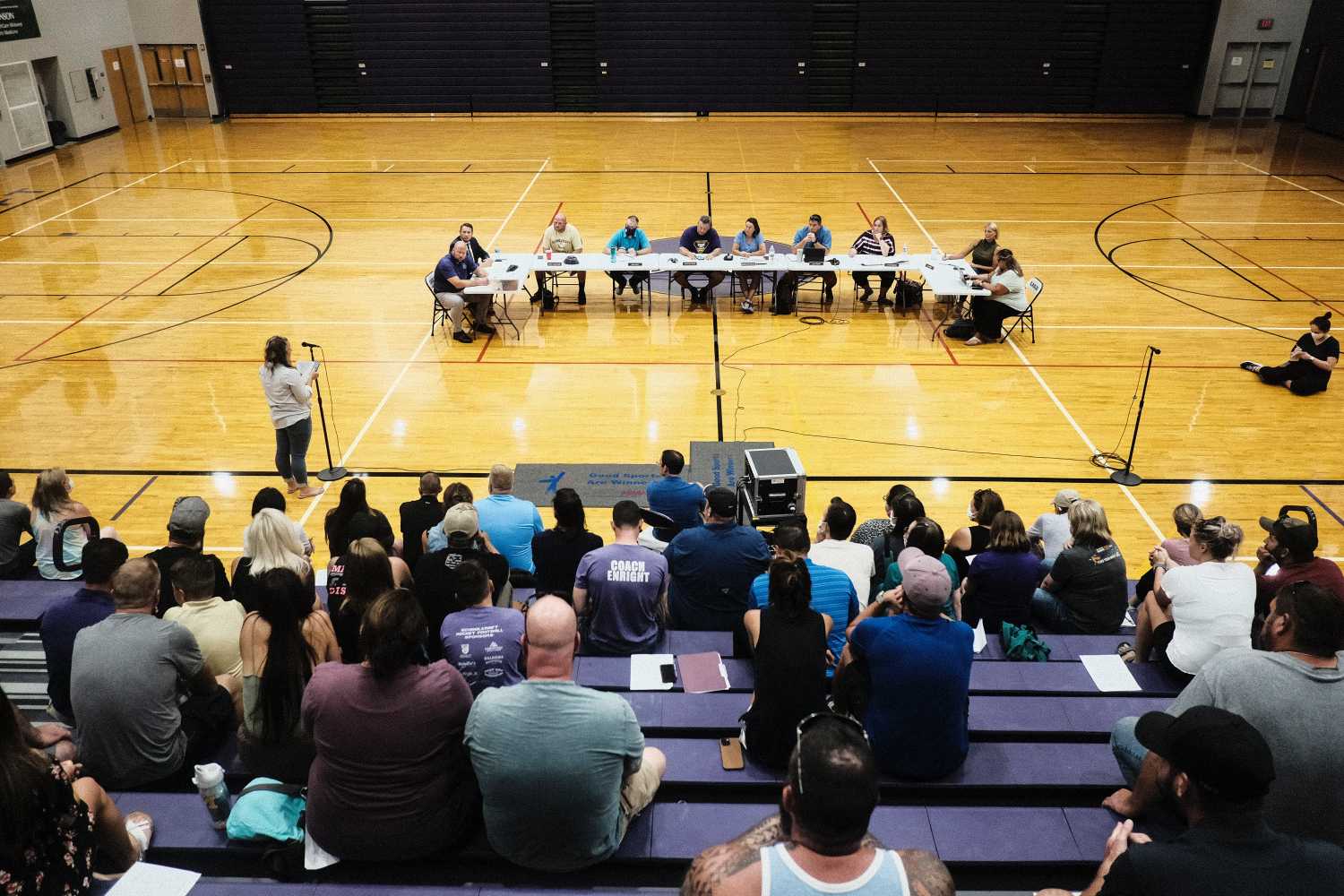
For as long as they have existed, America’s local school boards have navigated conflicts, hard decisions, and moments of intense public scrutiny. Disagreements over budgets, curriculum, and school boundaries are not new, nor are contentious school board meetings. Among the nation’s most accessible political institutions, America’s school boards are designed for debate and disagreement.
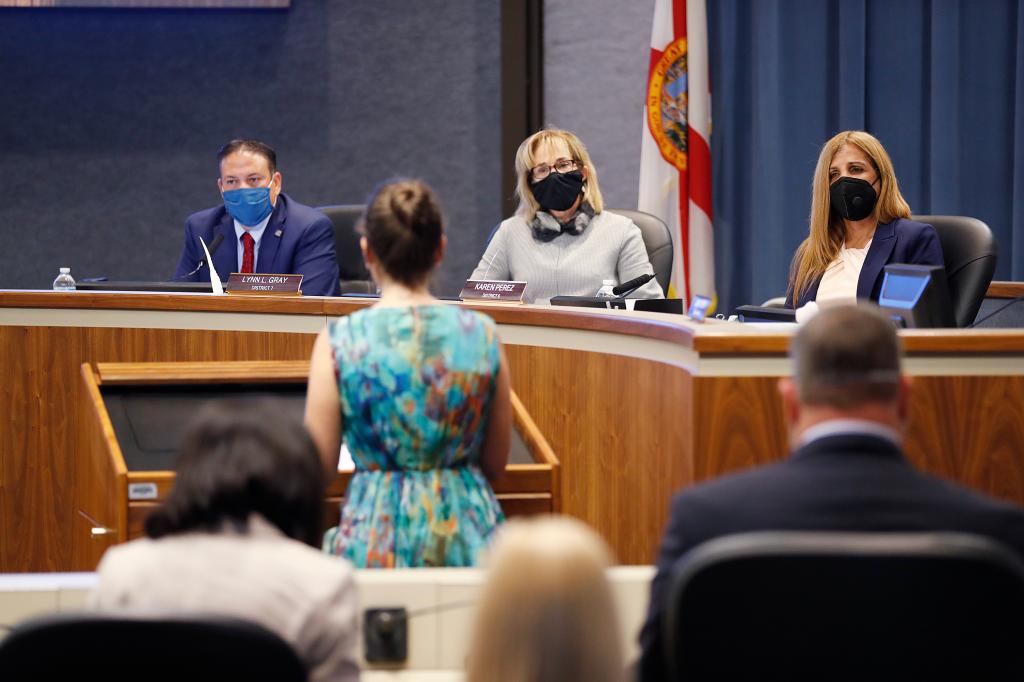
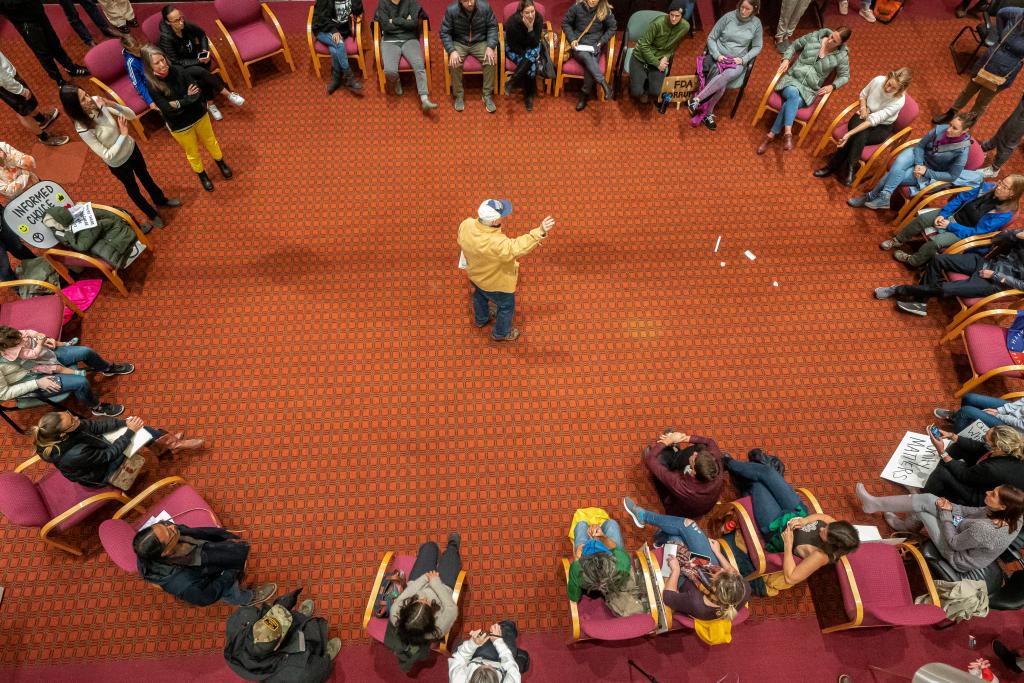
Yet, over the last few years, something has changed. Disputes over pandemic-related school closures and masking policies put school boards in the national spotlight. Clashes between board members and protesters went viral. Media reports across the country showed boards struggling not only with the aftermath of COVID-19 but a host of hot-button issues involving race, gender, and sexuality. School boards became major battlegrounds for America’s culture wars.
In this context, we risk losing sight of the people who serve on these boards: the individuals who, in most cases, run for local offices to do work that can be difficult and thankless.
Therefore, we sought to document board members’ perspectives of this important period for school boards by conducting a nationally representative survey. We received responses from 1,002 local school board members across the country.
This report contains a narrative summary of key survey findings along with the full survey results (in table form). The report is divided into the following sections:
- Demographics and background
- Experiences as a candidate and board member
- School board politics
- Evaluations of local and national public schools
- Stakeholders’ priorities
- COVID-19 and culture wars
In a companion report, we delve more deeply into the topic of school boards during the COVID-19 pandemic and subsequent culture wars. That report contains a detailed analysis of the COVID and culture wars section of the survey along with analyses of media reports and election results from this time period.
In this report, we take a broader look at what school board members are telling us through this survey. We come away with six key takeaways:
- Battles over COVID-19 and culture-war issues have affected school boards across the country—in all types of communities. They have strained relationships and have left lasting scars on many of America’s school boards.
We asked board members about the level of conflict between school boards and community members—as well as among board members—before, during, and after the pandemic. They report sharp increases in conflicts from the pre-pandemic period (2017–2019) to pandemic period (2020–2022) that only partly subsided in the years that followed. These spikes were evident in many types of communities, including politically red, blue, and purple areas. Many, though not most, school board members say the pandemic has negatively affected their board’s ability to govern.
- Board members are concerned about the influence of partisan politics—and strongly opposed to having school board candidates’ party affiliations appear on the ballot.
Throughout their survey responses (and written comments), board members express concern about the influence of divisive, partisan politics in school board governance. Notably, the vast majority of board members oppose the idea of showing school board candidates’ political party on election ballots.
- Serving on a school board in a large district is a fundamentally different experience from serving on a school board in a small district. The same is true of running for a board seat.
Throughout the survey, we see differences between the responses of board members working in large (high-enrollment) versus small (low-enrollment) districts. For example, members working in large districts report: more difficult and expensive elections; more time spent on board work; more factions on their school boards; and more conflicts with their communities and fellow board members.
- Board members see gaps between what their communities want them to prioritize and what the most vocal members of their community want them to prioritize. They also see gaps between what their boards spend the most time on and what they would like their boards to prioritize.
We find that board members’ own priorities generally match what they believe their communities want them to prioritize. This includes school safety and academic performance. When asked about the most vocal members of their communities, board members say these individuals also prioritize safety—but are more likely than other community members to emphasize issues related to race, gender, and sexuality. Also, board members report spending the most time on financial planning and facilities, which differ from the issues they would like to prioritize.
- Board members are older, wealthier, more likely to be female, and more highly educated than the adult population. They are disproportionately white, though the average public school student is represented by a board that is racially and ethnically representative of U.S. adults.
In many respects, school board members are not demographically representative of the U.S. population. The differences are most striking with respect to age, household income, and educational attainment. Assessing board members’ representativeness by race and ethnicity is more complex.
- Despite the challenges of school board service, most board members plan to pursue another term. To explain why, they cite a belief that they are making a positive impact.
About half of the country’s board members are planning to pursue another term on their board. Among those planning to run again, the vast majority cite “I’m making a positive impact” as a reason why. Among those planning not to run again, responses are mixed, with many board members citing time constraints and a sense they have accomplished what they set out to do.
The education policy community is engaged in debates about school boards—down to whether we need school boards at all. We believe these debates are healthy and necessary, as local school boards play critical roles in America’s decentralized education system.
We also believe that the voices of school board members need to be heard in these discussions. These survey results provide one opportunity to hear those voices.
Main results
Here, we describe notable findings from each section of the school board member survey. This summary does not cover every item. For the complete set of results, we encourage readers to review the survey results tables below.
Results tables
This page contains tables with the full set of results from the school board member survey administered from October 2024 to January 2025.
Methodological appendix
Authors



-
Acknowledgements and disclosures
The Brown Center on Education Policy at Brookings is grateful for the support of the Spencer Foundation.
The research reported in this report was made possible by a grant from the Spencer Foundation (#202300189). The views expressed are those of the authors and do not necessarily reflect the views of the Spencer Foundation.
Brookings is committed to quality, independence, and impact in all of its work. Activities supported by its donors reflect this commitment, and the analysis and recommendations are solely determined by the scholars.
The authors thank Purnima Aggarwal, Kelsey Brown, Rosalia Dalton, Elizabeth Gellman, Gabrielle Harris, Alex Hubbard, Annabelle Kim, Jamie Klinenberg, Emma Mills, Brianna Paliz, Sally Park, Analisa Pines, Ayanna Platt, Estan Rodriguez, Simon Rosenbaum, Brock Schultz, Claire Siegel, Sana Sinha, and Rebecca Wagner for their excellent research support.
The Brookings Institution is committed to quality, independence, and impact.
We are supported by a diverse array of funders. In line with our values and policies, each Brookings publication represents the sole views of its author(s).