Reuters May 20, 2026
Xi does appear to hold the stronger position relative to both Putin and Trump. Both leaders are grappling with conflicts of their own making that have proven far more difficult to..."
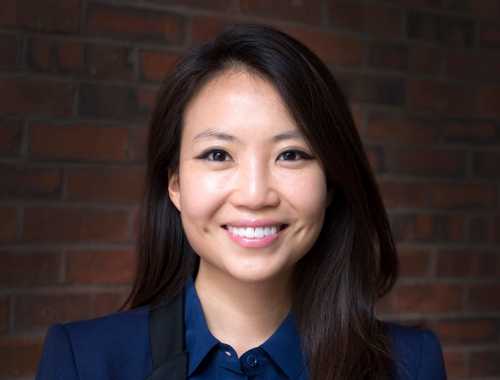
Patricia M. Kim is a leading expert on Chinese foreign policy, U.S.–China relations, and East Asian politics and security. She is a senior fellow in the Foreign Policy program with a joint appointment to the John L. Thornton China Center and the Center for Asia Policy Studies at the Brookings Institution, and the author of “No Constraints: China’s Global Quest for Partners and Influence,” forthcoming with Princeton University Press in late 2026. At Brookings, she co-leads the Assessing China Project, a signature initiative of the Foreign Policy program focused on producing rigorous, policy-relevant analysis of China’s global strategy and its implications for the United States and the international order.
Kim previously served as a senior China specialist at the U.S. Institute of Peace, where she led analytical work on U.S.–China strategic stability and directed a major research effort on China’s expanding influence across Africa and the Middle East. She has held fellowships at the Council on Foreign Relations, Harvard Kennedy School’s Belfer Center for Science and International Affairs, and Princeton University. Kim regularly briefs senior U.S. government officials and has provided expert testimony to the House Intelligence Committee and the House Foreign Affairs Subcommittee on Terrorism, Nonproliferation, and Trade. Her writing and analysis have appeared widely in leading policy journals and major international media outlets.
Kim holds a doctorate in politics from Princeton University and a bachelor’s, with highest distinction, in political science and Asian studies from the University of California, Berkeley. She is a member of the National Committee on U.S.-China Relations and a nonresident fellow at the Paul Tsai China Center at Yale Law School.
Xi does appear to hold the stronger position relative to both Putin and Trump. Both leaders are grappling with conflicts of their own making that have proven far more difficult to..."
Xi, meanwhile, has been able to focus more squarely on strengthening China internally while projecting an image of a stable and confident great power on the global stage.
Beijing made clear, well before the summit, that Taiwan would be central to Xi Jinping’s agenda, while the White House appeared much more focused on trade and economic issues.
China has been very clear that they are not happy with the last arms sale package for Taiwan and the potential large package on the docket. Xi will probably ask Trump to delay, or..."
While the Iranians are keen to play up their relationship with China and have asked Beijing to serve as a guarantor of a ceasefire, Beijing has shown zero interest in assuming such a..."
Both sides are invested in keeping the U.S.-China relationship relatively stable. That’s what’s going to be driving the trajectory of the relationship for at least the next year.
Chinese leaders tend to view U.S. interventions in the Middle East as a key driver of American decline and they have no interest in following that model.
China’s first priority remains keeping the relationship with the United States relatively steady so it can continue focusing on self-strengthening in preparation for the longer-term..."
The Sinica Podcast interviewed Patricia Kim to take stock of President Trump’s second term China policy.
Beijing is particularly pleased with its own handling of the trade war with the United States, which Chinese analysts largely view as having played out to China’s advantage.