Past Event
March
04
2026
Global Trade
USMCA Forward 2026 launch

This year, the United States-Mexico-Canada Agreement (USMCA) is undergoing its first-ever joint review. By the end of the process, the three trade partners must choose to renew, revise, or terminate the agreement.
To aid the decisionmaking process, our 2026 USMCA Forward report offers expert analyses and viewpoints from business, government, and civil society on which parts of the agreement are working and where improvements are needed to achieve a more secure and competitive North America.
With pertinent insights for policymakers, the private sector, and concerned citizens in all three countries, the report addresses:
Explore the chapters below.
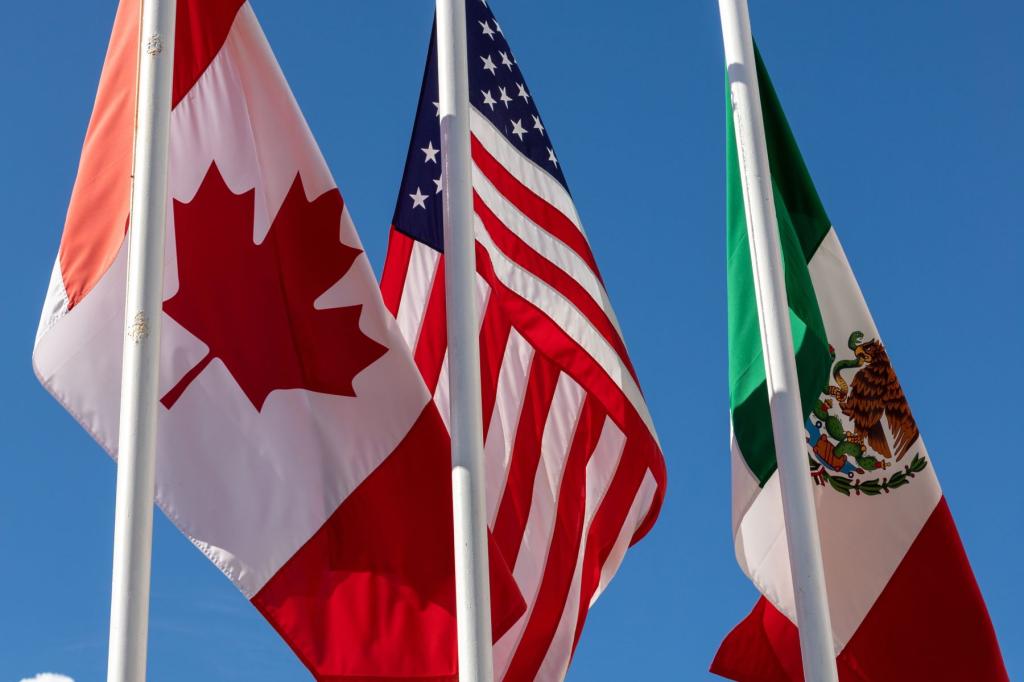
The 2026 USMCA Forward report comes at a time of flux. Christopher Sands lays out possible outcomes and the issues at stake as the countries of North America undertake the first joint review of the U.S.-Canada-Mexico Agreement.
Related Viewpoints

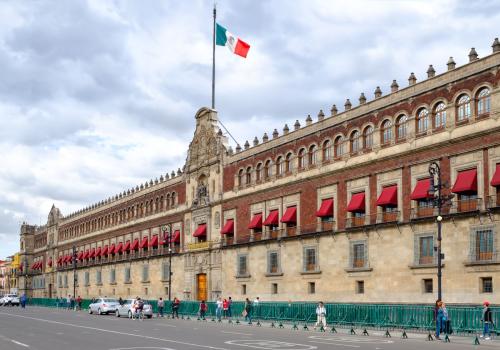

Developments over the past year have made the USMCA more central to the international trade and manufacturing of the three North American economies, reinforcing the stakes for the 2026 review. Brendan Kelly, Jesus Cañas, and Luis Bernando Torres examine the evolving North American trade and investment ties within the region and to East Asia.
Related Viewpoints
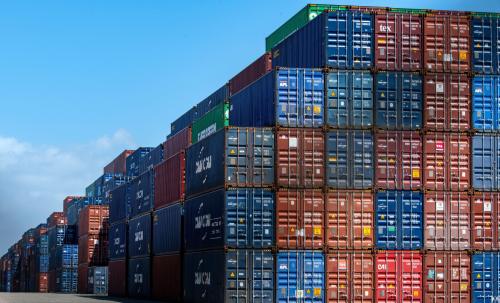


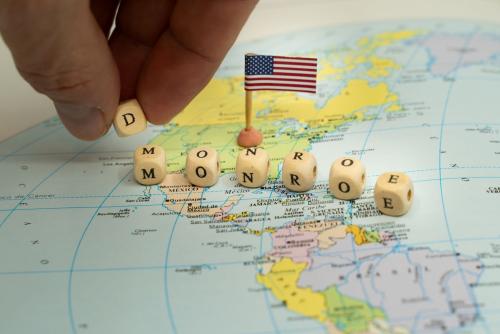
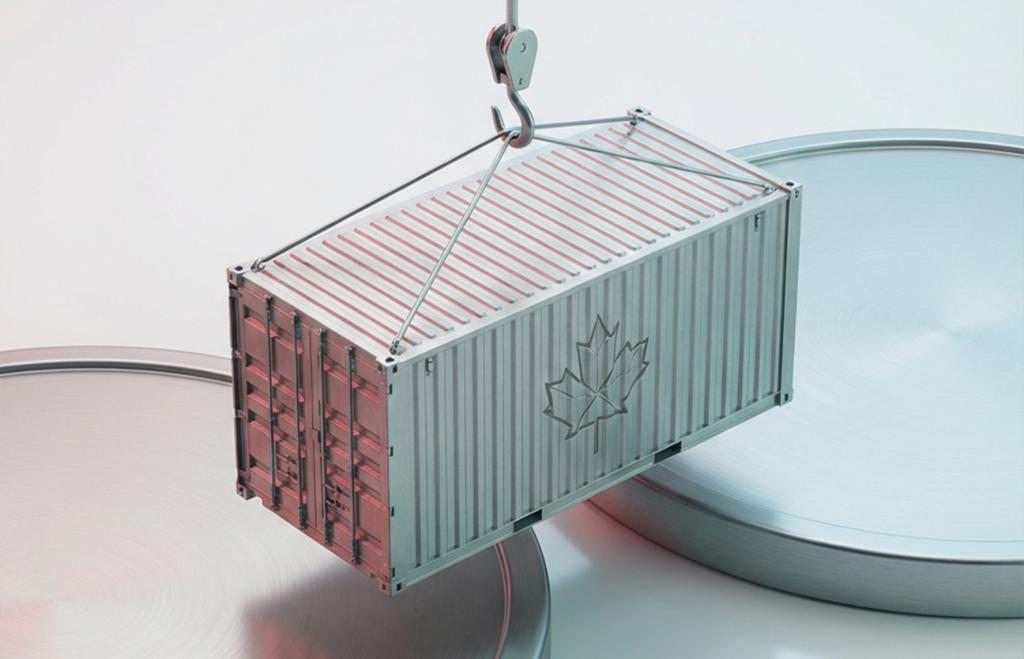
Canada faces a choice: deepen its long-standing relationship with the U.S. or search for additional partners. Christopher Sands unpacks the strained U.S.-Canada relationship since the second Trump administration.
Related Viewpoint

The U.S.-Mexico relationship has evolved over two centuries of geographic proximity, structural asymmetry, and deepening interdependence. Gerónimo Gutiérrez and Kimberly Breier trace the overall relationship and explore considerations Mexico faces as it navigates a dynamic of economic interdependence amid significant political differences.
Related Viewpoints


The automotive sector has seen major changes over the past year, with new factors in the trade dynamic of a deeply integrated supply chain in North America. Susan Helper and Todd Tucker analyze the panorama for the auto sector and discuss paths forward to strengthen the competitiveness and reliability of one of the region’s most important sectors.

USMCA and its NAFTA predecessor have shaped the regional steel industry into a deeply integrated market with high value production, processing, distribution, and consumption. Josh Spoores highlights how the United States’ Section 232 tariffs disrupted the North American steel industry and what reforms are needed to ensure a competitive steel supply across the region..

North American agriculture’s integration under NAFTA and now USMCA has created a continental market that buffers producers and consumers from global shocks, ensuring affordable food, stable value chains, and continued competitiveness. Kari Heerman and Ian Sheldon outline the opportunities and challenges facing North American agriculture and what the review should prioritize to keep the sector competitive and resilient.

Pharmaceuticals occupy a unique position in the North American economy as they are simultaneously a high-value traded good, a driver of innovation, and an essential component of public health security. William Padula explores the vulnerabilities in regional pharmaceutical supply chains and how the review can strengthen regional resilience.

USMCA modernized North American trade governance but replaced NAFTA’s durability with a conditional structure that introduced recurring uncertainty. Barry Appleton assesses whether USMCA’s dispute settlement mechanisms function as enforceable law or political leverage.
Related Viewpoint


USMCA’s Rapid Response Labor Mechanism (RRLM) was introduced for Mexico to address facility-specific violations of internationally recognized labor rights and Mexican labor laws. Mark Anner evaluates the effectiveness of the RRLM and what reforms should be addressed in the review that are favorable to all workers.
Related Viewpoint


The USMCA has contributed to strengthening the export market in Mexico and stimulated some economic growth. However, structural issues related to the coexistence of Mexico’s formal and informal economies must be addressed in order to tackle productivity complexities. In this chapter, Fausto Hernández Trillo analyzes the extent to which Mexico has narrowed the wage gap with the United States and Canada, as well as the firm productivity and labor market dynamics that play a role in labor outcomes.
The Brookings Institution is a nonprofit organization devoted to independent research and policy solutions. Its mission is to conduct high-quality, independent research, and based on that research, provide innovative, practical recommendations for policymakers and the public. The conclusions and recommendations of any Brookings publication are solely those of its author(s), and do not reflect the views of the Institution, its management, or its scholars.
The USMCA initiative gratefully acknowledges the support of donors including but not limited to the co-chairs, Brookings Trustee Paul Desmarais and Brookings International Advisory Council member Pablo González, as well as Brookings Trustee Victor Dodig, Brookfield Asset Management, George Weston Limited, Greenbrier Companies, Magna Services of America Inc., McCain Foods Limited, Rio Tinto, Saputo Inc., and TD Bank.
Brookings recognizes that the value it provides is in its absolute commitment to quality, independence, and impact. Activities supported by its donors reflect this commitment, and the analysis and recommendations are not determined or influenced by any donation. A full list of contributors to the Brookings Institution can be found in the Annual Report.
EDITORS: Brahima S. Coulibaly, Christopher Sands, Joshua P. Meltzer
ASSISTANT EDITORS: Maricarmen Barrón Esper, Chidozie Ezi-Ashi
AUTHORS: Mark Anner, Barry Appleton, Kimberly Breier, Jesús Cañas, Gerónimo Gutiérrez, Fausto Hernández Trillo, Kari Heerman, Susan Helper, Goldy Hyder, Brendan Kelly, Candace Laing, Dominic LeBlanc, José Medina, Valeria Moy, Maria Pagan, William Padula, Sofía Pérez Gasque, Christopher Sands, Ian Sheldon, Liz Shuler, Kristen Silverberg, Josh Spoores, John Stackhouse, Luis Bernardo Torres, Todd Tucker, Roberto Velasco
WITH SPECIAL THANKS: Maricarmen Barrón Esper, Chidozie Ezi-Ashi, Esther Lee Rosen, Jeannine Ajello ,Wafa Abedin, Mary Conrad
Measuring the effectiveness and implementation of the USMCA, as well as its impact on the policies and economies of the partner nations through forward-looking research, data, and analyses
Explore the latest data on trade, investments, meetings, and trade disputes
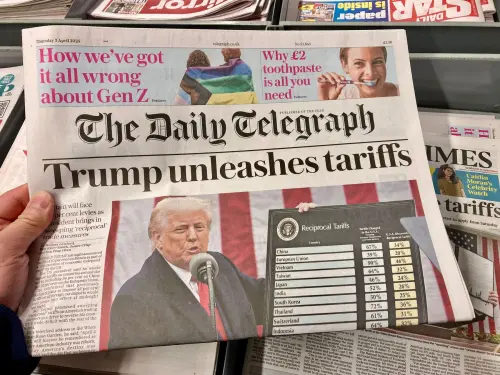
Keep tabs on key U.S. tariffs and trade deals, as well as reciprocal trade actions by other countries.