




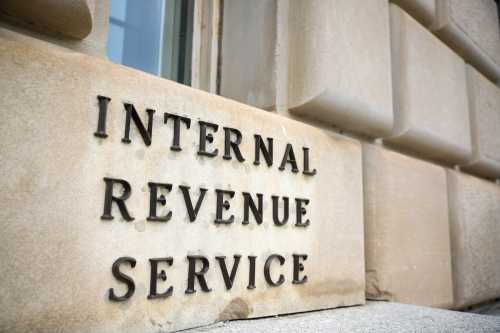
The IRS and the Postal Service are close to their breaking points. On this episode of The Current, Katie Dunn Tenpas speaks with Senior Fellows Elena Patel and Vanessa Williamson about how cuts have impacted the agencies’ mission, if they can be saved, and what all this means for taxpayers.
Related Content

Transcript
TENPAS: The IRS and the Postal Service are close to their breaking points. Both of these entities are sort of boiling over right now. They’re both on the stove, water’s going everywhere.
PATEL: Quite urgent actually. The postmaster general is saying that in 12 months, they’re going to run out of cash.
WILLIAMSON: The IRS lost one quarter of its staff last year, and three quarters of its senior leadership. You’re really beginning to see the impacts of that now during tax season.
[music]
TENPAS: You’re listening to The Current. I’m Katie Dunn Tenpas, visiting fellow in Governance Studies and host of the Democracy in Question podcast. With the April 15th tax deadline upon us, millions of Americans are reaching for stamps or waiting on refund checks. But the two agencies responsible for that work, the IRS and the Postal Service, are close to their breaking points. Today we’re asking how did these essential services become so fragile and can they be saved?
Joining me are my colleagues Elena Patel and Vanessa Williamson to break down the future of our most public facing government agencies. Elena, a senior fellow in Economic Studies, is co-director of the Urban-Brookings Tax Policy Center.
Welcome, Elena.
PATEL: Thanks for having me.
TENPAS: And Vanessa Williamson is a senior fellow in Governance Studies and the Tax Policy Center. Welcome to you too.
WILLIAMSON: Glad to be here.
[1:23]
TENPAS: So Elena I’m wondering if you could tell us a little bit about the history of the USPS, because I understand for the longest time it was actually a cabinet department, and it wasn’t until 1970 that things changed.
[1:32]
PATEL: Yeah. The Postal Service has been around since the founding of our nation. Benjamin Franklin is famously the first postmaster general of the United States Postal Service. And when it was established, it was established to bind the needs of the nation. And that remains a core part of its mission to this day.
What changed in the ‘70s was the financing and the business model. And so the Postal Reorganization Act in 1970 established the Postal Service as an independent federal agency that was charged with delivering the mail and doing it in a way that did not require taxpayer funds.
So what’s changed between 1970 and today is the underlying business model for the Postal Service and coming back to the fragility that we’ll be talking about today. The economics of letter mail are very different in 2026 as compared to 1970. But the original establishment was to give it business flexibility to deliver mail, but it’s always been a core part of its operations to bind the nation.
TENPAS: And so it went from being a hundred percent governmental to quasi-governmental —
PATEL: Yeah, that’s right. So eventually it was established that it had a board of governors, and so the agency operates with a lot of autonomy. They can make a lot of business decisions without having to go to Congress.
They’re expected to be self-funded with some very small exceptions for some subsidized services. But ultimately, U.S. Postal Service employees are employees of the federal government. They just exist in kind of a separate bucket than what you think of as, you know, the IRS or the Treasury or other federal employees.
TENPAS: It’s kind of an interesting carve out, I think.
PATEL: Yeah, that’s right.
[2:55]
TENPAS: And I understand you recently wrote a paper called the “U.S. Postal Service’s fiscal crisis,” in which you outline these dangers. Can you just summarize what the primary dangers are?
[3:03]
PATEL: Yeah, so the primary danger is that the economics of delivering mail changed in the early 2000s with the rise of digitization and email and digital communications. Letter mail has been the core sort of source of revenue to fund the Postal Service. They have a protective monopoly actually to help them raise revenue to be able to do the job of universal service, which means delivered to everybody in the United States no matter where you are at uniform and affordable prices.
[3:30]
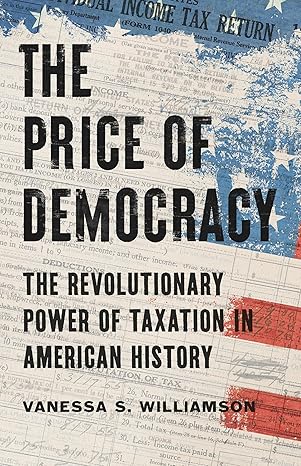
TENPAS: Yeah. And Vanessa, you recently published a book called The Price of Democracy, on the revolutionary power of taxation in American history. But you also have this incredible website called the IRS Spotlight, and you have all of these different performance measures about that. Wondering if you can tell me a little bit about the evolution of the IRS and also address the IRS Spotlight and what it does and why.
[3:51]
WILLIAMSON: So, the IRS is largely a product of the Civil War, but you know, of course the Treasury Department was our first department because raising revenue for the government is job one fundamentally. If you’re going to have a government, someone has to be paying for it. But it wasn’t until the Civil War that we imposed an income tax for the first time.
Before that we were relying heavily on tariffs. But, you know, when the Union Army needed the money to put down the rebellion, Congress was flooded with letters from people demanding that their taxes be raised so that this rebellion could be put down.
So the the Civil War, you see the start of the income tax, they were taxing everything, you know, playing cards, every single thing you can imagine was getting taxed. But they also put in place an income tax because they wanted to make sure that very wealthy people were doing their part while, you know, the country’s sons were headed off to war.
But then, there’s sort of a a hiccup in the process, if you will, because the income tax was allowed to expire after the war. We certainly didn’t need as much money for the federal government. And then when they tried to reinstitute an income tax, it was declared unconstitutional by the Supreme Court, a Gilded Age Supreme Court that was making a number of other decisions that would later be overturned like Plessy v. Ferguson and other conservative decisions.
So, it would take another 20 years before we get an income tax. And so we only really have the modern income tax once the 16th Amendment is passed to support American service members in World War I. Right?
So ever since then, we’ve had this Bureau of Internal Revenue, and it’s always played a sort of a crucial part in keeping the country afloat in times of war and in times of peace.
[5:13]
Now, in my book, I talk about how important taxation is for the development of democracy. There’s this sort of myth that taxation is tyranny and you know, but the reality is it’s elected officials who are really good at raising taxes because the need for tax money encourages leaders to listen to the people that they are taxing, and it gives them an incentive to pay attention, and to be concerned with the needs of the population.
And taxation also gives taxpayers power over the government. So over time, taxation and representation develop together and strengthen each other. So that’s one of the reasons why I care so much about the health of the IRS. Because the capacity of the country to tax is in many ways a measure of the health of our democracy, because it’s the revenue that the IRS collects that allows us to enact democracy. Right?
I mean, otherwise, you know, you could send your legislators to Washington, they could write stuff on paper. But it doesn’t matter what they wrote unless there’s the money to do those things. Right? Whether that’s build roads, build schools, whatever it would be. So the the role of the IRS Is really critical to maintaining the capacity of the federal government to do what the voters want.
And so the IRS Spotlight tracks all different kinds of IRS performance data. There was a large number of changes . And so this is where you can find call wait times. You can find information about paper processing or about changes in taxpayer privacy, all kinds of different issues, so that Americans have better access to information about their revenue agency.
[6:34]
TENPAS: Okay, that sounds great.
The fact that both of these entities are sort of boiling over right now, they’re both on the stove, boiling waters going everywhere. I, as somebody who watches government carefully would think that maybe DOGE cuts, sort of a general kind of distaste for governing or caring about governing, maybe a deep seated hatred of taxes as well, is kind of what has led us to this position. I think it’s, number one, interesting that it’s coincidental, it’s happening at the same time. And how much of it is due to a new administration that seems to have disdain for government and government workers and has let go a lot of them? Or was this going to happen no matter who was president?
[7:13]
PATEL: In the case of the Postal Service, this has been brewing since 2008 across Democratic and Republican administrations. I think to the extent that the administration has paid attention to it has varied a little across sort of cycles. But this has been coming. What’s going on with the Postal Service and its financial fragility is just the result of sort of digitization and modernization.
And it’s actually a fragile national postal operator is something that developed countries around the world are confronting right now and trying to figure out what should a public postal operator look like in 2026? What is their role? What is their mission? And what should the funding be that’s attached to it?
TENPAS: So we’re not the only ones in this boat.
PATEL: Absolutely not.
[7:52]
TENPAS: Okay. And what about you, Vanessa? What about the IRS? Is it a function of the current administration or is it sort of a long running or or technological changes that have fed into this?
[8:01]
WILLIAMSON: Yeah. So the IRS was chronically underfunded for decades. There was a big move in the Biden administration to reinvest in the IRS. You know, originally it was going to be an $80 billion investment in IRS modernization because, you know, the IRS has a lot of very ancient technologies, so there is sort of a modernization story involved. And also just the IRS was hugely understaffed, it has a much older staff because they were operating under a hiring freeze for many years.
So there was just a bunch of revitalization work that needed to be done. That was underway. And the IRS, unlike the Post Office, was very strongly affected by DOGE and other workforce cuts last year. So the IRS lost one-quarter of its staff last year, and three-quarters of its senior leadership, a lot of folks leaving over changes in taxpayer privacy protections.
So, the IRS has seen an enormous loss and you’re you’re really beginning to see the impacts of that now during tax season.
[8:51]
TENPAS: Right. All that turnover leads to kind of the inability for any long range planning, a lot of anxiety, a lot of uncertainty.
[8:57]
WILLIAMSON: And it’s also just the day-to-day. The loss of leadership absolutely has long-term effects, but there’s not enough people to answer the phones at the IRS right now. So here we are, the lead up to tax day, you have a question about about your taxes, about how to pay, you’ve gotten an audit letter and you have a question about it, you want to know more. You can be on the phone with IRS for an hour waiting just to reach an agent. Independent observers have been saying that the wait time can be an over an hour and that that there have been a lot of hangups that you get. You wait for an hour and then there’s just a click.
TENPAS: Oh, that’s not fun.
WILLIAMSON: Not the best.
[9:26]
PATEL: Don’t forget that the IRS is charged with lifting up the $5 trillion tax bill that was passed last summer. And so not only is it the day-to-day of the normal tax filing season, but it’s taxpayers trying to understand no tax on tips and overtime over titles.
All these new deductions and the regulations that need to be written. Even in a normal year, IRS would have been doing much more this year than in any other year recently because of the bill that needed to be implemented.
WILLIAMSON: And then there was a government shutdown, right, longest in history.
TENPAS: That’s right.
WILLIAMSON: So there was all this time where people were either not working or working without pay to try and get these regulations in place to the taxes. It was a really perfect storm this year for poor IRS.
[10:00]
TENPAS: Elena, where do we go from here? Like, what are your thoughts about fixing the system? Even just the possibility that we can improve it in a short time?
[10:10]
PATEL: It’s a really good question because we really are at a crossroads right now. I am somebody who believes that the Postal Service provides fundamental public value. That hasn’t changed. Despite digitization and modernization, what they do now is as important as it was in the late 1700s.
We are an enormous country. If you think about us compared to European countries, even compared to Canada in terms of where they deliver mail, it’s an enormous effort to maintain these mail networks.
And mail networks are more than delivery of Christmas cards. It’s how businesses operate, it’s how people get their drugs, it’s how people who don’t have access to retail in their local environment, which has been happening, sort of the closing of banks and big grocery stores, they have to deliver everything in.
And the Postal Service is the only operator that is required to deliver to places where private carriers might not go. And so it’s a public good. And it’s got a broken funding model. And that means that the only way to fix this is for Congress to come in and to really rethink postal financing in the way that 1970 was really a seminal moment in how the Postal Service came to be and what it is today.
We’re at a moment again where the old model from 1970 will not work, and so this is going to require taxpayer funding. We just can’t fund the Postal Service with letter mail delivery anymore.
[11:25]
TENPAS: So how do you respond to those who suggest that we should just privatize USPS and then we’ll be fine?
[11:30]
PATEL: Privatization is a really appealing thought concept, I think. When people float it, it might sound like, oh yeah, Amazon is delivering to my door now, why do we need the Postal Service anymore?
But Amazon does not deliver to everybody’s door. They only deliver in places where it makes economic sense. And that’s not the part of the Postal Service that’s the public good. The public good is that the Postal Service will go to Alaska and will go to Northern Montana and we’ll go even to, you might think D.C. is very dense, you only have to go about 50 miles outside of D.C. to get to pretty less dense and rural areas. And Amazon doesn’t deliver there. Amazon relies on the Postal Service to deliver there.
And so privatization without providing funding to the private operator to deliver in those rural areas will leave out a huge majority of the country in terms of area and a really large number of people.
And so if you’re going to have to pay a private operator to do it, I see absolutely no value to moving to a private model. You might as well give that money to the Postal Service to deliver in those places where it already has the network and the assets and the people in place to do this. And do it well.
[12:30]
TENPAS: And does the Postal Service have any champions in Congress that think, Come on, we have to fix this, let’s get our act together and do this? Or is Congress as I expect it to be highly dysfunctional and there’s not a lot of reward with your constituents because of you’re working on for USPS?
[12:44]
PATEL: I actually think you might be surprised to hear, given where we are right now politically, that the Postal Service and saving the Postal Service is a surprisingly bipartisan area. Every congressman has a post office in their local area that’s really an important fixture to the community. And so if you pay attention to congressional conversation and testimony, it’s incredibly bipartisan. And I think everybody’s trying to figure out a path forward. It’s just an uncomfortable path forward because it really does mean fundamentally rethinking how we fund the Postal Service.
If you try to talk to somebody about the Postal Service, like, it’s something that’s always there. It’s one of the most trusted groups in America, despite its financial issues, which I would mention are quite urgent actually. The postmaster general is saying that in 12 months they’re going to run out of cash.
TENPAS: In 12 months?
PATEL: In 12 months. And so that means that while Congress may be reluctant to engage on this right now in this moment, the Postal Service is really putting the pressure on Congress to do something because they will have to do something in the next year.
[13:35]
TENPAS: Yeah. What about you, Vanessa? Any reform ideas for the IRS? Can we sort of salvage where we’re at?
[13:42] WILLIAMSON: I mean, the IRS was on a real upward swing. You know, it it is not an area that has bipartisan love. It is not an area that has any partisan love on any either side. It’s bipartisan sort of beating up on the IRS has been a more typical thing.
But, you know, the IRS raises $5 trillion a year for public purposes. I mean, if can imagine a large company, they are all dwarfed by what what our government is. And so it’s the IRS that brings that money in the door. And they deliver billions and billions in benefits to families across the country. So the tax credits, like the Earned Income Tax Credit.
And they do really important work too. You know, and they’re a law enforcement agency. So if you care about everyone having to follow the law and everyone having to pay their fair share of taxes, and Americans really do care about that, the IRS’s enforcement arm is is really important.
So it’s a it’s a crucial agency. One of the cool things about the IRS is if you invest in it and the government actually ends up with more money, that’s one of the things that you achieve. Right? If you invest in IRS services, it makes it easier for people to pay the money that they owe. It ensures that people who are trying to cheat either other taxpayers or the federal government get caught.
And so there’s just a huge financial upside. If you invest a dollar in high-end enforcement at the IRS, twelve more dollars go into the federal government. Nonetheless, despite that incredible revenue incentive, the the agency really does struggle. It has struggled for a long time, and the last year has been very, very hard.
[14:57]
So, what we’ll need to see is another major reinvestment in the agency. We’ll need to see restaffing, recommitment, modernization efforts. I, mean, a program that was underway that got shut down last year that was a real value. It was called Direct File. In every other sensible country in the world, you can file your taxes directly with the federal tax agency, and they generally speaking tell you what they know about your taxes. Whereas in the United States, it’s like a quiz. You know, you have to fill out all the paperwork, you have to put in all the numbers, and the IRS says, well actually we know these numbers already and you got it wrong.
So Direct File was a program to end that. Right? That that you could file directly with IRS and they were going to start pre-population, which is where they would put in the data they already have about your salary and wages and so forth. And that was one of the programs that got shut down last year.
So I think things like launching things like Direct File again, these initiatives are really important, they’re things Americans really want. And so I think that’s a crucial part of revitalizing an agency that even if it’s not beloved, it is necessary.
[15:53]
TENPAS: So that’s the common denominator here: a functional Congress that realizes that these two pots are boiling over and really needs to do something. And are you optimistic about that?
[16:02]
PATEL: I am an eternal optimist about the Postal Service in that I think we can’t let it wither on the vine. And if you think about the scope of dollars one might be talking about to solve the problem, again, I’ll just offer in the context of a $5 trillion tax bill we passed last summer— we spent $5 trillion on tax cuts— the Postal Service right now is in the red a couple billion dollars a year.
And so to think about what kind of funding shift might need to happen to kind of plug the gap, it’s sort of the rounding error of the federal budget in the context of what an important role that it plays. In the context of the IRS being able to deliver your tax returns to the federal and the state government and make sure that those are entered on time and you know how to interact with the system.
The president just issued an executive order having to do with mail-in voting that had implications for the Postal Service, but with no dollars attached to them in a way that is going to cause more, not less, financial strain for the Postal Service. We treat it like the public good that it is. It supports all of our government agencies and it needs money to survive. And so I think it’s not unreasonable to expect Congress to provide the funding that it needs to shore up its financial model.
[17:05]
TENPAS: And is there any fear that Congress will just let it die on the vine?
[17:08]
PATEL: I don’t think so. Again, if you talk to any congressman, they’ll tell you, my grandfather was a postmaster and somebody was a letter carrier. It’s the largest employer of veterans in the United States. There’re incredibly good jobs at the Postal Service. They have very high promotion rates of females and minorities. It’s a really great place to be. And so I think it would be really hard for them to let it die. I think it matters to a lot of Americans and to congressmen too.
[17:31]
TENPAS: And on a scale of one to 10 for you, how optimistic are you that this will be solved before a real crisis? Like, we’re not going to get mail for four weeks or something like that?
[17:38]
PATEL: Very optimistic.
TENPAS: Okay.
PATEL: I mean, there have been disruptions with some of the consolidation plans that are in place right now. And Congress pays attention, because again, if somebody can’t get their medication or their feed for their farm, they yell at their congressman and they’re loud. So I think it’s one of these things that it’s a trusted agency that actually touches everybody’s lives every day. So when things are disrupted, it is loud.
[17:59]
TENPAS: And what about you, Vanessa? How optimistic are you that these reforms that really need to take place will actually occur?
[18:06]
WILLIAMSON: I think I’m more optimistic than I would’ve been in, say, 2019, you know, when the IRS had suffered from many years of hiring freezes and no one was really talking about investing in the way that the agency needed.
But now, you know, we’ve seen what happens when you put a major investment into the IRS. We’ve seen the dividends that come out of that. You know, programs were underway that were really working. And so I think the blueprint is there, you know, so it’s just a matter of re-implementing some of that program. Obviously it’ll have to be updated, but a lot of what we need to know about how to revitalize the IRS, we have that information. And so I’m more optimistic than I would’ve been even just a few years ago.
[18:41]
TENPAS: Will we make it through this tax season without any enormous upheaval?
[18:45]
WILLIAMSON: So I I hope we’re not going to see any sort of major crisis this year. The reality is the remaining staff of the IRS works really hard. You know, it’s not the stereotype of a a government employee but, you know, just as you said, a a quarter of our government employees are veterans. They are mission-driven people, they work really hard, and they’re used to working without adequate resources or without adequate support.
So a lot of people are trying to land the plane this tax season, and I think they’re going to make it. But there’re going to be just growing challenges over time. We’re eroding base services in a way that’s going to come increasingly painful over time.
The other thing that’s not happening right now that’s really important actually is auditing. Right? So, to the extent we don’t enforce the law on taxation, it means that the responsibility for funding our government falls on the honest and also those who have wages and salaries, which the government already knows about. Right? And so it’s, it’s on that side that I think we’re going to see the pain first. That is to say that if you want to cheat on your taxes, right, or if you can hire very expensive lawyers and accountants to help you avoid your taxes, the IRS is going to be much less capable of ensuring that the laws are applied fairly.
But yeah, this year, if you’re getting a paper check, I think you’re going to be waiting a long time. If you submit a paper return, I think you’re going to be waiting a long time. But by and large, the system’s going to hold.
[19:58]
TENPAS: And some of this ties into the Postal Service, right?
[20:00]
PATEL: Yeah, that’s right. This filing season is different in a different way that has to do with the Postal Service, which is the consolidation plan that the Postal Service is in the middle of rolling out has meant that there are changes or updates to the way the postmark is applied to a letter. What’s changed is how long it may take for your letter to get to the machine that applies the postmark, which dates when you’ve dropped your tax return with the Postal Service. And the IRS requires that to be postmarked by April 15th to be counted as an on-time filing. Otherwise, you’re subject to penalties.
So if you have not filed your taxes yet, it’s really important that you’re aware of the tools so that if you are going to really mail that in on April 15th, you need to hand take it to a retail counter at the post office and ask them to hand postmark your return, or it will not be postmarked on April 15th and then it’ll be late.
TENPAS: This has turned into a public service announcement.
PATEL: That’s right.
TENPAS: That’s really important.
[20:49]
PATEL: So everybody who needs to file at the last minute on April 15th, that’s fine, that’s the deadline, but you are incurring a little bit of extra cost now and that you really need to hand take that to the post office and make sure that it’s hand postmarked.
TENPAS: Thank you for that. And I really like the point you made about the importance of appreciating government employees, and these people are really, sort of, working as hard as they can to make things, like, with minimal resources and minimal support. But I’m going to take your optimism and put that in the bank today, so thank you for that. Thanks for a great conversation.
[music]
PATEL: Yeah, thank you.
TENPAS: You can learn more about USPS and IRS reform on our website brookings.edu. Thank you for listening. I’m Katie Dunn Tenpas.
Participants



More information:
- Listen to The Current on Apple, Spotify, YouTube, or wherever you like to get podcasts.
- Learn about other Brookings podcasts from the Brookings Podcast Network.
- Sign up for the podcasts newsletter for occasional updates on featured episodes and new shows.
- Send feedback email to [email protected].
The Brookings Institution is committed to quality, independence, and impact.
We are supported by a diverse array of funders. In line with our values and policies, each Brookings publication represents the sole views of its author(s).



Commentary
PodcastWhat does the future hold for the IRS and Postal Service?
Listen on
The Current Podcast
April 13, 2026