This chapter is part of USMCA Forward 2026.
This chapter analyzes the extent to which Mexico has narrowed the wage gap with the United States and Canada. While some stakeholders in the U.S. and Canada contend that Mexico deliberately maintains low wages to secure a competitive advantage, evidence suggests that the decline in U.S. manufacturing employment stems primarily from the China Shock rather than from Mexican competition. In fact, due to the highly integrated North American supply chain, Mexican and U.S. labor are often complementary rather than direct competitors; paradoxically, Mexico itself has experienced negative effects from this shock. These external dynamics are further complicated by Mexico’s persistent dual economy, in which a highly productive export sector coexists with a massive informal sector that suppresses national productivity. This structural dynamic began before NAFTA and has persisted under the USMCA. While the agreement has supported some economic growth, it alone is insufficient to address deeper, longstanding challenges such as widespread informality and chronically low productivity.
Mexican economy under USMCA
Mexico’s total productivity1 grew strongly during the first 20 years of the so-called Mexican Miracle (1950–1970), but it declined thereafter, averaging negative growth rates from the onset of the debt crisis in 1982 up to the present day.2 In the early 1990s, Mexico reformed its economy in response to what is referred to as the lost decade of the 1980s, a period marked by economic stagnation and annual inflation rates exceeding 100%.
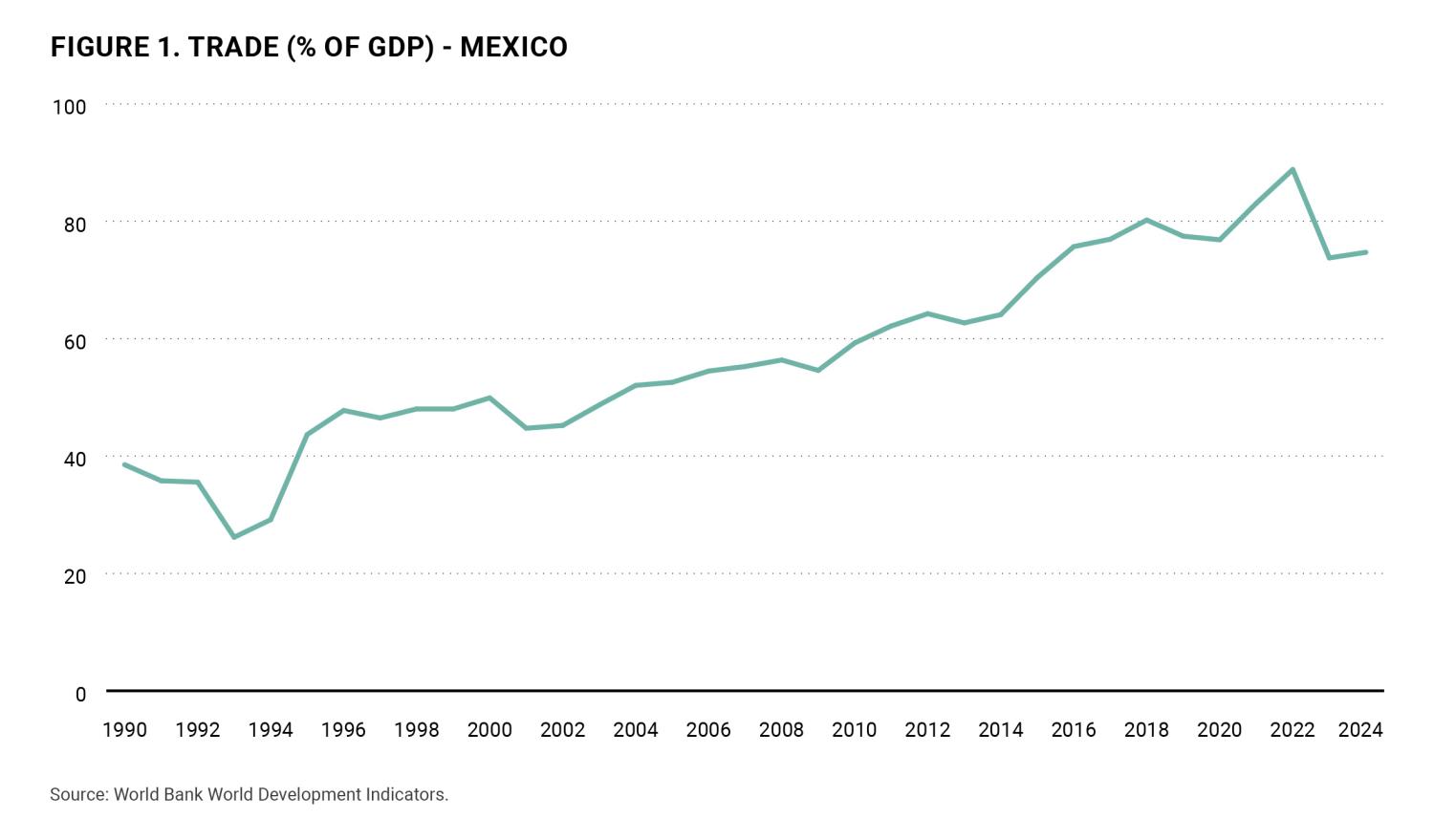
The country adopted an outward-oriented growth strategy that included greater international trade, financial liberalization, and a set of policies aimed at bringing inflation under control. As part of this strategy, Mexico signed the North American Free Trade Agreement (NAFTA) with the United States and Canada. This contributed to a substantial increase in trade, which rose from 26% of GDP in 1993 to 80% in 2024, as shown in Figure 1.
However, following the financial crisis of December 1994 (the so-called Tequila Crisis), Mexico was bailed out by the United States. Since then, the country has devoted considerable attention and effort to taking advantage of the benefits provided by the agreement. Over time, however, economic policy gradually lost sight of the fact that the agreement was only one component of a far more complex development strategy that required broader policy attention, as I explain in this chapter.
The prior import-substitution and state-led development strategy—which during its first 20 years (1950–1970) promoted the manufacturing sector—had initially achieved high rates of economic growth and high total factor productivity (TFP). Yet it left behind an important legacy. By abandoning the agricultural sector and channeling resources toward manufacturing, the country created significant distortions in relative prices, which in turn encouraged migration from rural areas to industrial cities. In addition, population policy was neglected during those two decades of rapid growth, resulting in birth rates far outpacing the capacity to create new jobs.
Thus, by 1970, when industrial growth slowed down sharply and therefore ceased generating sufficient employment—and with demographic pressures increasingly demanding new jobs—the conditions emerged for the expansion of what is now known as informality. This refers to workers who are not registered with fiscal and/or social-security authorities. They mainly include self-employed workers, street vendors, and salaried workers lacking legally required benefits.
Today, Mexico can be understood as a dual economy in which a modern, globally integrated formal sector coexists with a larger informal sector—measured in employment terms—that survives in the gray economy. Currently, about 55% of total employment is informal.3 The latter exhibits extremely low labor productivity, largely because its activities take place “in the shadows,” as Santiago Levy has shown.4 These activities, by their very nature, do not participate in international trade (they cannot, for example, issue formal invoices). Consequently, when national productivity levels are estimated, the aggregate result is negative.
It is important to emphasize that while the formal sector is significantly more productive than the informal one, the large size of the gray economy pulls the overall average downward, as shown in Table 1, which presents Total Factor Productivity (TFP) estimates for various years. Nonetheless, productivity in the formal sector is also negative. The table includes a pre-NAFTA estimate (1993), showing that even before NAFTA entered into force, the formal sector already exhibited negative TFP—and this trend has persisted to the present day. In other words, based on these estimates, TFP did not increase under NAFTA and remained negative even after its renegotiation into the USMCA.
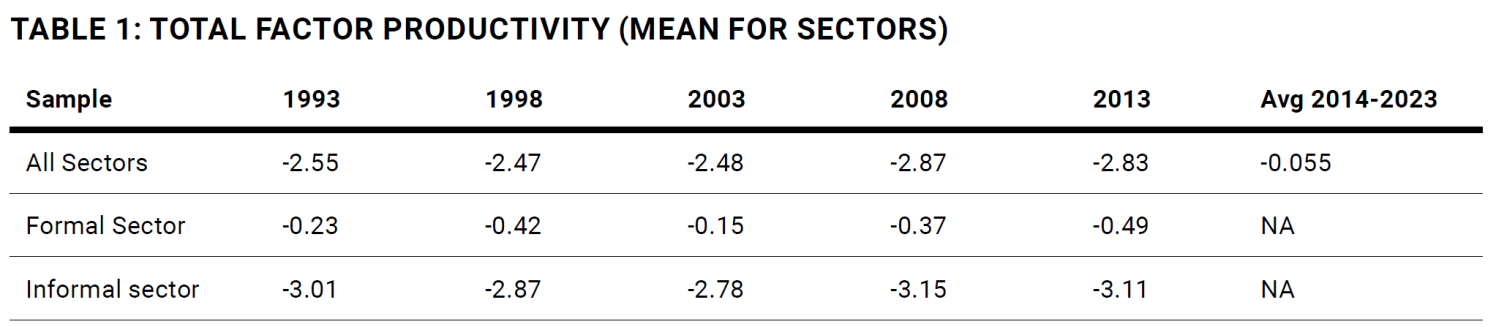
Source: Author’s calculations + Joaquín Mayorga Garrido-Cortés, Resource Misallocation in Mexico (M.A. thesis, CIDE, 2017); INEGI (2014–2023)
Notes: Methodologies of estimation for both sources differ.
Gains from USMCA
This does not mean that NAFTA and USMCA did not bring benefits. Rather, the issue is that Mexico has relied too heavily on the agreement to address structural problems inherent to its dual economy. As noted earlier, the agreement is a valuable instrument, but it is not a panacea for Mexico’s economic challenges. To properly assess its benefits, the only study that has jointly evaluated welfare and wage outcomes for all three member countries is Caliendo and Parro.5
Using unique datasets, these authors decomposed and quantified the distinct role played by intermediate goods and intersectoral linkages as amplifiers of the gains arising from tariff reductions, thereby overcoming key empirical challenges. Their model suggests two important results.
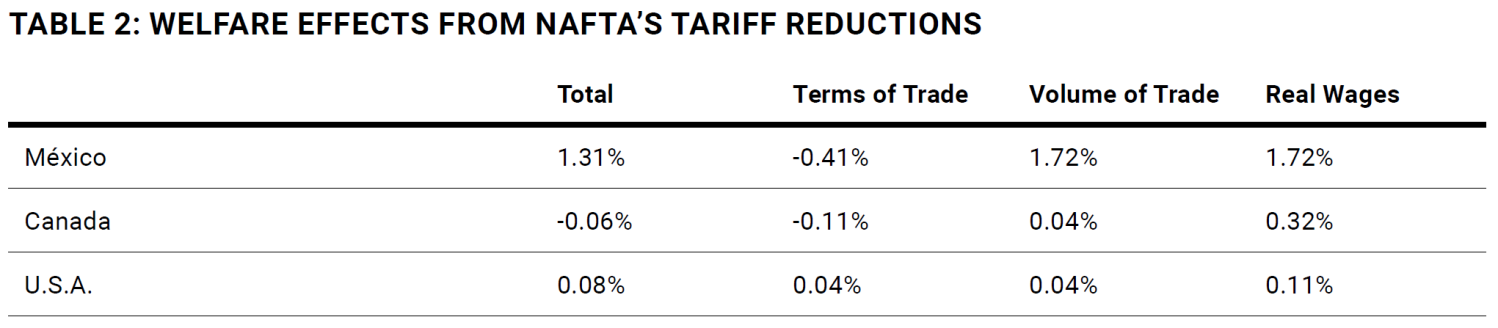
First, NAFTA’s tariff reductions had a significant impact on the member economies. NAFTA increased aggregate intra-bloc trade by 118% for Mexico, 11% for Canada, and 41% for the United States. Second, the effects on welfare (see Table 2) were unevenly distributed. While Mexico and the United States gained 1.31% and 0.08%, respectively, Canada experienced a small welfare loss of 0.06%. Real wages, however, increased slightly in all member countries, with Mexico experiencing the largest gains—a result consistent with Fentanes and Levy.6 The decomposition further shows that trade creation among North America members exceeded trade diversion away from the rest of the world.7Mexico is, in fact, the country that benefited the most in terms of intra-bloc trade, welfare, and real wages. Nevertheless, the United States and Canada also gained, though to a lesser extent, as standard international trade theory would predict.
Source: Caliendo and Parro
Still, some policymakers—particularly in the United States—perceive the agreement as having harmed their country in terms of wages and employment. However, as shown above, the findings of Caliendo and Parro8 indicate that this is not the case. Moreover, the current dynamics of trade among the three countries suggest that these results continue to hold under the USMCA.
Wages and productivity in the Mexican economy
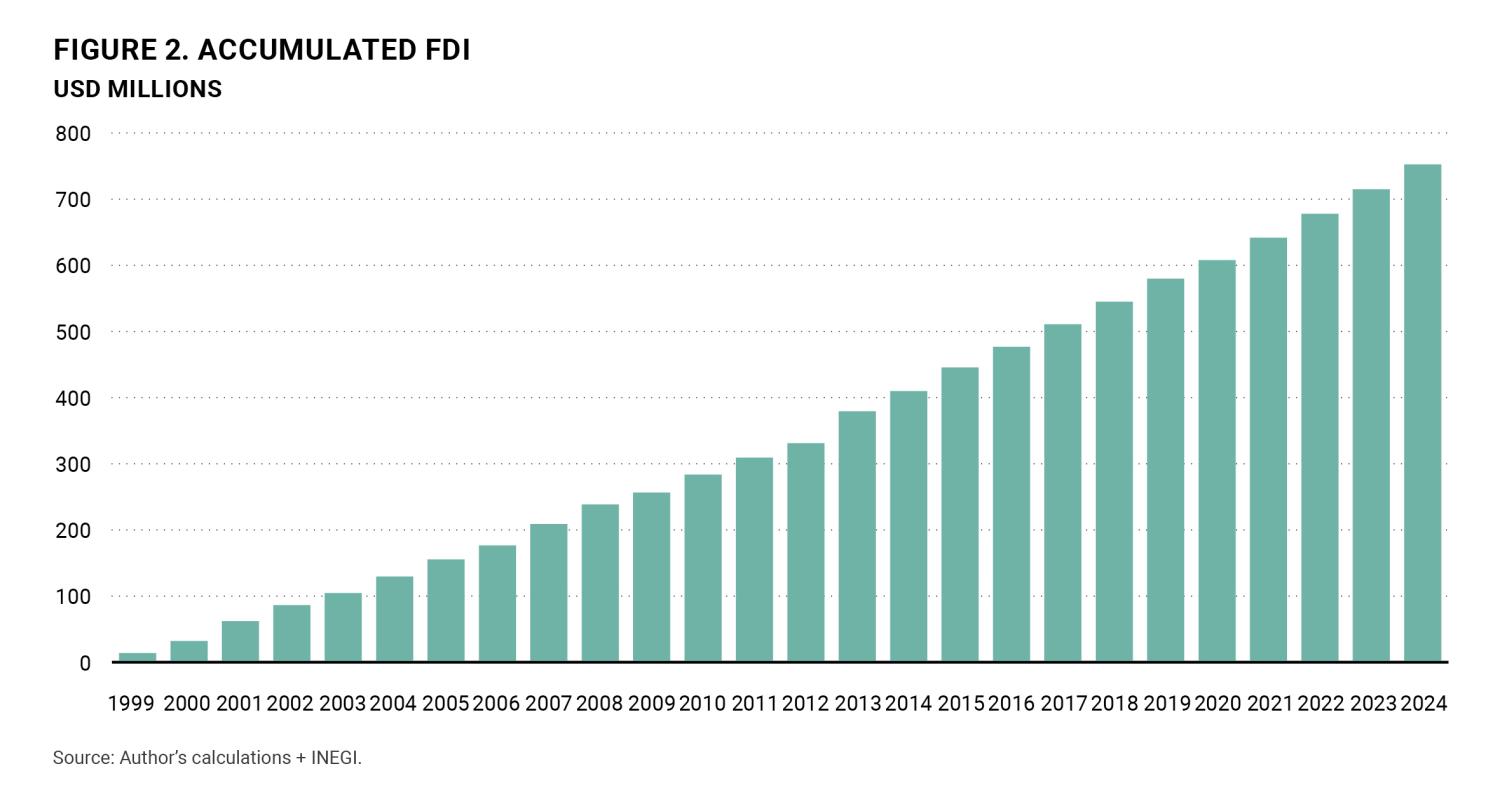
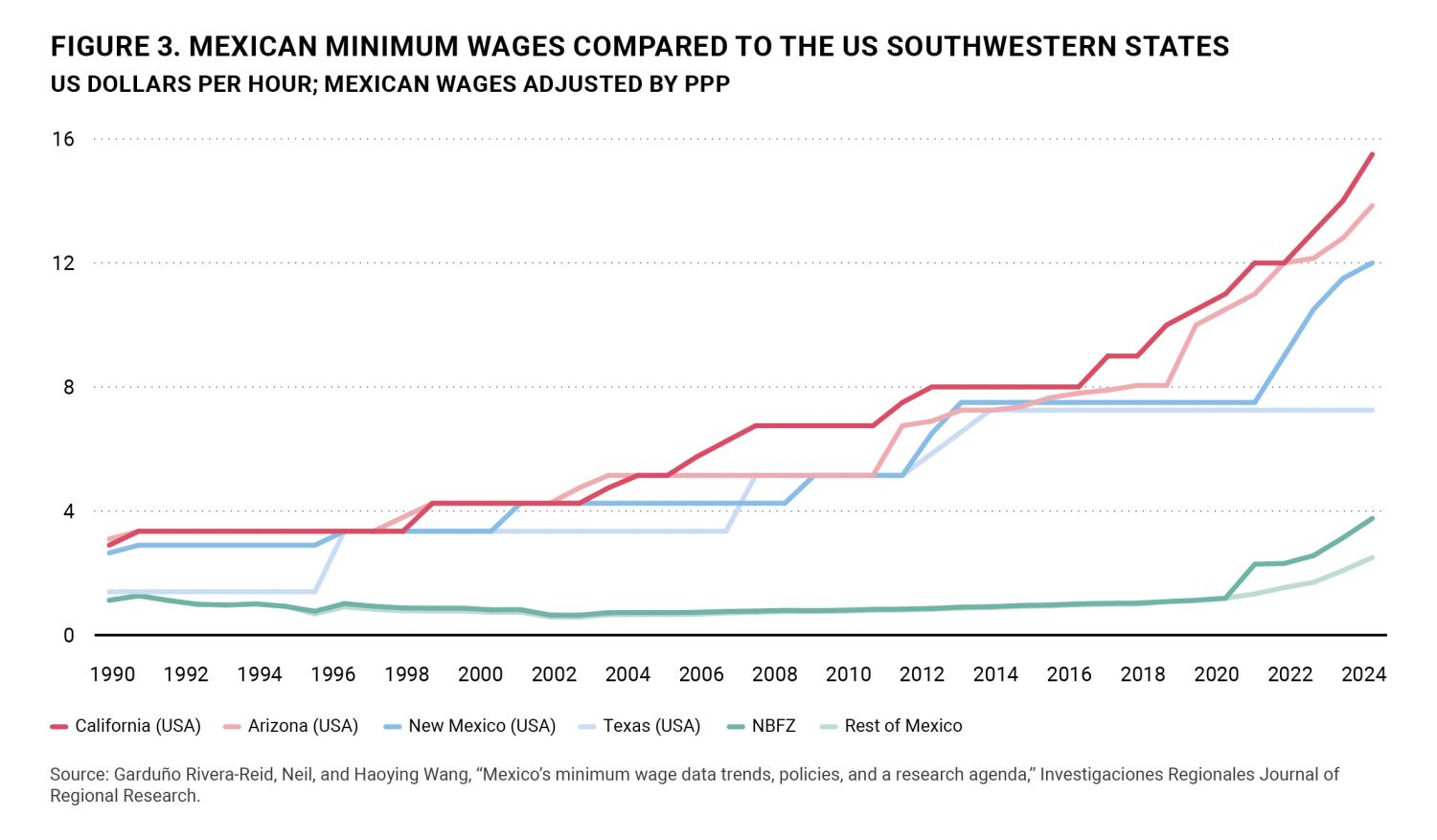
It is important to pinpoint that USMCA also has other, often overlooked, objectives—one of the most important being the strengthening of property rights in Mexico.9 This contributed to a significant increase in foreign direct investment (FDI) following the signing of the original agreement, a trend that continued after the renegotiation under the USMCA, as shown in Figure 2. The increases in FDI were also driven by expanding export opportunities to the United States and by Mexico’s comparatively lower labor costs relative to its two trade partners. Figure 3 presents Mexico’s minimum wage (adjusted for purchasing power) relative to those of the U.S. border states. As shown, real wages remained largely stable until 2018.
Thus, the perception in the United States that jobs were being lost to Mexico due to low Mexican wages was partly rooted in these two indicators: rising FDI and wage containment. Following the renegotiation of NAFTA into USMCA in 2020, a novel wage-content rule was included in USMCA that requires that 40% to 45% of a vehicle’s value be produced by workers earning at least $16 per hour. This provision was specifically designed to discourage outsourcing to Mexico and to incentivize higher labor compensation. USMCA in effect mandated wage increases for workers involved in the production of export-oriented manufactures (NBFZ)—particularly in the automotive industry—with the goal of stemming the alleged outflow of jobs from the United States (Figure 3).
Official employment statistics,10 however, suggest that the outflow of jobs from the United States to Mexico has not been—nor is it currently—a persistent problem in the United States. Over this century, the U.S. unemployment rate has moved largely in line with the country’s own economic cycle and in response to external shocks such as the subprime crisis and the COVID-19 pandemic. Excluding these events, the average unemployment rate has been relatively stable at around 4.8%, slightly above what is considered the natural rate of unemployment—or the rate consistent with full employment—in the United States.
Moreover, the phenomenon known as the “China Shock” was the primary driver of concentrated manufacturing job displacement in the early 21st century in the U.S.11However, Mexico also experienced its own China Shock. Mexico in many sectors competes with China. In addition, the highly integrated North American supply chain—particularly in industries such as automotive and machinery—means that U.S. and Mexican workers are often complements rather than direct substitutes in the production process, with Mexican factories relying on U.S.-made parts and vice versa. As a result, the negative impact of China on U.S. manufacturing also adversely affected Mexico.
In addition, it has been argued that Mexican workers’ rights were undermined by NAFTA. The USMCA responded to these concerns and incorporated stronger labor and environmental protections, enshrining workers’ rights to unionize and collective bargaining, and instituting stricter enforcement mechanisms, such as the ability to block goods from entering if labor laws are violated.
These labor concerns were addressed by the Mexican administration that took office in 2018 (in the middle of the renegotiation of USMCA)12 with the so-called New Labor Model13 that was designed in 2019 and implemented in 2022, which aimed at moving toward an environment of greater union democracy, faster and more transparent labor justice, and a more dignified and equitable working environment for workers in Mexico. Of particular importance for the USMCA is the guarantee of union freedom, which was incorporated into its provisions.
This component—known in Mexico as “union freedom and democracy”—seeks to return control of unions and collective bargaining agreements to workers through: 1) personal, free, and secret ballots for electing union leadership and, crucially, for legitimizing collective bargaining agreements (CBAs); 2) elimination of the possibility that a worker be dismissed for not belonging to or for resigning from a union; 3) requirements that unions provide financial accountability to their members; and 4) a mandate that a majority of workers approve collective bargaining agreements through a vote for them to be valid, putting an end to the so-called “protection contracts.”
Compliance with these measures will depend heavily on how they evolve over time, particularly on how the new enforcement body operates. The 2025 Independent Mexico Labor Expert Board (IMLEB) Report14 concluded that Mexico is not in compliance with its labor obligations under the USMCA, citing a failure to adequately implement and enforce the necessary domestic labor reforms. The core findings leading to this conclusion focused on the continued suppression of independent unionism and the lack of protection for workers’ rights to freedom of association and collective bargaining.
It is true that in international rule-of-law indicators Mexico tends to score well in the drafting of laws but performs very poorly in their enforcement. For example, in the World Justice Project’s 2025 ranking, the country is placed 121st out of 143 countries.15 Similarly, in the World Bank’s 2024 Business Ready index16—which measures the legal ease of doing business—Mexico ranks well in legislative drafting but very poorly in implementation. Although this indicator pertains to business regulations, labor-union aspects are included. The IMLEB argues that legal reforms alone are inadequate to produce a democratic transformation without a concerted effort to enforce the laws and protect workers from retaliation and violence by employers and incumbent, pro-employer unions.17
Perhaps the most important pillar of the labor-reform package was the decree to increase minimum wages (MW).18 While the rise in the MW was an internal demand—given that, in real terms, in 2018 it fell below the amount needed to purchase the basic consumption basket (used to define the extreme-poverty line, shown in Figure 4)—it can also be interpreted as a commitment undertaken during the renegotiation of the agreement to reduce the gap between wages in the U.S. and Mexico, especially in the export sector, located in the northern border (NBFZ).
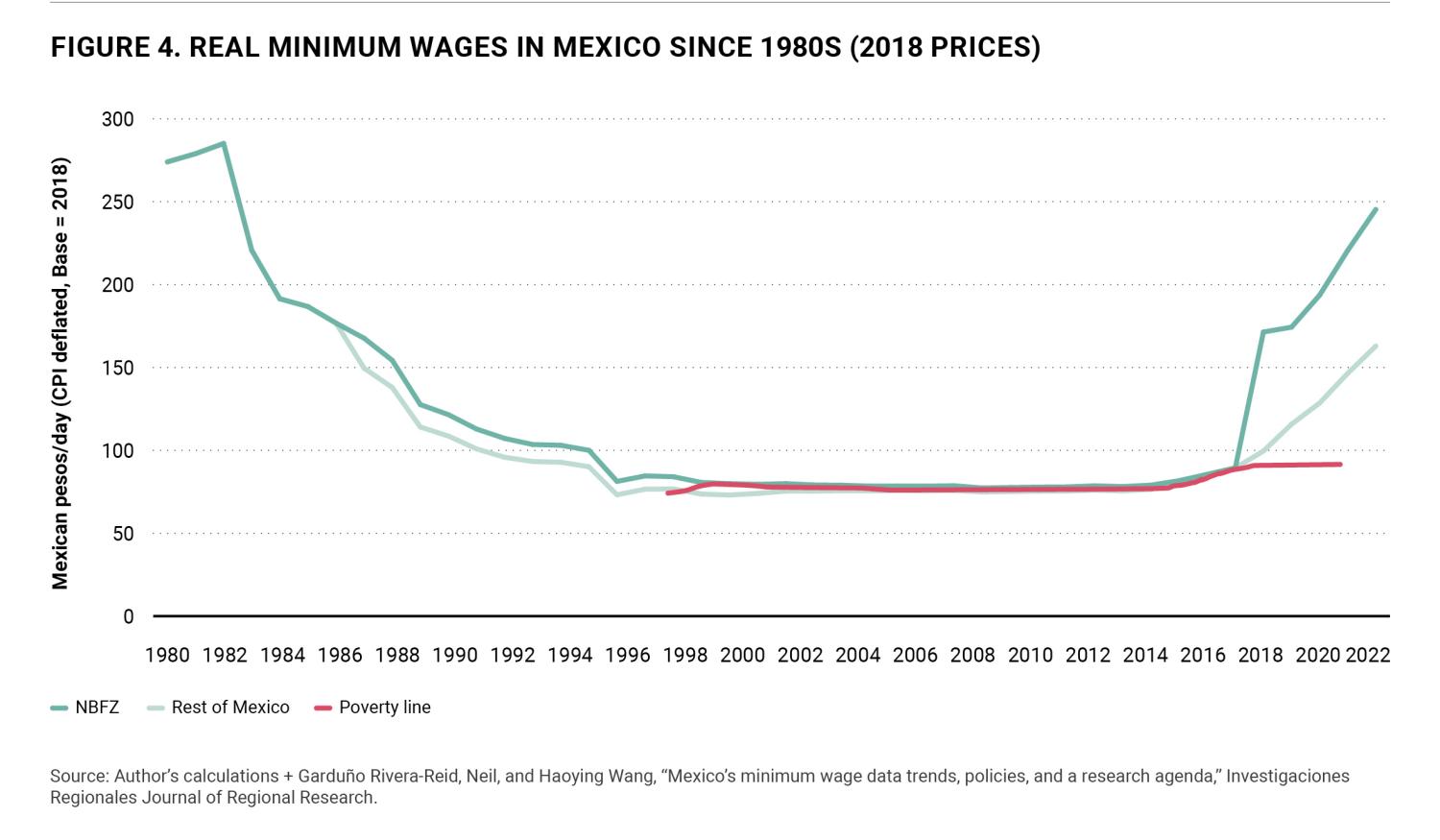
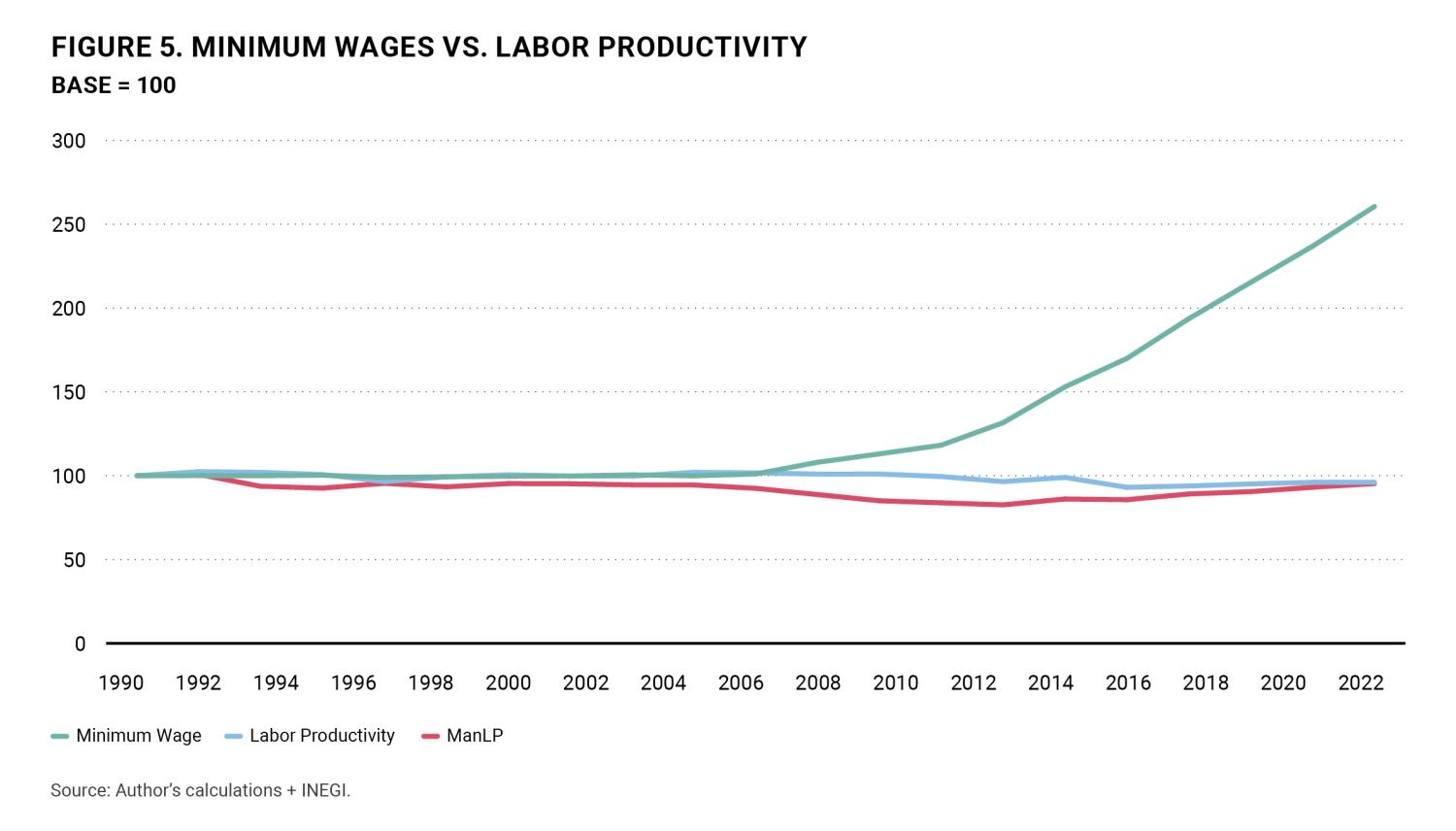
As noted, while the legislated increase in minimum wages was an internal demand—and by 2013 they were even below the country’s average labor productivity—the rise since 2017 has approached 200% (131% in real terms), far outpacing average labor productivity (in the general economy and the one considering only manufacturing, which is more related to USMCA) (see Figure 5).19 This has begun to raise competitiveness concerns in the business sector, particularly among small and medium-sized enterprises. In fact, one consequence of rising MW has been that formal employment has sharply slowed its rate of growth, increasing the number of informal workers as small and medium entrepreneurs try to circumvent these increases. Today 56% of work force is employed in the informal sector, an indicator 2 percentage points above the one prevailing at the end of 2024.20 Finally, inflation in the services sector, which is labor-intensive, has begun to show resistance to declining.21
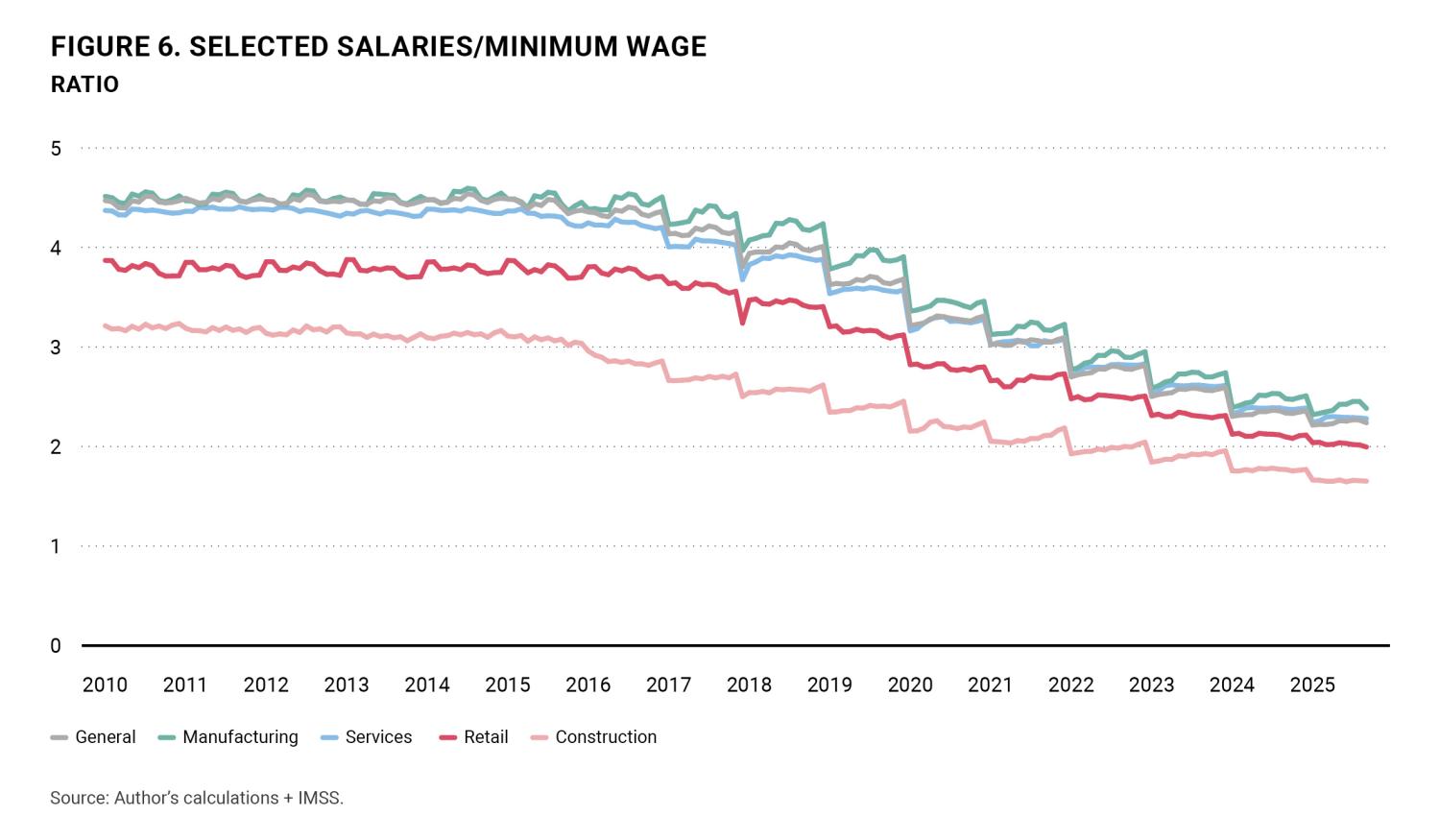
The abrupt increase in the minimum wage has reduced the gap between MW and wages in other sectors of the economy. Figure 6 presents the ratio of wages in different activities compared to the minimum wage. As can be seen, this gap has narrowed sharply. On the one hand, this helps reduce income inequality; on the other hand, it may indicate that the minimum wage will eventually exert upward pressure on overall wages, which could in turn place additional pressure on inflation rates. This development may further exacerbate the existing inconsistency between labor productivity and wage growth.
The lesson—and thus the central challenge—remains: Mexico must address its structural productivity problems. The USMCA provides only marginal support in this regard; it helps strengthen the export sector and stimulate some economic growth, but it cannot, on its own, resolve the structural issues that characterize the [dual] Mexican economy.22
Author

Related Content

2026
-
Footnotes
- Total Factor Productivity (TFP) measures how efficiently an economy uses its standard inputs—labor (workers’ hours) and capital (machinery, buildings, infrastructure)—to produce goods and services (output). In simple terms, TFP is the portion of economic growth or output increase that cannot be explained simply by using more workers or more equipment. It tells you how much “more with less” an economy is producing.
- Ryan Alexander, “Myth and Reality of the Mexican Miracle, 1946–1982,” in The Oxford Handbook of Mexican History, ed. William H. Beezley (Oxford: Oxford University Press, 2021), https://doi.org/10.1093/oxfordhb/9780190699192.013.32
- Instituto Nacional de Estadística y Geografía (INEGI), Encuesta Nacional de Ocupación y Empleo (ENOE), Indicadores de Ocupación y Empleo, Boletín de Indicador 732/25, December 24, 2025, https://www.inegi.org.mx/contenidos/saladeprensa/boletines/2025/iooe/IOE2025_12.pdf
- Santiago Levy, Good Intentions, Bad Outcomes: Social Policy, Informality, and Economic Growth in Mexico (Washington, DC: Brookings Institution Press, 2008). and Santiago Levy, Under‑Rewarded Efforts: The Elusive Quest for Prosperity in Mexico (Washington, DC: Inter‑American Development Bank, 2018).
- Lorenzo Caliendo and Fernando Parro, “Estimates of the Trade and Welfare Effects of NAFTA,” The Review of Economic Studies 82, no. 1 (January 2015): 1–44, https://www.jstor.org/stable/43551463
- Santiago Levy and Oscar Fentanes, “USMCA Forward: Building a More Competitive, Inclusive, and Sustainable North American Economy,” Brookings (Brookings Institution), February 2022, https://www.brookings.edu/articles/usmca-forward-building-a-more-competitive-inclusive-and-sustainable-north-american-economy-labor/
- Caliendo and Parro, “Estimates of the Trade and Welfare Effects of NAFTA.”
- Caliendo and Parro, “Estimates of the Trade and Welfare Effects of NAFTA.”
- Fausto Hernández-Trillo, “Mexico, NAFTA, and Beyond,” The International Trade Journal 32, no. 1 (January 2018): 5–20, https://doi.org/10.1080/08853908.2017.1387622
- Federal Reserve Bank of St. Louis, “Unemployment Rate (UNRATE),” FRED, Federal Reserve Economic Data, https://fred.stlouisfed.org/series/UNRATE
- As documented by David, David Dorn, and Gordon H. Hanson (2016) The China Shock: Learning from Labor-Market Adjustment to Large Changes in Trade. Annu. Rev. Econ. 2016. 8:205–40 and later updated by other institutions, such as the Economic Policy Institute.
- The parties reached an agreement on October 1, 2018, which was signed at the G20 Summit the following month by U.S. President Donald Trump, Mexican President Enrique Peña Nieto, and Canadian Prime Minister Justin Trudeau. A revised version of USMCA was signed on December 10, 2019, ratified by all three countries—Canada last on March 13, 2020—and entered into force on July 1, 2020.
- Secretaría del Trabajo y Previsión Social, Hacia un nuevo modelo laboral: Reforma a la Ley Federal del Trabajo (México: Dirección General de Concertación y Capacitación Laboral, 2019), https://reformalaboral.stps.gob.mx/sitio/rl/doc/HACIA_UN_NUEVO_MODELO_LABORAL.pdf
- Independent Mexico Labor Expert Board, Report to the Interagency Labor Committee and the U.S. Congress, October 6, 2025 (Washington, DC: AFL-CIO, October 6, 2025), https://aflcio.org/sites/default/files/2025-10/IMLEB_REPORT_2025_10_06.pdf
- World Justice Project, “Rule of Law Index — Mexico,” World Justice Project, accessed January 14, 2026, https://worldjusticeproject.org/rule-of-law-index/country/Mexico
- World Bank, “Domestic credit to private sector (% of GDP) — Mexico (IC.BRE.BE.P1),” World Bank Data, https://data.worldbank.org/indicator/IC.BRE.BE.P1?locations=MX
- AFL-CIO, Independent Mexico Labor Expert Board Report.
- Minimum wages in Mexico are set by a committee composed of representatives from labor unions, employers, and the government.
- Recall that this measure of labor productivity includes the informal sector, which pulls the indicator downward. Still, productivity is below the increase in minimum wage.
- Instituto Nacional de Estadística y Geografía (INEGI), “Empleo y ocupación,” INEGI (site), https://www.inegi.org.mx/temas/empleo/
- Trading Economics, “Mexico Inflation Rate Moderates at Year-End,” Trading Economics, January 8, 2026, https://tradingeconomics.com/mexico/inflation-cpi/news/508498; México, ¿cómo vamos?, “Inflación cierra 2025 en 3.69% anual por debajo de lo esperado,” México, ¿cómo vamos?, January 8, 2026, https://mexicocomovamos.mx/publicaciones/2026/01/inflacion-cierra-2025-en-3-69-anual-por-debajo-de-lo-esperado/
- Fausto Hernandez-Trillo, “Mexico, NAFTA, and Beyond,” The International Trade Journal 32, no. 1 (2018): 5–20, https://doi.org/10.1080/08853908.2017.1387622
The Brookings Institution is committed to quality, independence, and impact.
We are supported by a diverse array of funders. In line with our values and policies, each Brookings publication represents the sole views of its author(s).