




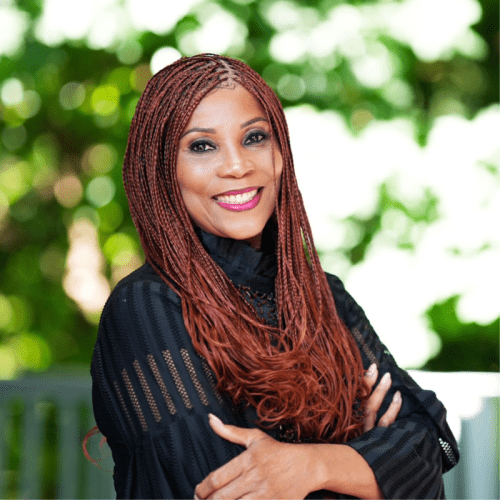
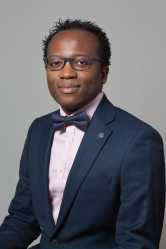
Ahead of the 81st General Assembly of the United Nations, host Landry Signé is joined by the UN’s Under-Secretary-General and Special Adviser on Africa, Ahunna Eziakonwa. Their discussion highlights the UN’s work to coordinate African development and how African countries themselves are shaping a more sustainable and equitable global system.
Transcript
[music]
SIGNÉ: Hello. Welcome to season five of the Foresight Africa podcast. As always, I’m your host and executive producer, Landry Signé, senior fellow in the Brookings Institution’s Africa Growth Initiative. In this season of the Foresight Africa podcast, we are looking beyond the headlines to see how global shifts in economy, technology, culture, and politics are shaping the relationship between African countries, the United States, and the global community.
In today’s episode, we look forward to the 2026 United Nations General Assembly and reflect on how African priorities are shaping and are shaped by the UN’s important work.
I have the honor of being joined by the United Nations Under-Secretary-General Ahunna Eziakonwa, special adviser on Africa to the United Nation’s Secretary General. She has an incredibly impactful and long career within the United Nations, including most recently as assistant secretary general and regional director for Africa at the United Nations Development Program.
USG Eziakonwa, thank you so much for joining us today for this very important conversation.
EZIAKONWA: Thank you, Landry. It’s always good to see you. Thanks for inviting me.
[2:04]
SIGNÉ: Excellent! USG, you have had an impressive career in the United Nations spanning over 30 years. Do you think the role of the United Nations has changed since you first joined? And how do you think the current moment has impacted the organization’s work?
[2:29]
EZIAKONWA: Thank you. Thank you. I think it’s it’s a real privilege to look back on those last three decades. Though I must quite say upfront that the world that I joined the United Nations in was quite different from the world that we see today. In one, I think one important way. At the time, development cooperation sat inside a broadly cooperative international environment, you know, in which I think really most all the major powers, but also middle powers accepted that multilateral space was worth investing in, you know?
And it was, you know, it was a world that was shaped by the optimism of the immediate post-Cold War environment. There was a lot of optimism around that, and it was the era that gave birth to the MDGs, for instance. Imperfect as they may have been, there was a a real sense that we had a common destiny, a common direction. There was consensus around that.
Today, I think that consensus is under strain. And in terms of, you know, the geopolitical context and contestation, there’s a lot more competition and questions around whether we really are on the same page in terms of the future, our common future. And that, of course, is having some impact on on our work.
[4:03]
SIGNÉ: Insightful, USG! As we head into the 81st General Assembly, how do you see African countries and their priorities being reflected in the UN’s agenda? And what do you think African countries hope to accomplish in this year’s UNGA?
[4:27]
EZIAKONWA: I think I’ll say, you know, that the 81st session really comes at a time where what we’re witnessing is African countries a lot more assertive on the global stage. You can see Africa’s fingerprints and footprints across the entire spectrum of global issues that are being discussed, you know, from discussions at the G20 in South Africa, with South Africa’s presidency, to Sevilla on the financing for development, the discussions and the commitments that were made there.
The Pact for the Future, Africa had a big voice there and actually influenced its adoption as well. And we also see in the COPs, the climate change debates, a big role that Africa is playing. So you have a continent that is no longer arriving at the GA or these global forums as passive recipients of agendas that are set elsewhere, but are really increasingly seeing themselves, the member states of the continent, seeing themselves more as shapers and and co-architects of the agendas that are coming up.
African countries are under no illusion that, you know, their priorities will be immediately the priorities of others. So they are sharpening their case and also maintaining, I think quite significant clarity on what Africa’s priorities are. I can probably name a few that I think African member states will push quite strongly at the GA.
One is the almighty issue around global governance architecture and the need to push for reform in that construct, whether it is with the Security Council or other bodies. So I think there is a real push and relentless effort there that a continent of 1.4 billion people, and by far the largest regional bloc in this house, cannot have a voice on the Council. I think that that is becoming increasingly untenable and an issue that African member states will continue to advocate for.
I think the second one is around the, again, reform of the global financial architecture. This is really important for the continent, and some of those conversations begun already in Sevilla on the Fourth Financing for Development conference, and important milestones were reached.
I think there will be a desire on the Africa side to see a continuation, a follow-up to some of those commitments that were made. African countries are worried about debt, quite rightly so. But the cost of capital, for instance, credit rating methodologies, you know, SDRs and their re-channeling.
[7:36]
But above all, the fact that this system was not created really for the era that we’re facing now, and therefore needs to be adjusted. So that misalignment is something that Africa feels in all of its economies and structures, and there will be a push for more reform of the financial architecture to be more in step with what the needs of developing countries are and and indeed of Africa.
I think the third is around climate, you know, climate finance. The fact that this is a continent that, its share of emissions is still at the very bottom. However, the impact on the continent is huge. And and so you would find the Africa voice around issues to do with delivery on loss and damage, for instance, but also more financing towards adaptation. I think there will be many voices around the issue of industrialization and value addition in terms of the energy security and Africa’s critical minerals.
You know, having transformation at home rather than just exportation in their raw form so that, you know, these minerals can also create job opportunities for Africa’s youth, but also the continent can mine a lot more value from from its own natural resources.
I think peace and security will also find echoes here, particularly on the situations that are still unfinished business on the African continent. Issues around the the the Horn of Africa, the Sudans for instance, the Great Lakes region, the Sahel, violent extremism in particular.
I I think you will find advocacy around ensuring that Africa-led initiatives and operations, find global support. So these are some of the areas I believe will be focus areas for for member states from the continent.
[9:50]
SIGNÉ: A very packed and very important agenda.
Looking to your current role, the Office of the Special Adviser on Africa was established to coordinate the support of the United Nations and its members for African development, peace, and security. As you step into the organization, what mark do you hope to leave on the office work, and where do you see the greatest opportunity to accelerate support for African countries?
[10:31]
EZIAKONWA: For me, you know, I come with a lot of experience from the continent, of course. You know, having worked in UNDP Africa, I think I’m very familiar with where the issues are and what what the continent is is demanding from its partnerships.
But I I I come also quite open to work with others, particularly the Africa Group here in New York, the African Union, but also sister agencies of the Secretariat and the, and the funds and programs to really co-create a vision that is in line with the demands of the day and also that takes into account the the geopolitical context that has evolved and is evolving. So, you know, I I I don’t come with pre- determined vision here, but really a an open mind and a willingness to shape it with others.
But but I think I am driven by a few instincts that I bring with me. One is agility, and and I think I will be quite hesitant and even refuse to invest a lot of my energy in processes and and structures at the expense of of agility. I think we have established a lot of systems, and I think this is the moment where we say all systems go. You know, we need to really be in tune with the urgency that the issues on the table demand. And and we need to position an office like this with that spirit and letter of agility.
I think the second instinct I have is on partnerships, that, you know, this is a a small, tight office, and I will not be under any illusion that we can, you know, be all of what Africa needs at all times, and that we can go it alone. I think it’s gonna be important to network this office and and make sure that we have the right— we’re connecting with the right platforms, but also playing that connection role, connecting and convening role.
Africa today is actually highly sought after by many parts of the world because of its resources. And it’s going to be important to understand those partnerships, to be able to to move them in the direction that favors the continent’s development and trajectory, and and to provide advisory that helps Africa shape more meaningful partnerships. But also, you know, this concept of convening is another instinct that I really will home in on as as I as I do this job.
So if I can get OSAA into a position where it is highly networked, it has that depth in terms of data credibility so that whatever advice we’re providing is well informed by credible data. So there’s a lot of emphasis that we’ll be placing on data. And and also that we’re networked within the house, but also beyond the United Nations, you know, looking at the private sector space, but also the diaspora space.
[14:08]
SIGNÉ: This is an incredibly wonderful agenda, and we look forward to watching you seize these opportunities. I’m particularly excited that the first point you mentioned is agility, especially given the velocity and the complexity of the world in which we are living now.
USG, you recently served in the UN Development Program, UNDP, as assistant secretary-general and director of the Africa Bureau. As you reflect upon your time in the UNDP, what do you see as your biggest accomplishment, and how do you see the work ahead of you with OSAA interacting with the UNDP’s Africa’s agenda?
[15:03]
EZIAKONWA: It was an incredible eight years in this position during which I really developed a special, respect, for the UNDP workforce and the system that is UNDP. I think a lot of focus on giving agency to the people, the program countries, the people that we serve, is really been part of the DNA of UNDP. I really truly appreciated that, and I milked it for the continent of Africa.
And so while I was there, my my focus was quite clear. One was not to drive an agenda for the continent where Africa was seen through the lens of problems rather than opportunities and the promise that the continent holds. That was, for me, a point of departure, and that guided everything that we did. That there were enough, there are enough PhDs that have been written about Africa’s problems. We’re not in denial that there are problems, but also those problems are so well known.
But our role was now not to continue peddling and managing the problem narrative, but rather to home in on the opportunity narrative. Because for every problem that you identify on the Africa continent, there are 10 opportunities that not only, you know, address a problem, but also create a well of new solutions for for the future. So we really focused on on this narrative of the opportunity lens for Africa.
The second is also to recognize that Africa’s greatest asset, perhaps the most underpriced asset, was its youth. This was something that was very close to my heart because as I went from country to country, I was in touch with this asset in real times, and no one could convince me that this was not gold. And the the only thing that kept me up at night is a feeling that we had not quite recognized and connected with this powerhouse of Africa’s youth, and the need to invest in that asset in a way that made them incredible allies for development.
And linked to that is the lever, the, you know, maybe most under-resourced lever for putting up that opportunity that I described earlier was innovation, Africa-led innovation. And we began to see this post COVID, that this was a continent of ideas and and that we had a population that could give those ideas legs if only we would equip them with the right instruments, including technology and resources, financial resources and the like.
[18:23]
And and I think the fourth element is the the women, really unleashing the power of women on the continent. Women political leaders, women entrepreneurs, the fact that we have to unleash the power of 50% of the population or even more, in the area of governance, in the area of finance, in the area of, you know, climate change and response to it, energy. And Africa had actually under-invested in its women, and we needed to open up the doors for women to play their role with an empowerment that’s not been there.
You know, women play their role, but with a huge struggle. And so it’s how we limit the structural obstacles that women find themselves in that, that limits the contributions that they make to the development of the continent.
Maybe lastly is is really looking at regional integration, and we did a lot of investment in the Africa Continental Free Trade Area. I was really convinced as soon as I took up this job that it was critical to support the implementation of this game changer on the continent. And I think we will see a lot more coming out of there for the future. And that’s the bridge to OSAA really is trying to to invest in implementation, in convening that will bring the systems together in looking at domestic resource mobilization and how we can make Africa’s resources work for Africa’s development.
You know, so there are lots of bridges between this office and what I I think we were able to accomplish during my term at the Africa Bureau in UNDP.
[20:25]
SIGNÉ: Amazing! This year, the UN will be choosing a new secretary-general as António Guterres’ second term comes to an end. For our listeners, can you describe why the position of secretary-general is so important, what kind of work they do, and how your office supports and advises this work?
[20:57]
EZIAKONWA: Right. I think, you know, on paper, the secretary-general is the chief administrative office of the United Nations secretariat. But I think that really is an understatement, you know, because this role holds the the moral voice of the world. The secretary-general is the moral voice, and this is the place where member states come when there are issues that no one member state can can address. Right? I I spoke earlier about the fact that we are today facing a more transactional world and and, you know, perhaps contested space of multilateralism.
But these times actually also show that what has not changed is the reason why the United Nations exists. That in a world where we’re facing compounding problems, you know, it’s it’s it’s global issues that affect all of us, whether it’s pandemics or climate change or, you know, some of the issues around global financing, trade. You know, these are all global issues, but we haven’t even talked about AI and digital governance, related issues.
They are issues that require a place like the United Nations and a leader like the secretary-general to convene the member states, the members of this global community to discuss and reach consensus on how we move forward.
And indeed, our current secretary-general has done a lot of that convening around our digital future, for instance, around international tax cooperation, around climate change and the impact that it is having.
And this role I don’t think will change. I think it will continue to be quite important because there are more and more issues that are of a global nature that cannot—that are borderless, cannot be tackled within a single border. And, and it’s it’s really calling for a position such as that one.
[23:24]
And I think for Africa, the role of the secretary-general is critical, you know. And and I’m really pleased to be in this privileged position of having to advise and bring evidence to bear on the decisions that will affect the continent, you know.
These are some of the global decisions as well on, on financing for instance, on trade. Africa is still developing, and it does need a conducive global environment to be able to power its development. And so the role of the secretary-general in ensuring, first of all, that Africa is at the table and that Africa’s voice matters, and Africa’s voice is influential.
I mean, this is, after all, the continent that will be responsible for one in four persons on this planet coming from Africa by 2050. So the demographic power of this region cannot be ignored. It has to be recognized, and it has to be weighted in the way the UN positions issues, and and Africa’s voice has to be strong there.
So I would see also doing a lot of groundwork for the secretary-general in terms of making sure that the data, the evidence is there, is credible, making sure that Africa’s platforms and, and networks are part of the conversation, and that, you know, Africa is taken seriously, because it does have something to contribute.
But also on the issues of justice, whether it’s climate justice or, you know, justice in the way in the international system is shaped. Because even though Africa is going to be having to work hard at home to strengthen its economies, it will need a global system that’s fair and that’s able to, you know, to facilitate and foster prosperity on the continent as well.
[25:31]
SIGNÉ: Wonderful! Amidst many countries drawing back on official development assistance, ODA, how can organizations like the UN keep development relevant and adapt the development landscape to the current moment?
[25:55]
EZIAKONWA: That’s an interesting question. You know, the contraction of ODA is real. You know, we feel it in the UN. We see it even with UN organizations being largely defunded. But it is, it’s not going to diminish the the the presence and the the influence and the impact of the UN. I think there’s a there’s a relentless spirit in in many member states to keep the UN at the center of development in the developing countries. The finances will speak perhaps a different language, but I think there is a a commitment to seeing a robust UN in in many of our countries.
Let’s be clear. I don’t think ODA was ever going to be … to shape the future of development on the African continent. It has had a place, but not at the center. You know? What is going to really make a difference for a continent, its, its ability to mobilize its own resources and generate its own economies into economies that work to build systems and structures that allow Africa’s wealth to be mobilized for its people. You know, that that’s really what’s going to make a difference.
Now, there is some role for ODA there in terms of de-risking and and and catalyzing some of these changes that are required. But in the main, it’s really a shift to regional integration and regional trade. It’s a shift to investment, as opposed to to, you know, being locked into an aid framework.
So increasing trade within the continent, intra-Africa trade, you know, improving on on also movement of the people across borders, free movement, so that services and goods can move freely and and flourish. It’s going to involve transformation of Africa’s wealth, Africa’s raw wealth. Critical minerals, as I said earlier, is very much in high demand today. And if you start to add value to them rather than export them in their raw state, it’s going to make a big difference in the economies.
So it’s, it’s what we are calling sort of the flow of resources within each country. Being able to control that. Every country must control and own the flow of its own resources in its economies for this to really happen.
But also the investment in young people. You know, Africa’s future in terms of its development, that’s where ODA has played a a key role, and I hope that whatever is left of it can continue to be pushed into this area, human capital development. Making sure that the education sector is well-resourced and able to produce young people who can compete globally. That that is really key. But also technology transfer and, and all of that.
So I I think there’s a there’s a major shift from just being locked into the aid framework to understanding domestic resource mobilization investment opportunities. So Africa, not as a destination for aid as such, but as a destination for for serious investment.
[29:35]
SIGNÉ: I really love the idea of serious investment and really insightful perspective, USG Eziakonwa. As we approach the 2030 deadline for the United Nations Sustainable Development Goals, there is still a gap on achieving many of the SDGs. In 2025, the UN noted that only about 35% of the SDGs were on track to be achieved by 2030. What can the UN and its partner do to advance progress against these goals?
[30:22]
EZIAKONWA: Yeah, you know, I think, the SDGs will not necessarily be delivered by another summit. There there has to be a realization that perhaps why we have seen slow progress is in the approach, which is in mostly addressing the symptoms, you know, rather than the structures. I think it’s really important as we move into this last push to think beyond projects and programs, funding of projects and programs, but to think about how we really tackle the structural bottlenecks that keep economies from going in the right direction. This is both at the local level and at the global level.
And and this is the challenge of this last few years of the SDGs. How how do we turn the lens to structural issues that underpin a country’s ability to lift, you know, their their people out of poverty? It is in so many different areas. War is one of them, conflict, insecurity. As we always say, there is no development without peace and no peace without development. And then human rights and and all of that.
I think these underlying structural impediments have to be a a good focus. Development itself will run on a smoother rail if we were able to tackle some of these structural issues and not just focus on the symptomatic issues.
So there is where my hope lies, that as the world’s attention begins to turn towards really what is beneath the surface of what makes a country, a continent, a region develop and invest there, I I think we will see greater speed in the aspirations that we have.
[32:37]
SIGNÉ: Insightful, USG! How does the UN coordinate and interact with the African Union Development Agency, AUDA-NEPAD, on the topic of African development? And likewise, how do you see the African Union’s Agenda 2063 complementing the United Nations Sustainable Development Goals?
[33:09]
EZIAKONWA: First off, you know, the relationship is really quite simple. The African Union defines its priorities. The UN puts its best foot forward to support those priorities. It’s it’s as simple as that. The UN does not dictate or impose on the African Union or African’s member states, but really follows their priorities.
Now, with regards to the coordination aspects, there are several initiatives that are on the table between the commission and the UN system leadership is something called the College to College, which this office, under the guidance of the deputy secretary general, has championed in the last couple of years, where we’re bringing face to face the executive directors of UN entities with the commissioners of the AUC to listen to the priorities of the commissioners in the different sectors, whether it’s trade and and and infrastructure or education, and and doing a matching of those entities so that we can understand how UN activities can directly answer some of the priorities that those commissioners have under the 10-year implementation plan. And now we’re on the second 10-year implementation plan.
And now we’ve actually, as OSAA, led the development of a dashboard that will enable us to see more clearly how the direction of UN investments in those priorities of the African Union and and be able to monitor and account for that.
So it’s becoming quite real. You know, we’re not just talking about having meetings. We’re actually going to have data that shows us where the gaps are, where perhaps we’re having a lot of overlap, and where we are under-resourced and will need to seek more resources. So it’s the alignment that we’re focused on currently.
AUDA-NEPAD is is is part of that process. And of course, we have the secretary general and the AU chairperson meeting annually on a high level, you know, forum where they also bring the political weight of both offices to bear on the relationship. So I think it’s it’s it’s work in progress, but the key principle is that the United Nations follows and supports the aspirations and priorities laid out by the African Union and Africa member states.
And on the two agendas, they’re not in contradiction. We believe, you know, the 2063 agenda is the African Union’s vision for the Africa we want. And the 2030 agenda is the global framework to facilitate its implementation, its delivery.
[36:22]
SIGNÉ: Fantastic! Finally, looking back on your career, what drew you towards work in the multilateral space, and what message would you share to African youth looking to make a difference in your countries and across the continent? Especially to African young girls and women.
[36:56]
EZIAKONWA: I think, you know, I I had the privilege, I would call it a privilege actually, of traveling the African continent and the world at a really early age because I had an interest in having been a literature student, a drama student, and consuming a lot of African literature. You know, these were the things that shaped my sort of worldview studying, South Africa protest literature and and their anti-apartheid movement, looking at sort of post-colonial content in the Chinua Achebes and the and the, and the Wole Soyinkas. And and I think very early on in life, I I became very conscious of of the Pan-African movement and the African identity and what it, what it means.
And and that sort of fueled my interest in in Africa and passion for Africa, but also in a global organization like the the United Nations, which works to make sure that all voices are heard and can be sort of put on the same platform.
I think, you know, my view in terms of looking at the younger generation and and it’s it’s very difficult to advise this generation. They have a completely different landscape that has informed them. But I think there’s a core principle that I think applies irrespective of what generation you grew in, and it is this principle of volunteerism. For me, I think that really helped to shape my character apart from what my parents put in put in me. Just this idea of service of, you know, when you’re young and able to actually go out and serve.
You know, I spent five years post-college as a volunteer in different institutions, and that took me into rooms that really helped to shape my my character, my worldview, my self-discipline, my yes, my sort of sense of ethical work culture.
If we don’t learn to serve, it’s very difficult to embrace and deliver leadership effectively. It really has to be part of your journey. And to young people, I’m not just talking about go do an internship. I’m actually saying, and I was just talking to some of our interns this afternoon, you need to invest the early years of your life in the work, in the in the idea of service, of volunteering wherever, in a community, in a school.
Whatever you can do that is selfless really helps you to possess your possessions rather than letting your possessions possess you. We need leaders with integrity. We need leaders who have understood through their own experience the power of service and leadership as service. And it comes from giving of yourself when you don’t expect too much in return. But in in fact, that’s what builds you and positions you for a life of success and productivity.
SIGNÉ: What a fantastic message on which to finish this interview! Thank you for joining us today, USG Eziakonwa and for sharing your valuable contributions with our audience.
EZIAKONWA: Thank you very much. It’s been a pleasure as always, Landry.
[music]
SIGNÉ: I am Landry Signé, and this has been Foresight Africa. Thank you, listeners, for joining me today. The Foresight Africa podcast is brought to you by the Brookings Podcast Network. Send your feedback and questions to podcasts at Brookings dot edu.
My special thanks to the production team, including Ike Blake, supervising producer; Fred Dews, producer; Dafe Oputu, Izzy Taylor, and Aysha House, associate producers; and Daniel Morales and Teddy Wansink, video producers.
The show’s art was designed by Shavanthi Mendis. Additional promotional support for this podcast comes from my colleagues in Brookings Global and the Office of Communications at Brookings.
Participants
- Subscribe to Foresight Africa on Apple, Spotify, Afripods, or wherever you listen to podcasts.
- Listen to previous episodes.
- Watch episodes on YouTube.
- Learn about other Brookings podcasts from the Brookings Podcast Network.
- Sign up for the podcasts newsletter for occasional updates on featured episodes and new shows.
- Send feedback to [email protected].
The Brookings Institution is committed to quality, independence, and impact.
We are supported by a diverse array of funders. In line with our values and policies, each Brookings publication represents the sole views of its author(s).
Commentary
PodcastUNGA 2026: How Africa is setting agendas amidst strained multilateral consensus
Listen on
Foresight Africa Podcast
August 28, 2026