This policy brief is part of a series on “Cross-Strait crossroads: Pathways for America’s Taiwan policy” produced by the Brookings Institution in partnership with RAND’s China Research Center.
Over the past decade, relations between the United States and China shifted from what looked to be a fragile partnership into a hostile rivalry. This shift should prompt American policymakers to reexamine the policies adopted when that partnership appeared to be growing closer and consider whether those policies are still fit for purpose. One of those policies, colloquially known as “strategic ambiguity,” maintains that the United States will decline to publicly state whether it would intervene militarily if the People’s Republic of China (PRC) abandoned efforts at “peaceful reunification” and attacked Taiwan.
Strategic ambiguity emerged as part of a broader Cold War framework governing U.S. relations with China following normalization in 1979. For the United States, this policy was a compromise, an effort to bridge multiple competing interests. The United States sought to deter China from attacking Taiwan, maintain peace and stability in the Western Pacific, deepen cooperation with the PRC to counter the Soviet Union, and preserve a close—if unofficial—relationship with Taiwan, particularly as the country transitioned to democracy in the late 1980s. Ambiguity over the circumstances of U.S. military intervention was a policy compromise intended to balance these interests while buying time for a peaceful resolution to the dispute between Beijing and Taipei.
Together with strategic ambiguity, the U.S. “One China” policy formed the core of Washington’s approach to managing cross-Strait relations. The U.S. “One China” policy was another compromise to bridge these same competing interests. The policy recognizes the PRC as the sole legal government of China and acknowledges Beijing’s position that Taiwan is part of China, while maintaining a robust unofficial relationship with Taiwan, providing defensive arms, and opposing any unilateral change to the status quo by either side. Additionally, the “One China” policy insists that any resolution of the dispute must be peaceful and done with the consent of the people of Taiwan. This policy is guided by the 1979 Taiwan Relations Act, the three U.S.-China joint communiqués, and the Six Assurances that the Reagan administration provided to the Taiwanese government in the early 1980s.
Crucially, this U.S. framework is notably distinct from Beijing’s own “One China” principle. China’s principle asserts that Chinese sovereignty over Taiwan is nonnegotiable and a domestic affair that no third country should interfere with. The U.S. “One China” policy simply “acknowledges” China’s sovereignty claim without endorsing it. This nuanced policy was the compromise that Washington and Beijing hammered out during their negotiations in the 1970s and early 1980s. Taken together, these arrangements represented a bargain that reflected Cold War conditions rather than an effort to definitively resolve the dispute between the two sides.
The strategic environment that made this Cold War framework viable no longer exists. China is no longer a weak partner aligned with the United States against a common adversary, nor is Beijing credibly committed to a peaceful resolution of its dispute with Taiwan. Under these conditions, strategic ambiguity no longer strengthens deterrence. Instead, it risks encouraging miscalculation by obscuring American resolve to defend Taiwan at a time when Beijing has the capability and incentive to use force. To protect its vital interests in the Indo-Pacific, the United States should retain its “One China” policy but replace strategic ambiguity with a policy of strategic clarity that signals its willingness to defend Taiwan against aggression.
The assumption underpinning strategic ambiguity no longer hold
When the United States and China signed their third and final joint communiqué in August 1982, it was grounded in Cold War logic. Both Washington and Beijing viewed the Soviet Union as their most serious geopolitical threat and were willing to compromise on other issues to reach an agreement on a partnership. For the United States, the primary theaters of competition were Central Europe and the Middle East, not the Western Pacific. Regardless of Chinese rhetoric about retaking Taiwan, American leaders knew that the PRC in 1982 did not pose a serious military threat to Taiwan, especially following China’s disastrous campaign against Vietnam in 1979. For all practical purposes, the Taiwan Strait in 1982 was a deep and insurmountable moat.
Under these conditions, it was rational for both sides to accept a negotiated compromise. The United States downgraded its formal ties with Taiwan to secure Beijing’s cooperation against Moscow. China, in turn, compromised on U.S. arms sales to Taiwan and Washington’s “unofficial” relationship with Taipei in exchange for Washington’s support against Soviet threats, economic aid, and technological assistance after decades of Mao Zedong’s disastrous rule. From the American perspective, this bargain resulted in the U.S. “One China” policy and the policy of “strategic ambiguity.”
Four decades later, the geopolitical, economic, and technological conditions that made that compromise possible couldn’t be more different. The Soviet Union is gone, and China has transformed from a partner seeking Western support into Washington’s main rival. Rather than aligning with Washington against Moscow, Beijing now proclaims a “no limits” partnership with Moscow, providing the financial, material, and technological support Russia needs to wage its war on Ukraine.1
Additionally, the primary theater of U.S. strategic competition has shifted from Central Europe to the Western Pacific, now the world’s most economically and technologically dynamic region. China’s industrial development and military modernization have been equally significant. China now accounts for about 28% of global manufacturing, while the United States represents about 17% (the third- and fourth-largest manufacturing nations are Japan and Germany at about 5% each).2 China fields the world’s largest navy and sophisticated air and rocket forces, all of which routinely conduct exercises to simulate attacks on, or the isolation of, Taiwan. Today’s strategic environment does not resemble that of the early 1980s.
In many ways, Chinese leaders understand how much has changed. While they insist that their American counterparts remain faithful to past agreements, Beijing largely does not observe any of the restraints that underpinned the compromise between the two countries. Chinese leaders have mostly dropped the pretense of working toward “peaceful reunification”; today, Beijing employs military threats, economic coercion, cyberattacks, and political warfare on a nearly daily basis to isolate Taipei and compel its capitulation. The United States’ decision to constrain its security relationship with Taipei in the late 1970s was predicated on Beijing’s alignment with Washington against Moscow. That foundation no longer holds.
Under these new circumstances, American policymakers should conduct a “clean-sheet” review of the policies that have governed Sino-American relations for nearly half a century. This review should not seek to shoehorn existing policies into today’s geopolitical environment but clearly identify America’s vital national interests and then develop the alliances, policies, and strategies that would most likely sustain and protect those interests. If strategic ambiguity and the U.S. “One China” policy continue to serve American interests, they should be retained. But if they do not, they should not be preserved out of habit or nostalgia.
What are America’s vital interests?
To assess U.S. policy toward Taiwan, American policymakers must first identify the United States’ vital national interests in the Indo-Pacific. A stable and secure Western Hemisphere is necessary, but not sufficient, to provide for the prosperity and security of the United States. Over the past few decades, the Indo-Pacific has become the locus of global economic and technological power, compelling American leaders to recognize two vital national interests in the region. The first is to maintain a free, open, peaceful, and stable region. The second is to prevent a rival from dominating this most important economic, technological, and geopolitical region in the world. The logic that encouraged the United States to prevent Nazi Germany and the Soviet Union from dominating Europe in the 20th century now encourages it to prioritize the Indo-Pacific region in the 21st century.
Today, the United States and China are now hostile rivals, seeking to establish competing visions of an international order by controlling the Indo-Pacific and translating that control into a global system. For now, the rivalry falls short of outright conflict, but the relationship is defined by tension, not only competition, and can no longer be described as a partnership. In the spectrum between friends and enemies, the United States and China have moved away from the former and closer to the latter.
The one place where this rivalry is most acute, with risks of a large-scale military conflict, is Taiwan. Aside from perhaps aggression by North Korea, the potential of a large-scale military attack on Taiwan is the most plausible scenario that would threaten the first U.S. vital national interest listed above—that of a free, open, and peaceful Indo-Pacific region. Further, if China were successful in conducting an attack and annexing Taiwan, the second vital national interest—preventing a rival from dominating the Indo-Pacific—would be threatened.
Taiwan’s importance to the United States cannot be understood without examining why it holds such a prominent place in the Chinese Communist Party’s (CCP) strategic and ideological calculations. For the CCP, Taiwan represents the last unresolved element of the Chinese civil war, and, for a variety of reasons, the party has tied its legitimacy to Taiwan’s eventual annexation. The party proclaims that it prefers to achieve this goal through “peaceful” means, but China’s leaders have stated explicitly, and on numerous occasions, that the use of military force, including the invasion of Taiwan, is on the table. Moreover, the PLA’s training, doctrine, procurement, and exercises are designed to undertake such an attack.
Taiwan is not just symbolically powerful but also influences the regional balance of power. Taiwan represents a geographic barrier, when combined with other U.S. Indo-Pacific allies, that contains Chinese power inside the first island chain. Taiwan also possesses the most advanced microelectronics production industry in the world. Controlling and having access to this technology grants enormous advantages for both economic prosperity and national security.
Taiwan’s transition to democracy in the 1990s adds a significant ideological dimension to its relations with Beijing. Today, the island nation represents an alternative political system to mainland China, in ways that the Kuomintang dictatorship of the 1950s to the 1980s did not. As a democracy, Taiwan is connected to, and representative of, the liberal international order built by the United States. This poses a significant ideological risk to the CCP’s monopoly on power. Taiwan’s existence as a democracy provides a real-world example to Chinese citizens that ethnic Chinese can thrive and be prosperous in a dynamic multiparty democracy. Subverting, dismantling, and erasing Taiwan’s democracy is a domestic security imperative for the CCP.
For the United States, Taiwan directly affects both vital interests identified above. Taiwan’s dominance of semiconductor production is critically important to the U.S. economy and to the United States’ technological military advantage vis-à-vis the PRC.3 As Taiwan is the geographic pivot point between Northeast and Southeast Asia, the United States can more easily maintain a free and open Indo-Pacific and prevent a rival from dominating the region if Taiwan remains free. Since Taiwan’s transition to democracy, the island nation has become a significant success story for representative government with a strong rule of law, meaning Taiwan is important to America’s long-term effort to build a friendly international order and to America’s rivalry with China to control that order.
Taiwan’s fate would also have immediate and significant consequences for U.S. allies and partners across the Indo-Pacific. Like Taiwan, Japan and the Philippines are under assault from the PRC, which seeks to take territory and maritime rights from them in the East China Sea and South China Sea, respectively. This has encouraged both countries to pursue closer security cooperation agreements with the United States, as well as with each other. In Japan’s case, Japanese leaders have recognized that a PRC military attack against Taiwan would threaten Japanese vital national interests. Tokyo has used this rationale to undertake military modernization and rearmament since Chinese aggression in the East China Sea started in 2010.
Security America’s vital national interests
The United States must seriously consider that, at some point in the future, Chinese leaders may decide to abandon “peaceful unification” and seek to forcefully annex Taiwan. Such a decision would directly threaten America’s two vital national interests in the Indo-Pacific: maintaining a free, open, peaceful, and stable region; and preventing a hostile rival from dominating the region’s economic and technological centers of gravity. Under these circumstances, a policy of strategic ambiguity places the United States in a reactive mode, only able to mount an effective defense and gather the necessary coalition after Chinese leaders decide that the conditions are favorable for them to attack.
Deterrence, therefore, is the best way to protect the United States’ vital national interests. Effective deterrence requires convincing Chinese leaders that they could not achieve their desired objectives through a military attack—whether that is a standalone blockade, a blockade that escalates to an invasion, or a sudden invasion—at an acceptable cost. Presumably, Chinese leaders would only direct such an operation after concluding that the United States is either unwilling or unable to stop it. Yet strategic ambiguity, by design, creates uncertainty about U.S. intentions, leaving Beijing uncertain about whether the United States would intervene in response to aggression against Taiwan. Under current regional circumstances, that uncertainty is destabilizing: it undermines deterrence rather than reinforces it.
For deterrence to succeed, Chinese leaders must be confident of two things simultaneously. First, they must believe that the United States possesses the trained and ready military capabilities to prevent China from achieving its military objectives at an acceptable cost. Second, they must believe that the United States has the political will to pay the substantial costs of employing those military capabilities to prevent China from achieving its military objectives. As long as both conditions hold, Chinese leaders are unlikely to initiate a war of aggression against Taiwan, given the near certainty that a conflict would be exceedingly long and costly.
Strategic ambiguity, however, purposefully obscures Chinese leaders’ certainty regarding American intentions. In the late Cold War, this vagueness aligned with U.S. interests. At the time of adoption, U.S. leaders believed that China lacked the capability to mount an effective attack on Taiwan and remained committed to “peaceful reunification.” Ambiguity discouraged Taiwanese leaders from outright rejecting Beijing’s entreaties while reassuring Chinese leaders that Washington was not completely opposed to their interests. Under those conditions, strategic ambiguity supported stability and served as a lubricant for cross-Strait negotiations, but those conditions no longer prevail.
Today, China’s PLA is far more capable than ever before, while the risk of conflict has grown. To achieve deterrence under these circumstances requires the United States to have a military posture and readiness that keeps pace with the PLA’s ability to coerce and threaten Taiwan. Just as important, U.S. leaders must persuade their Chinese counterparts that the United States will militarily intervene even if doing so comes at a very high cost in lives and resources. American leaders can build credibility in this area by expending political capital to convince the American people that deterring a Chinese attack on Taiwan is in their interests. They can also take steps to build a collective security framework to defend Taiwan, the Philippines, and Japan from Chinese aggression, with support from partners like Australia, Europe, and others.
Ultimately, convincing China to forego the use of force against Taiwan necessitates a degree of clarity about U.S. intentions that American leaders have been reluctant to provide. Strategic ambiguity now risks signaling hesitation or lack of will at a moment when deterrence depends on resolve.
The case for strategic clarity
Successful deterrence rests on two elements: the physical capability to impose intolerable costs and the demonstrated willingness to bear the costs of doing so. One without the other is not persuasive. Deterrence takes place within the mind of one’s opponent, meaning it only succeeds when one’s opponent believes that their actions will reliably trigger consequences that prevent them from achieving their objectives.
Strengthening physical deterrence
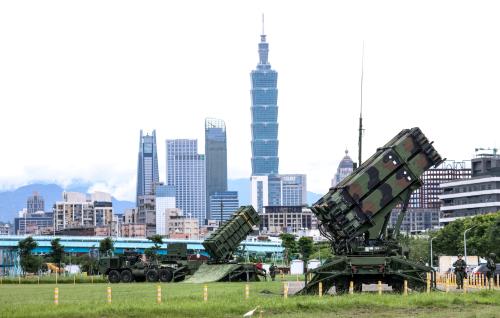
In terms of physical capabilities, the United States still fields an impressive military force in the Western Pacific, along with a military headquarters that has spent decades focusing on responding to a Chinese attack on Taiwan. Although the U.S. military’s advantages over the PLA have certainly shrunk since the 1990s, American capabilities and operational concepts have adapted as the PLA expanded and modernized.
A military attack on Taiwan would require the PLA to conduct a joint offensive operation over vast and difficult terrain in the face of significant and well-trained defensive military forces. Current and emerging military technologies, as seen on the battlefields of Ukraine, the Black Sea, and the Middle East, appear to favor the defense. Integrated intelligence, surveillance, and reconnaissance forces, along with complex and redundant communications systems, can integrate dispersed and mobile weapons platforms on land, in the air, at sea, and in the ocean. If China were to blockade Taiwan, Chinese forces would need to maintain a distributed ring around the island, which would be vulnerable to periodic disruption by the defenders. If China were to invade Taiwan, its forces would need to achieve mass at a specific time and place. Meanwhile, defenders would hold the advantage of detecting those preparations and using fires to disrupt the assault by destroying the units and assets Beijing needs to accomplish its objectives.
To support these advantages, the United States should maintain capable, forward-deployed forces west of the international date line; continue to conduct unilateral, bilateral, and multilateral training exercises tailored to intelligence on Chinese military plans and operational concepts; and field its most advanced weapon systems to the Indo-Pacific region. The exercises conducted by China to intimidate Taiwan provide excellent insight into how China would conduct a range of military operations.
The United States should maintain its long-standing policy of fielding its most advanced weapon systems to the Indo-Pacific region and continue to update and refine tactics and operating concepts based upon intelligence on how China intends to operate in a military contingency.
The United States should also expand its rehearsals and exercises for conducting distributed logistics across the Pacific, as well as develop and rehearse plans for protecting critical infrastructure and the defense industrial base inside the continental United States. Ensuring that the Panama Canal and U.S. ports are free of Chinese influence is an important step. The United States should make itself a “harder target” against Chinese sabotage and strikes to take out critical assets and infrastructure.
The United States should expand the number of military units aligned to contingencies in the Indo-Pacific, just as the U.S. Army did on December 5, 2025, when it permanently assigned I Corps and the 4th Infantry Division to United States Army Pacific.
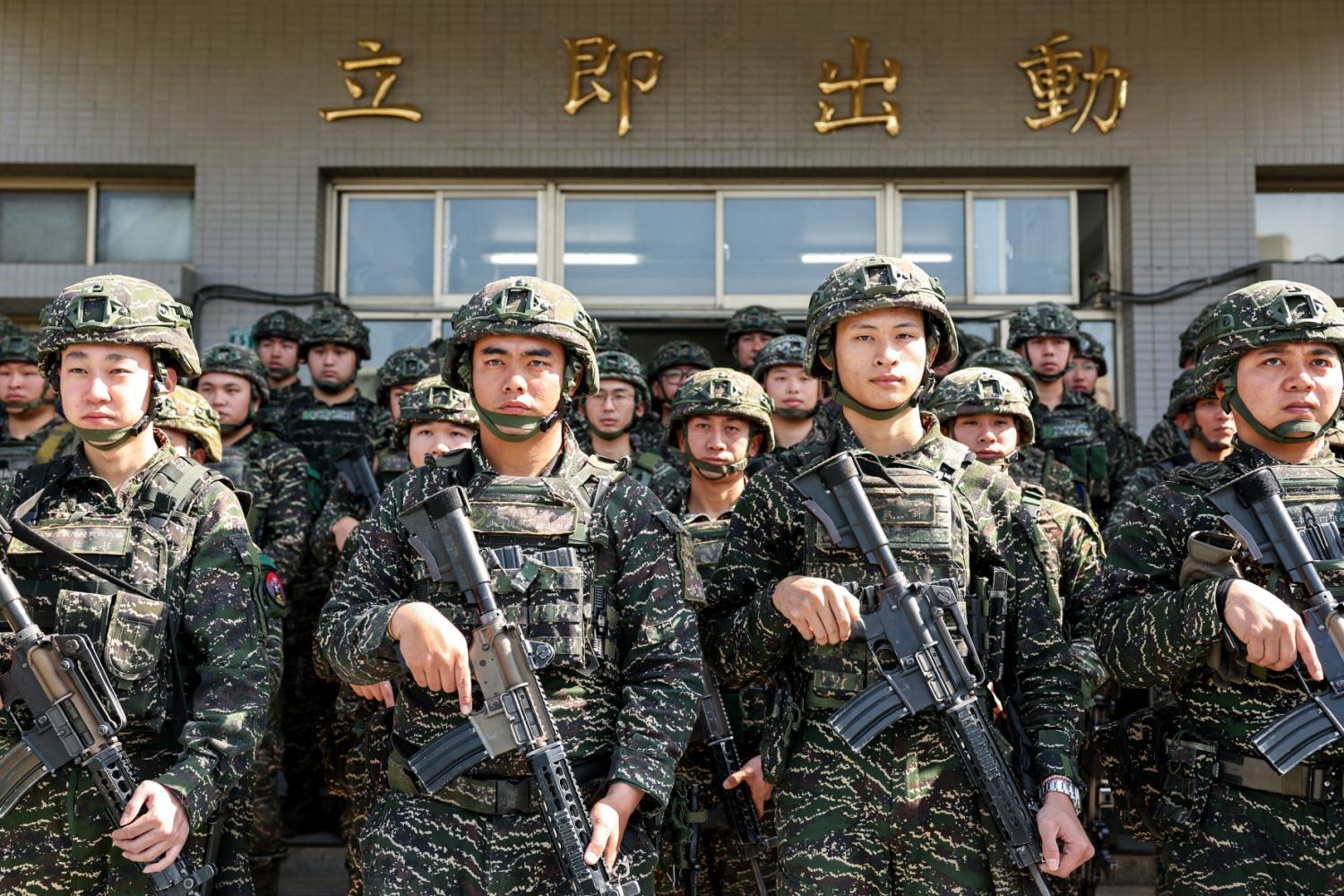
The United States should maintain its long-standing policy of training with Taiwanese military forces. Moreover, it should expand the opportunities in which U.S. and Taiwanese military forces can operate alongside each other in high-end contingencies, build interoperability, and create a broad understanding of how each military operates and conducts its military missions. U.S. and Taiwanese military cooperation should expand to contingency planning and involve detailed specifics on how units would fight alongside one another. To be effective, the United States must provide a greater degree of certainty to its partner about U.S. intentions.
Strengthen psychological deterrence
These measures to build capability and resilience are necessary but insufficient to maintain deterrence. Indeed, simply positioning military forces, training them, and building infrastructure to support them does not mean that U.S. political leaders and the public are prepared or willing to employ those forces at great cost and sacrifice. Authoritarian regimes often convince themselves that democracies are weak and unwilling to fight, unless those democracies demonstrate through public opinion and political consensus a willingness to accept sacrifice in defense of their interests.
This is why the policy of strategic ambiguity is so problematic under the current circumstances. By intentionally being vague about whether the United States would militarily intervene if China attacked Taiwan, and by failing to explain to the American people why it is in their interest to deter an attack on Taiwan, U.S. leaders feed into authoritarian preconceptions of democratic weakness. Ambiguity, by definition, creates uncertainty, and uncertainty may persuade Chinese leaders that they have a window of opportunity to attack Taiwan without an American or allied military response.
Adopting a policy of “strategic clarity” would not surrender U.S. autonomy to Taipei, nor would it require abandoning the U.S. “One China” policy. Ambiguity and clarity are not binary; they exist across a spectrum. As discussed earlier, the U.S. “One China” policy is not the same as Beijing’s “One China” principle and has always preserved the right to provide for Taiwan’s defense and to intervene militarily should American leaders decide it is in their interest to do so. Strategic clarity would make that conditional commitment more credible.
Conclusion
By pairing a policy of “strategic clarity” with the U.S. “One China” policy, Washington can better balance deterrence and reassurance under present conditions. China’s growing military power and shift toward hostile rivalry with the United States compel Washington to provide greater clarity on its intentions regarding Taiwan. Such clarity would allow U.S. leaders to prepare the American people for a potential conflict with China and mobilize partners to join with the United States. It would also help deter Chinese aggression and ultimately protect U.S. vital national interests.
Successful American, Taiwanese, and allied deterrence is likely to drive Chinese leaders further toward indirect coercion, consisting of cognitive warfare, gray zone threats, economic coercion, and political interference, tactics Beijing already employs. While these methods are disruptive and pose challenges to Taiwan and its partners, they are unlikely to achieve China’s ultimate political goal of annexing Taiwan and dismantling its democracy.
One could imagine a future scenario in which Chinese leaders conclude that their aggressive approach to Taiwan is counterproductive, that Beijing is pushing the Taiwanese people away. Chinese leaders might adopt a new approach, perhaps dismantle a portion of the military infrastructure threatening Taiwan, end their economic coercion and political interference, and pursue good-faith negotiations with elected Taiwanese leaders. These would all be positive changes that American leaders should welcome. Under those conditions, it might be wise for U.S. leaders to return to a policy of “strategic ambiguity.” However, until such a time as Beijing reverses course in its attempts to isolate and pressure Taiwan, the United States’ interests in the Indo-Pacific would be better served by adopting a policy of strategic clarity.
In Partnership With
Author

Related Content
-
Acknowledgements and disclosures
Thanks goes to Adam Lammon for editing and Rachel Slattery and Adrien Chorn for design.
The views expressed in this document are those of the authors and do not necessarily reflect RAND’s or Brookings’ opinions.
-
Footnotes
- Khaled Robert Maalouf, “China in Russia and Ukraine,” Council on Foreign Relations, January 7, 2026, https://www.cfr.org/articles/china-russia-and-ukraine-october-2025.
- “Top 10 Manufacturing Countries in the World in 2025,” Safeguard Global, January 3, 2025, https://www.safeguardglobal.com/resources/blog/top-10-manufacturing-countries-in-the-world/ and “Top Manufacturing Countries in the World (2026),” CrossDock Insights, February 23, 2026, https://crossdockinsights.com/p/top-manufacturing-countries-in-the-world.
- Larry Diamond, James O. Ellis Jr., and Orville Schell, Silicon Triangle: The United States, Taiwan, China, and Global Semiconductor Security, Hoover Institution Press, July 18, 2023, https://www.hoover.org/research/silicon-triangle-united-states-taiwan-china-and-global-semiconductor-security.
The Brookings Institution is committed to quality, independence, and impact.
We are supported by a diverse array of funders. In line with our values and policies, each Brookings publication represents the sole views of its author(s).